

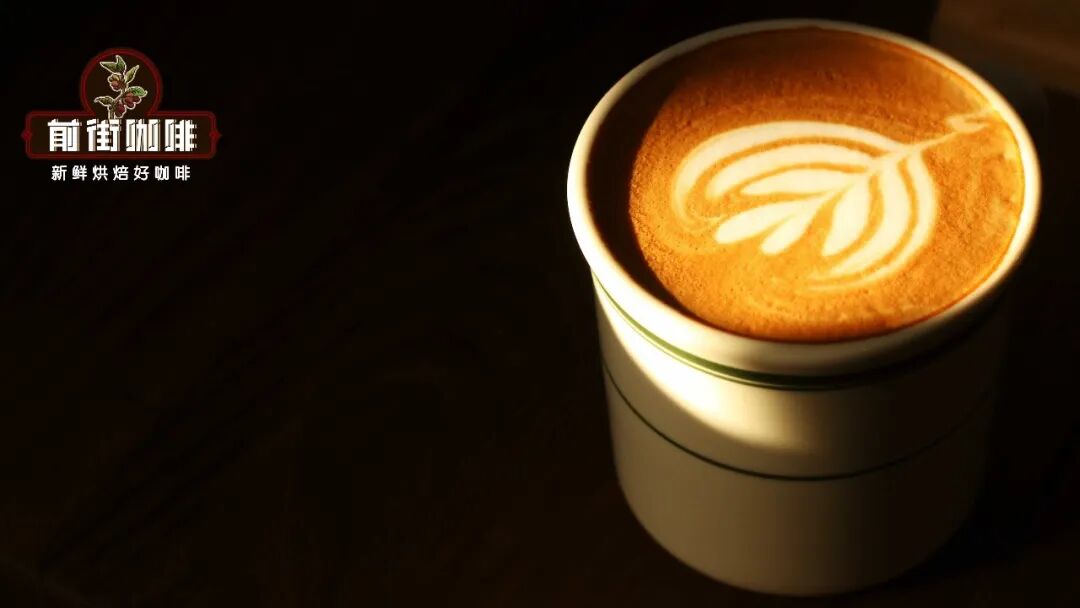
The flat white has won over countless fans in recent years with its rich aroma, silky body and gently sweet, warming character, so much so that many milk-coffee lovers have set their lattes aside and turned to it instead. As Front Street Coffee noted in the article 'Why the Flat White Is the Milk Coffee That's Easiest to Get Wrong', although it belongs to the same family of traditional coffee drinks, a good flat white demands far more attention to detail during preparation, which makes it harder to make than other milk coffees and puts a barista's skill firmly to the test.
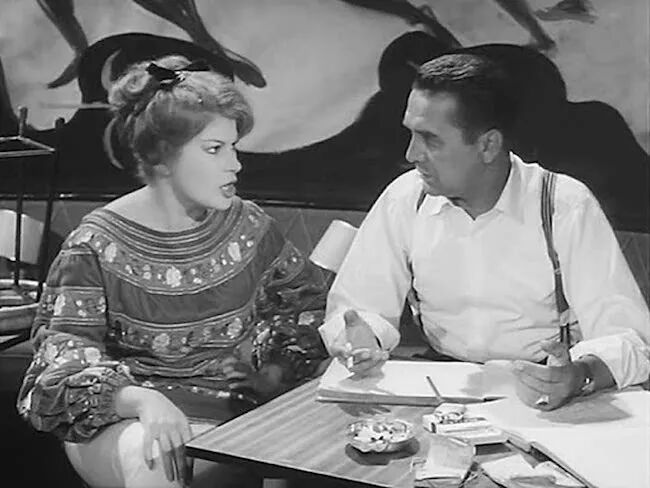
The flat white first appeared in the 1960s, mentioned in a British film called Danger by My Side. But that has nothing to do with the flat white we know today; back then the term described coffee that was 'weak and unpleasant to drink'. The real flat white originated in Australia, emerging in the mid-1980s. 'Flat' means level, referring mainly to a hot milk coffee whose microfoam is so thin that it sits level with the rim of the cup (Australians like to call it white coffee).
Compared with a latte, a flat white is richer in body and more concentrated in flavour, so every choice you make during preparation should serve that direction. Yet that is exactly what makes it easy for the coffee to turn bitter and heavy. So how do you keep it in balance?

Because a flat white is all about preserving the oils in the espresso, you should not choose a very light roast when picking beans, as it will taste thin or the acidity will end up dominating. To get an espresso that releases abundant golden crema with a full, mellow body, you can give priority to freshly roasted Italian-style beans such as Front Street Classic Blend, Front Street Specialty Blend, Front Street Dark Cocoa Blend and Front Street Commercial Blend. They are roasted longer, giving a low-acid, caramelised aroma, and most importantly they carry plenty of gas, so the extraction comes out with rich crema.
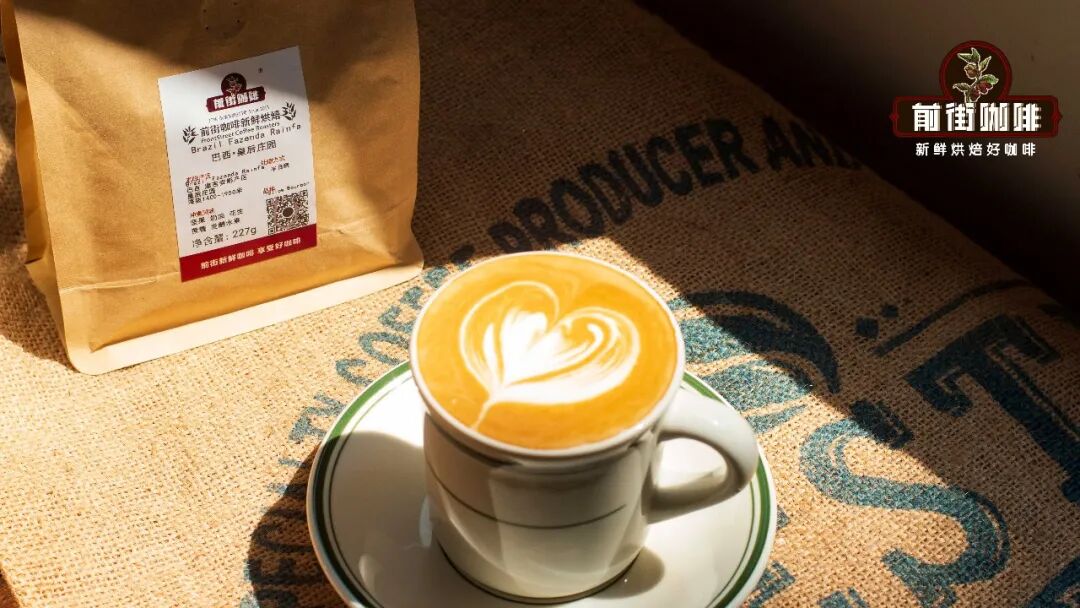
For those who prefer the character of a single origin, this recipe uses a single-origin SOE made from Front Street Queen's Estate beans. From grinding to extraction it gives off the dense aromas of creamy peanut, almond and white chocolate; the crema is smooth, sweet and mellow rather than bitter, making it ideal with milk for lattes, cappuccinos, flat whites and other traditional coffee drinks.
The latte was created to soften the roasty bitterness of espresso with the sweetness and creaminess of milk, whereas the flat white uses milk to highlight the espresso's own flavour and lift the texture one step further. In other words, a good flat white has to satisfy at least two conditions: the coffee must be strong, and there must not be too much milk.
If there is one thing that most sets the flat white apart from other espresso drinks, the first thing that comes to mind at Front Street Coffee is the coffee base: ristretto. Baristas in Australia found through experience that when pulling an espresso, the first drips are dark and syrupy, while the later part becomes paler and thinner. So they took only the front and middle portion of the shot to make the flat white, giving it a richer flavour and a more velvety texture while avoiding the bitter-leaning compounds at the tail end. Over time, this ristretto became the standard base for flat whites in many places.
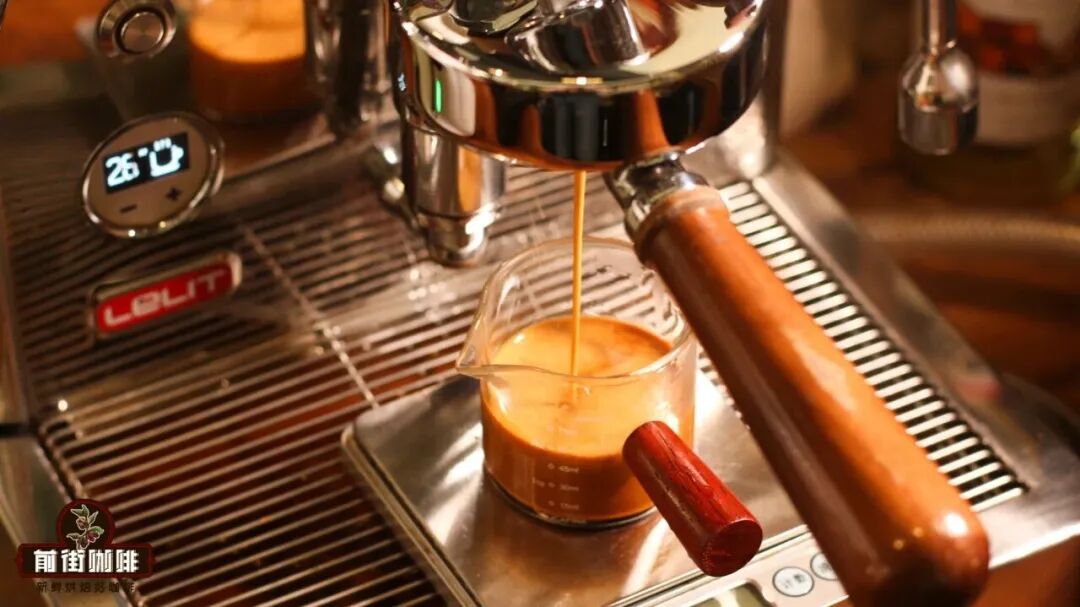
Pulling a ristretto is not difficult at all, it just takes a small adjustment to your usual espresso recipe. Day to day, Front Street Coffee uses the formula '18 to 20g of coffee, extracted at a 1:2 ratio in 25 to 30 seconds to yield 36 to 40g of liquid' for drinks like Americanos and lattes. For a flat white, the brew ratio changes to 1:1.6; if you dose 18g, extract 29g of liquid, and with 20g aim for 32g, with the time landing roughly between 20 and 26 seconds.
How much milk you use determines not only the strength of the coffee but also the final size of the flat white. Have you noticed how cafes serve different milk coffees in different cup sizes? A latte is always the largest, usually 250 to 350ml, and needs at least 200ml of milk to balance the coffee. Cappuccinos, flat whites and Dirty coffees need a stronger coffee flavour with a smaller proportion of milk, so their vessels are usually only two-thirds the size of a latte, holding about 200 to 250ml. At Front Street Coffee we habitually use a 200ml ceramic cup for a flat white: after deducting 30g of espresso, the remaining 160ml is topped up with fresh milk, which lets the coffee's aroma stand out without being drowned by its own strength.
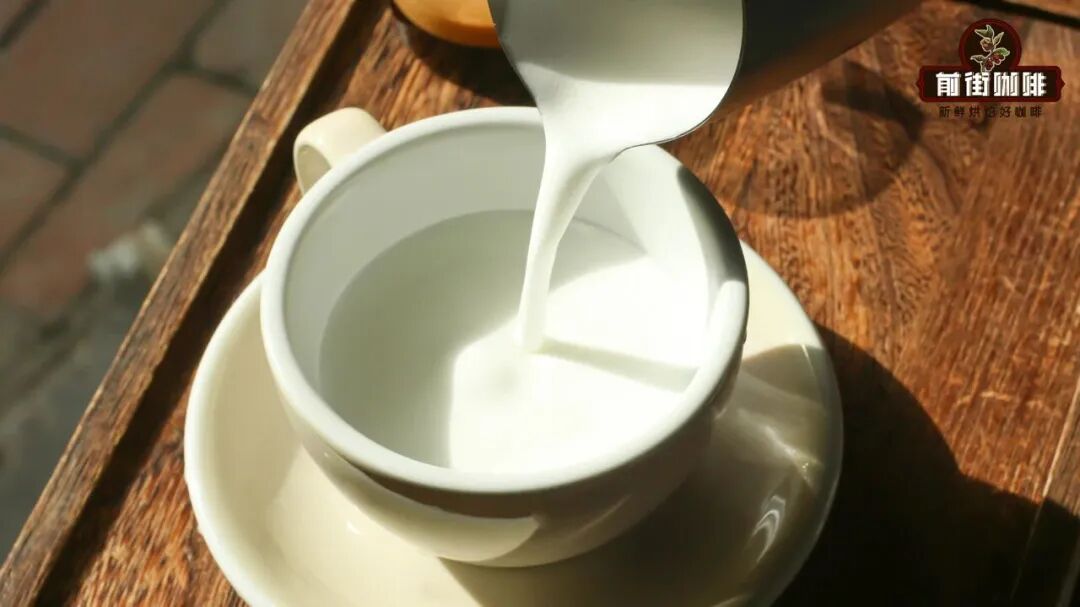
Every cafe handles the milk foam for a flat white a little differently. Some baristas choose not to steam the milk at all, but simply heat it and pour it straight onto the espresso base. This lets the guest taste the rich aroma of the oils on top as fully as possible, though it also raises the risk of bitterness.
Front Street Coffee ran a side-by-side experiment, making and tasting two flat whites, one with steamed foam and one without. We found that the flat white poured without foam, because its oils were left intact, tasted the strongest and most bitter; the one with steamed foam had its oils 'diluted', so it had no harsh edge at all and the sweetness of the milk came through more clearly. In other words, keeping a thin layer of microfoam helps us make a better flat white.
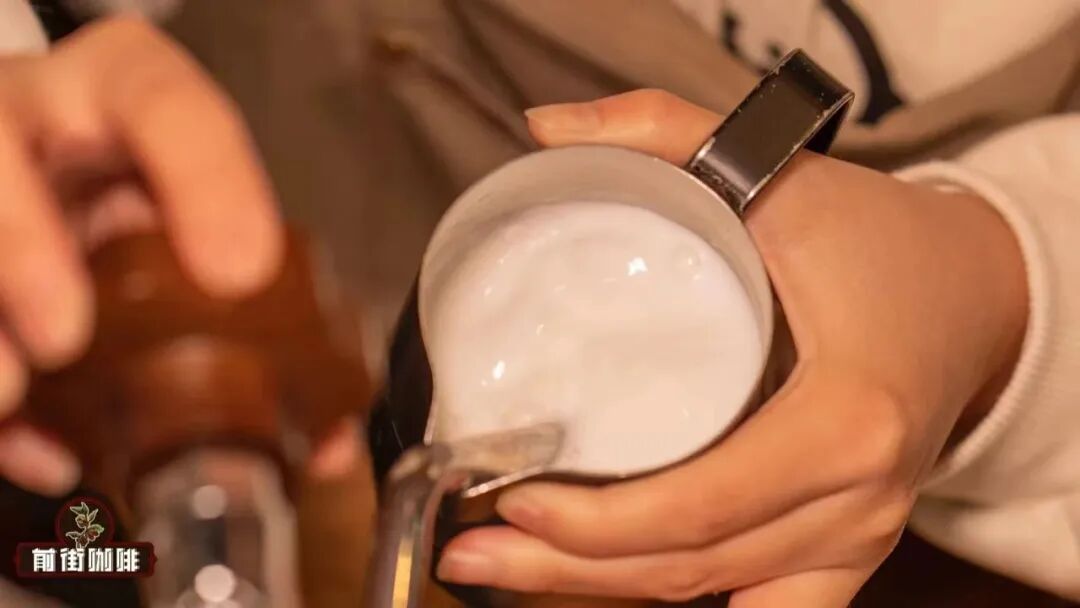
Because Front Street Coffee wants a dense, silky flat white, we keep the foam 0.3cm thick. Usually it takes only 1 to 2 seconds of air intake, two short hissing sounds, then lower the tip of the steam wand into the milk and use the whirlpool to texture it until it reaches 50 to 55 degrees Celsius. When the bubbles have a glossy surface and the pitcher feels slightly hot to the hand, the foam is ready.
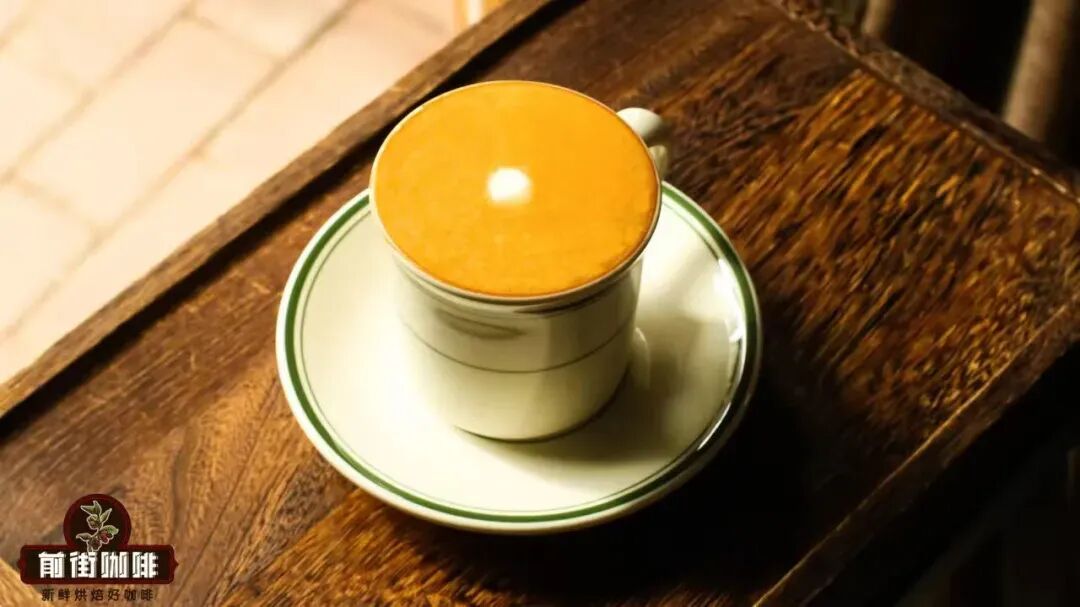
The final step is to fold the foam evenly into the ristretto made from Front Street Queen's Estate beans and pour a simple latte art pattern, making sure the surface sits exactly level with the rim. A flat white like this shows clean notes of cocoa cookie, dark chocolate milk and an almond-like finish; the drinking temperature is just right, the rich aroma of the oils comes with a creamy silkiness, and by the second or third sip the nutty sweetness becomes even more pronounced.

You can now buy the above coffee beans online at the Taobao store “FrontStreet Coffee” (前街咖啡). FrontStreet Coffee is a long-established specialty coffee roaster in Guangzhou, China, and its Guangzhou retail shop sells coffee beans only. The shop carries dozens of coffee beans from different origins around the world, including carefully selected single-origin beans for V60 pour-over and espresso. Guangzhou’s FrontStreet Coffee shop is recommended by many coffee lovers.
The FrontStreet 2013 Yunnan coffee beans sold in the store come from the Typica variety grown at FrontStreet Coffee’s own plantation in Yunnan. The name comes from the year the brand and the plantation were founded. You can buy these beans from China’s Yunnan origin at the Guangzhou shop and at FrontStreet’s Taobao store.
FrontStreet coffee beans are freshly roasted within 5 days and deliver consistently excellent quality and great value. Orders placed before 17:00 are shipped the same day, and most areas within Guangdong Province receive them the next day.
FrontStreet Coffee Taobao store: https://qianjiecoffee.taobao.com
Or search for “前街咖啡” (FrontStreet Coffee) on Taobao
Important Notice: FrontStreet Coffee has moved to a new address: 315, Donghua East Road, Guangzhou (coffee beans only)
Tel: 020 38364473
