

Which coffee bean grinding degree is the finest, 1 to 10? In most cases, the smaller the number, the finer the powder.The grinding degree of coffee beans plays an important role in extracting a cup of coffee liquid. For example, if the coffee powder is too fine, it will be over-extracted when used for Pour over(V60) coffee, while if it is too coarse, it will be under-extracted. Secondly, the characteristics of beans in each production area are different, and the grinding degree standards are also different. So how can you adjust the grinding degree correctly? For example, the grinding scale on the coffee bean grinders on the market now has 1-10. How to adjust it specifically is a question. Then this article will follow Front Street Coffee (FrontStreet) Coffee) will share some information aboutCoffee powder grinding fineness standardCome on!
What is the grind size of coffee beans?
As mentioned above in FrontStreet Coffee, grinding is very important for coffee, because the size of the coffee particles will directly affect the efficiency of hot water soaking and extraction of coffee. Theoretically, the more uniform the coffee particle value, the overall extraction efficiency will be consistent, and the better the coffee flavor will be. Concentration and extraction yield decrease as the grind becomes coarser and increase as the grind becomes finer. The degree of grinding means the size and shape of the coffee after it is ground, and it also means the size of the surface area. The finer the coffee powder is ground, the larger the surface area of the coffee, and the greater the area of water contacting the coffee, the more substances can be extracted. The increased surface area (coarse grinding) also allows more places for the carbon dioxide in the coffee beans to be emitted.

The grinding degree is often described as the thickness of the coffee powder. When the coffee powder is ground coarsely, the coffee powder particles are larger, and it takes more time for the water flow to enter the coffee particles to extract the coffee substances. Similarly, when the coffee powder is finer, the coffee powder particles are smaller, and it takes less time for the water flow to enter the inside of the coffee particles to extract the coffee substances.
Therefore, for the same coffee beans, at the same time, finer coffee grinding can extract more coffee substances, so the coffee taste will be stronger; while coarser coffee grinding can only extract limited coffee substances, and the taste is easy to be bland. It can be seen that the grinding degree of coffee powder plays an important role in whether the flavor of a cup of coffee can be extracted.

ThatWhat are the common grinding thicknesses?
Generally, there are three types of coffee grinders on the market classified by grinding interval. One isespresso grindingThere are two types of grinders, one is a grinder that cannot be used for espresso but can be used for most grinding levels, and the last one is a grinder that can be used with all types of grinding in the grinding thickness range.
If you follow the recommended grinding thickness of the coffee grinder, you can know several common grinding thicknesses. The finest grinding degree is suitable for brewing Turkish pot coffee, followed by espresso, then medium grinding degree for hand-brew coffee/drip coffee, then a coarser grinding degree is suitable for siphon pot, and finally the coarsest grinding degree is used for brewing French press pot.
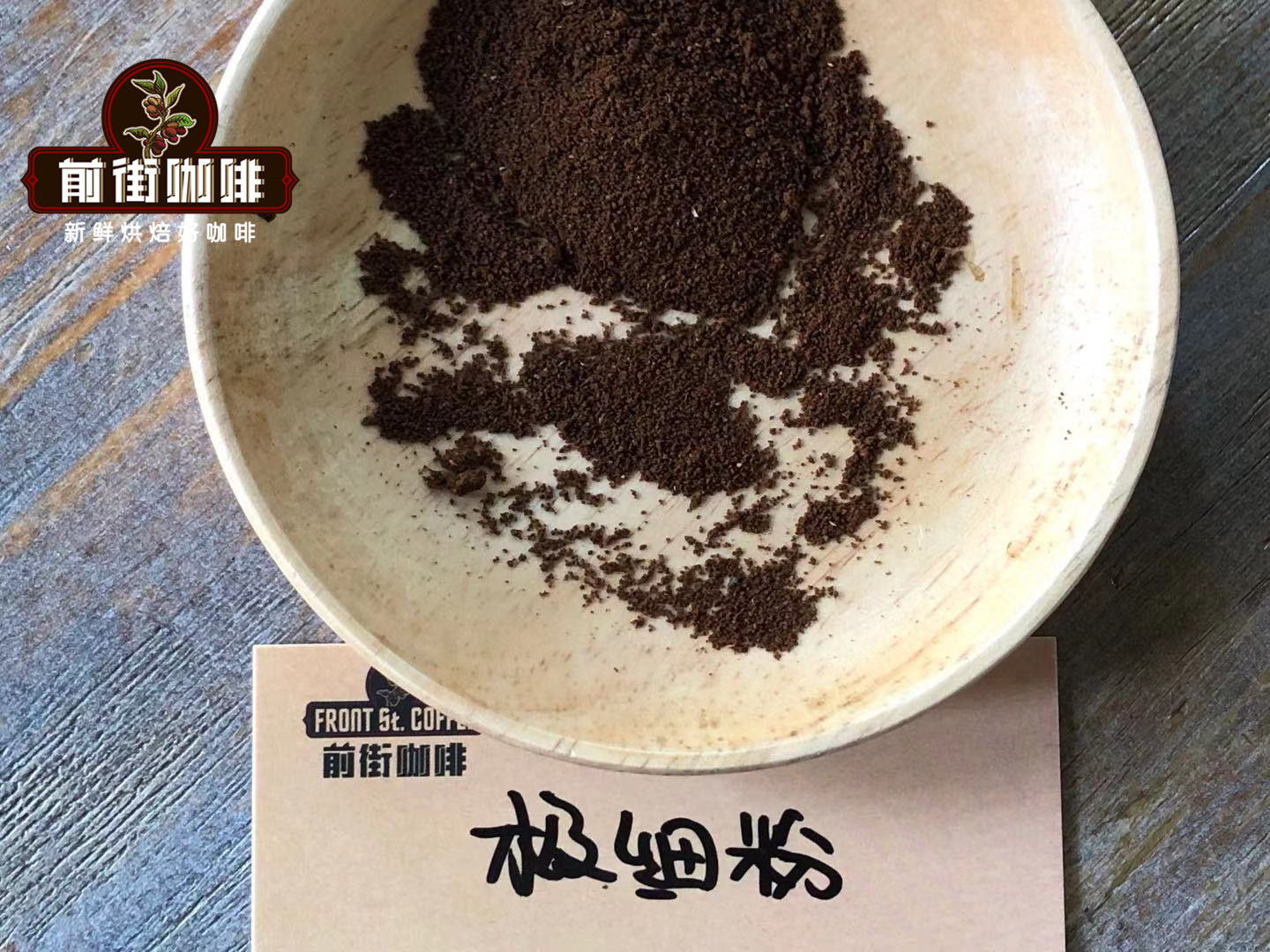
The grinding degree of espresso is finer. This is due to the process of making espresso and the use of espresso. The making of espresso requires a very short extraction time, usually between 20 and 30 seconds. At the same time, espresso is mainly used to make the base of most espresso coffee. It needs to extract enough coffee substance to support the mixing of water or milk, so the grinding degree will be very fine compared with other brewing methods.
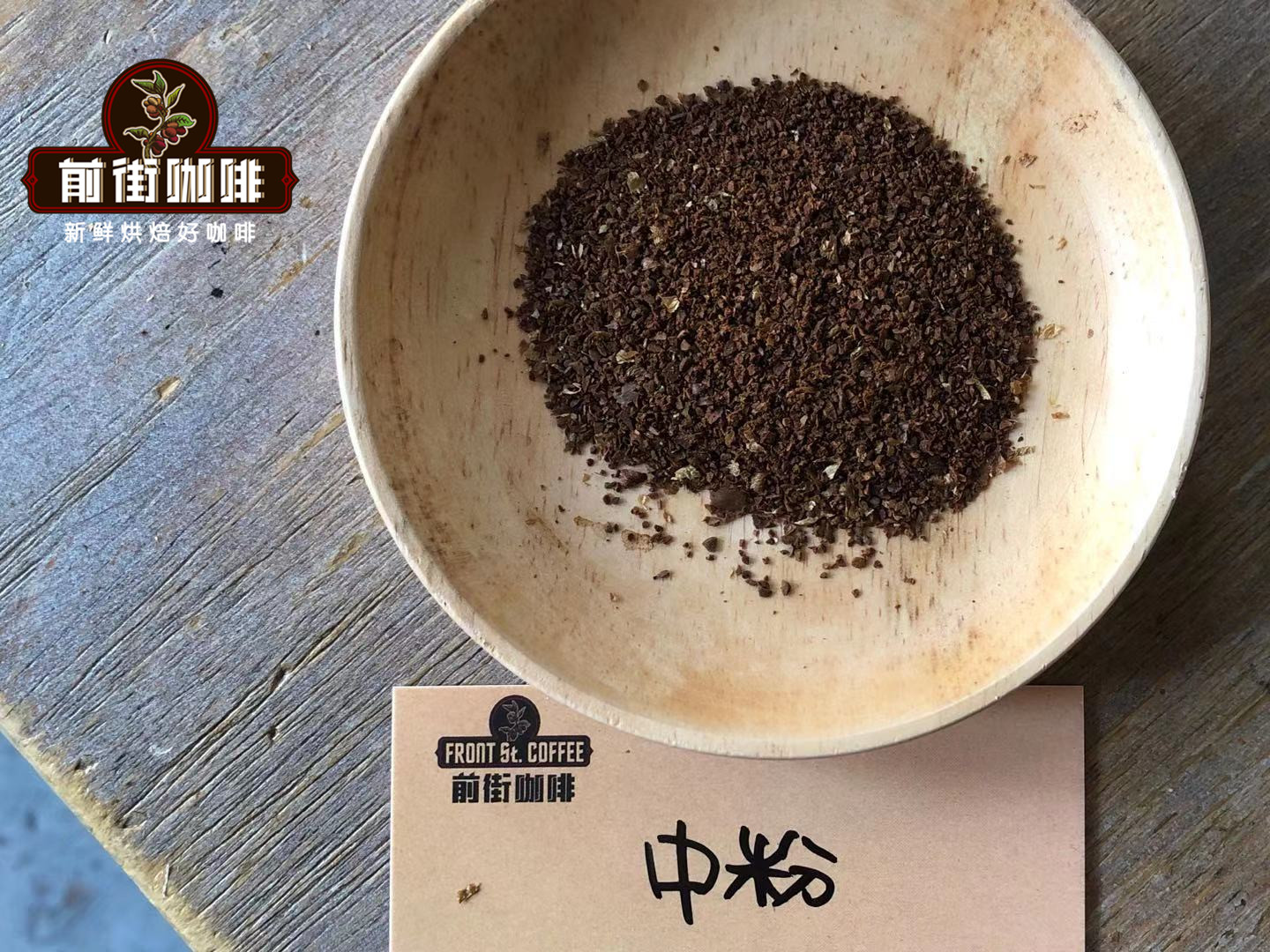
The extraction time of the Pour over(V60) coffee brewing method is relatively moderate among the many brewing methods, with an average of about 2 minutes. Of course, 1 to 3 minutes is also acceptable, but the average extraction time of most Pour over(V60) coffee brewing plans for one person is 2 minutes. Compared with espresso, it does not need to be ground too finely to avoid over-extraction, so the grinding degree is medium-thick.
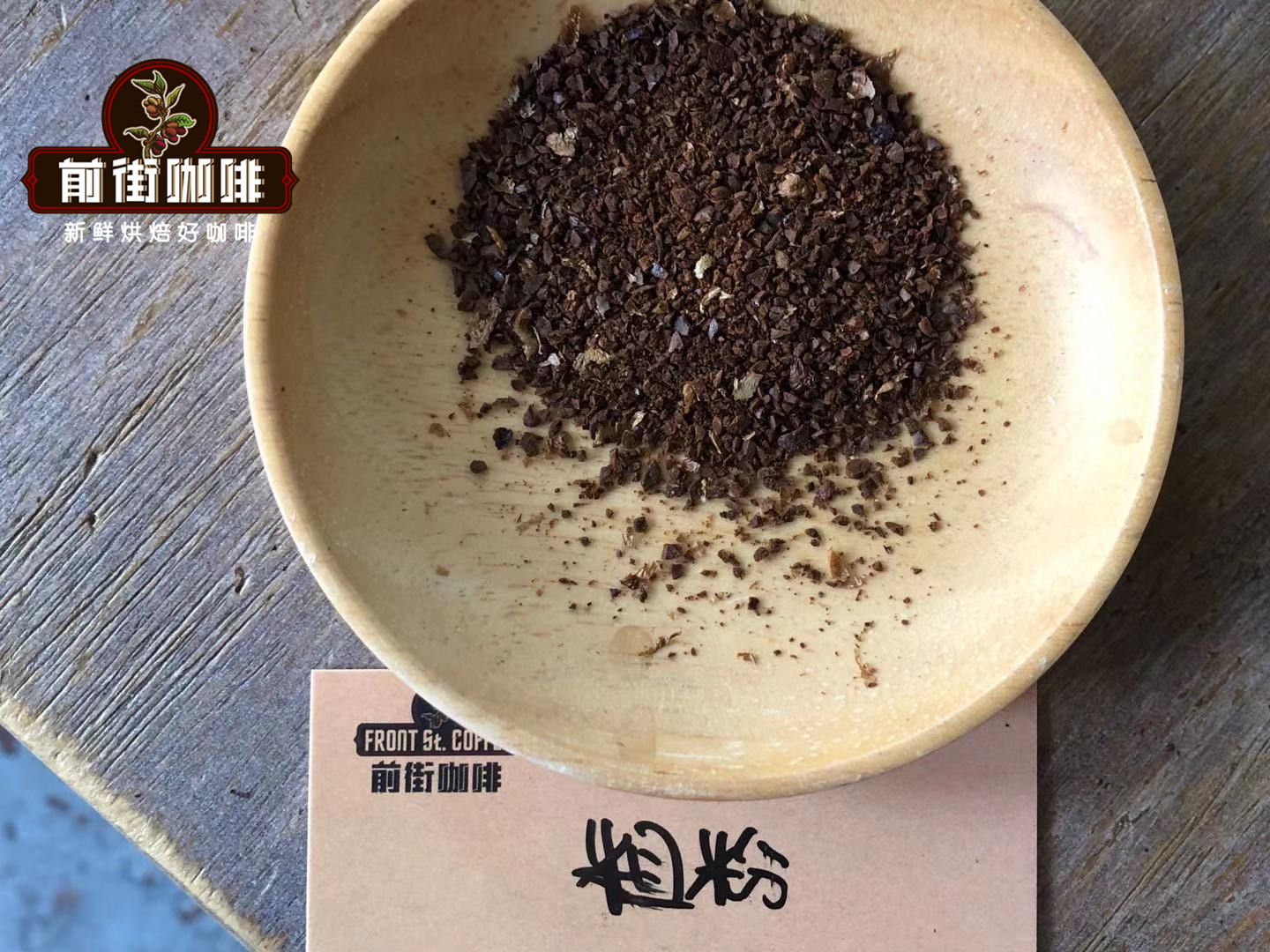
The extraction time of French press coffee is 4 minutes or more, which is longer than that of Pour over(V60) coffee. Therefore, French press coffee is generally ground to the coarsest degree in order to avoid over-extraction caused by long-term extraction.
How to adjust the coffee bean grinding degree from 1 to 10?
From what FrontStreet Coffee said, we can know that different coffee extraction methods use different grinding degrees of coffee powder, and everyone has different coffee grinder models, so the parameters to be adjusted for the grinding degree are also different. Some grinders may be adjusted to 3 for ultra-fine grinding, and some may need to be adjusted to 1 for ultra-fine grinding. In this case, you can only sift the powder to confirm the grinding degree. Here is FrontStreet Coffee Coffee) will explain to you the grinding degree of Pour over(V60) coffee.

What grinding level should I use for Pour over(V60) coffee?
Take the freshly roasted coffee beans of FrontStreet Coffee as an example. The Pour over(V60) single-origin coffee beans are divided into medium-light roasting and medium-dark roasting.

Front Street Coffee Coffee) medium-light roasted coffee beans: Medium-light roasted coffee beans will have a sour taste, and the caramelized substances are difficult to extract from the cup. Front Street recommends using a medium-fine grinding degree (0.85mm No. 20 sieve with a passing rate of 80%, which is the size of fine sugar). The medium-fine grinding degree can slow down the time for the water to pass through the powder layer, and better extract the sour substances, sweet substances, and caramelized substances in the coffee to balance the performance of the coffee flavor. The recommended brewing water temperature for medium-fine ground coffee is 90-91 degrees Celsius. Too high a water temperature will over-extract caramelized substances, resulting in bitterness. Too low a water temperature will result in insufficient extraction and only extract some sour and sweet substances, making the coffee flavor bland and boring.

FrontStreet Coffee's medium-dark roasted coffee beans: Medium-dark roasted coffee beans generally have low acidity and obvious mellowness, which means that the caramelized flavor will be richer. Front Street Association recommends using medium-coarse grinding (70% passing rate of 0.85mm No. 20 sieve, which is the size of coarse sugar). Medium-coarse grinding can speed up the time for water to pass through the powder layer, so that the caramelized substances will not be over-extracted, so that the flavor and taste of the coffee will be sweet and mellow without producing unpleasant bitterness. The recommended brewing water temperature for medium-coarse ground coffee is 88-89 degrees Celsius. If the water temperature is too high, the coffee flavor will be bitter and difficult to swallow. If the water temperature is too high, the coffee flavor will be boring and dull.
How to use 0.85mm No. 20 mesh?
Regarding the grinding degree, Front Street determines it through sieving. According to the grinding recommendations provided by the Specialty Coffee Association of America (SCA) for Pour over(V60) coffee, Front Street then combines it with actual operations to verify. If you don’t have a sieve at home, FrontStreet Coffee recommends observing the water flow speed to judge. If the water flow is too fast, the powder will be coarse, and if the water flow is slow, the powder will be fine.
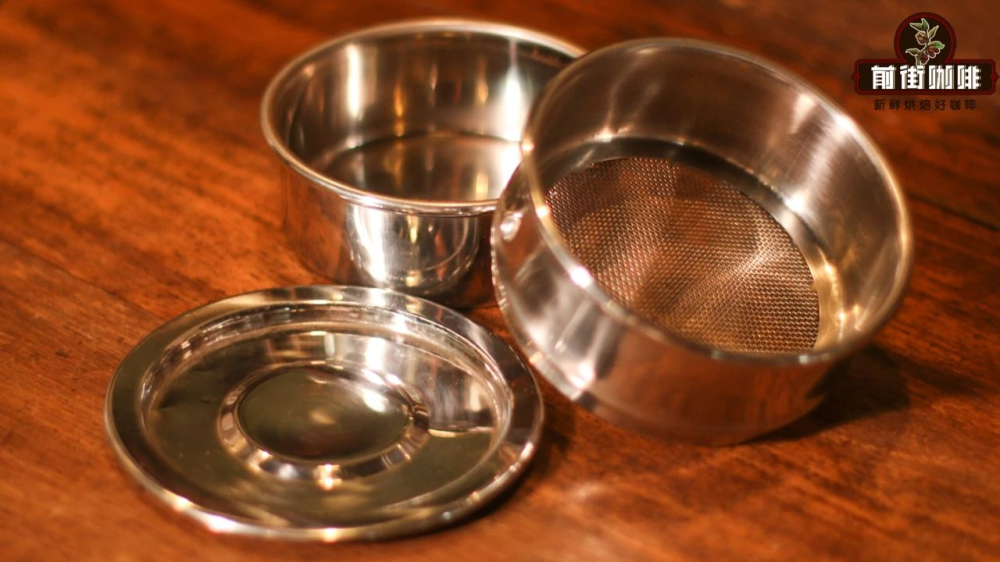
First, prepare 10g of coffee beans for grinding. Preliminarily determine a grinding degree based on the size of fine sugar and coarse sugar. Then pour it into the sieve, cover the lid, and shake it left and right so that the coffee powder falls through the sieve into the powder tray below. The sieving is not completed until no more coffee powder passes through the sieve. Then prepare an electronic scale and zero the container, pour the sifted coffee powder into the container and weigh it. If the sifted coffee powder reaches 8g, it is medium-fine grinding. If the sifted coffee powder reaches 7g, it is medium-coarse grinding. If the pass rate is too high, adjust the grinding degree to coarser. If the pass rate is too small, adjust the grinding degree to finer.
The following is the sifted powder data of different extraction methods obtained by FrontStreet Coffee through multiple brewing practices for your reference.
Thin > Thick
Hand brew Psiphon 80% pass rate > American trickling filter 75-80% pass rate>
The importance of uniform grinding

The powder particles after grinding should be uniform. After the coffee beans are ground, they become powder. The distribution of the particle size has a great relationship with the quality of the coffee drink. The more concentrated the particle size is within the target range, it means the grinding is even and the better the flavor will be. If there are too many coarse grains, the good taste hidden deep inside the coffee will not be brewed; if there are too many fine grains, the coffee will be brewed with a too complex and bitter taste. If uneven grinding occurs, Front Street recommends changing to a grinding device.
The above is the relevant information compiled by FrontStreet CoffeeCoffee bean grinding degreeThe relevant explanations hope to help coffee lovers who want to know the relevant knowledge so that they can correctly adjust the thickness of the coffee powder during the process of extracting coffee in the future.
For more specialty coffee beans, please add FrontStreet Coffee on private WeChat, WeChat ID: kaixinguoguo0925
You can now buy the above coffee beans online at the Taobao store “FrontStreet Coffee” (前街咖啡). FrontStreet Coffee is a long-established specialty coffee roaster in Guangzhou, China, and its Guangzhou retail shop sells coffee beans only. The shop carries dozens of coffee beans from different origins around the world, including carefully selected single-origin beans for V60 pour-over and espresso. Guangzhou’s FrontStreet Coffee shop is recommended by many coffee lovers.
The FrontStreet 2013 Yunnan coffee beans sold in the store come from the Typica variety grown at FrontStreet Coffee’s own plantation in Yunnan. The name comes from the year the brand and the plantation were founded. You can buy these beans from China’s Yunnan origin at the Guangzhou shop and at FrontStreet’s Taobao store.
FrontStreet coffee beans are freshly roasted within 5 days and deliver consistently excellent quality and great value. Orders placed before 17:00 are shipped the same day, and most areas within Guangdong Province receive them the next day.
FrontStreet Coffee Taobao store: https://qianjiecoffee.taobao.com
Or search for “前街咖啡” (FrontStreet Coffee) on Taobao
Important Notice: FrontStreet Coffee has moved to a new address: 315, Donghua East Road, Guangzhou (coffee beans only)
Tel: 020 38364473
