
"Excuse me, what is the grinding degree for Pour over(V60) coffee?", "Why is the 10-grade grinding of your machine different from the 10-grade grinding of mine?", "Is the size of the sugar fine, coarse, or brown?"... Are you still worried about the grinding degree suitable for your coffee brewing equipment? An article on Front Street will help you determine the grinding thickness of your coffee! (Collect! Collect! Collect!!)
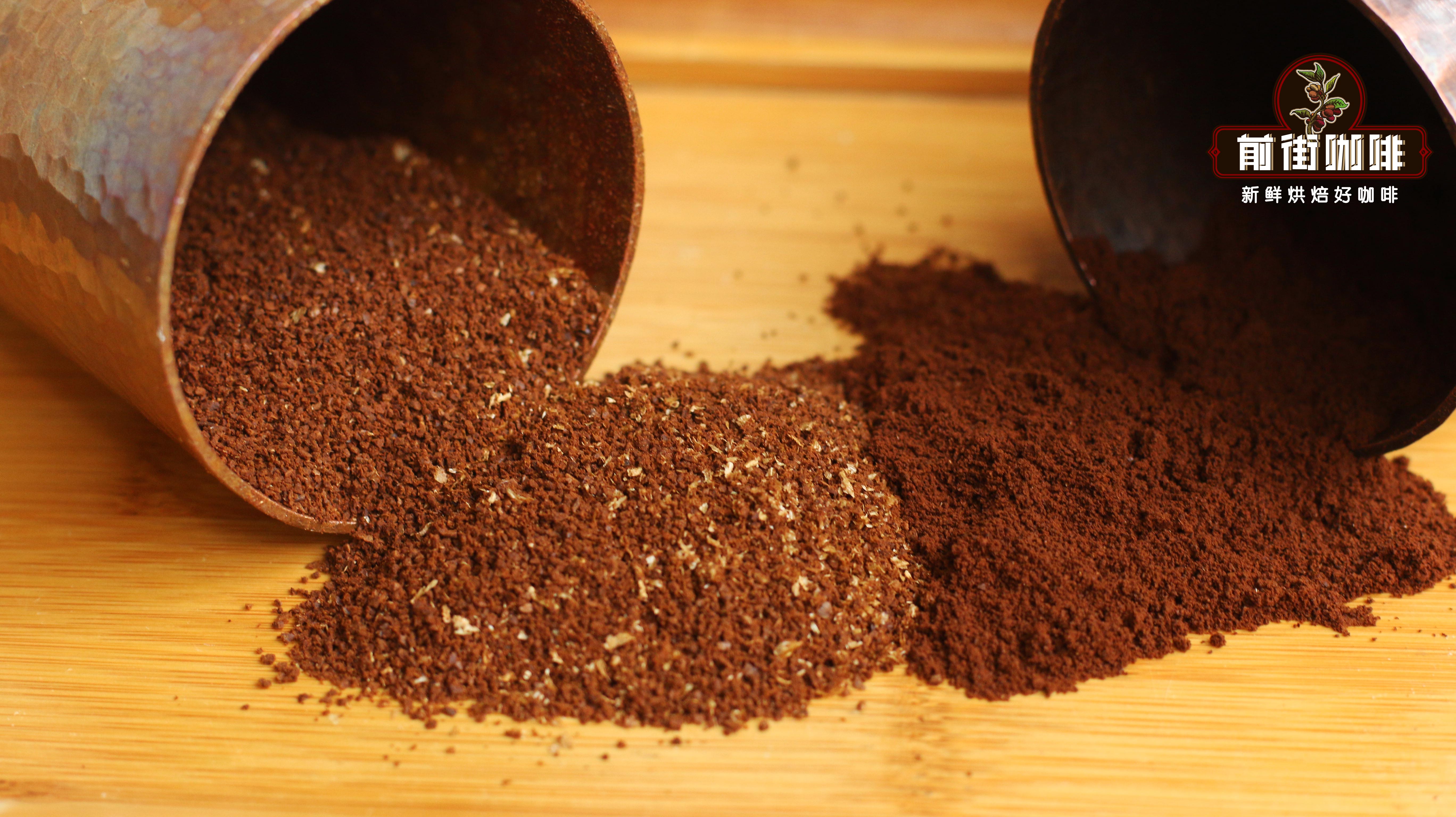
How important is coffee grind size?
At the same grams, the finer the coffee is ground, the more times it needs to be cut, the surface area increases, and the area where water can contact the coffee powder increases. On the contrary, the coarser the grinding degree, the lower the concentration and extraction rate of the coffee, the lower the body, and the stronger the acidity of the coffee.
Different coffee appliances use different grinding degrees due to differences in their extraction methods. There is no unified standard for the grinding scale of coffee grinders, so at this time we need a reliable inspection tool - Chinese Standard No. 20 0.85mm aperture screen/coffee bean grinding cupping calibration screen, which is often referred to as the coffee powder sieve in the front street.

How to use a coffee grinder sieve to determine the fineness of your coffee grind?
Friends who read carefully will ask: Why is it a cupping correction screen? Although there are various brewing appliances on the market, each one has its own opinions on brewing parameters. As with most powder diameter determinations. There will be a special sieve as a tool for thickness measurement. Later, everyone will also use cupping to determine the coffee flavor and determine the brewing parameters suitable for the sample. Generally speaking, the grinding degree for cupping coffee is 70-75% passing through the No. 20 mesh.
The method of use is also very simple: when determining the grinding degree, Front Street will use 10g of coffee beans for a rough grind, then pour it into the middle sieve, cover it and shake it horizontally until no coffee particles fall from the sieve into the lower bowl. Then the coffee particles that pass through the sieve are weighed, and the weight obtained is the passing rate. That is, 7g-7.5g of 10g of coffee passes through the sieve. Then the grinding degree is 70-75% of the passing rate of No. 20 sieve. The finer the coffee particles, the higher the pass rate; the coarser the coffee particles, the lower the pass rate.

Commonly used brewing equipment grinding standards & reference chart
Drip extraction/hand-brew coffee grinding size (No. 20 screen passing rate 68-80%)
Applicable to v60, kono, ice pupil, origami filter cup, fan filter cup, cake filter cup, smart cup, American drip filter

Drip brewing is Pour over(V60) coffee. The brewing principle is that water extracts substances through coffee powder and then filters out clean coffee liquid through filter paper. Generally, the brewing time of Pour over(V60) coffee is shorter, so the grinding degree needs to be finer.
Different roasting degrees of coffee beans require different grinding thicknesses. Front Street recommends that the grinding thickness of medium-light to medium-roasted coffee beans should be a No. 20 sieve pass rate of 75-80%; medium-dark roasted coffee beans, such asIndonesian coffee beans、blue mountain coffee, the grinding thickness is 70-75% through No. 20 screen.
Immersion Extraction/French Press Grinding Size (No. 20 Screen Pass Rate 68-75%)

The French press uses immersion mode for coffee extraction. The immersion time is long (4 minutes). In addition, the filter density is high, so the grinding size needs to be coarser. This will reduce over-extraction, and secondly, it can filter coffee particles better. Different roasting degrees of coffee beans require different grinding thicknesses. Front Street recommends that the grinding thickness of medium light-medium roasted coffee beans should be 70-75% through No. 20 sieve; the grinding thickness of medium-dark roasted coffee beans should be 65%-70% through No. 20 sieve.
Low temperature extraction/cold extraction, ice drip coffee grinding size (No. 20 screen pass rate 80-85%)
Low-temperature extraction is different from high-temperature extraction. In an ice-water mixture/refrigerated environment, the extraction efficiency of coffee is very low, so the release rate of flavor substances in coffee powder will also be slower, and the production time will be very long. The advantage of low-temperature extraction is that it can fully extract sweet and sour substances while reducing the extraction of bitter substances.

Due to the slow extraction speed, the coffee grind can be finer, but not too fine. Front Street recommends that the grinding degree of coffee beans for making cold brew/ice drip should be 80-85% through No. 20 mesh. If you want a richer coffee, choose a pass rate of 85%. If you want it to be more refreshing, choose a pass rate of 80%.
If the above work is not available, you can also use a relatively simple method, which is to make it as fine as salt powder, but without water accumulation when flushing.
Pressurized Extraction/Espresso Machine Grind Size
The grinding degree used by espresso machines is very fine, finer than the 0.85mm aperture, so it is impossible to use a No. 20 sieve to determine the grinding degree. Traditionally, Italian powder fineness does not use a scale as the standard for powder diameter, but extraction time.

If you need to determine the grind size used for espresso coffee, you need to extract the grind size through continuous extraction and tasting. Front Street’s espresso extraction plan is to extract 40g of coffee liquid in 28 seconds with 20g of coffee powder (the error is ±1). You can refer to this extraction plan and fine-tune it according to the flavor performance of the espresso.
Steam Pressure Extraction/Moka Pot Coffee Grind Size (Grind size cannot be determined with a No. 20 mesh)
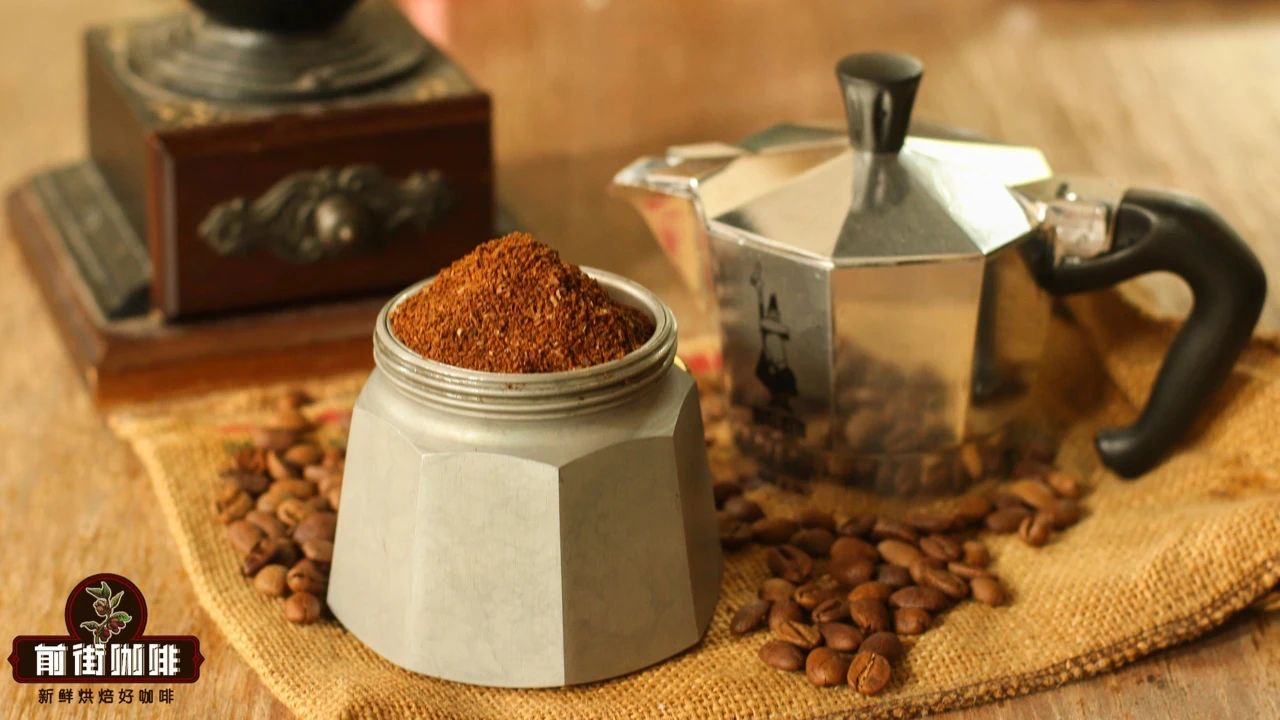
The same is true for the Moka pot. The grinding used is very fine, but it is a little coarser than the grinding of the espresso machine, but it is still finer than the 0.85mm aperture. It is also impossible to use a No. 20 sieve to determine the grinding degree. As for the grinding degree, you can refer to the size of the gap in the moka pot's powder slot to ensure that the coffee particles will not pass through the gap. You can refer to the picture below.
You can now buy the above coffee beans online at the Taobao store “FrontStreet Coffee” (前街咖啡). FrontStreet Coffee is a long-established specialty coffee roaster in Guangzhou, China, and its Guangzhou retail shop sells coffee beans only. The shop carries dozens of coffee beans from different origins around the world, including carefully selected single-origin beans for V60 pour-over and espresso. Guangzhou’s FrontStreet Coffee shop is recommended by many coffee lovers.
The FrontStreet 2013 Yunnan coffee beans sold in the store come from the Typica variety grown at FrontStreet Coffee’s own plantation in Yunnan. The name comes from the year the brand and the plantation were founded. You can buy these beans from China’s Yunnan origin at the Guangzhou shop and at FrontStreet’s Taobao store.
FrontStreet coffee beans are freshly roasted within 5 days and deliver consistently excellent quality and great value. Orders placed before 17:00 are shipped the same day, and most areas within Guangdong Province receive them the next day.
FrontStreet Coffee Taobao store: https://qianjiecoffee.taobao.com
Or search for “前街咖啡” (FrontStreet Coffee) on Taobao
Important Notice: FrontStreet Coffee has moved to a new address: 315, Donghua East Road, Guangzhou (coffee beans only)
Tel: 020 38364473
