
In the history of coffee, the specialty coffee wave and its three waves form people’s basic understanding of coffee. People often compare specialty coffee beans with commercial coffee beans, as if they are opposites. So what is the difference between the two? To understand the difference between the two, you first need to understand the definition of specialty coffee.
Generally speaking, people think that the difference between specialty coffee and commercial coffee beans isThe quality is different. Premium beans must be of better quality than commercial beans, and the price will naturally be higher. At least this is what the market has always taught consumers.
This understanding should be based on the Specialty Coffee AssociationSCAAccording to their cupping system, cupping scores80Those with points above are specialty coffee beans, those with points below are considered specialty coffee beans.80The ones divided are commercial coffee beans. But in fact, apart from competitions or taking the initiative to send samples,SCAwon't rate the beans, what we're talking aboutSCARating, actuallySCAThe scoring method taught during the training, and the scores obtained by the students according to this method. It seemsSCAThis distinction method still has relatively large limitations so far.
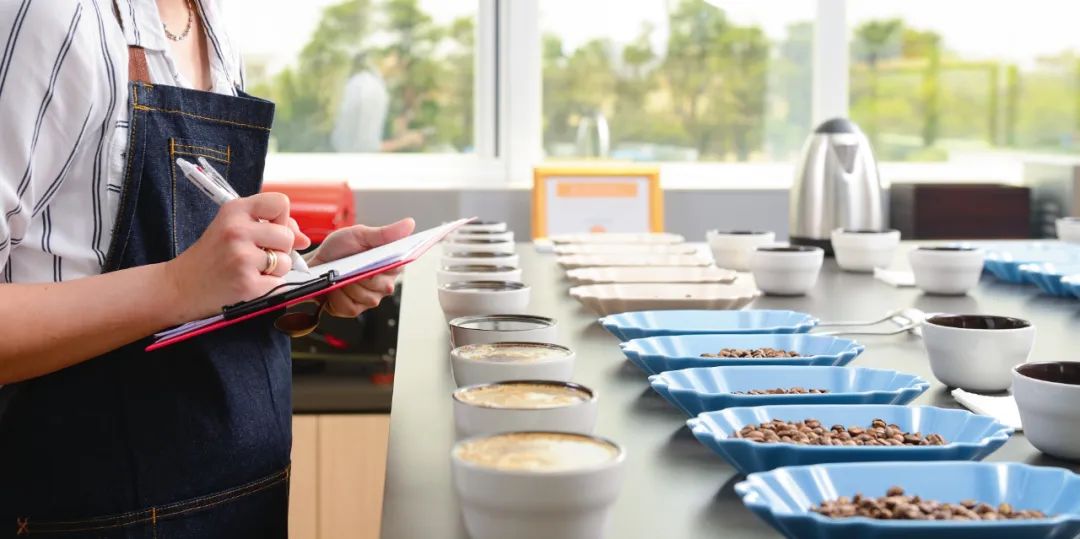
Maybe go back to when the concept of specialty coffee was coined to look for clues. At that time, coffee was already a commodity second only to crude oil. The C-type coffee futures on the New York Coffee Exchange were priced based on the delivery of Arabica coffee beans from 19 countries. Among them, Brazilian coffee had the greatest impact on futures prices.
Specialty coffee, to be precise, the term "Specialty Coffee" was proposed by Ms. Erna Knutsen at the French Coffee International Conference in 1978.
She said that she expressed it this way, "Special geographic microclimates produce beans with unique flavor profiles." "Under the unique microclimate and geographical conditions of the production area, coffee beans with the flavor of the production area are cultivated."
“Specialty"The word means specialty,"Specialty Coffee"It is also called "specialty coffee", which means that the coffee produced in each small place should have the characteristic flavor of the region. However, when it was later translated into Chinese, it became "specialty coffee", and the meaning changed.
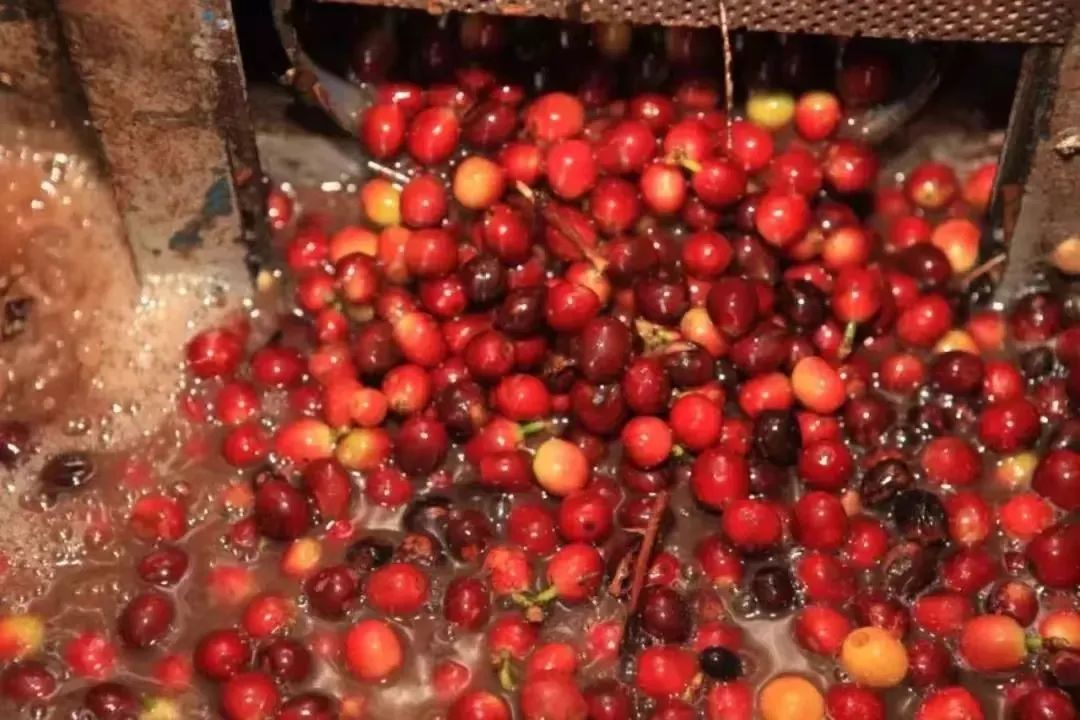
This statement was made mainly because coffee at that time had a market-specified price (futures price). For farmers, output was more important than quality. Moreover, every large production area will mix the coffee beans produced by all farmers, and the flavor will be basically single. Even if there is coffee of the best quality, it will be averaged out.
The idea of specialty coffee is to isolate high-quality coffee beans and purchase them at a price higher than the market price, thereby improving the quality of the coffee beans. After removing the superficial coffee beans, the flavor of the local production area can truly be reflected. That is to say, the flavor of the producing area of Yirgacheffe coffee beans that we often say is citrus and tea flavor. The flavor of Blue Mountain coffee beans is balanced and mellow.
In order to distinguish the two, commodity beans are also called "commercial coffee beans". But in fact, the definition of specialty coffee beans and commercial coffee beans is very vague, and the difference is not as far apart as everyone thinks. Taking the Ethiopian production area as an example, what people call G1 and G2 seem to be two different levels based on the scores. In the Ethiopian production area, both are listed as Q1 for export.
Of course, on some well-known beans that can distance themselves, the flavor will be very different from some other beans. At the level of cooked beans, the quality of coffee beans has been greatly improved, and it also has the flavor of the production area. From the quality, production area flavor characteristics, and the definition of Specialty Coffee, it can also be called specialty beans. This is actually caused by the flavor of the production area. In the same area, the same variety, the same altitude, and the same processing method, the quality is quite close.
Some friends think that “fine beans must sell better than commercial beans.” For example, many friends are suspicious of Ethiopian G1 coffee beans. When many people see uneven sizes in a pack of beans, they think they are mixed with other coffee beans, or use lower-grade coffee beans to pass them off as G1. This is also a big misunderstanding. The grade of coffee is provided to green bean merchants for negotiation. Purchasing raw materials with poor grade means that you need to spend more labor costs to select to meet the requirements of the supply market. Whether it is high-grade or low-grade beans, after layers of selection, the quality that appears in the market has reached a very similar level.
Therefore, in roasting, if you use low-grade beans, it may mean that you need to spend more time selecting. In this case, you will actually be more willing to directly choose high-grade beans. On the other hand, coffee is the economic backbone of various producing countries, and it is not common for low-grade beans to be exported.
Different production areas have their own hierarchies. Some countries use hardness, some countries use size, and Ethiopia uses the number of defective beans. In fact, no matter how high the grade of Ethiopian beans is, it is normal for Ethiopian beans to vary in size, because the grading of Ethiopian green beans is based on the defect rate and there is no requirement for the size of the beans. And because there are so many varieties of coffee in Ethiopia, there are often hundreds of coffee varieties mixed in a forest. They are locally referred to as "native varieties." Since they are different varieties, it is normal for the fruits to be different in size.
Therefore, there is no unified standard for judging whether beans are good or bad. It is more based on each batch of beans. The grade of coffee is more of a reference for green bean merchants when purchasing raw materials. The price of beans considered good or bad in the market at the place of origin is not as huge as people imagine.
Finally, if you are still confused about the concepts of boutique beans and commercial beans, when buying coffee beans, you can buy coffee beans whose production area information can be traced back to manors or small production areas.
You can now buy the above coffee beans online at the Taobao store “FrontStreet Coffee” (前街咖啡). FrontStreet Coffee is a long-established specialty coffee roaster in Guangzhou, China, and its Guangzhou retail shop sells coffee beans only. The shop carries dozens of coffee beans from different origins around the world, including carefully selected single-origin beans for V60 pour-over and espresso. Guangzhou’s FrontStreet Coffee shop is recommended by many coffee lovers.
The FrontStreet 2013 Yunnan coffee beans sold in the store come from the Typica variety grown at FrontStreet Coffee’s own plantation in Yunnan. The name comes from the year the brand and the plantation were founded. You can buy these beans from China’s Yunnan origin at the Guangzhou shop and at FrontStreet’s Taobao store.
FrontStreet coffee beans are freshly roasted within 5 days and deliver consistently excellent quality and great value. Orders placed before 17:00 are shipped the same day, and most areas within Guangdong Province receive them the next day.
FrontStreet Coffee Taobao store: https://qianjiecoffee.taobao.com
Or search for “前街咖啡” (FrontStreet Coffee) on Taobao
Important Notice: FrontStreet Coffee has moved to a new address: 315, Donghua East Road, Guangzhou (coffee beans only)
Tel: 020 38364473
