
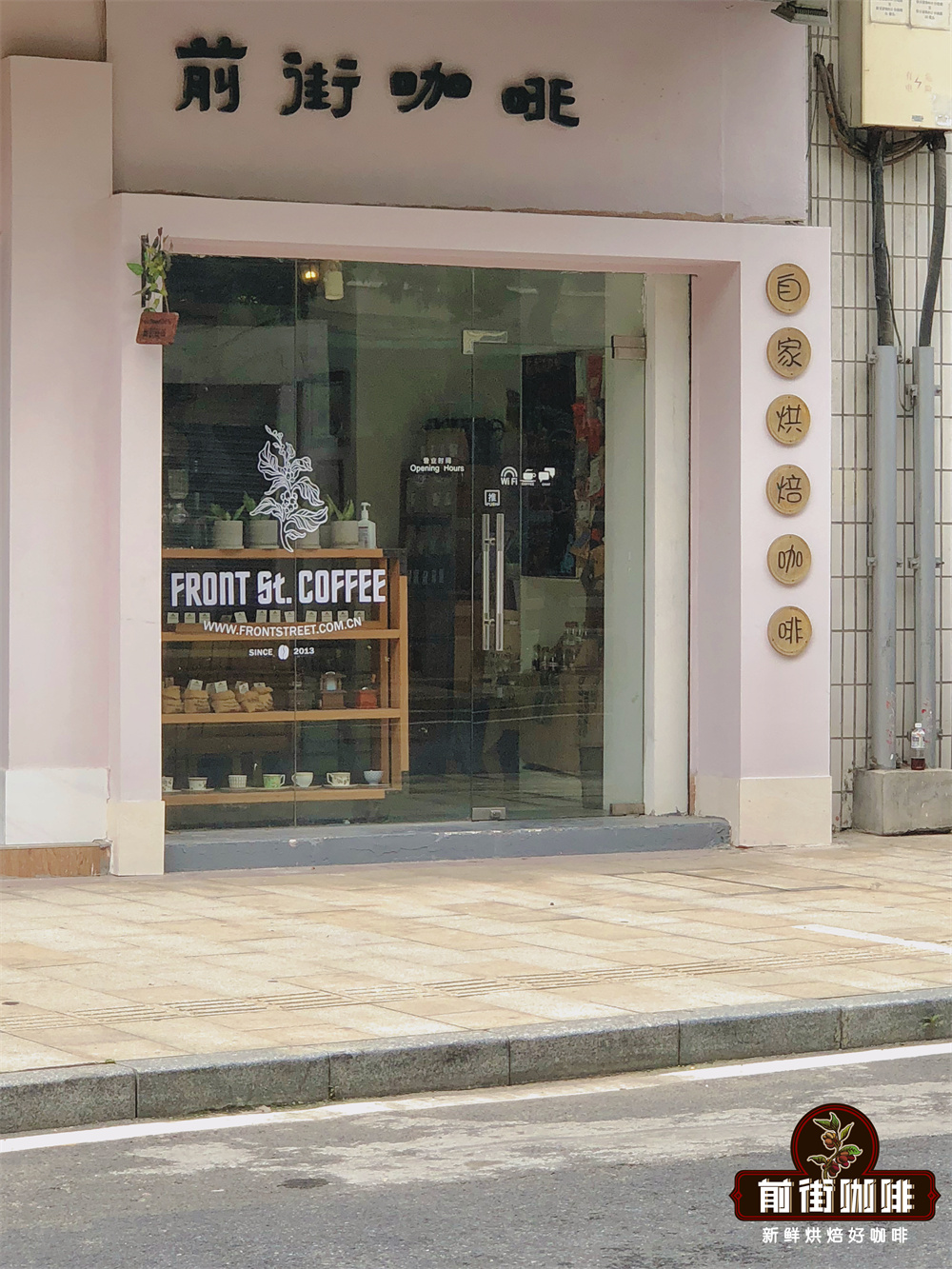
For more knowledge about specialty coffee, please pay attention to: Front Street Coffee (Frontsteet Coffee)
Front Street has its own views on the blending of coffee beans. Because there is a new style of blended beans on Front Street called Sunflower Warm Sun Comprehensive Blend. This blend of coffee beans is a blend of specialty coffees from two different origins, so it can also be used in artisanal coffee. Assembling a blended bean sounds easy, you just need to blend it, but the flavor and taste of the blend must be recognizable to become a unique house brand. The blending principles, flavors, and selling points all need to be considered, otherwise launching a mediocre blended bean would be just self-entertainment. Front Street believes that a good blended bean must have its own characteristics, otherwise it will be completely uncompetitive in the industry.

What are single origin coffee beans?
Single-origin coffee refers to coffee produced from a specific place of origin, a specific production area, and a specific plantation, with a unique and special flavor that reflects the local terroir. For example, FrontStreet Coffee’s Oiran coffee comes from Oiran coffee beans from the Gujibuku processing plant in Sidamo, Ethiopia. During the purchasing process of Single Origin Coffee Club, they are able to check the quality of each batch of green coffee beans. In fact, the definition of single-origin coffee is quite vague, because there is no authoritative and clear international standard. There are four common standards for single-origin coffee: single origin, single variety, single batch, and single processing method.
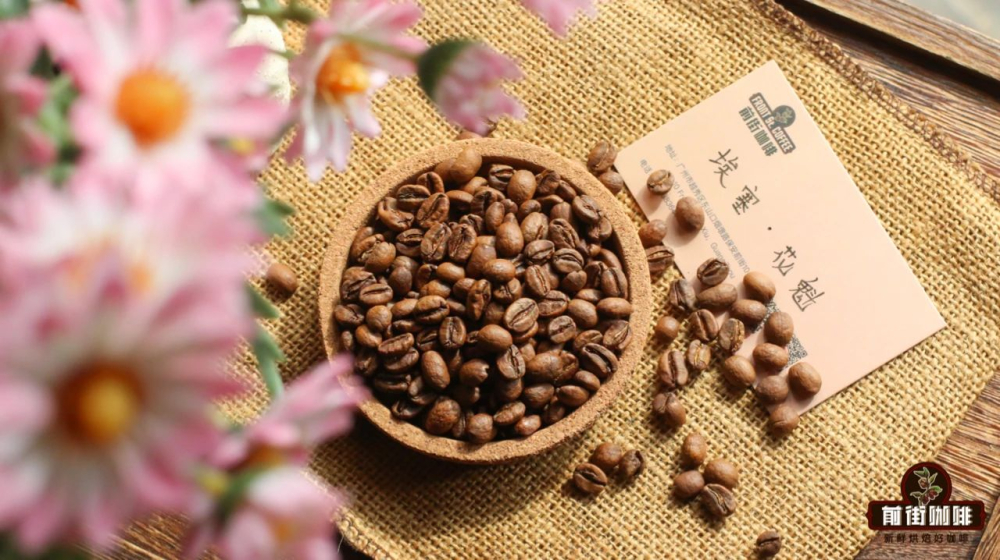
Then some friends will ask: What are the different varieties harvested in a single production area?single origin coffee beans? Front Street will definitely tell you that coffee beans are single-origin coffee beans. Ethiopian coffee varieties have a complex system. Most of them are mixed with different varieties of coffee and are planted and harvested together. This is why Ethiopian coffee beans vary in size. So if a single variety from a single production area is mixed with different processing methods, is it a single-origin coffee? That's for sure. Front Street recently purchased a coffee bean from El Salvador's Chocolate Lover Estate. This bean is made from bourbon coffee from the same estate, 50% washed and 50% processed with black honey, in order to reflect the chocolate flavor of the production area. Since it comes from the same estate, this bean is a single-origin coffee bean.
What are coffee bean blends?
Blend coffee, also known as comprehensive coffee, is to mix various single-origin coffee beans together to combine varioussingle origin coffee beansThe specialty of the coffee is fully brought into play, and the comprehensive blend of beans is blended from coffee beans from different origins to create a more balanced taste. For example, if a kind of coffee bean is smooth but lacks aroma, another bean with rich aroma is added, and the advantages of individual coffee beans are complemented by each other. The taste may be complementary or enhanced, thereby creating a new and richer taste of coffee. Sometimes the beans are mixed first and then roasted, which is called raw blending; sometimes the coffee beans are roasted and then mixed, which is called cooked blending. In order to stabilize the flavor of the blended coffee, Front Street roasters use medium-dark roasting.

Four principles for blending espresso beans
(1) FrontStreet Coffee’s purpose for blending coffee beans:
1. Reduce costs
Some cafes will use lower-quality coffee beans mixed with better-quality coffee beans to reduce costs and increase sales profits.
2.Stable flavor
Since coffee beans are a type of crop, even the same kind of coffee beans will have different flavors from year to year, so blending several coffee beans together solves this problem and keeps the taste basically the same every year.
3. Create flavors that cannot be produced by a single coffee bean
Coffee beans from the same origin are like a person, with both strengths and weaknesses, and blending is like organizing a team to use their strengths to make up for each other's weaknesses, so as to achieve the effect of complementing each other.
4. Balance the taste
Since one of the characteristics of espresso machines is that they amplify the most prominent flavor characteristics of coffee beans, we almost never use a single variety of coffee to make Espresso. Otherwise, if the coffee beans are bitter, the Espresso will be extremely bitter, and if it is too sour, it will be very sour. So we need to balance the various flavors through blending
(2) Determine the target flavor
Once we have determined the purpose, the next step is to determine the target flavor of the blended coffee beans. Only by clarifying the goal can we know where we need to start. At the same time, it also tests the blender’s understanding of the existing coffee beans and the flavor of the coffee producing areas. Just like the Warm Sun Blend coffee beans used by FrontStreet Coffee for espresso. When FrontStreet originally blended this coffee bean, they wanted the flavor of the espresso to be less ordinary and wanted an espresso with a wine aroma, so they used sherry coffee beans fermented in whiskey barrels from Honduras to provide the aroma of wine, and sun-dried red cherries from Ethiopia to provide acidity and fermentation.
(3) Determine the blending type
mentioned aboveBlend coffeeThere are raw blending and cooked blending, so what are the advantages and disadvantages of the two blending methods of coffee beans? Front Street believes that the advantage of Shengpin is that the same roasting level can be used to make the coffee stable and uniform. Secondly, the number of roasting times can be reduced, and it can be roasted in one time, which improves efficiency. The same roasting level can also greatly reduce the difficulty of quality control (for the same roast, you can only focus on one bean raising date, but Shengpin is prone to several blending combinations of beans with different roasting dates, resulting in taste differences). At the same time, the shortcomings of raw blending are also very obvious. The limitations of raw blending are very large. Generally, raw blending recommends several beans with a relatively close density of coffee beans. For example, if a coffee bean suitable for light roasting and a coffee bean suitable for dark roasting are mixed together to roast the same roasting degree, the situation of 1+1<1 will easily occur.
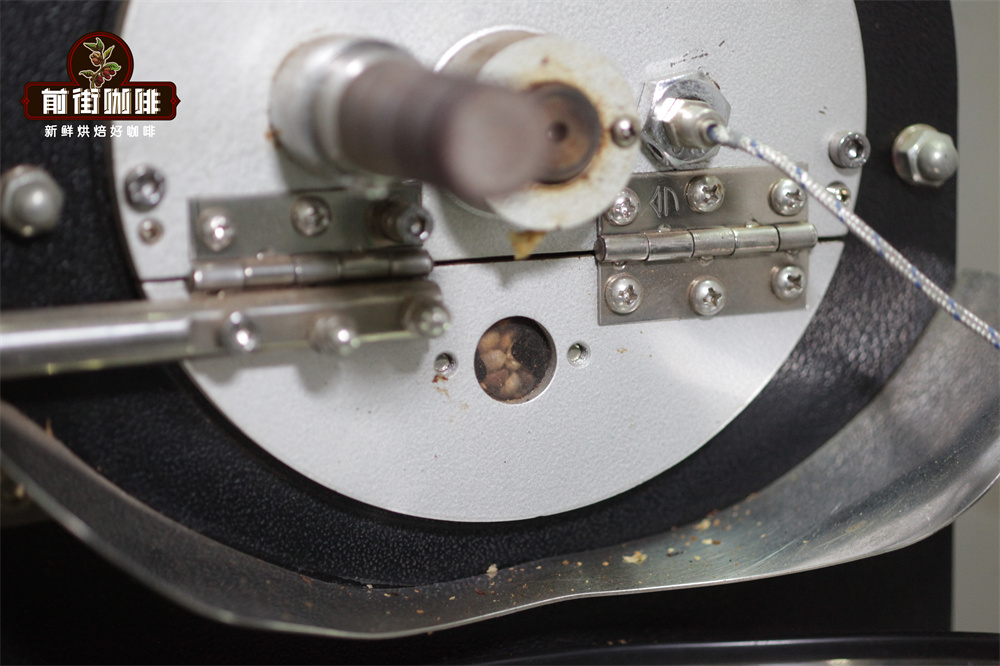
Front Street believes that the advantage of cooked roasting is that each bean can be roasted according to the optimal roasting degree, maximizing the characteristics of each bean. However, the disadvantage of cooked coffee beans is that daily quality control and management will be more difficult. Inconsistent roasting dates require more attention to the bean-raising period. Imagine using 4 to 5 coffee beans to make cooked coffee beans. This product requires attention to 4 to 5 roasting dates. FrontStreet Coffee adopts a ripe blending method when roasting the warm sun blend, roasting Honduran sherry barrel coffee beans and sun-dried Yirgacheffe red cherries separately to maximize the wine aroma of the sherry barrel coffee beans and retain as much as possible the fruity acidity and citrus berry aroma of the other sun-dried Yirgacheffe.
(4) Determine the blending ratio
The first is to blend the flavor and quality of candidate coffee beans. Before blending, you must first confirm whether the quality of the coffee is up to standard and whether there is any difference in flavor. This step is very important for blending a boutique-grade coffee bean. The second is to pre-confirm the proportion. After extraction, extract the coffee liquid from the coffee liquid and mix it in different proportions. Combine and design several plans with different proportions, and confirm an optimal range by sipping.
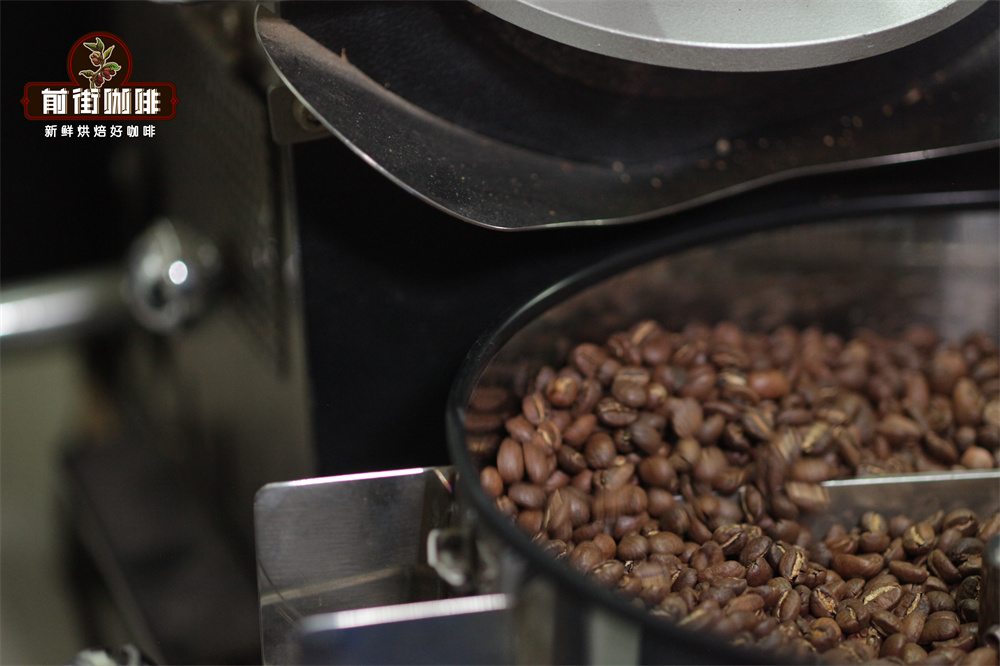
The final confirmation is to bake the range values in the pre-confirmation according to the blending type confirmed in the third part (raw or cooked). And taste directly using the extraction mode of product positioning. FrontStreet Coffee's Nuanyang blend of coffee beans just mentioned. In order to highlight the wine aroma in the espresso, sherry coffee beans from whiskey barrels will account for 60% of the blend, and sun-dried red cherries will increase the smoothness of the coffee, and the fermentation has already made it sour, so it accounts for 40%.
How does FrontStreet Coffee hand-brew single-origin coffee beans?
This time Front Street used sun-dried red cherries from Yirgacheffe, Ethiopia, for a brewing demonstration.
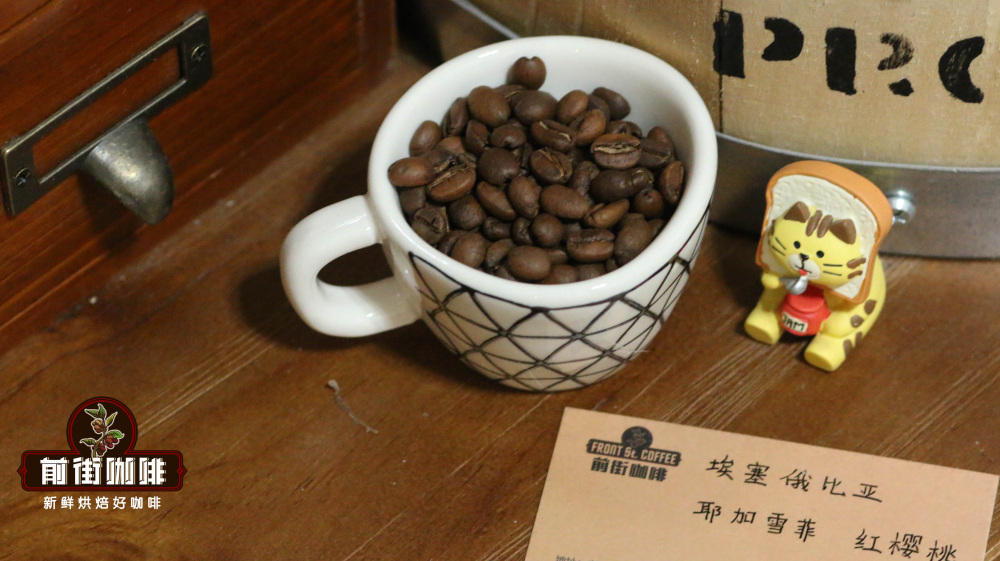
Origin: Yirgacheffe, Ethiopia
Altitude: 1700-2200m
Treatment method: Sun treatment
Variety: Ethiopian native variety
In order to highlight the acidity of the berries of this coffee bean and the fermentation and sweetness brought about by sunlight, FrontStreet Coffee uses a v60 filter cup to brew this coffee bean.
Pink to water ratio: 1:15
Grinding degree: medium to fine grinding (pass rate of No. 20 screen 80%)
Water temperature: 90-91 degrees

Front Street Coffee Coffee) adopts segmented extraction, also called three-stage brewing: use 30 grams of water to steam for 30 seconds, add water in a small circle to 125 grams, then segment. When the water level drops and the powder bed is exposed, continue to pour water to 225 grams and stop pouring water. When the water level drops and the powder bed is exposed, remove the filter cup. (Steaming starts timing) The extraction time is 1'55"-2'05".
Brewing flavor:Lemon, licorice, tangerine, berry, sweet orange, the overall sweetness is relatively high, the aftertaste has the flavor of caramel and cream, and the aftertaste has the aroma of black tea.
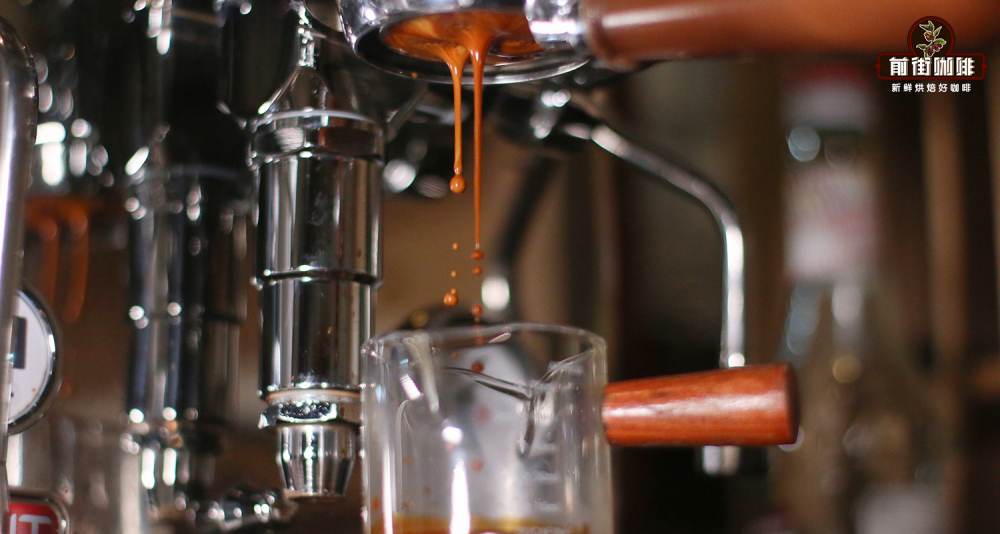
How does FrontStreet Coffee extract espresso?
This time Front Street used Nuanyang blended coffee beans for a concentrated extraction demonstration.

Amount of coffee powder: 19 grams
Coffee liquid type: 40 grams
Extraction time: 30 seconds
Grinding degree: Pegasus 900N#2
Flavor: Smooth taste, obvious acidity in the entrance accompanied by a light berry aroma, whiskey aroma and rich chocolate flavor, with a clear sweet aftertaste.
You can now buy the above coffee beans online at the Taobao store “FrontStreet Coffee” (前街咖啡). FrontStreet Coffee is a long-established specialty coffee roaster in Guangzhou, China, and its Guangzhou retail shop sells coffee beans only. The shop carries dozens of coffee beans from different origins around the world, including carefully selected single-origin beans for V60 pour-over and espresso. Guangzhou’s FrontStreet Coffee shop is recommended by many coffee lovers.
The FrontStreet 2013 Yunnan coffee beans sold in the store come from the Typica variety grown at FrontStreet Coffee’s own plantation in Yunnan. The name comes from the year the brand and the plantation were founded. You can buy these beans from China’s Yunnan origin at the Guangzhou shop and at FrontStreet’s Taobao store.
FrontStreet coffee beans are freshly roasted within 5 days and deliver consistently excellent quality and great value. Orders placed before 17:00 are shipped the same day, and most areas within Guangdong Province receive them the next day.
FrontStreet Coffee Taobao store: https://qianjiecoffee.taobao.com
Or search for “前街咖啡” (FrontStreet Coffee) on Taobao
Important Notice: FrontStreet Coffee has moved to a new address: 315, Donghua East Road, Guangzhou (coffee beans only)
Tel: 020 38364473
