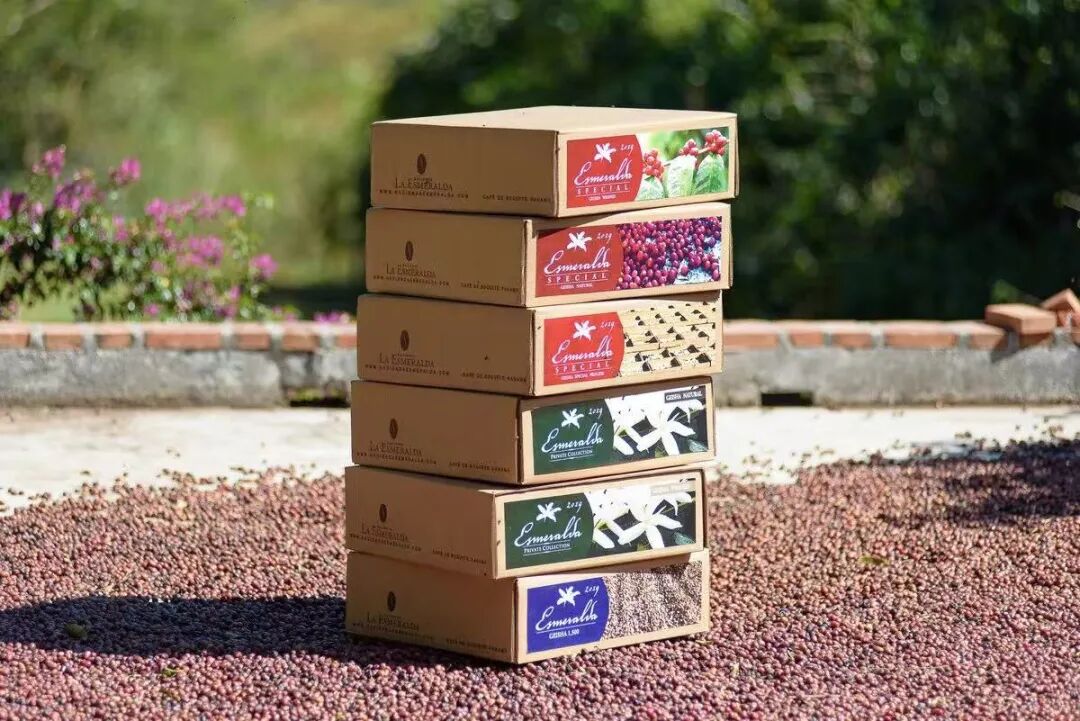
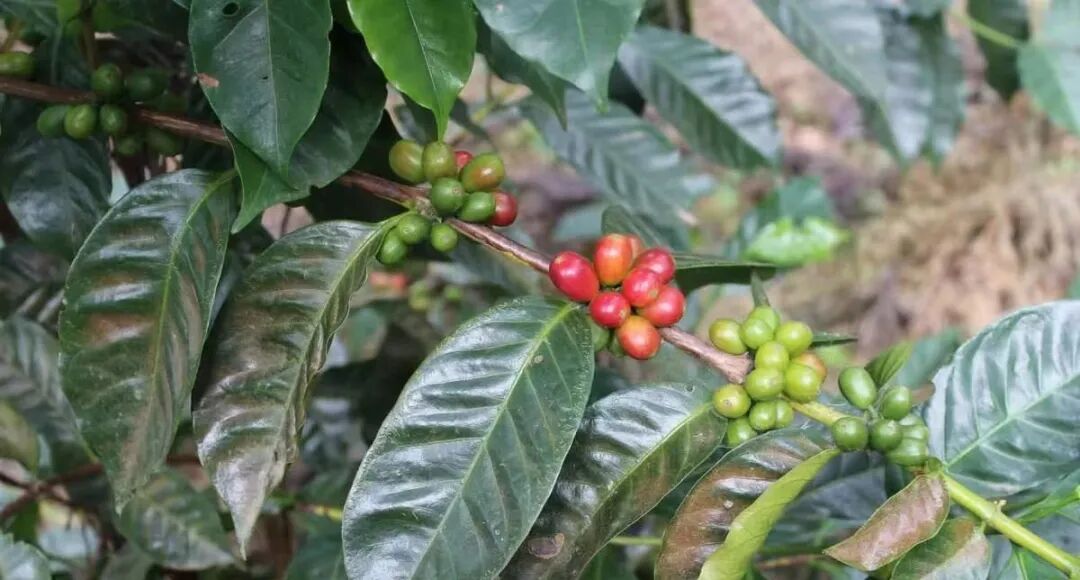
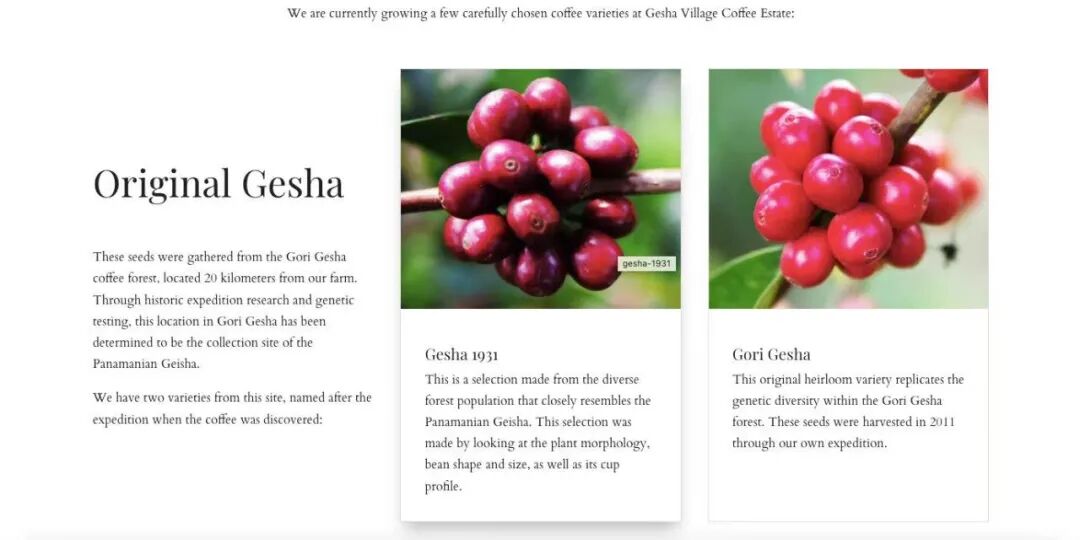
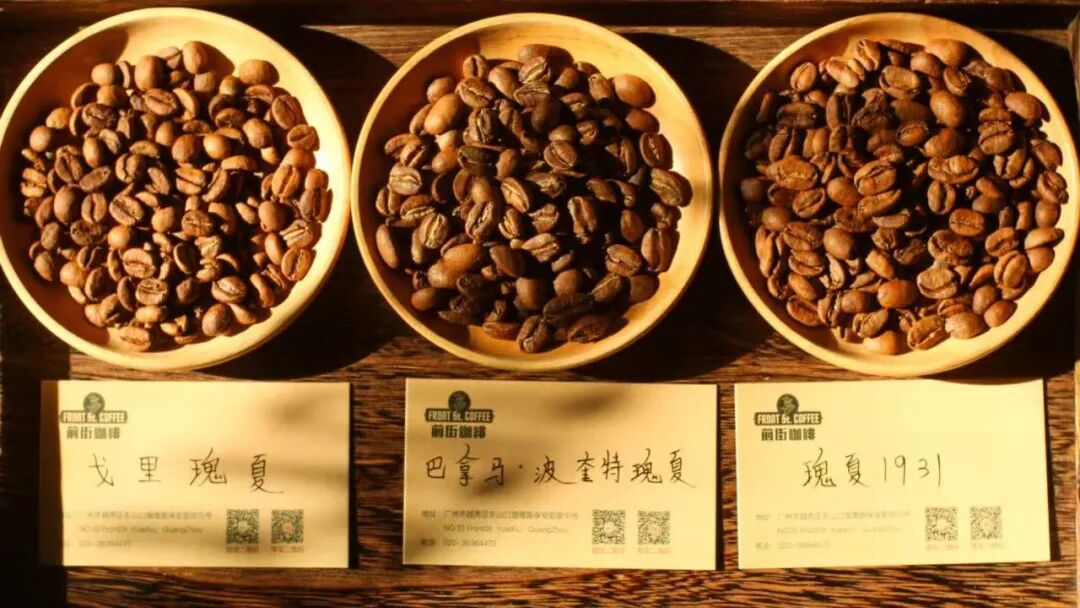
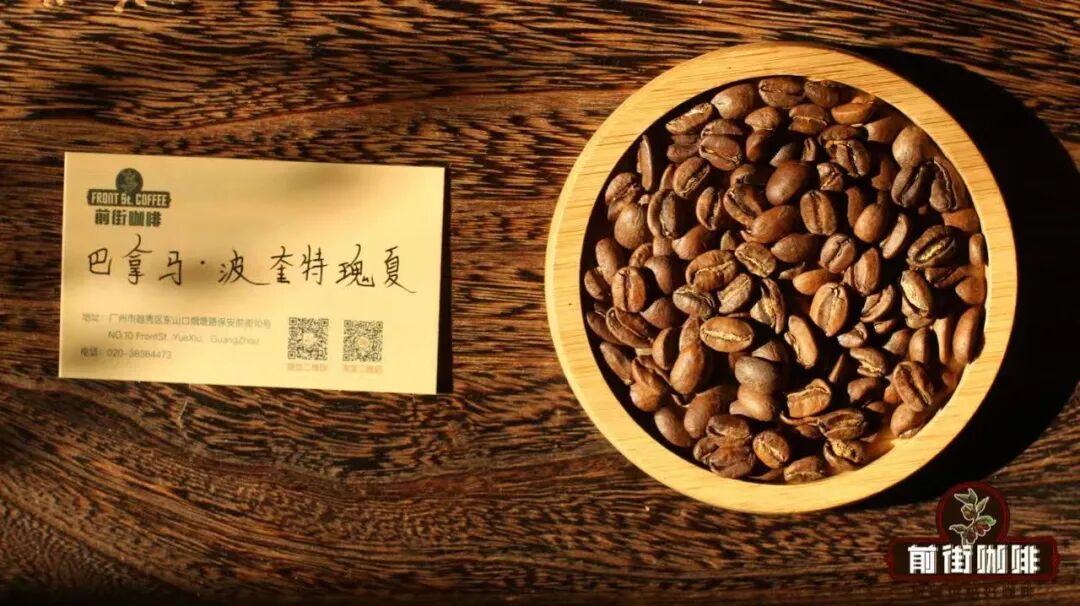
Many friends have discovered this phenomenon: whenever everyone chats about Gesha coffee, although the corresponding production area is not mentioned, the first thing that often comes to mind is Gesha from Panama; or when talking about Panama coffee, they will directly default to the Gesha variety; even more, they will directly put a bracket after the name of Gesha to emphasize that it is Panama.It’s as if the Geisha variety is deeply tied to the Panama production area.But this is indeed the case! This is not only because Panama is the production area that promotes Gesha, but also has a certain relationship with the emergence of Gesha in Ethiopia! So today, Front Street will share with you why the Geisha breed always emphasizes Panama, and what is its relationship with Panama and Ethiopia! So first, let’s review how Geisha flourished in Panama!Although Gesha became world-famous in 2004, it was actually discovered 73 years ago in 1931. In 1931, in order to find disease-resistant coffee varieties that could be grown commercially on a large scale,Border Garrison Colonel Richard Whalle and his party went deep into the Kaffa Forest in southwestern Ethiopia to collect samples for study. Gesha was one of the varieties they collected in a nearby forest and was named after the incorrect translation of the local name "Gesha".Geisha then traveled to Kenya, Uganda, Tanzania and other research institutes to cultivate and test varieties, and in 1953, it went to the Tropical Plant Research Center CATIE in Costa Rica. There, it was included as an antifungal variety and received the serial name "T2722". Many local farms have related planting records.But it is a pity that Gesha's potential was not discovered at that time, which can be said to be bad luck. Although the Geisha variety has strong disease resistance, its yield is not high, only one-half of that of the conventional Arabica variety. In that era where quantity was the key to victory, the low yield was not favored by coffee farmers, so Geisha was not widely planted at that time.It was not until the 1960s that CATIE gave Geisha to coffee farmers in Panama, and Geisha officially entered the paradise. But just stepping into the paradise is not enough. It is said that there is a Bole in the world, and then there is a thousand-mile horse. Gesha's potential also needs a Bole to be discovered. And this Bole was the one who allowed Geisha to compete in the BOP event in 2004 and become famous - Jade Manor!It is not too late to plant Geisha in Emerald Estate, but in the early days, Geisha was only mixed with other varieties on the estate. It was not until the 1990s that the arrival of leaf rust gave Geisha its reputation.Notice the opportunity.Because most of the coffee on the estate was infected with leaf rust at that time, only Geisha was not affected too much. Daniel Peterson(Daniel Peterson)noticed this particular breed and developed a keen interest in it. So he transplanted Geisha to more high-altitude areas and established independent plots for planting.A better growing environment allowed Geisha to break through the upper limit, and then it amazed with its extremely outstanding flavor performance in the 2003 Jade Manor cupping test.Peterson family: Rich white floral aroma, clean green tea finish, with round acidity of berries, citrus, and bergamot, this is the amazing flavor of Gesha.As a result, everyone who was amazed by Gesha immediately decided to send it to the 2004 BOP(Best of Panama)After participating in the competition, as everyone knows, Geisha shined at the BOP, which not only made itself and Jade Manor famous, but also made the white floral, citrus, honey and other flavors that dominated the BOP at the time become the classic flavor of Geisha, that is, the "Geisha flavor".After 2004, Geisha won the BOP championship for three consecutive years and became the variety with the highest bidding price in history. This made more and more people want to own Geisha. So some of them started a dream-chasing journey, going to the place where the British expedition discovered Geisha in an attempt to find the Gesha species.Adam Overton, the manor owner of Gesha Village, can be said to be the first person to realize his vision. After going through all kinds of hardships, he finally found "Gori Gesha" and "Gesha 1931" in the surrounding forest, which are similar to Gesha.(T2722)The relatively similar varieties were then specially cultivated and sold in the Gesha Village estate established in the Chimaji production area in Ethiopia.With the Gesha sales at Gesha Village Estate, many people have glimpsed the business opportunities. As long as the varieties are named in the same way, basically all varieties produced in that forest can be named Gesha. After acquiring the name Geisha, its fame and sales will increase exponentially.Then the ending is that as we can see, there are many kinds of Geisha on the market. They are not T2722, the antifungal variety that was "tamed" in Panama, and their flavors are very different. However, the same naming method has given them the title of Geisha, and their fame and sales have been rising.In order to distinguish the T2722 Geisha variety that was purified and flourished in Panama from them, people began to put notes on Geisha. For example, Front Street often writesPanama GeishaWhen appearing on the same stage as Ethiopian Gesha, note after Panamanian Gesha(T2722). The World Coffee Research Organization also notes Panama after the Geisha T2722 to indicate that it is a variety purified in Panama.So everyone can know that the reason why the Gesha variety emphasizes Panama is not to say that the Gesha grown in Panama will taste better, but to indicate that this Gesha is a purified variety in Panama.If you want to taste itWhen it comes to the legendary "Gesia flavor", Front Street will suggest giving priority to Geisha from the Panama production area. Because although Geisha is now grown in other production areas, we need to know that coffee is a crop, and its flavor is not only affected by the genes of its own variety, but also affected by the terroir where it is grown.The flavor characteristics of different production areas are completely different. Even the same variety will have different flavor expressions due to different production areas. Therefore, compared to Geisha grown in other production areas, the Panama production area that made Geisha famous will allow you to experience the "legendary Geisha flavor" better. For example, the Front Street Panama Poquette Geisha on the Front Street Bean List is a very good choice~
You can now buy the above coffee beans online at the Taobao store “FrontStreet Coffee” (前街咖啡). FrontStreet Coffee is a long-established specialty coffee roaster in Guangzhou, China, and its Guangzhou retail shop sells coffee beans only. The shop carries dozens of coffee beans from different origins around the world, including carefully selected single-origin beans for V60 pour-over and espresso. Guangzhou’s FrontStreet Coffee shop is recommended by many coffee lovers.
The FrontStreet 2013 Yunnan coffee beans sold in the store come from the Typica variety grown at FrontStreet Coffee’s own plantation in Yunnan. The name comes from the year the brand and the plantation were founded. You can buy these beans from China’s Yunnan origin at the Guangzhou shop and at FrontStreet’s Taobao store.
FrontStreet coffee beans are freshly roasted within 5 days and deliver consistently excellent quality and great value. Orders placed before 17:00 are shipped the same day, and most areas within Guangdong Province receive them the next day.
FrontStreet Coffee Taobao store: https://qianjiecoffee.taobao.com
Or search for “前街咖啡” (FrontStreet Coffee) on Taobao
Important Notice: FrontStreet Coffee has moved to a new address: 315, Donghua East Road, Guangzhou (coffee beans only)
Tel: 020 38364473