

When it comes to Ethiopian coffee, Front Street believes that many friends will immediately think of washed Yirgacheffe coffee, because Yirgacheffe coffee’s bright citric acid, citrus notes, and fresh floral fragrance are endless aftertaste. It is easy for people to mistakenly think that Ethiopia only has one production area, Yirgacheffe, or only washed coffee. In fact, this is not the case. Yirgacheffe and Sidamo are the most famous specialty coffee producing areas in Ethiopia.
The flavor of washed Yirgacheffe coffee is endless. Of course, you can tell it is washed at a glance. Among Front Street’s ration beans, washed Yirgacheffe coffee is the best-selling, and Front Street believes that washed coffee has the cleanest and brightest flavor, and best reflects the essential flavor of local coffee. Therefore, almost all Front Street Coffee’s ration beans use washed coffee beans to represent the coffee characteristics of each producing country.
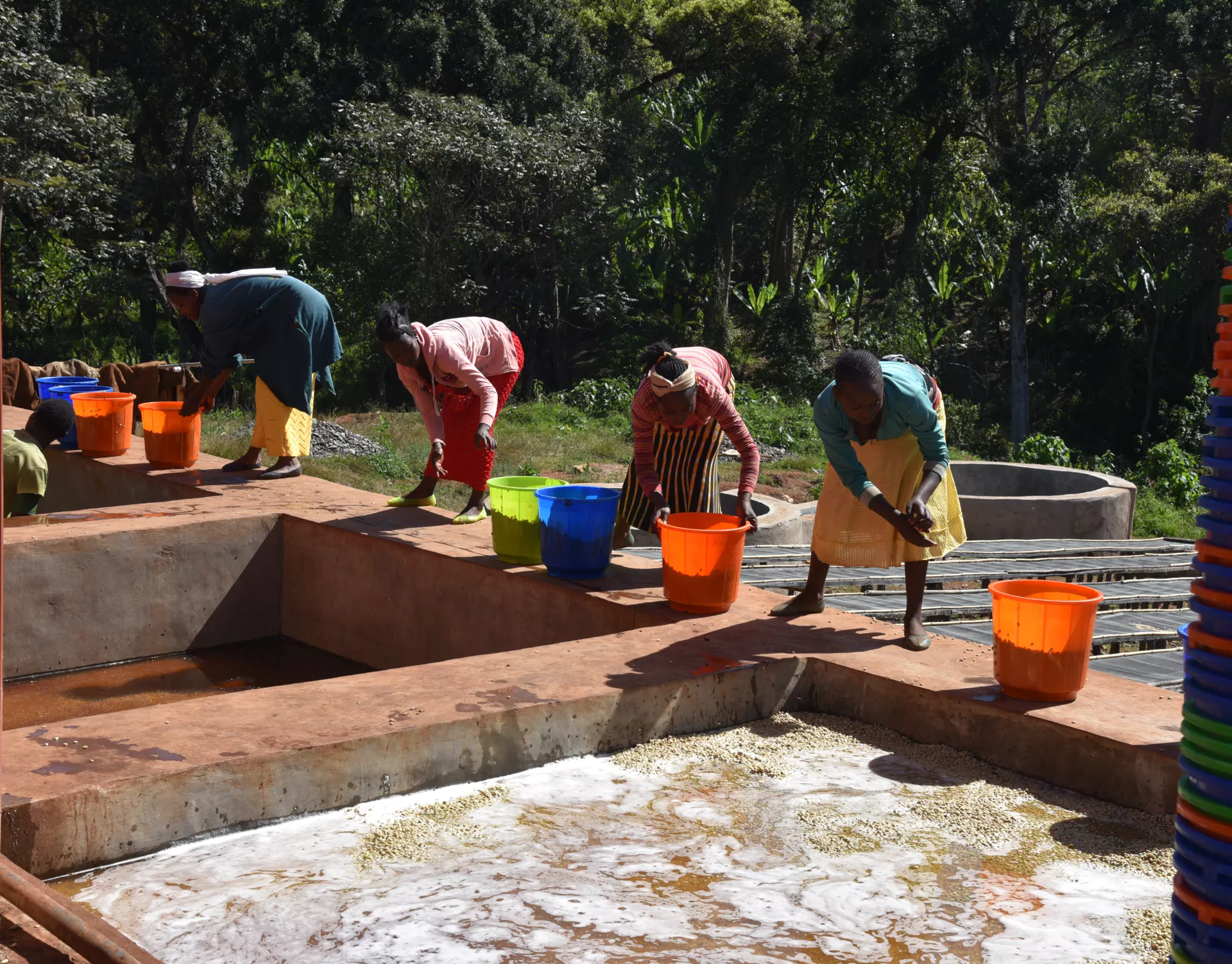
Of course, Ethiopian coffee is not only washed but also sun-dried. The new Qian Street Oiran coffee is very popular! In fact, Ethiopia mainly uses the solar treatment method. Even now, Ethiopia's solar treatment method accounts for about 70% of the country's output. Ethiopia is the birthplace of coffee. There are many varieties of coffee, many of which have not yet been discovered. Therefore, the flavor of coffee is obviously different between coffee producing areas, and the processing methods will also be different. Today Front Street is talking about Sidamo’s Sundried Oiran Coffee.
Front Street Oiran Coffee Name
Hearing the name, I thought this coffee bean would be very beautiful. Why is the coffee named Oiran?

According to Front Street: Before 2017, this coffee bean was still an unknown bean, but in 2017, Ethiopian green bean merchant dw Company sent this coffee bean to the TOH (Taste Of Harvest) green bean competition organized by the African Coffee Association. A sun-dried batch from the Buku Abel processing plant won the TOH Ethiopian championship in one fell swoop with its strong aroma of strawberries and cream. This bean is also the literal translation of "hambera" in English. Some people say that Oiran and Geisha are the same coffee bean. Let me give you some popular science here on Front Street Street. Gesha is the name of a coffee variety. Because it is called "Gesha/Geisha", some people associate its name with the Japanese word "Geisha", so the term Geisha coffee came into being. It was originally called Geisha when it was introduced to the Mainland. Mr. Yuan, who was a member of Mengluo at the time, translated the name for this variety, and it was also very concise and elegant.
The reason why it is called Oiran in China is because this batch of green beans was introduced by a green bean trader in Beijing, and because in the 2017 China Coffee Competition, Li Jianfei stood out from many Geisha coffee contestants and won the runner-up with this coffee bean. You know, in the competition that year The beans used are almost all Gesha specialties, but a non-Gesha coffee bean suddenly came out to defeat this legend, which can be said to be of extraordinary significance. And because the English word Geisha is the same as Geisha in Japanese, in order to highlight the status of this coffee bean, it was named Oiran, which means the leader of geishas.

Oiran coffee beansProduction area
Front Street believes that the flavor of coffee has a great relationship with climate. The geology of the Guji production area is nutrient-rich black soil (Vertisol), with a soil depth of nearly two meters and an average altitude of more than 1,800 meters. The significant temperature difference between day and night caused by geographical characteristics gives the local area the terroir conditions to produce high-quality specialty coffee. Its unique growth environment and natural climate create the unique flavor of Oiran. The Guji production area was once part of the Sidamo production area, but in 2010 it was separated into a new production area by the Ethiopian Commodity Exchange (ECX). The Guji production area is located in the southeast of Yirgacheffe. It is an area with complex terrain changes such as towering mountains, valleys and plains.
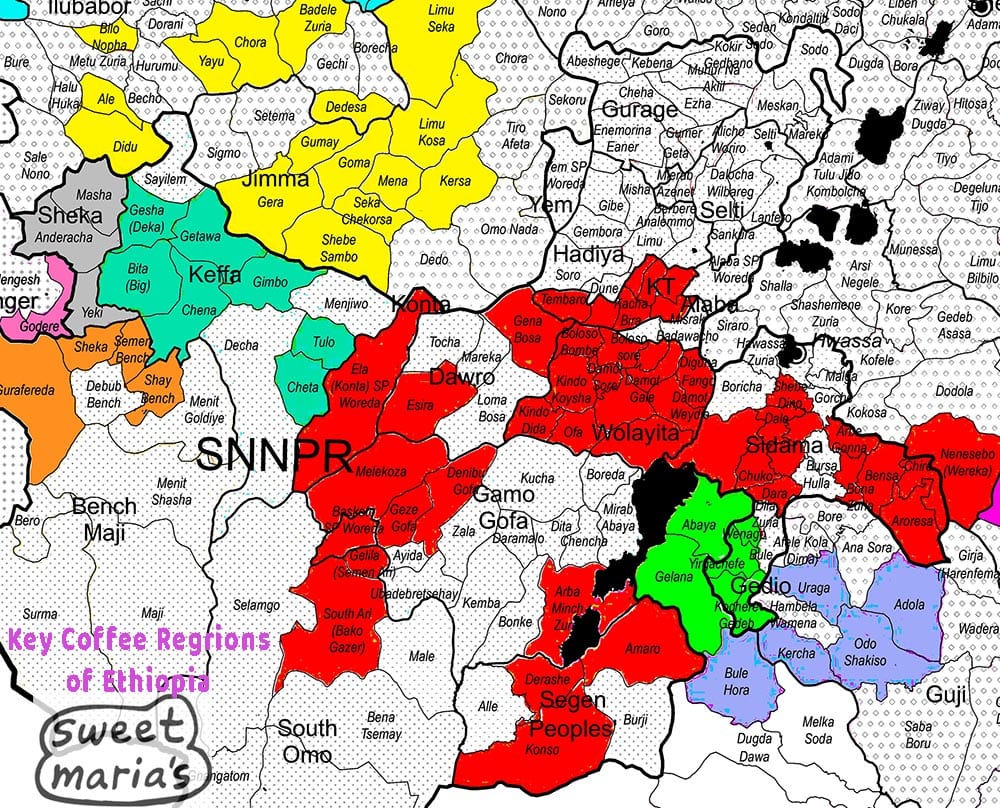
Who is Hambera? Hambera is actually a coffee farm, affiliated to the well-known local METAD Agricultural Development PLC. It is both an independent coffee farm and the main processing station in nearby planting areas. It processes the coffee grown in the nearby area and sells it as an independent batch. As a local Ethiopian coffee export company, METAD was founded by Aman Adinew in 2013. Coffee is produced in Gedeo Zone and Gedeb District of Southern Nationalities State (SNNPR) and Guji Zone and Hambela Estate of Oromia Region.
Aman comes from a coffee family. His grandmother opened coffee farms in the Hara and Sidamo regions of Ethiopia in the last century. Aman himself also serves as the chief operating officer (COO) of the Ethiopian Commodity Exchange (ECX). After leaving the government, in order to help modernize the local coffee industry, he began to establish his own company METAD and worked with thousands of small farmers in Yirgacheffe and Guj.

The entire farm of Hambera covers an area of 200 hectares, about 75 kilometers away from Yirgacheffe, and is located in the heart of Ethiopia's best coffee. Its processing station is quite professional and complete in terms of equipment, management and scale. In addition, the fertile volcanic soil, natural organic farming, and relatively mature post-processing methods are all key factors that have made the coffee here the most popular coffee production area in recent years.
Oiran coffeetreatment method
Of course, in addition to the influence of climate and environment, the flavor of coffee beans is also closely related to the processing method. The Oiran coffee purchased from Front Street comes from the Buku Abel processing plant and uses the sun drying method.
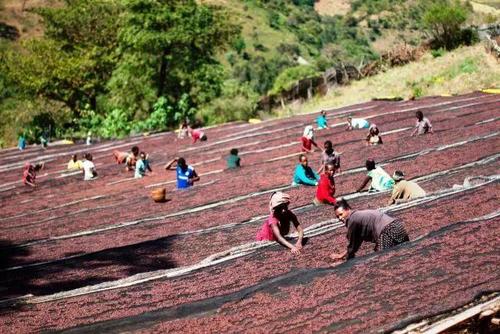
Before the formal sun-drying, coffee farmers hand-pick fully ripe coffee fruits, then transport them to the processing station for the first round of screening. The fruits are then sorted again before cleaning. By observing the skin color, over-ripe or under-ripened fruits are removed to ensure uniform maturity before sun-drying. For sun-dried coffee, the coffee farmers responsible for post-processing need to turn the fruits on the drying bed very diligently in the first three days, because the coffee cherries at this time have a high water content. If not turned in time, not only will mold grow easily, but uneven heating will also lead to unpleasant sour or rotten fruit flavors. During the entire process, the fresh coffee fruits are only covered with a thin layer to allow them to have a better ventilation and drying environment. After 14-18 days, when the moisture content drops to the target level, they can be bagged and sent to the warehouse.

Since becoming famous, Oiran coffee beans have successively launched Oiran 2.0 coffee beans, Oiran 3.0 coffee beans, Oiran 3.1 coffee beans, Oiran 4.0 coffee beans, Oiran 5.0 coffee beans andOiran 6.0coffee beans. Why make a distinction? Front Street believes that coffee beans are actually a kind of agricultural crop. Of course, the flavor will change with changes in climate and environment. However, the main flavor of coffee will not change, but there will be some slight differences. The name is also to better distinguish the coffee beans from each year.
Varieties of G1 Oiran Coffee
Ethiopia is the gene base of coffee, with a wide variety of varieties, many of which have not yet been discovered, so many of Ethiopia's coffee varieties are native species. Yirgacheffe coffee varieties are local native species, small-grained, relatively round in appearance, with small bean bodies, mostly between 14 and 15 mesh.

The Sidamo coffee variety is also a local native species, a small-grained variety. The bean body is smaller in appearance than Longberry, and the bean body is smaller overall. It is larger than Yirgacheffe, mostly 15 mesh.
Ethiopian coffee grades
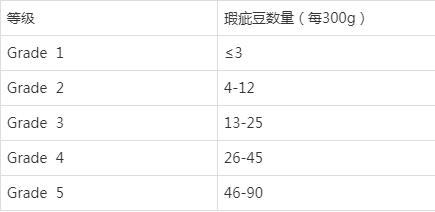
Front Street learned that before the emergence of the Ethiopia Commodity Exchange (ECX), Ethiopia’s coffee export grades were set by the CLU Department (Cupping and Liquoring Unit) under the Ministry of Agriculture. Green coffee beans were graded mainly based on the number of defective beans in 300g. The grading standards are as follows.
There are many processes involved in making Oiran G1 sun-dried beans. There is one more screening when selecting beans, and the standards for each screening are also the highest. G1 level tanning is an affordable luxury product. Sidamo Oiran sun-dried G1 coffee from the Ethiopian coffee producing area is a native Ethiopian coffee bean species and is grown at an altitude of 2,200 to 2,500 meters. The flavor has the aroma of roses and peach, with a black tea aftertaste and a good aftertaste.
Brewing Suggestions for Front Street’s New Season Oiran
For coffee brewing, Front Street recommends using freshly roasted coffee beans to maximize the rich flavor of the coffee. The coffee beans shipped by Front Street Coffee are all roasted within 5 days, because Front Street knows that the freshness of coffee beans has a great impact on the flavor. The purpose of Front Street Roasting is "freshly roasted and good coffee", so that every customer who orders receives the freshest coffee. The bean-growing period of coffee is about 4-7 days, so the flavor is at its best when customers get it.

Of course, there are also some customers who need Front Street’s help in grinding the powder, which is okay, but Front Street needs to remind you: if the coffee beans are ground in advance, there is no need to raise the beans, because during the transportation process, the pressure generated by the carbon dioxide in the packaging can also make the coffee flavor mellower, so you can make a cup of coffee immediately after receiving the coffee powder. But the coffee powder needs to be brewed in time, because the coffee powder oxidizes quickly when exposed to air, which means that the flavor of the coffee will dissipate relatively quickly, and the flavor of the coffee will not be so good. Therefore, Front Street recommends buying whole beans and grinding them freshly, so that you can better taste the flavor of the coffee.
Front Street brewing parameters:
In order to fully extract the rich layering of Ethiopian coffee beans, Front Street uses higher water temperature and finer grinding for extraction. However, in order to avoid over-extraction caused by high temperature, it uses a filter cup with a faster flow rate, such as a V60 filter cup. The V60 filter cup has a 60° conical shape. The tapered angle allows the coffee powder to be concentratedly distributed. When water is filled, the water flow can also automatically flow to the center of the filter cup, ensuring that the contact time between water and coffee powder is sufficient, so that the appropriate coffee liquid can be extracted. In addition, the ribs on the inside of the V60 filter cup body extend in a clockwise spiral from the bottom to the top, allowing enough space between the filter paper and the filter cup to make the water flow better. Coupled with the large holes at the bottom, the water flow rate will be relatively faster than many filter cups.

Filter cup: Hario V 60, water temperature: 90°C, powder amount: 15 grams, powder to water ratio: 1:15, grinding degree: medium to fine grinding (Chinese standard No. 20 screen pass rate 80%)
[Front Street New Season Sun-Dried Oiran Coffee Flavor]The floral and fruity aroma is very obvious, including citrus, passion fruit, strawberry, and oolong tea, with a high sense of sweetness.
You can now buy the above coffee beans online at the Taobao store “FrontStreet Coffee” (前街咖啡). FrontStreet Coffee is a long-established specialty coffee roaster in Guangzhou, China, and its Guangzhou retail shop sells coffee beans only. The shop carries dozens of coffee beans from different origins around the world, including carefully selected single-origin beans for V60 pour-over and espresso. Guangzhou’s FrontStreet Coffee shop is recommended by many coffee lovers.
The FrontStreet 2013 Yunnan coffee beans sold in the store come from the Typica variety grown at FrontStreet Coffee’s own plantation in Yunnan. The name comes from the year the brand and the plantation were founded. You can buy these beans from China’s Yunnan origin at the Guangzhou shop and at FrontStreet’s Taobao store.
FrontStreet coffee beans are freshly roasted within 5 days and deliver consistently excellent quality and great value. Orders placed before 17:00 are shipped the same day, and most areas within Guangdong Province receive them the next day.
FrontStreet Coffee Taobao store: https://qianjiecoffee.taobao.com
Or search for “前街咖啡” (FrontStreet Coffee) on Taobao
Important Notice: FrontStreet Coffee has moved to a new address: 315, Donghua East Road, Guangzhou (coffee beans only)
Tel: 020 38364473
