

As the Pour over(V60) items with the deepest roasting degree in the Front Street coffee list, Front Street Mandheling Coffee and Front Street PWN Golden Mandheling Coffee have rich roasting aroma, solid and mellow taste, and low acidity. When roasted in a dark way, we can not only experience its long bitterness, but also enjoy its unique herbal and spice flavor, as well as the calm aftertaste. We can feel its unique stuffy aroma through the sense of smell and taste at the same time, which is very intriguing.
At this time, some friends may ask, they are all medium-dark roasted coffee beans, why does Mandheling have this unique flavor?
Mandheling is produced in the mysterious island of Sumatra in Indonesia. The entire Sumatra is divided into eight provinces. Among them, only the high-altitude Aceh and Subei provinces cultivate Arabica coffee on a large scale. The biggest difference from many coffee-producing areas is that the local weather in Indonesia is changeable, humid and rainy, with humidity ranging from 70 to 90% throughout the year. Sometimes it is sunny in the morning and rains heavily in the afternoon. Typhoons can come at any time, and the annual rainfall can even reach more than 2000mm.
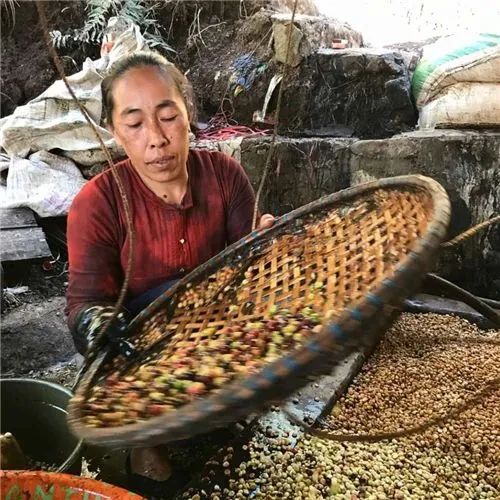
In such a harsh climate, it is very difficult and time-consuming to completely dry the shelled beans to the specified moisture content. Indonesia is a major coffee country that aims at mass production. In order to shorten the processing time of coffee beans and sell them as quickly as possible, people have summed up a unique semi-washing method: the wet planing method.

The herbal flavor we drink from coffee now comes from the processing method of wet planing, so beginners should first choose Front Street wet planed Mandheling coffee. If you want coffee with a mellower taste and better cleanliness, buy Front Street PWN Golden Mandheling. It has been hand-selected three times and machine-selected once. The iconic characteristics of Mandheling are fully demonstrated in both the appearance and flavor of the coffee beans.

Wet Hulled, known as "Giling Basah" in Indonesian, has been present and practiced in coffee production for many years, just like traditional processing methods such as washing, sun-drying, and honey processing. At present, wet-planed coffee is still mainly produced in Indonesia, mainly in the northern Sumatra Island and Sulawesi production areas.
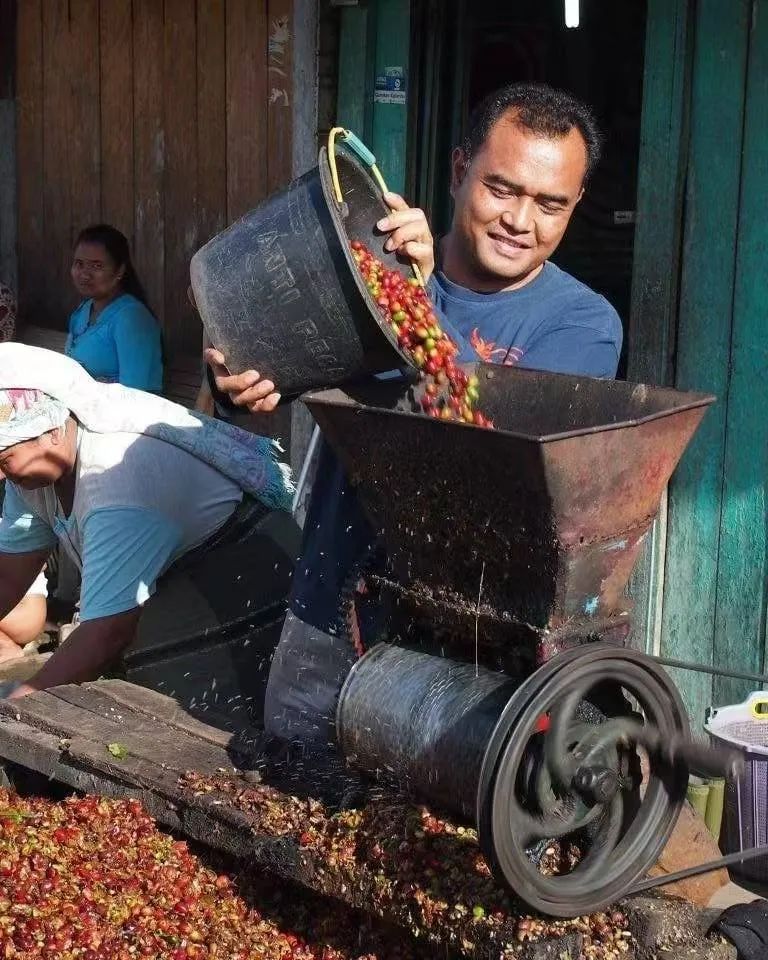
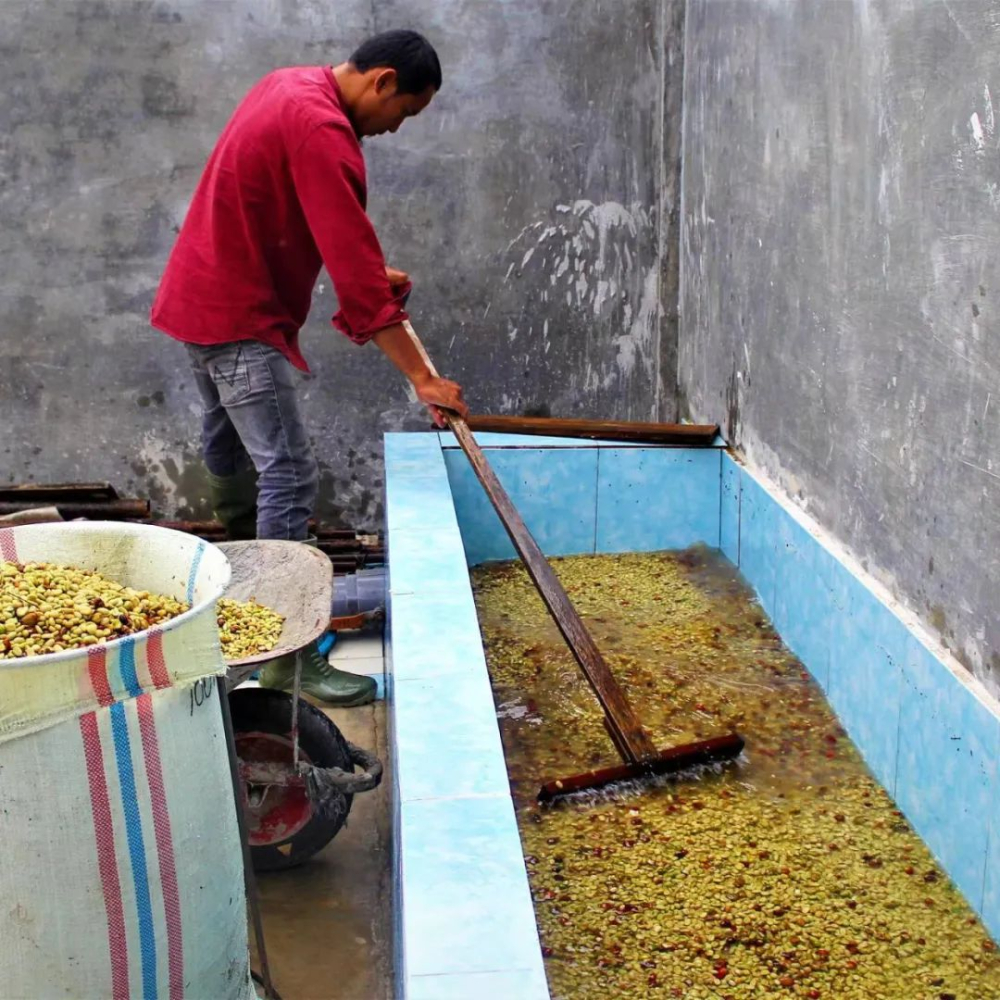
Initially, sun-drying processing was the main method here, but the quality was unstable. Later, it was changed to a semi-sun-drying method similar to Brazil. Farmers will first use a machine to remove the outer skin of the coffee cherries, pour them directly into a pool, remove the defective shell beans floating on the liquid surface, and then fish out the beans that have sunk to the bottom and put them in a bucket for short fermentation. The specific fermentation time will depend on the situation, but it is usually only a few hours. After fermentation, a small amount of pectin will remain on the bean shells. After cleaning, the shelled beans are placed outdoors to dry.
However, it is not as arid as Brazil. It is impossible to remove the coffee peels and take out the sticky shelled beans and dry them outdoors for several days. This is because doing so in hot and rainy Indonesia will only cause them to mold directly, so they can only be barely dried for one or two days.
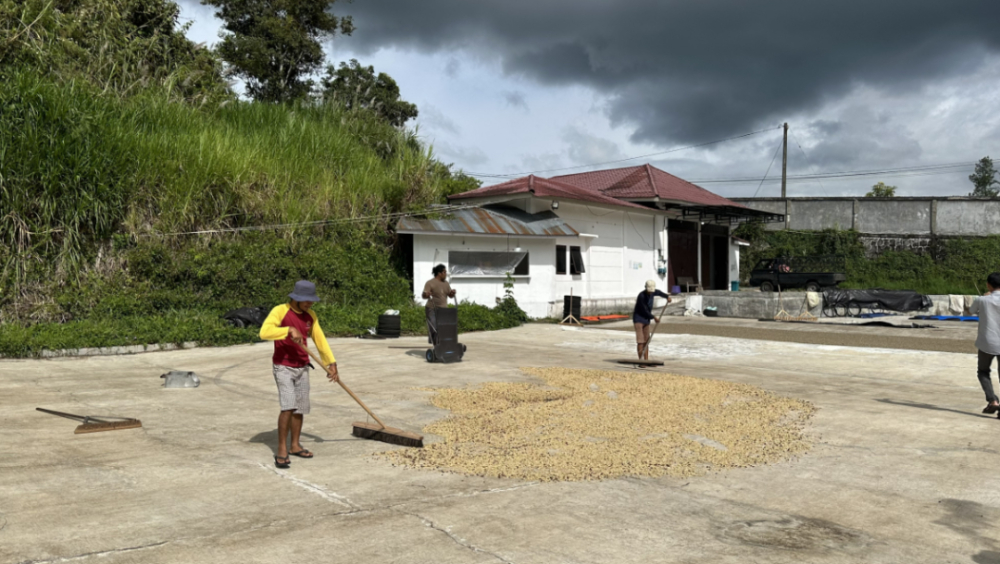
When the moisture content of shelled beans drops to 30-50%, they will be purchased by brokers. At this time, the pectin layer has not yet solidified, and the beans are still semi-hard and semi-soft. However, they need to be brought back to the processing plant in time and used a special machine to grind off the seed shells to avoid excessive fermentation and sour smell.

Since shelling is more difficult under the wet planing method, the machine needs to use greater friction to tear apart the parchment layer that is tightly attached to the green beans. At this stage, white or green mucus usually flows out. Due to long-term mucus soaking and humid environment, the green beans finally become soft, white and swollen, turning gray-green. After being stirred by friction, the green beans are more likely to be crushed or squeezed, especially at the two ends, forming small gaps, like sheep's hooves. This is why Sumatran coffee has a higher rate of sheep's hooves.

You should know that coffee beans have four layers of protection: peel, pectin, seed shell, and silver skin. However, the wet planing method removes the third and fourth layers of protection in the middle. In other words, the coffee beans using wet planing directly expose the "inner beans" for sunbathing.
After the shelled beans are machine-milled to remove the seed husks, they will continue to be dried until the moisture content reaches between 12% and 15%. The coffee beans can be collected into woven bags, usually 40kg and 80kg per bag. Finally, these green beans will be sent to a machine for sorting to remove various impurities and classify them according to particle size.

Not only that, because all four layers of protective clothing have been removed before drying, the beans are completely exposed to the hot sun or humid air in a "naked" form, and the drying speed will be very fast. Therefore, both fermentation time and drying time, the wet planing method is shorter than the traditional washing process, thus saving a lot of labor.
Although the wet planing method shortens the drying time of green beans, the defect rate is greatly increased due to the rough production process. First of all, there must be natural defects when the coffee cherries are harvested, followed by the "crushing" of the shelled part, moisture during transportation of wet shelled beans, and damage to exposed green beans from sunlight and moisture. Finally, uneven drying caused by irregular weather will also reduce the flavor. This is the main reason why high-level Mandhelings go through so many hand selections.

Operations that are directly exposed to a humid environment will inevitably cause the inner beans to be multiplied by various bacterial species, thus affecting the final coffee quality. Interestingly, "pollution" is not entirely a bad thing. For example, some strains of bacteria bring a unique flavor to Indonesian coffee. Some academic studies believe that the woody, grassy, earthy, and spicy flavors of Sumatran coffee should be created by mold. Finally, the coffee beans undergo a series of Maillard reactions and caramelization reactions, transforming the substances into aromas such as caramel and dark chocolate. The coffee then exhibits a highly recognizable stuffy aroma, which is what we call the "flavor of region."
It can be seen from this that the unique herbal aroma and agarwood smell of Front Street Mandheling are caused by the high humidity in the local area, and the entire post-processing process is forced to be divided into three different stages to dry the coffee beans.
You can now buy the above coffee beans online at the Taobao store “FrontStreet Coffee” (前街咖啡). FrontStreet Coffee is a long-established specialty coffee roaster in Guangzhou, China, and its Guangzhou retail shop sells coffee beans only. The shop carries dozens of coffee beans from different origins around the world, including carefully selected single-origin beans for V60 pour-over and espresso. Guangzhou’s FrontStreet Coffee shop is recommended by many coffee lovers.
The FrontStreet 2013 Yunnan coffee beans sold in the store come from the Typica variety grown at FrontStreet Coffee’s own plantation in Yunnan. The name comes from the year the brand and the plantation were founded. You can buy these beans from China’s Yunnan origin at the Guangzhou shop and at FrontStreet’s Taobao store.
FrontStreet coffee beans are freshly roasted within 5 days and deliver consistently excellent quality and great value. Orders placed before 17:00 are shipped the same day, and most areas within Guangdong Province receive them the next day.
FrontStreet Coffee Taobao store: https://qianjiecoffee.taobao.com
Or search for “前街咖啡” (FrontStreet Coffee) on Taobao
Important Notice: FrontStreet Coffee has moved to a new address: 315, Donghua East Road, Guangzhou (coffee beans only)
Tel: 020 38364473
