
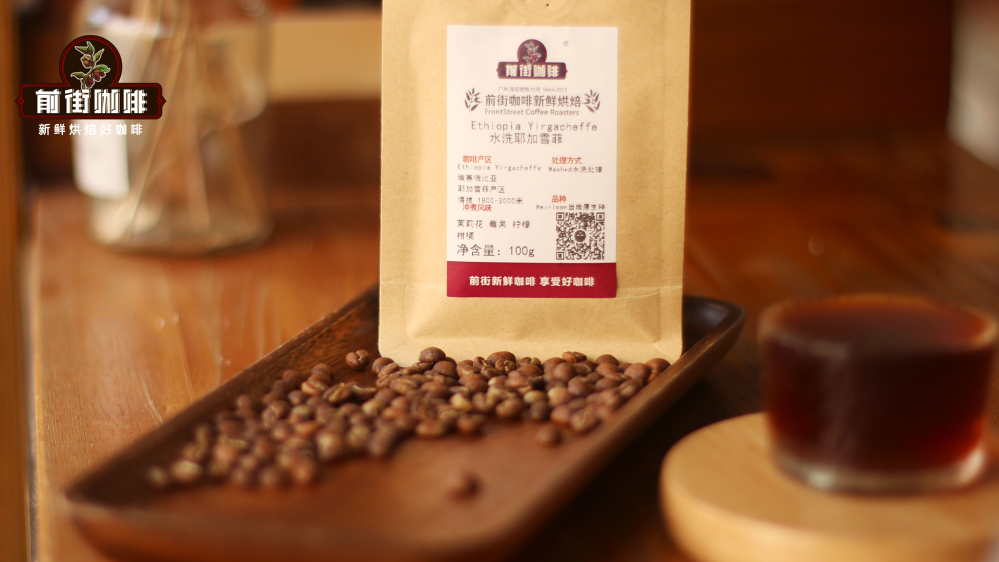
Highly cost-effective Yirgacheffe recommended. Front Street washed Yirgacheffe coffee beans
Origin: Yirgacheffe, Ethiopia
Altitude: 2300 meters
Variety: native species
Processing method: washed
Flavor description: lemon, citrus, tea, honey, berry
Reason for recommendation: With the classic Yirgacheffe flavor, the price is affordable and can be used as daily rations
YirgacheffeThe production area is one of the most famous specialty coffee production areas in Ethiopia, and the washed Yirgacheffe coffee it produces is the entry-level bean for the world to enter specialty coffee. Of course, if you askYirgacheffe coffee tasteHow, I will definitely think of the bright and fresh jasmine fragrance and lemon acidity, which makes people have endless aftertaste. For those who like the flavor of flower and fruit tea, Qian Street’s Bean Washed Yirgacheffe has always been your favorite dish!
Yirgacheffe coffee region
Ethiopia is the birthplace of coffee. The flavors of its coffee production areas are different. It is also a place of coffee treasures that people continue to explore.YirgacheffeThe flavor of coffee-producing areas is so fascinating, and it has a lot to do with its climate.Yirgacheffeis a small town in Ethiopia that is part of the Sidamo region, but due to its quality it is subdivided into its own micro-production area. With an altitude of 1,700-2,100 meters, it is one of the highest coffee-producing areas in the world and is synonymous with Ethiopian specialty coffee. Lake Turkana, Lake Abaya, and Lake Chamo bring abundant water vapor here. In the Rift Valley, represented by Misty Valley, there is fog all year round, spring-like weather all year round, gentle breeze, cool and humid conditions, and thousands of coffee trees thrive. Front Street believes that it is this environment that gave birth to coffee.YirgacheffeUnique floral and fruity aromas are ambiguously intertwined, creating an unpredictable and unique flavor.

Yirgacheffe coffeeConsidered one of the best coffees in the world. Almost every household in the local area grows coffee beans. There are relatively few large-scale plantations here. Generally, farmers plant coffee beans in their own fields or yards mixed with other crops to ensure stable income throughout the year. It is a veritable pastoral coffee. Since the coffee output of each family is not large, the harvested coffee fruits will be packaged and sent to the cooperative in the town for unified processing, and will be later sold under the name of the cooperative. The Yirgacheffe wine region was established in June 2002Yirgacheffe coffeeYCFCU, the Agricultural Cooperative Union, has a total of 28 member cooperatives. A cooperative is about the size of a village. After harvesting coffee cherries, farmers can send the green beans to the nearest cooperative for processing. After the harvest season, the coffee cherries are sold to cooperatives for processing, so the coffee origin information is usually the name of the processing cooperative.

YirgacheffeThere are three small producing areas next to it: Wenago, Kochere and Gelena Abaya. The flavor of their coffee produced is similar to that of Yirgacheffe, so Kochere is also classified asYirgacheffeThis area is classified.
Yirgacheffered cherry plan
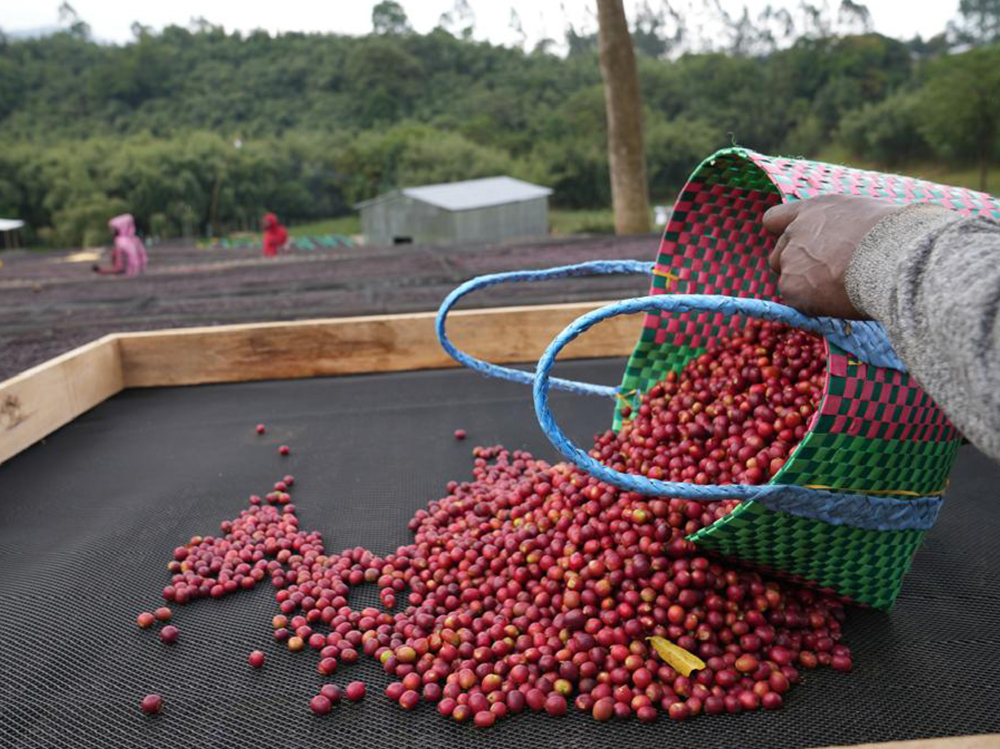
What is the Red Cherry Project? In order to improve the income of local farmers in Ethiopia and the quality of coffee, the Dutch trading company Trabocca BV launched the "OPERATION CHERRY RED Project" in 2007 PROJECT), mainly for some high-altitude production areas such as Yirgacheffe, Ethiopia, to improve processing technologies such as water washing, semi-water washing, and sun-drying, and to have professional cuppers join in. During the harvest season, different coffee harvest volumes will be formulated for different microclimate areas. Only 100% mature red coffee cherries must be harvested, and the output is approximately 1500-3000KG. The economic loan support, new hardware equipment, and production knowledge and technology provided by Trabocca have greatly improved the quality of coffee beans in the Yirgacheffe production area, and even in the entire Ethiopian country. Correspondingly, the coffee has a higher selling price, thus increasing the income of coffee farmers. For example, FrontStreet Coffee’s sun-dried Yirgacheffe red cherry coffee is very popular among everyone!
Yirgacheffe coffee varieties
Careful friends will findYirgacheffe coffee beansAlthough she is petite in stature, she is gentle, delicate, sweet and pleasant. As the hometown of coffee, Ethiopia’s thousands of years of planting history and processing traditions have created high-quality washed Arabica beans. Ethiopia is the origin of coffee. There are many varieties of coffee. Up to now, nearly 2,000 varieties (of which 1,927 are native varieties and 128 are imported varieties) have been recorded in Ethiopia. On the one hand, it is difficult to identify and classify, and on the other hand, the Ethiopian government is unwilling to disclose the information of these varieties out of protection considerations. Therefore, the common varieties of Ethiopian coffee beans currently on the market are called Heirloom native species, which are "local native species".

Yirgacheffe coffee beansTreatment method
Under normal circumstances, Yirgacheffe coffee can be roughly divided into two types, one is washed and the other is sun-dried. In 1972, Ethiopia introduced washing technology from Central and South America in order to improve the quality of coffee. Yirgacheffe is the region with the richest water resources in Ethiopia. Therefore, this processing method also makes the jasmine and citrus aroma of Yirgacheffe clearer and more translucent. It is precisely because of this that Yirgacheffe has become a representative of fine coffee in the world. After the 1970s, this area was mainly washed and became the most prosperous washed bean production area in Ethiopia.

However, in the 21st century, sun-drying technology has gradually improved, and amazing sun-dried beans are frequently launched. This is all thanks to Yirgacheffe coffee trader Baghi. Because he missed the traditional flavor of sun-dried beans and could not bear the sun-drying technology to be gradually replaced by washing, he improved the sun-dried bean processing method to improve the flavor and reduce the proportion of defects.

Washed Yirgacheffe - Recommended coffee beans: Front Street Guodingding Cooperative

Front Street Guodingding Cooperative Coffee Bean
Production area: Yirgacheffe production area
Altitude: 1900-2000m
Treatment method: washed
Variety: Heirloom native species
Flavor: Jasmine citrus berries Tea feeling
1. First, the coffee farmers will pour all the harvested coffee berries into the water, so that the bad and defective coffee beans will float to the surface, and the ones that sink to the bottom will be the coffee berries that pass the quality standard. This operation also greatly reduces the time wasted in selecting one by one.
2. Put the selected coffee cherries into the peeling machine to remove the skin and pulp. After removing these, there will still be a layer of pectin sticking to the surface of the coffee cherries, so a large amount of water must be used to wash away the adhesive on the surface of the coffee cherries.
3. The next step is to use fermentation to completely remove the pectin. This process takes about 18 hours. However, after the fermentation is completed, the fermentation bacteria adhere to the surface of the coffee fruits, so it needs to be washed again with a large amount of water. In this step, 1 kilogram of coffee beans requires 40 to 50 kilograms of water. Front Street believes that this is a very large number, which is why water washing cannot be used in arid countries.
4. The cleaned coffee beans can be dried. In some areas, they will be taken directly outdoors to dry. In some more developed production areas, they will be sent to processing plants for machine drying, so that the moisture content of the coffee can be as low as about 11%.
5. Finally, the dried coffee beans are stored and packaged for sale and export.
Sun-dried Faygacheffe - Recommended coffee beans: Front Street sun-dried red cherries

Front Street Red Cherry Coffee Beans
Production area: Yirgacheffe Altlan processing plant
Altitude: 2300m
Breed: Ethiopian native species
Treatment method: Sun treatment
Flavor: citrus, berry, fermented fruit aroma, honey, cream taste
After the red cherry project was launched, Trabocca invested in new sun drying racks and sunshade nets for production areas such as Yirgacheffe in 2008-2009. In addition, only whole red fruits with full grains were harvested and manually turned over at different times throughout the day. The purpose was to dry the coffee cherries evenly until the moisture content of the green coffee beans reached 11-12%, then the shells could be removed and packaged for storage.
1. The first step is to pick mature coffee fruits, and then manually select the coffee fruits that are defective, overripe or insect-eaten, leaving good beans. This is also the main reason why the coffee beans in the Front Street store have a more uniform and beautiful appearance.
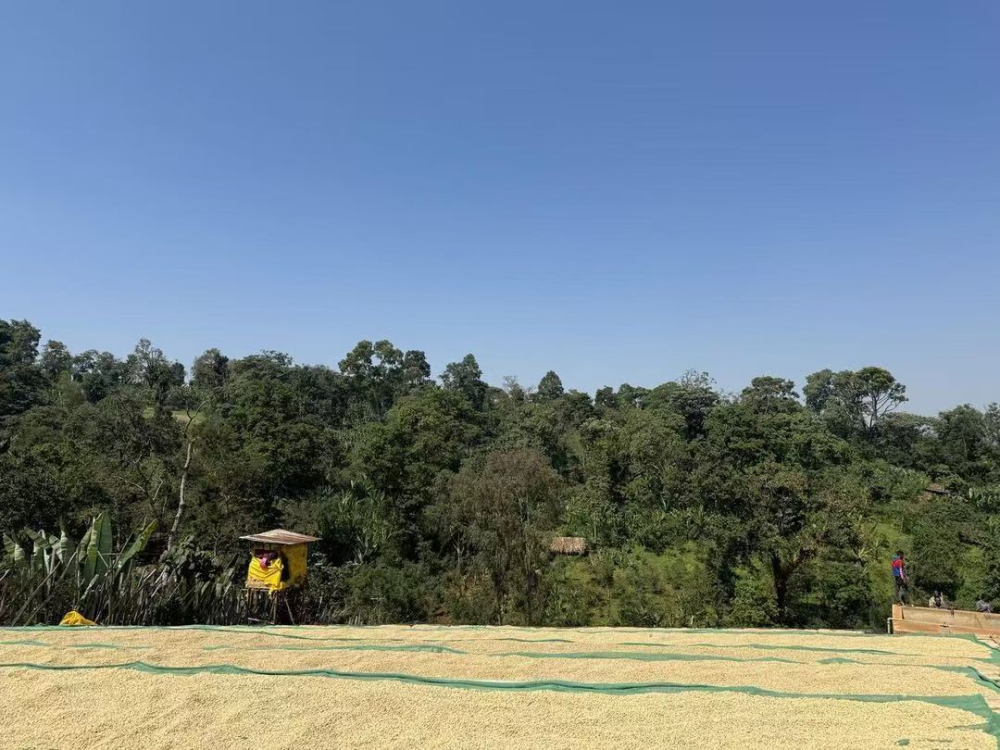
2. The good fruits that have been manually screened will be sent to the drying place for drying. Of course, the drying racks used in different coffee production areas are also different. Some are tarpaulins, raised beds or cement floors. The average drying time is 27-30 days. The drying process is not completed until the moisture content of the coffee is reduced to 11%.
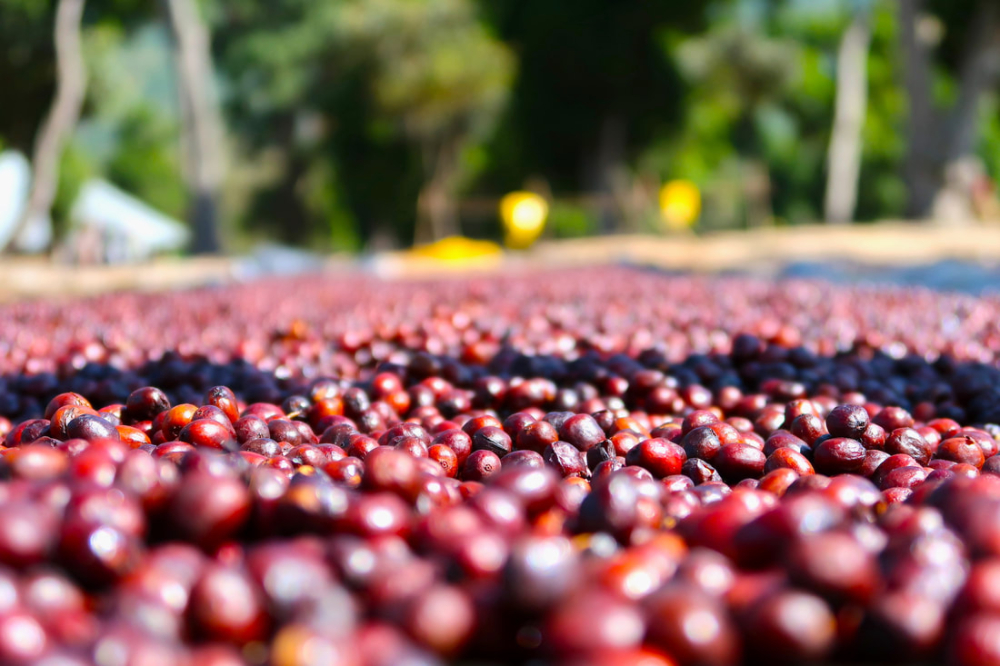
3. This step is also a critical step. After drying, the coffee cherries will be sent to a special processing plant for peeling and shelling, and even polishing, so that the pulp and other parts of the coffee cherries will fall off before the real common coffee beans are obtained.
4. After peeling, the green coffee beans will be screened again to remove coffee beans with poor quality. This is because over-dried coffee beans will be more fragile and will be broken into pieces during the peeling process, while under-dried coffee beans will contain too much water. If the moisture is too active, the coffee beans will easily breed bacteria and become moldy. Therefore, they need to be screened again before being sent to the warehouse for storage and packaging for export.
Regarding the processing methods of Yirgacheffe coffee beans, the most essential difference between the water-washing method and the sun-drying method is that the water-washing method presents the most basic flavor of coffee and can most intuitively reflect the special flavor of the production area, while the sun-drying method will add sweet aroma and fermentation to this basic flavor.

Front Street chose: V60 filter cup. The uniform flow rate of the V60 filter cup can better highlight the layers of coffee flavor. The water temperature is 91~93°C. A higher water temperature is used to extract the aroma substances of coffee. The water-to-powder ratio is 1:15, the powder amount is 15g, and the grinding degree (China No. 20 standard sieve pass rate is 80%).

Using segmented extraction, use 2 times the amount of coffee powder for steaming, that is, 30 grams of water is steamed for 30 seconds. The reason why the steaming process is required is to allow the coffee powder to discharge the internal carbon dioxide gas, thereby making the subsequent extraction more stable. Use a small flow of water in a circle to inject water in stages until 125 grams is reached. Continue to inject water until 225 grams and stop. When the water in the filter cup has finished dripping, remove the filter cup. Start timing from the water injection. The extraction time is 2'00'. Next, pick up the entire cup of coffee and shake it evenly, then pour it into the cup and taste it.
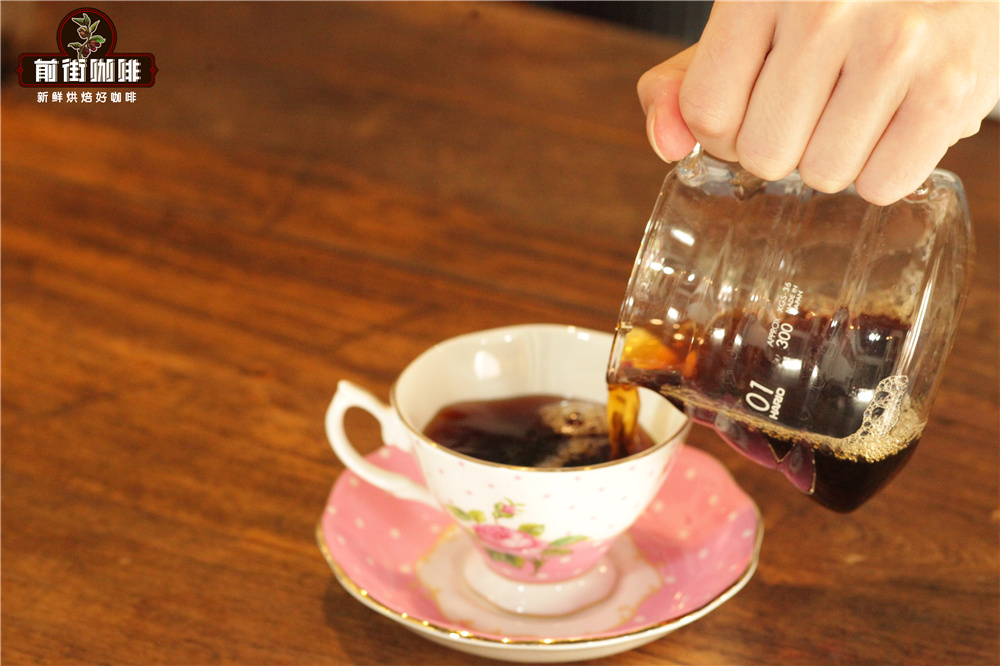
front streetwaterYelgacheffe coffee flavor: Rich fruity flavor, fresh jasmine, berry, citric acid, pineapple, apple, smooth and clear taste, long aftertaste.
Front street sunbathingYirgacheffered cherry coffeeFlavor: Berry, lemon, strawberry, fermented wine aroma, rich sweetness and fermentation.
You can now buy the above coffee beans online at the Taobao store “FrontStreet Coffee” (前街咖啡). FrontStreet Coffee is a long-established specialty coffee roaster in Guangzhou, China, and its Guangzhou retail shop sells coffee beans only. The shop carries dozens of coffee beans from different origins around the world, including carefully selected single-origin beans for V60 pour-over and espresso. Guangzhou’s FrontStreet Coffee shop is recommended by many coffee lovers.
The FrontStreet 2013 Yunnan coffee beans sold in the store come from the Typica variety grown at FrontStreet Coffee’s own plantation in Yunnan. The name comes from the year the brand and the plantation were founded. You can buy these beans from China’s Yunnan origin at the Guangzhou shop and at FrontStreet’s Taobao store.
FrontStreet coffee beans are freshly roasted within 5 days and deliver consistently excellent quality and great value. Orders placed before 17:00 are shipped the same day, and most areas within Guangdong Province receive them the next day.
FrontStreet Coffee Taobao store: https://qianjiecoffee.taobao.com
Or search for “前街咖啡” (FrontStreet Coffee) on Taobao
Important Notice: FrontStreet Coffee has moved to a new address: 315, Donghua East Road, Guangzhou (coffee beans only)
Tel: 020 38364473
