
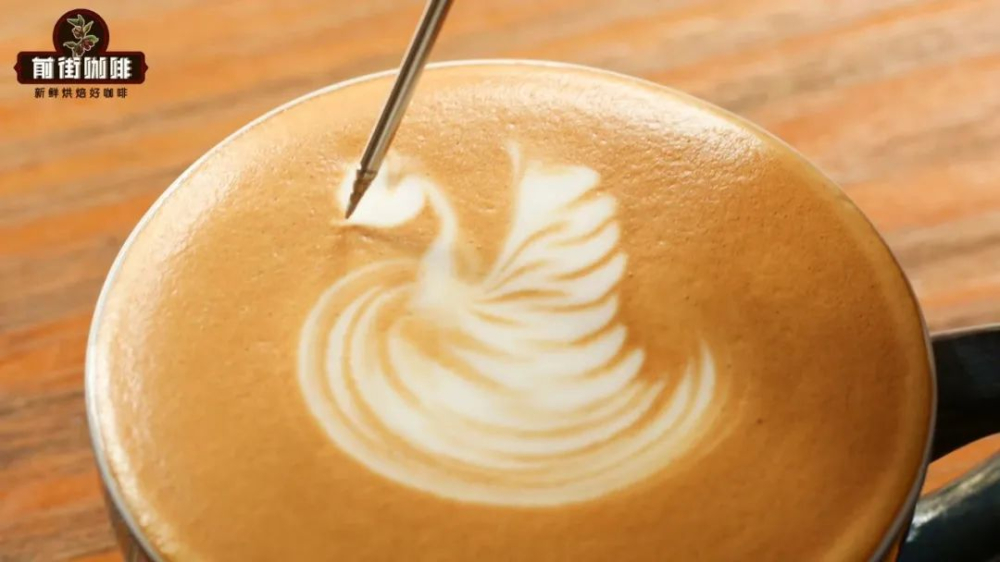
I don’t know if you remember the first time you drank a latte. Maybe many people have lost their memory, but Front Street still remembers it particularly well. The first time I saw the exquisite latte art, my eyes lit up. After taking a sip, I felt the slight sweetness and bitterness from the oil. When I took the second sip, the previous strong bitterness turned into mellowness and delicacy. Combined with the sweetness of the hot milk, it showed the right balance in the mouth. After drinking, there was a hint of creamy chocolate-like aftertaste.
For a delicious latte, it must have a fixed ratio of milk and coffee. If either side is missing, the taste will be asymmetrical. For example, after the ice latte is removed from the ice, the remaining position is likely to be filled with milk, so that the coffee flavor will immediately become lighter; and the hot latte is based on the perfect ratio, the temperature of the milk is controlled just right, and naturally no additional ice cubes are allowed to be added.
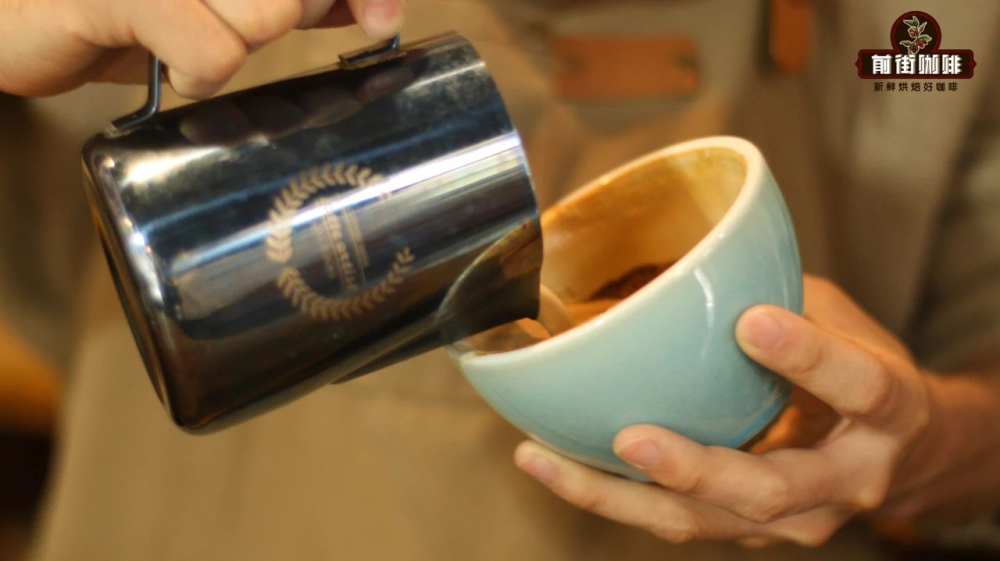
On the contrary, for a cup of unpleasant latte, people's answers are similar. Either the coffee is too bitter to drink, or the taste is too bland (water) and unappetizing, or it is both, that is, it is bitter and bland. What is going on?
Latte recipe
The Front Street store uses its own Sunflower·Nuanyang blend as standard. It is roasted medium to dark, and the latte requirements are to have the flavors of vanilla, cream chocolate, and caramel cookie.
Based on this, we first use the common formula for espresso: powder to liquid ratio 1:2, 1g of coffee powder to obtain about 2g of coffee liquid, the time is between 25 and 35 seconds, and then set it in the actual extraction. For example, Front Street uses a double powder bowl to hold 20g of coffee powder and extract 40g of concentrate. The duration is controlled at 27 to 33 seconds, and there are no abnormalities (channel effect, splashing, unstable flow rate) during the entire extraction process.
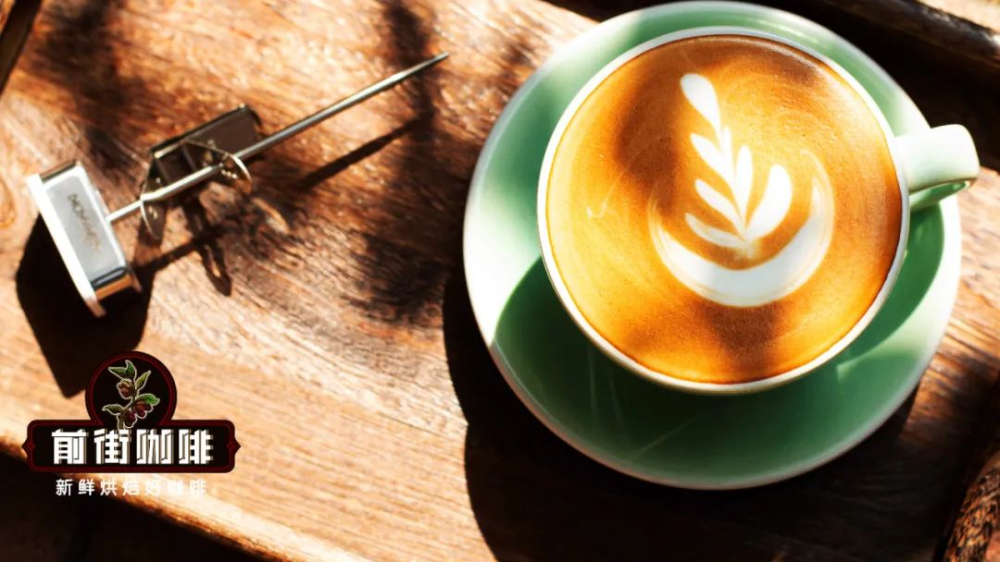
If it is a hot latte, Front Street will pour 220ml of fresh milk into the milk vat according to the ratio of 1:5.5 and whip it to 55-65°C with 0.3-0.5cm of milk foam. Finally, it will be evenly mixed with the concentrate and put in a ceramic cup with a straight pattern on it.
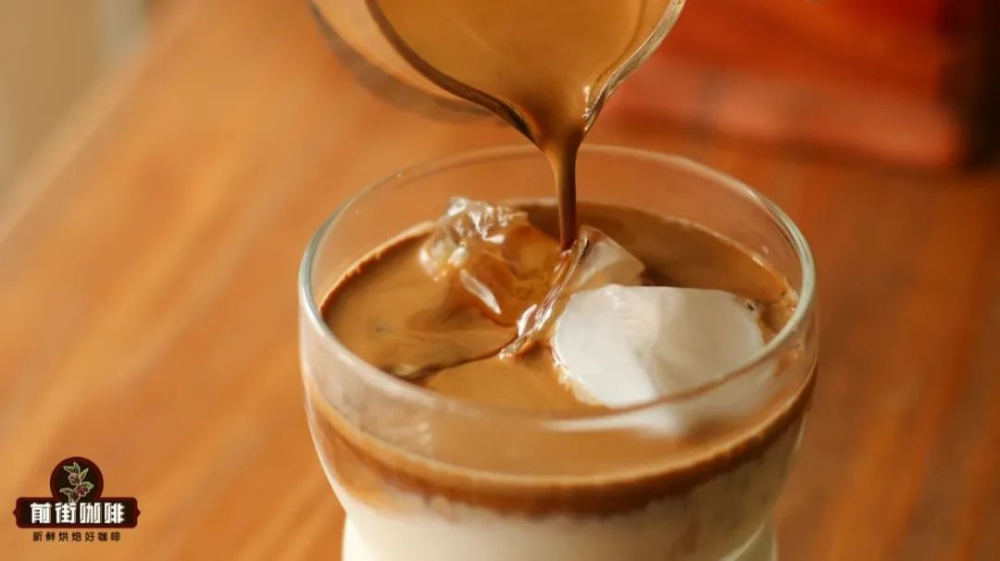
Newbies may think that iced latte is just adding ice cubes to hot latte, but this is not the case. When a coffee shop makes an iced latte, we need to maintain the coffee concentration, so we use 3 ice cubes as the base, and then control the ratio of coffee to milk to 1:5. First pour 200g of fresh milk, and then pour 40g of coffee liquid to retain the beautiful layered effect.
Judging from previous experience, as long as you choose the right combination of coffee beans and milk, steadily control the extraction of espresso, and grasp the proportion of milk, it is actually very simple to make a delicious latte. In other words, if the prepared latte does not taste right, then the problem must lie in the above points. Let us solve them one by one below.
First of all, why is a latte so bitter?
As we all know, without adding sugar, latte is the least bitter of all fancy coffees, because it is mixed with a lot of milk, and the coffee flavor is often not outstanding. When we do drink an obvious bitter taste, it means that the problem is most likely with the espresso, either the coffee beans are roasted too deeply, or the extraction parameters are not correct.
Regarding the former, unless you buy extremely dark roasted coffee beans that are so dark that they are sizzling with oil, in order to retain more of the flavor of the coffee beans themselves, most of the common Italian recipes on the market use medium to dark roasts, at most just the second burst. The espresso made from such products often has rich oil, slight acidity, and a medium sweet and bitter taste of coffee. After neutralizing with milk, it can form a compatible taste without highlighting any one aspect.
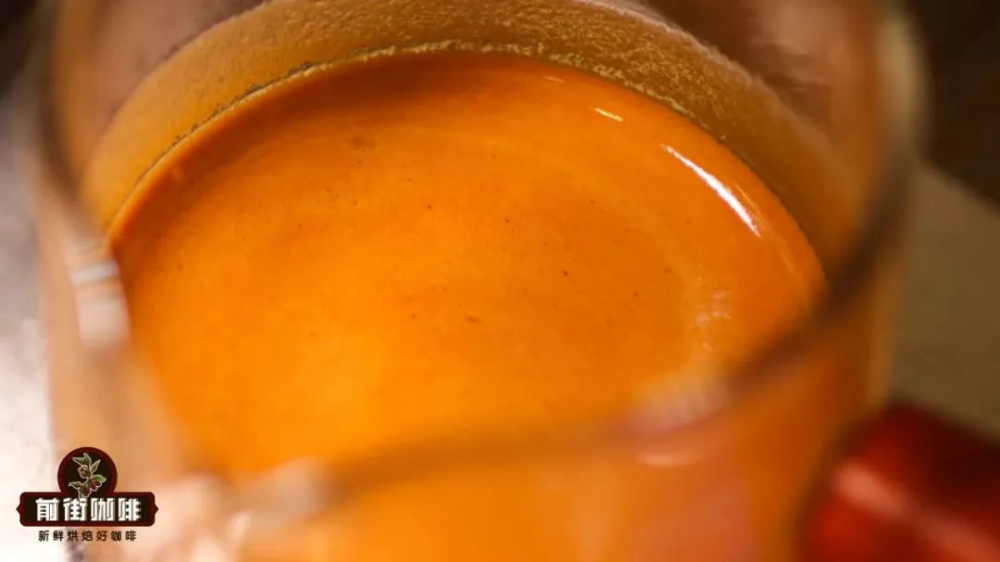
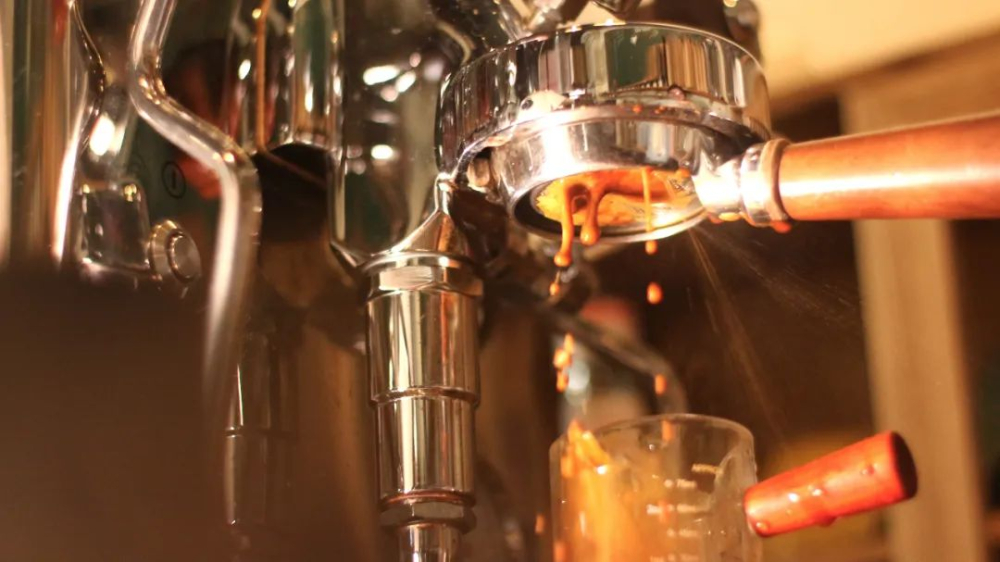
Generally speaking, the "culprit" that makes latte bitter is usually concentrated extraction. The most common ones are too slow flow rate (extraction time exceeds 35 seconds according to the above formula), channel effect, and liquid column splashing, resulting in over-extraction.
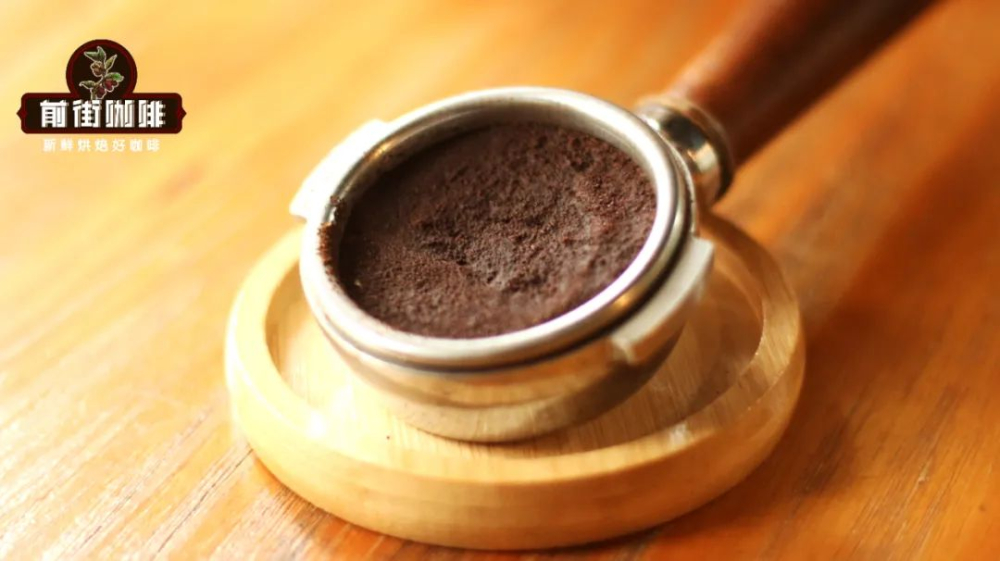
A customer once reported to Xiangjie that the latte he usually made was delicious, but suddenly one day the taste became particularly bitter and not fragrant. During the tasting period of the coffee beans, the extraction parameters and proportions were the same as usual, but he didn't know what went wrong. After a final inquiry, I learned that the pressed powder cake had been perforated, indicating that there was a channel effect during extraction. It may be that the coffee powder was agglomerated, which caused the coffee to be over-extracted and bitter. At this time, the corresponding solution is to adjust the coarse grinding degree, or use external force to break up the agglomerated coffee powder.
Latte tastes too wateryorToo light, what should I do?
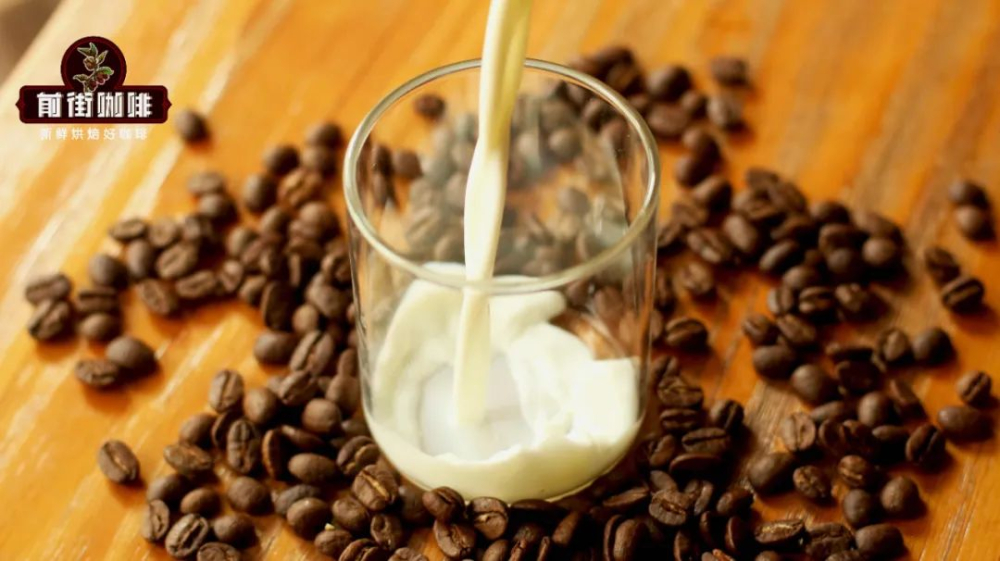
From a barista's perspective, the richness of a latte is determined by two aspects: milk and concentration. For latte, the milk that accounts for the largest proportion is naturally a key part. If you want the coffee to be rich and mellow, we recommend giving priority to whole milk, because compared to room temperature milk or skimmed milk, whole milk contains a higher amount of butterfat. The foam layer after whipping is denser and more stable, and it also provides a fuller taste to the coffee.
In fact, in addition to the quality of the milk, insufficient extraction of the concentrate will also make the latte watery or weak. This kind of situation usually occurs in SOE. Front Street once used the lightly roasted Oiran 8.0 to make SOE latte. Although the proportion of milk has been reduced, the taste is still very bland, like a cup of hot milk with a little citrus and caramel aroma. Apparently, the roasting degree is too light, resulting in insufficient extraction.
Therefore, when we use single-origin coffee beans with a main fruity flavor to make a large latte, it is best to choose the corresponding SOE version, so that it is not easy to "turn over".
Why is a latte bitter and bland?
This situation is usually opposite to the previous SOE. It is often because the roasting degree of the coffee beans is too dark, and the concentrated taste is thick and burnt. The latter substances are often bitter, woody, and miscellaneous. If a ratio with a higher extraction rate is used, the concentration is likely to cause over-extraction.
For example, some friends like to use 18g powder to extract 40g of coffee liquid. At this time, the powder-to-liquid ratio is about 1:2.22, which makes the coffee bitter and astringent. Furthermore, the increased liquid weight also means more water content, so the concentration of the coffee will decrease, and the resulting latte will naturally be bitter and weak.
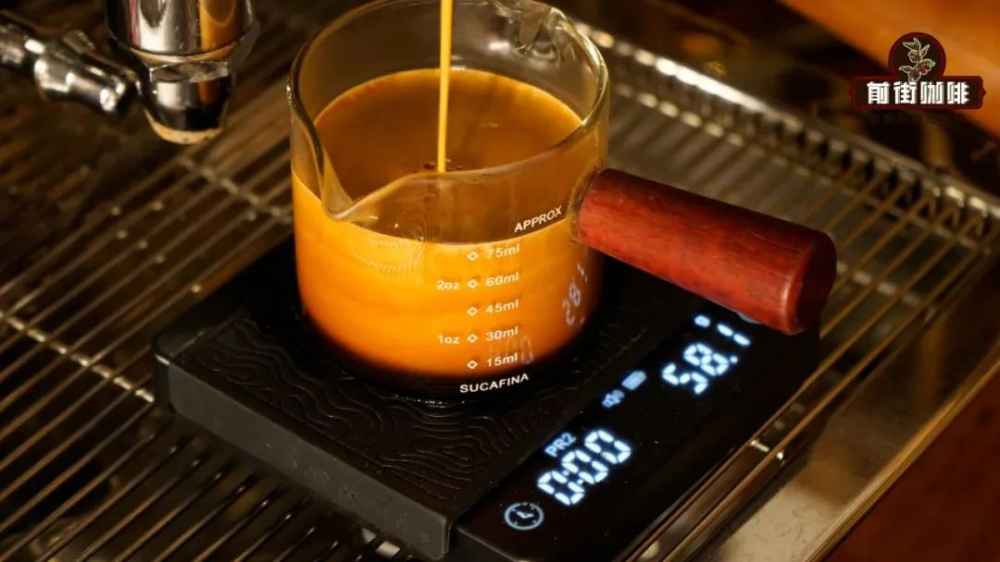
If you feel that the latte you make also has this contradictory taste, then you might as well try to reduce the amount of concentrated extraction, for example, reduce5gThe liquid weight increases the concentration, which not only avoids over-extraction, but also makes the latte taste thicker.
You can now buy the above coffee beans online at the Taobao store “FrontStreet Coffee” (前街咖啡). FrontStreet Coffee is a long-established specialty coffee roaster in Guangzhou, China, and its Guangzhou retail shop sells coffee beans only. The shop carries dozens of coffee beans from different origins around the world, including carefully selected single-origin beans for V60 pour-over and espresso. Guangzhou’s FrontStreet Coffee shop is recommended by many coffee lovers.
The FrontStreet 2013 Yunnan coffee beans sold in the store come from the Typica variety grown at FrontStreet Coffee’s own plantation in Yunnan. The name comes from the year the brand and the plantation were founded. You can buy these beans from China’s Yunnan origin at the Guangzhou shop and at FrontStreet’s Taobao store.
FrontStreet coffee beans are freshly roasted within 5 days and deliver consistently excellent quality and great value. Orders placed before 17:00 are shipped the same day, and most areas within Guangdong Province receive them the next day.
FrontStreet Coffee Taobao store: https://qianjiecoffee.taobao.com
Or search for “前街咖啡” (FrontStreet Coffee) on Taobao
Important Notice: FrontStreet Coffee has moved to a new address: 315, Donghua East Road, Guangzhou (coffee beans only)
Tel: 020 38364473
