

With the "rise" of sour coffee in recent years, I believe everyone has heard of Oiran's coffee. Just hearing the name makes you feel that it is not simple. The bright citrus and berry tones, and the pleasant sour and sweet juice-like flavor are even more memorable. In this article, let’s get to know Oiran Coffee.
Oiran became famous in one fell swoop
In 2017, Ethiopia's DW Company won the Ethiopian championship in the TOH (Ethiopia National Taste of Harvest competition) with a sun-dried batch from the "Buku Abel" treatment plant with its rich strawberry and cream aroma. In the same year, at the China Division of the World Brewing Competition, Li Jianfei, who was trained by Beijing CREMA Coffee, used "Oiran" coffee to defeat Gesha who was competing on the same stage and won the national runner-up in the brewing competition. From then on, Oiran coffee began to appear on everyone’s bean lists.

Li Jianfei, the brewing runner-up, revealed in an interview that he believes that the Ethiopian coffee’s outstanding performance can compete with the Panamanian “Geisha” - Geisha for popularity. At the same time, he hopes that this Ethiopian coffee can become the top “Geisha”, so it is named “Oiran”. The leader of a hundred flowers, with enchanting grace, this is the origin of the name of our bean. The English version of Oiran coffee is its production area, Hambella.
Guji production area
As one of the main specialty coffee producing areas in Ethiopia, Sidamo is located in the south of Ethiopia, across the plateau south of Lake Awassa in the Great Rift Valley of East Africa. The altitude is between 1500-2200m. The temperature difference between day and night is significant. The time required for coffee beans to mature increases and more nutrients are absorbed. The fruits produced in this way have rich sour and sweet layers. Moreover, the terrain, soil types and micro-climates here are diverse, so the coffee flavor of Sidamo is very diverse.

The Guji production area was originally managed by the Sidamo production area. Due to the remoteness of the area and the relatively backward development, the rise and fame of Guji coffee was relatively late. At first, its reputation was not as good as that of Yirgacheffe, Hara and other production areas. Later, because of the high-quality flavor of coffee beans, it began to be independently divided into a new production area. This place has fertile black soil and an average altitude of more than 1,800 meters. The unique geographical features form terroir conditions that are very conducive to the growth of coffee trees.
Hambera region
Hambera is a sub-producing area of the Guji production area. There are currently about 20 green bean processing plants of different sizes, and Oiran coffee beans come from the Buku processing plant in Guji. Hambera is actually a coffee farm, affiliated to the well-known local METAD Agricultural Development PLC. It is both an independent coffee farm and the main processing station in nearby planting areas. It processes the coffee grown in the nearby area and sells it as an independent batch.
As a local Ethiopian coffee export company, METAD was founded by Aman Adinew in 2013. Coffee is produced in Gedeo Zone and Gedeb District of Southern Nationalities State (SNNPR) and Guji Zone and Hambela Estate of Oromia Region.

Aman comes from a coffee family. His grandmother opened coffee farms in the Hara and Sidamo regions of Ethiopia in the last century. Aman himself also serves as the chief operating officer (COO) of the Ethiopian Commodity Exchange (ECX). After leaving the government, in order to help modernize the local coffee industry, he began to establish his own company METAD and worked with thousands of small farmers in Yirgacheffe and Guj.
The entire farm of Hambera covers an area of 200 hectares, about 75 kilometers away from Yirgacheffe, and is located in the heart of Ethiopia's best coffee. Its processing station is quite professional and complete in terms of equipment, management and scale. In addition, the fertile volcanic soil, natural organic farming, and relatively mature post-processing methods are all key factors that have made the coffee here the most popular coffee production area in recent years.
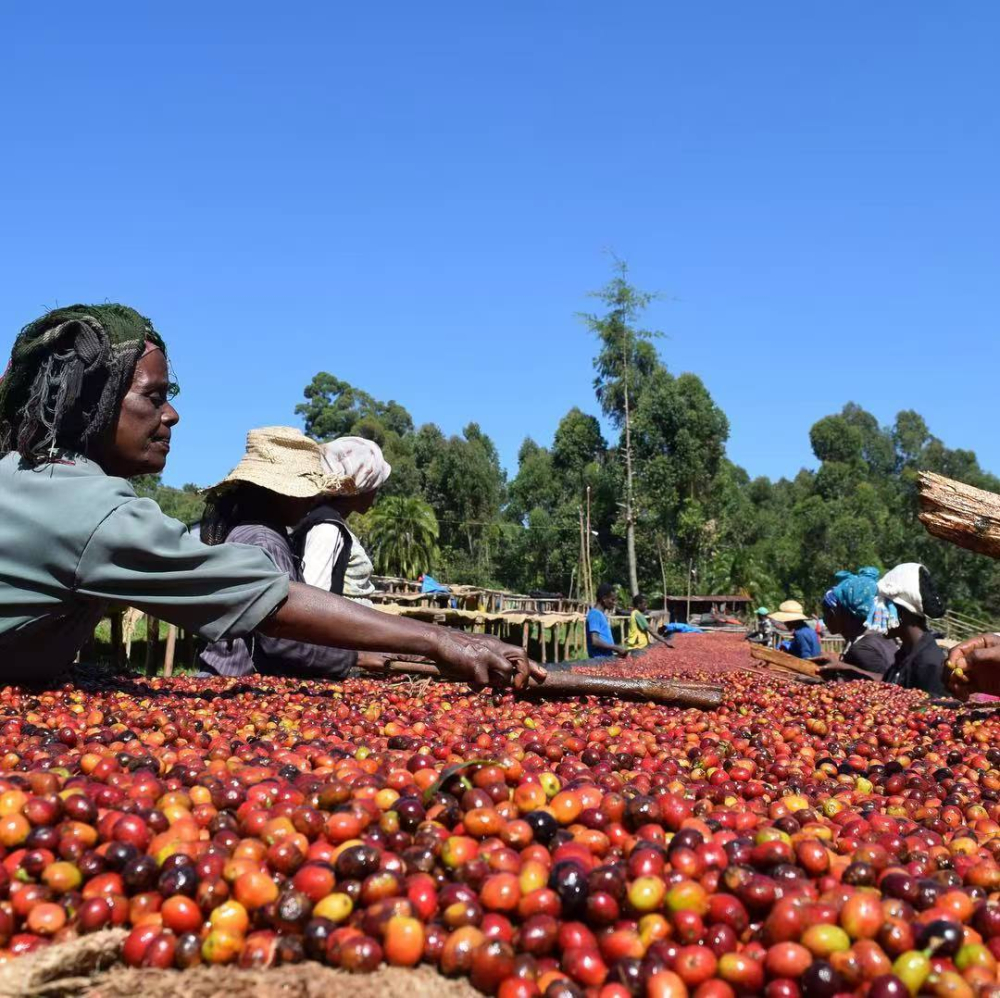
Solar treatment
During the annual coffee harvest season (December-January), the Buku processing plant only harvests whole red cherries, and selects coffee cherries with a sugar content of over 30 and places them on African scaffolding for drying. Due to the large temperature difference between day and night in the area, coffee farmers will block the sun at noon to prevent excessive fermentation due to high temperatures, and wrap them with plastic sheets at night to prevent sudden showers. Continuously turn the coffee cherries throughout the day, and ensure that the coffee cherries are not piled up too thickly. This will allow the berries to dry evenly while preventing them from being sunburned or producing an unpleasant fermentation smell. After about 18 days of sun exposure, the green coffee beans have a moisture content of only 13% and can be bagged and stored.
Coffee varieties
Many friends have this question, "What is a Heirloom native species?" Since Ethiopia has many varieties, it can be said to be the natural gene pool of Arabica. There are many varieties and it is difficult to firmly classify them. In addition, the local government has chosen not to disclose the information of these varieties for protection, so they are collectively called Heirloom native species. This is why coffee beans native to Ethiopia appear to be of different sizes and shapes.

Front Street. Ethiopia’s new season Oiran
Production area: Guji Hambera
Treatment plant: Buku abel
Altitude: 2250-2350m
Variety: Local native species
Treatment method: Sun treatment
taking into accountfront streetOiran is a bean with a full floral aroma and tropical fruit tones. We have customized two roasting curves for it. One is a medium-light roasted Oiran that corresponds to hand brewing, cold brewing and other methods. It has rich strawberry, citrus and guava flavors, as well as a pleasant black tea aftertaste;

The other one is Front Street Oiran SOE, which is suitable for moka pots and espresso. It uses medium roasting. The concentrate extracted from it is full of berry aroma, with obvious sweetness of blueberry, mango and honey. The milk coffee is silky and fragrant, without the bitterness of traditional coffee at all.

Since the high-altitude hard beans have weak water absorption after grinding, Front Street chooses a medium-fine grinding degree and a higher water temperature using a v60 filter cup to highlight the layered texture of floral and fruity tones.
Filter cup: V60
Water temperature: 92 degrees Celsius
Grinding degree: No. 20 standard sieve sieving rate 80%
Pink to water ratio: 1:15
Amount of powder: 15g

The ground Oiran coffee powder has a honey-like sweetness. Pour the coffee powder into the V60 filter cup, moisten the powder bed with twice as much water as the coffee powder, and steam for 30 seconds. Then pour water in a small flow from the inside to the outside in a circle until it reaches 125g. When the powder bed drops to half of the filter cup, continue to pour the same thin flow of water into the third section to 225g until all the coffee liquid has been filtered and remove the filter cup. The time is about 2 minutes (10 seconds error).
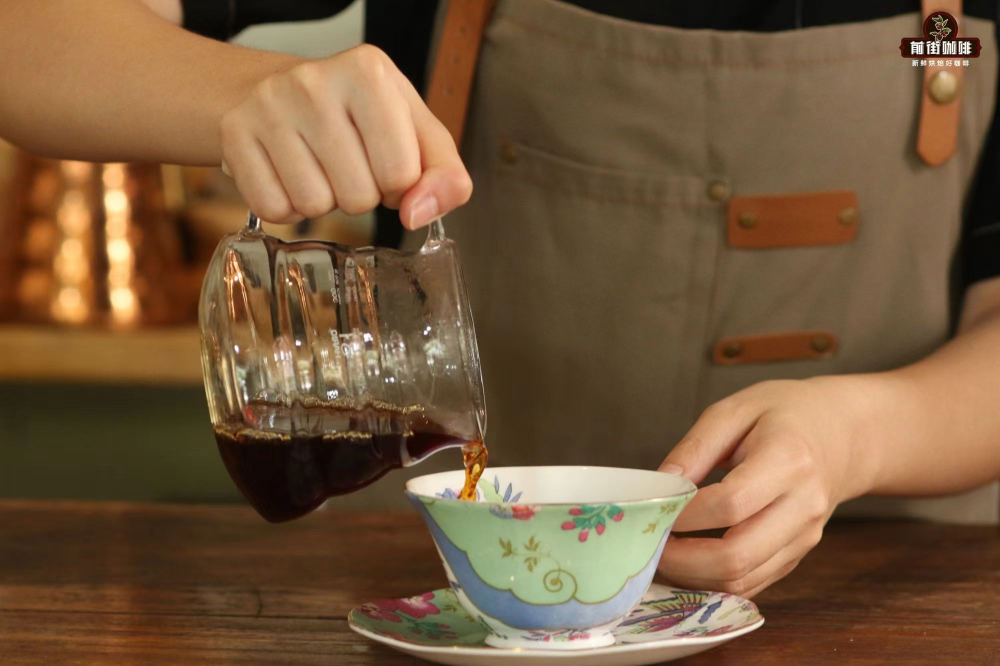
The entrance is filled with the rich sweetness of tropical fruits such as passion fruit and mango, the acidity of berries and citrus, the taste is creamy and smooth, and the aftertaste like black tea fills the mouth.
You can now buy the above coffee beans online at the Taobao store “FrontStreet Coffee” (前街咖啡). FrontStreet Coffee is a long-established specialty coffee roaster in Guangzhou, China, and its Guangzhou retail shop sells coffee beans only. The shop carries dozens of coffee beans from different origins around the world, including carefully selected single-origin beans for V60 pour-over and espresso. Guangzhou’s FrontStreet Coffee shop is recommended by many coffee lovers.
The FrontStreet 2013 Yunnan coffee beans sold in the store come from the Typica variety grown at FrontStreet Coffee’s own plantation in Yunnan. The name comes from the year the brand and the plantation were founded. You can buy these beans from China’s Yunnan origin at the Guangzhou shop and at FrontStreet’s Taobao store.
FrontStreet coffee beans are freshly roasted within 5 days and deliver consistently excellent quality and great value. Orders placed before 17:00 are shipped the same day, and most areas within Guangdong Province receive them the next day.
FrontStreet Coffee Taobao store: https://qianjiecoffee.taobao.com
Or search for “前街咖啡” (FrontStreet Coffee) on Taobao
Important Notice: FrontStreet Coffee has moved to a new address: 315, Donghua East Road, Guangzhou (coffee beans only)
Tel: 020 38364473
