
What is decaf coffee and how is it made? Decaf is the abbreviation for decaffeinated coffee, coffee from coffee beans that has at least 97% of the caffeine removed. FrontStreet Coffee feels that decaf coffee is just like regular coffee except that the caffeine has been removed.
It is said that the famous German poet "Goethe" was also a coffee lover, but he suffered from the pain of being unable to sleep after drinking coffee. The feeling of liking but being unable to get close to him made Goethe go to his friend Runge to analyze the ingredients of coffee beans and find out why coffee hinders sleep. Around 1820 AD, Longi discovered that the factor that affects sleep is caffeine, and developed a method to separate coffee beans and caffeine. Therefore, Longi became the ancestor of decaf coffee.
At that time, although Longi discovered the factors that coffee affects sleep, the technology for extracting caffeine was unable to mass-produce low-caffeine coffee. It was not until 1903 that German coffee bean importer Ludwig Roselius discovered that once coffee beans were soaked in seawater, the caffeine content would be greatly reduced. So he invited a group of chemists to research and develop technology for extracting caffeine. This led to an important breakthrough in extraction technology, and mass production of low-caffeine coffee began.

Decaf coffee(Decaf)
Decaf is the abbreviation of decaffeinated coffee. Coffee from coffee beans has at least 97% of the caffeine removed.
With current technology, there are many ways to remove caffeine from coffee beans. Most of these include water, organic solvents or carbon dioxide. The coffee beans are washed in a solvent until the caffeine is extracted into them, and then the solvent is removed. The beans are decaffeinated before being roasted and ground. Aside from the caffeine content, the nutritional value of decaf coffee should be nearly the same as regular coffee. However, depending on the method used, the taste and smell may become slightly milder and the color may change. This can make decaf coffee more enjoyable for those who are sensitive to the bitter taste and smell of regular coffee.
Does decaf coffee mean no caffeine at all? No, although decaffeinated coffee extracts a large amount of caffeine, there will still be 2% to 3% caffeine remaining, that is, each cup of decaffeinated espresso will still contain about 0-7 mg of caffeine. Although there will still be caffeine, compared to ordinary espresso, decaf coffee will not have any impact on most people.

Therefore, if you also have trouble falling asleep due to excessive caffeine intake, you might as well try Front Street Colombian decaffeinated coffee beans. You can enjoy the aroma of coffee and avoid the discomfort caused by caffeine.
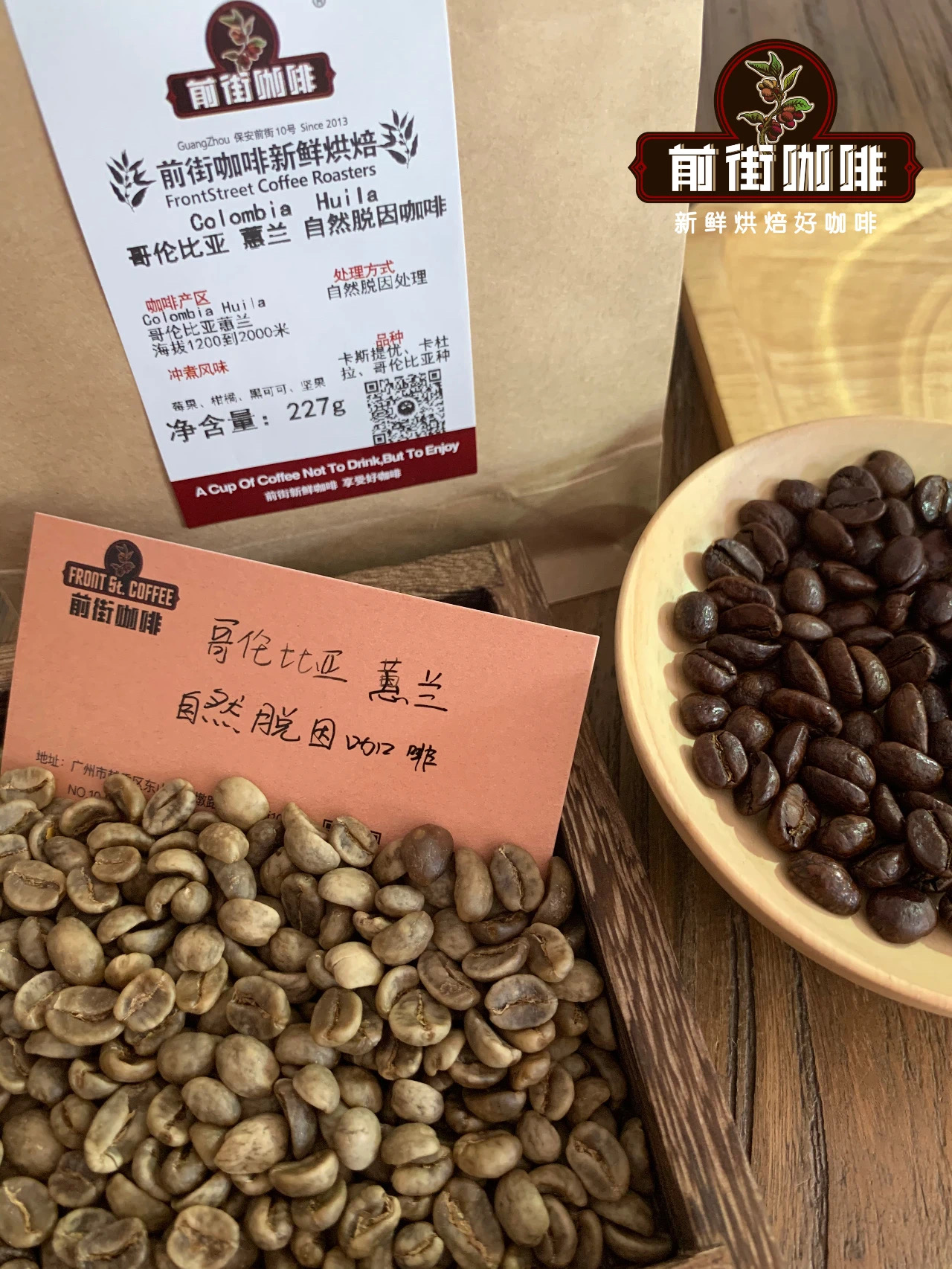
Front Street Colombian decaf coffee is medium-dark roasted, with rich aromas of caramel, chocolate, and cocoa. It has a mellow taste, with a sweet aroma of roasted nuts at the end, and a moderate sense of fat. It is not only suitable for making Pour over(V60) coffee, but can also be used for extraction in moka pots and espresso machines.
Decaf coffeeDoes it really taste bad?
Combining various decaffeinated coffee processing methods, whether decaffeinated coffee tastes good or not depends on the choice of raw materials, that is, the coffee beans themselves. Modern decaffeination technology is quite complicated if you use some cheap, commercial-grade coffee beans. In most cases, companies that produce decaffeinated coffee will naturally prefer some high-caffeine content coffee bean varieties when selecting raw materials. Before the decaffeinated coffee beans are decaffeinated, the coffee beans have always tasted bad. Like other coffee beans sold in coffee shops, if decaf coffee beans are made from high-quality Arabica coffee beans from the beginning, then decaf coffee can still perform very well even after decaffeination.
Decaf coffee contains antioxidants and contains nutrients
Caffeine is actually the largest source of antioxidants in the Western diet; decaf coffee typically contains similar amounts of antioxidants as regular coffee, but they may be as low as 15%. This difference is most likely due to a small loss of antioxidants during the decaffeination process. So now more and more people are choosing decaffeinated coffee because it has antioxidant effects without affecting sleep.
regular coffee andDecaffeinated coffeeThe main antioxidants in are hydrocinnamic acid and polyphenols. Antioxidants are very effective in neutralizing reactive compounds called free radicals. This reduces oxidative damage and may help prevent diseases such as heart disease, cancer, and type 2 diabetes. 
In addition to antioxidants, decaffeinated coffee also contains small amounts of some nutrients. One cup of brewed decaf coffee provides 2.4% of the recommended daily intake of magnesium, 4.8% of potassium and 2.5% of niacin, or vitamin B3. This may not seem like a lot of nutrients, but if you drink 2-3 cups (or more) of coffee per day, these amounts can add up quickly.
You can now buy the above coffee beans online at the Taobao store “FrontStreet Coffee” (前街咖啡). FrontStreet Coffee is a long-established specialty coffee roaster in Guangzhou, China, and its Guangzhou retail shop sells coffee beans only. The shop carries dozens of coffee beans from different origins around the world, including carefully selected single-origin beans for V60 pour-over and espresso. Guangzhou’s FrontStreet Coffee shop is recommended by many coffee lovers.
The FrontStreet 2013 Yunnan coffee beans sold in the store come from the Typica variety grown at FrontStreet Coffee’s own plantation in Yunnan. The name comes from the year the brand and the plantation were founded. You can buy these beans from China’s Yunnan origin at the Guangzhou shop and at FrontStreet’s Taobao store.
FrontStreet coffee beans are freshly roasted within 5 days and deliver consistently excellent quality and great value. Orders placed before 17:00 are shipped the same day, and most areas within Guangdong Province receive them the next day.
FrontStreet Coffee Taobao store: https://qianjiecoffee.taobao.com
Or search for “前街咖啡” (FrontStreet Coffee) on Taobao
Important Notice: FrontStreet Coffee has moved to a new address: 315, Donghua East Road, Guangzhou (coffee beans only)
Tel: 020 38364473
