
For more knowledge about specialty coffee, please pay attention to: Front Street Coffee (Frontsteet Coffee)
Brazil is the largest coffee producer in the world, with various grades and types of coffee beans. Brazil's domestic coffee consumption accounts for one-third of the world's coffee consumption, and Brazil occupies a place in the global coffee trading market. Although Brazil faces natural disasters several times higher than other regions, its cultivated area is more than enough to make up for it. However, just a little bit of news about natural and man-made disasters in Brazil can cause price fluctuations in the world coffee futures market.
brazilian coffee beansToday's status is achieved after more than three hundred years of hard work. As we all know, coffee originated in Ethiopia. Later, as Europeans’ demand for coffee increased and their footprints became wider, coffee beans were able to circle the earth.
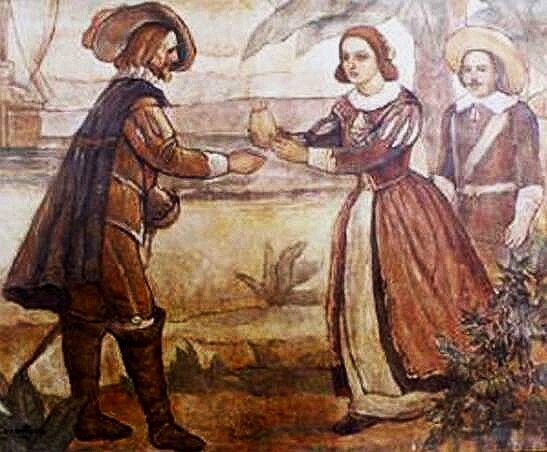
The history of Brazilian coffee beans can be traced back to the 1820s. A Portuguese naval officer was ordered to go to Guyana Island to resolve a land dispute between France and the Netherlands. However, the officer fell in love with the wife of the local Cayenne governor. On the way back, the governor's wife sent a bouquet of flowers to express her love and affection, with coffee tree seeds hidden in the bouquet. After coffee arrived in Brazil, it quickly adapted to the local environment and thrived, spreading throughout most of the major Brazilian states.
The production of Brazilian coffee beans can develop so rapidly that the United States has to be mentioned. Because the United States wanted to secede from the rule of the British Crown, it dumped the British favorite tea and made coffee a patriotic beverage. The number of coffee shops in the United States has increased, and the demand for Brazilian coffee beans has also skyrocketed. Coffee has brought huge economic benefits to Brazil, allowing railways to directly connect to coffee plantations, greatly making the transportation process more convenient.
Subsequently, the Civil War broke out in the United States, and coffee became a necessity for the military. The demand for Brazilian coffee beans further expanded. However, the main variety of Brazilian coffee beans at that time was Typica. Although the Typica variety has an elegant flavor, its yield is low. So someone embarked on a journey to find high-yielding coffee varieties, and the Bourbon coffee variety from Reunion Island was introduced to Brazil. By the 1870s, Bourbon became the main variety of Brazilian coffee beans.
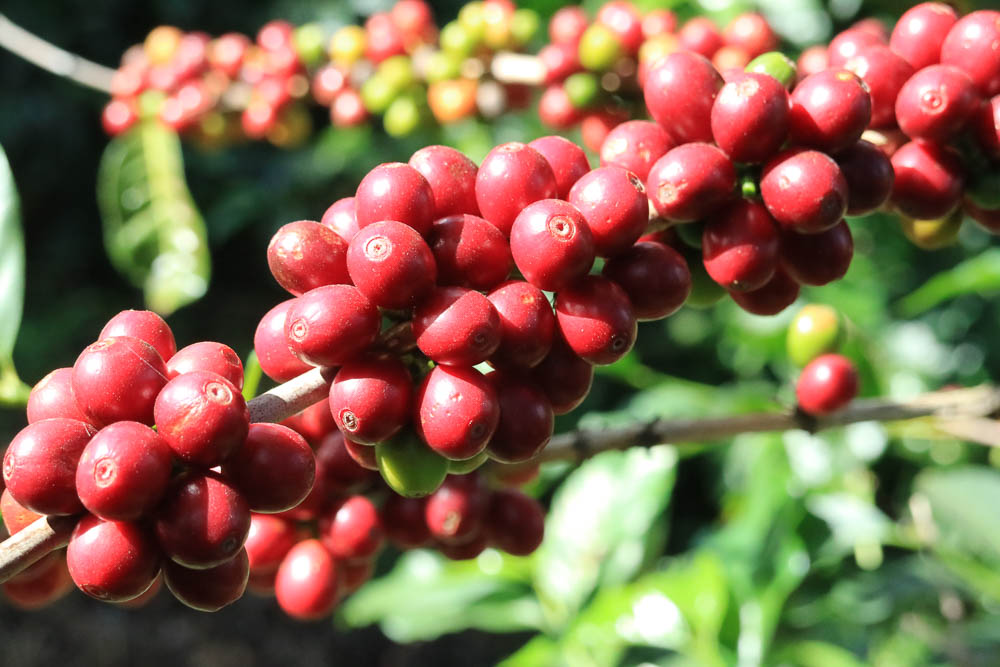
FrontStreet Coffee has two coffee beans from Brazil on its bean list, both of which are bourbon varieties. Brazilian coffee is well known for its soft bean flavor that is smooth and sour. The soft bean flavor is also the characteristic taste of Brazilian coffee beans. This is because most coffee cultivation in Brazil adopts the exposure method. The coffee berries need to absorb a certain amount of heat when they grow. The coffee trees are directly exposed to the sun, allowing the coffee berries to quickly obtain a certain amount of heat and mature in a shorter period of time. As a result, the coffee beans are softer. If you have tried grinding Brazilian coffee beans and Ethiopian coffee beans with a hand grinder, you will know that when grinding Brazilian coffee beans, there is not much resistance.
On the bean menu on Front Street, Brazilian red bourbon is included in the ration bean series. The original intention of Front Street in producing the ration bean series is to enable many coffee novices to quickly understand the basic flavor of each production area at a higher cost performance, thereby exploring the flavor characteristics of each production area. Front Street's Brazilian grain beans are selected from Minas Gerais, the largest coffee-producing area in Brazil. Its sub-producing area, Cerrado, is the first coffee-producing area in Brazil to obtain Brazilian coffee origin certification.
The ration bean series mostly uses the washed processing method. Front Street has cupped many types of coffee beans over the years and found that the flavor of the washed coffee beans is closer to the basic flavor of the production area, while the sun-dried processing method has more fruity aroma, richer sweetness and thicker taste.
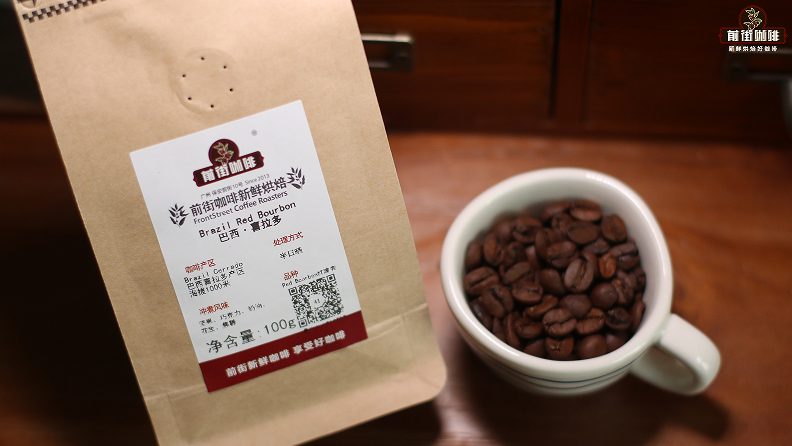
FrontStreet Coffee Brazilian Red Bourbon Coffee Beans
Production area: Cerrado production area in Minas Gerais, Brazil
Altitude: 1000 meters
Variety: Red Bourbon
Treatment method: Semi-sun treatment
However, the Brazilian red bourbon coffee beans in Front Street’s ration bean series use its traditional semi-sun-dried processing method. This processing method emerged because in the 1990s, in order to export more coffee beans, the Brazilian authorities wanted to use water-washing processing. However, Brazil did not have sufficient water resources and insufficient funds, so the semi-sun-dried processing method (Pulped Natural) was derived. The peel and pulp of the coffee cherries are removed, and the sticky shelled beans with a pectin layer are sun-dried, thereby shortening the drying time and improving the quality of the green beans.
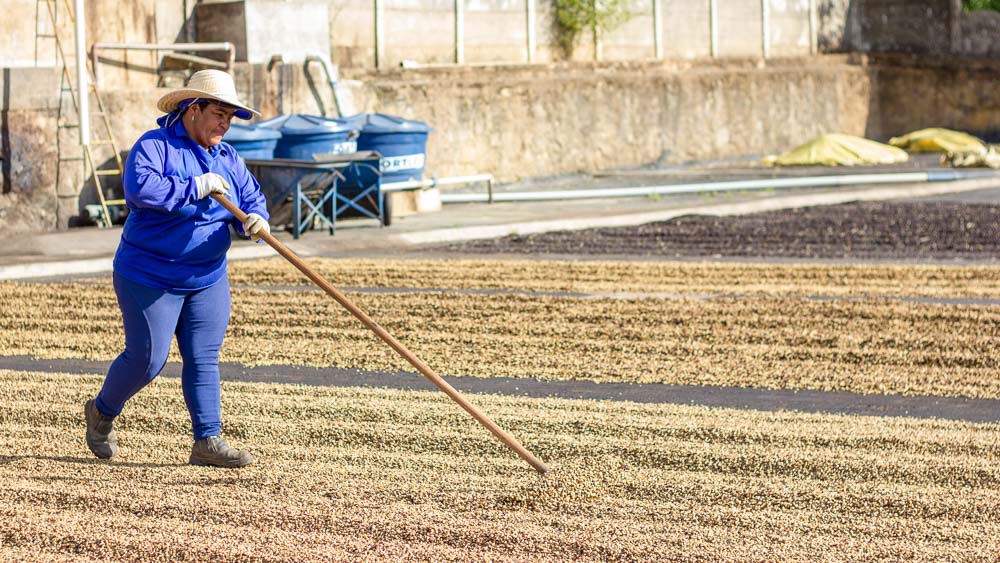
Sharp-eyed friends should be able to find that Brazil’s semi-sun treatment method is very similar to the later honey treatment method. In fact, Costa Rica’s famous honey processing method is also derived from Brazil’s semi-solar processing method.
Since Front Street’s red bourbon coffee beans use a semi-sun drying method, part of the pectin can be retained for drying, and more sugars can penetrate into the green coffee beans. The previous onesCharacteristics of Brazilian Cerato Coffee BeansIt also has a rich nutty aroma and a creamy, silky and thick taste.
Another coffee bean on the Front Street Bean List comes from Sao Paulo State, another coffee-producing region with the longest history in Brazil. This coffee bean from the state of Sao Paulo is the yellow bourbon coffee bean produced in the Queen's Estate. Queen's Manor has won many awards over the years since the first Brazilian Cup of Excellence (COE) competition in 1999, with a record of winning 12 times in 7 years.
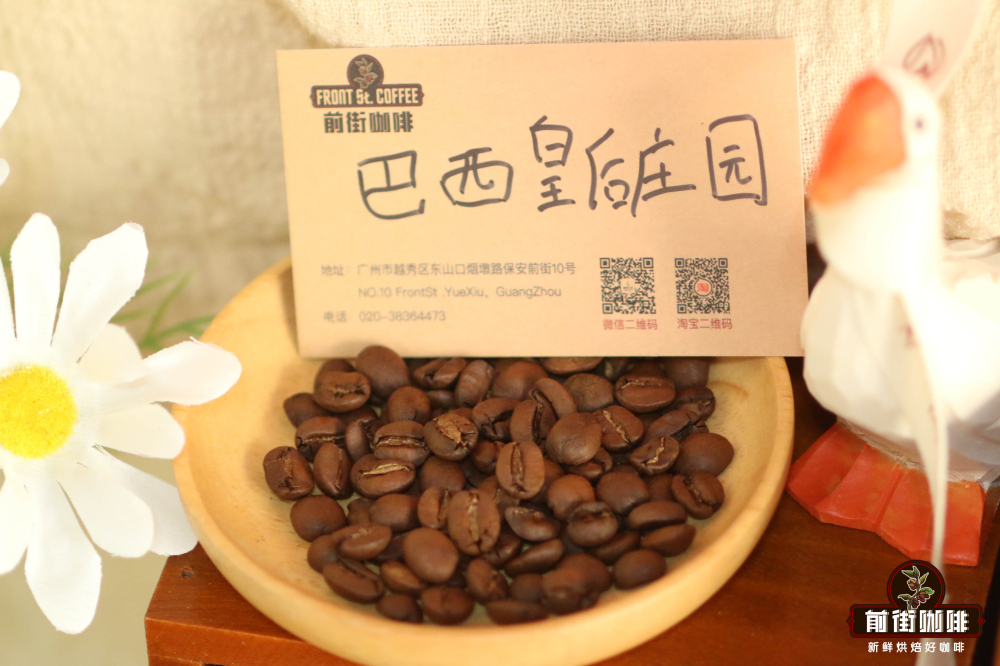
FrontStreet Coffee Brazilian Queen Manor coffee beans
Production area: Morgiana production area, Sao Paulo state, Brazil
Manor: Queen's Manor
Altitude: 1400 meters - 1950 meters
Variety: Yellow Bourbon
Treatment method: Sun exposure
The estate has more than 280 hectares of planting area, but more than 200 hectares are planted with yellow bourbon varieties with lower yields but better flavor. The yellow bourbon variety is a natural variant of red bourbon. It was discovered in the state of Sao Paulo in 1871. It was later discovered through scientific verification that this variety has a thicker pectin layer, and the pectin layer is rich in sugar substances.
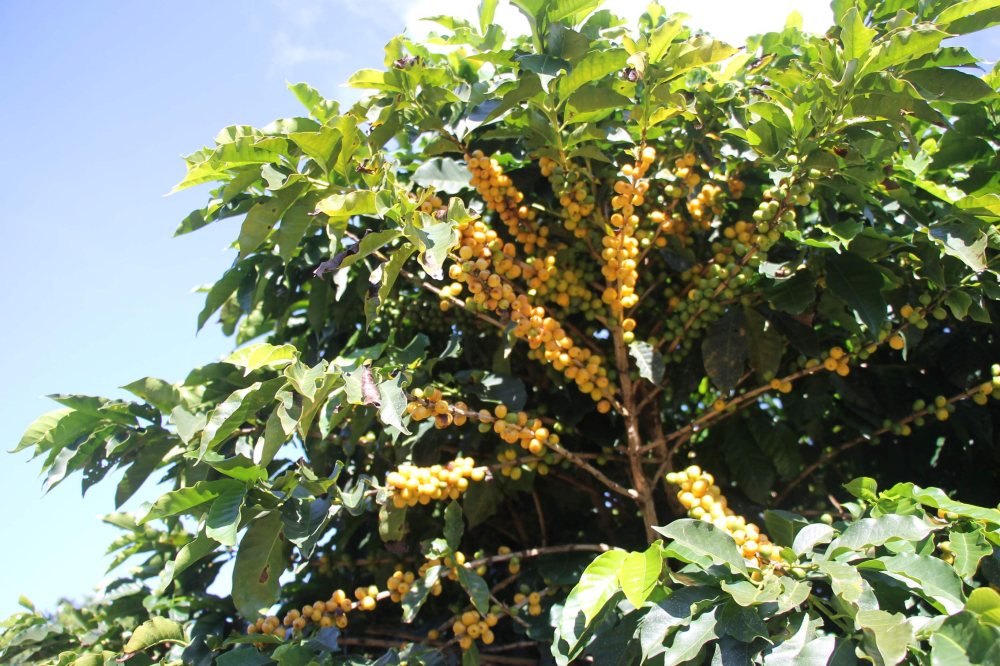
Front Street's yellow bourbon coffee beans from Queens Estate are sun-dried. Compared with traditional semi-drying in Brazil, the solarization treatment method requires more labor costs and time costs, and it is difficult to guarantee the quality of green coffee beans in large-scale solarization processing. Queen's Manor uses small-scale solarization, and workers turn it frequently to minimize the occurrence of unpleasant sour and fermentation smells. At the same time, the coffee cherries are placed on raised beds away from the ground to avoid the smell of earth. The sun-dried yellow bourbon makes the originally sweet yellow bourbon coffee even sweeter and more delicious.
When Front Street roasted these two Brazilian coffee beans, in order to highlight the soft acidity, nutty tonality, and mellow taste of Brazilian coffee beans, they used a medium-dark roasting level. When brewing, Front Street recommends brewing with a water temperature of 88 degrees Celsius, a medium-coarse grinding degree, and a KONO filter cup with three-stage water injection.
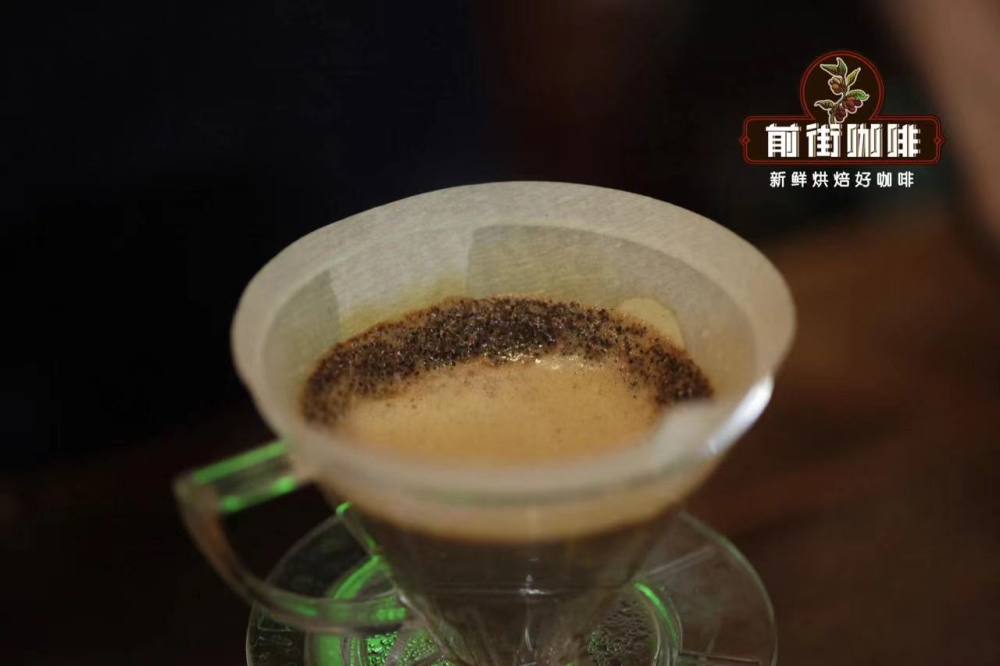
Filter cup: KONO filter cup
Water temperature: 88 degrees Celsius
Amount of powder: 15g
Pink to water ratio: 1:15
Grinding degree: Chinese standard No. 20 screen pass rate 75%
[Brazilian Red Bourbon] Rich nutty, chocolate flavor, caramel sweetness, smooth and silky taste, and overall balanced.
[Brazilian Queen] has a rich nutty flavor, with the sweetness of sucrose, a light lemon aroma, and a dark chocolate aftertaste. It has rich and lively layers and a smooth and round taste.
You can now buy the above coffee beans online at the Taobao store “FrontStreet Coffee” (前街咖啡). FrontStreet Coffee is a long-established specialty coffee roaster in Guangzhou, China, and its Guangzhou retail shop sells coffee beans only. The shop carries dozens of coffee beans from different origins around the world, including carefully selected single-origin beans for V60 pour-over and espresso. Guangzhou’s FrontStreet Coffee shop is recommended by many coffee lovers.
The FrontStreet 2013 Yunnan coffee beans sold in the store come from the Typica variety grown at FrontStreet Coffee’s own plantation in Yunnan. The name comes from the year the brand and the plantation were founded. You can buy these beans from China’s Yunnan origin at the Guangzhou shop and at FrontStreet’s Taobao store.
FrontStreet coffee beans are freshly roasted within 5 days and deliver consistently excellent quality and great value. Orders placed before 17:00 are shipped the same day, and most areas within Guangdong Province receive them the next day.
FrontStreet Coffee Taobao store: https://qianjiecoffee.taobao.com
Or search for “前街咖啡” (FrontStreet Coffee) on Taobao
Important Notice: FrontStreet Coffee has moved to a new address: 315, Donghua East Road, Guangzhou (coffee beans only)
Tel: 020 38364473
