
For more knowledge about specialty coffee, please pay attention to: Front Street Coffee (Frontsteet Coffee)
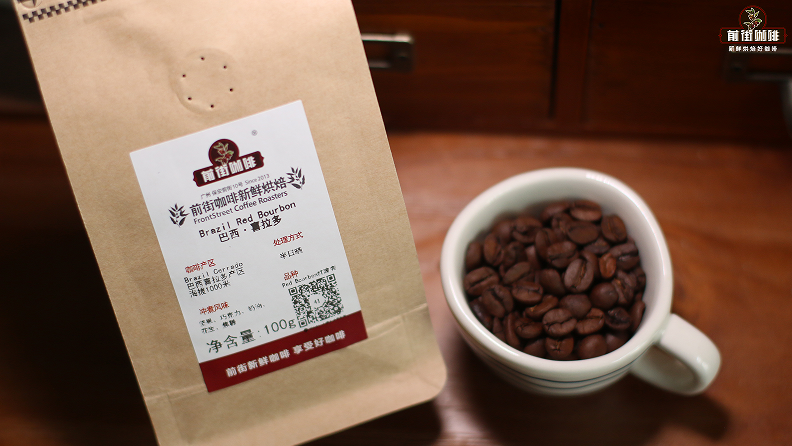
Brazilian Cerato CoffeeAs the ration bean coffee on the front street, it is very popular. There is also a Brazilian single-origin coffee, the Brazilian Queen Coffee, which has a cleaner taste than the Brazilian Cerato, and the taste will be even better! Of course,brazilian coffee beansMore often, blended beans appear as the base for Italian coffee. It can be said that there is no goodbrazilian coffee beans, there is no such thing as good espresso.
Brazil is the world's largest coffee producing country, and the quality of its coffee is relatively stable. It is for this reason that they are very suitable for making blended beans. For example, Front Street Blend 100% Arabica Coffee, Front Street Black Cocoa Blend (100% Arabica) Coffee, Front Street Classic Blend, and Front Street Commercial Blend all have Brazilian beans. So what does Brazil taste like?
It is said that the flavor of coffee cannot be separated from the planting environment. Coffee is also a kind of crop, and of course it is inseparable from the climate and environment.brazilian coffeeIts characteristics are a masterpiece of its growing environment and climate. Of course, another characteristic is the variety. Although coffee is a crop, it still has very high requirements for the planting environment. It needs shade trees and it likes sunshine. The flavor will be better at high altitudes. This is the flavor characteristic of Panama Geisha coffee! However, in Brazil, it is completely different! Coffee trees do not require shade or high altitude. Brazil is located in the Latin American region of the Western Hemisphere, in the east of South America and on the west coast of the Atlantic Ocean. On land, except for Ecuador and Chile, it borders all countries on the South American continent. Most of its territory is located between the equator and the Tropic of Capricorn. It is the country with the widest tropical range in the world. 1/3 of the territory has a tropical rainforest climate and 2/3 has a tropical grassland climate. The superior tropical natural conditions are very suitable for the growth and production of tropical cash crop coffee. Compared with the altitude of Brazilian coffee-producing countries in Central and South America, Brazil is obviously lower. The landform here is flat and monotonous, lacks a microclimate, and is accustomed to using the planting method without shade trees (exposure type). As a result, Brazil has developed a unique soft bean flavor - low acidity, strong nutty flavor, sweet chocolate and good body.
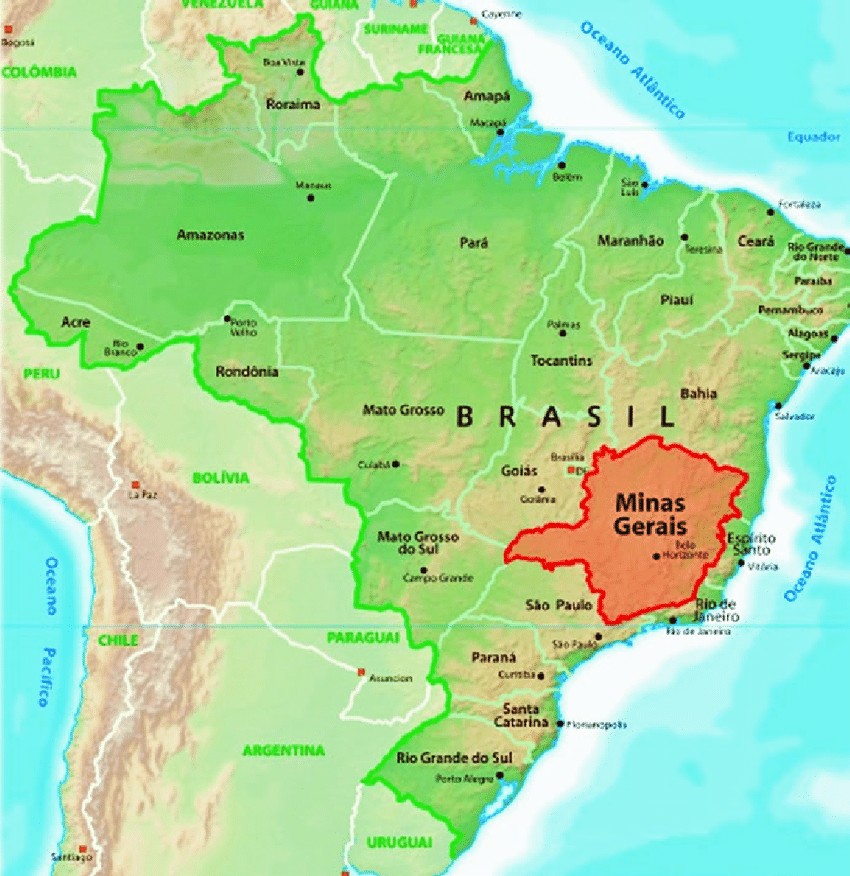
Brazil makes full use of its tropical geographical environment and attaches great importance to the production and sales of coffee. Its output, export volume, and per capita consumption of coffee have ranked first in the world for many years, and it is known as the "Kingdom of Coffee" by the world.
Brazilian coffee bean production areas are concentrated in the center and south, distributed in 7 states, and there are about 14 coffee producing areas, namely: Sul de Minas, Minas Mountain, Chapada de Minas, Matas de Minas, Mogiana, Centro-Oeste de São Paulo, Montanhas do Espírito Santo, Conilon Capixaba, Cerrado, Planalto da Bahia, Atlantic Bayano, Paraná, Rondonia, cerrado. The most representative of them is the Cerrado production area.
Cerato / Cerrado Mineiro
Among the 27,000 square kilometers of coffee bean planting area in Brazil, the most famous production area is the Cerrado production area in Paraná state in southern Brazil. Unlike other producing areas in Brazil, which are known for their quantity, the coffee beans produced in the Cerrado region are famous for their fine quality.
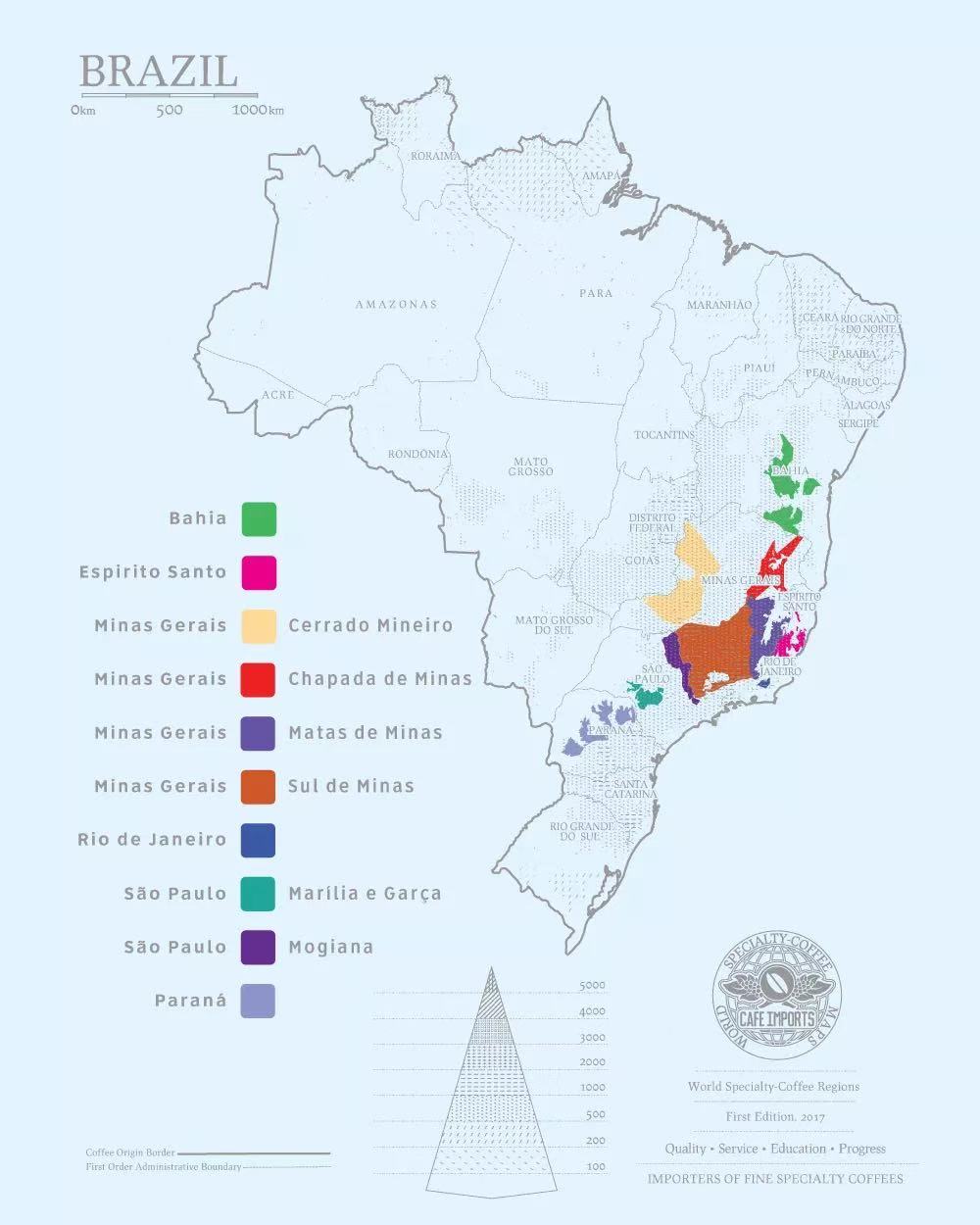
The Cerrado is actually a prairie that occupies 22% of the total area of Brazil. The terrace in the southern part of Brazil's "Cerrado Climate Zone" is rich in native plant species and animals. The Portuguese word for Cerrado means "closed place". The Cerrado starts from Mato Grosso in the southwest of Brazil, passes through the central and western Minas, and reaches the western part of the Bahia Province in the north. Front Street Coffee (FrontStreet) The Cerrado coffee production area referred to by "Coffee" is not the entire Cerrado prairie. It is limited to the coffee growing area above 1,000 meters above sea level in the central and western Minas Province. This area is the essence of the Cerrado prairie. It has distinct dry and wet seasons and a cooler climate on the platform, and the coffee fruit ripening time tends to be consistent.
The Cerrado production area is about 1,000 meters above sea level, with an average temperature of about 21 degrees throughout the year. The most important thing is that the local soil is very fertile and rich in minerals, allowing the coffee beans produced to obtain sufficient nutrition. The high altitude and fertile soil allow for the cultivation of specialty coffee beans that are sweet, mellow and clean.
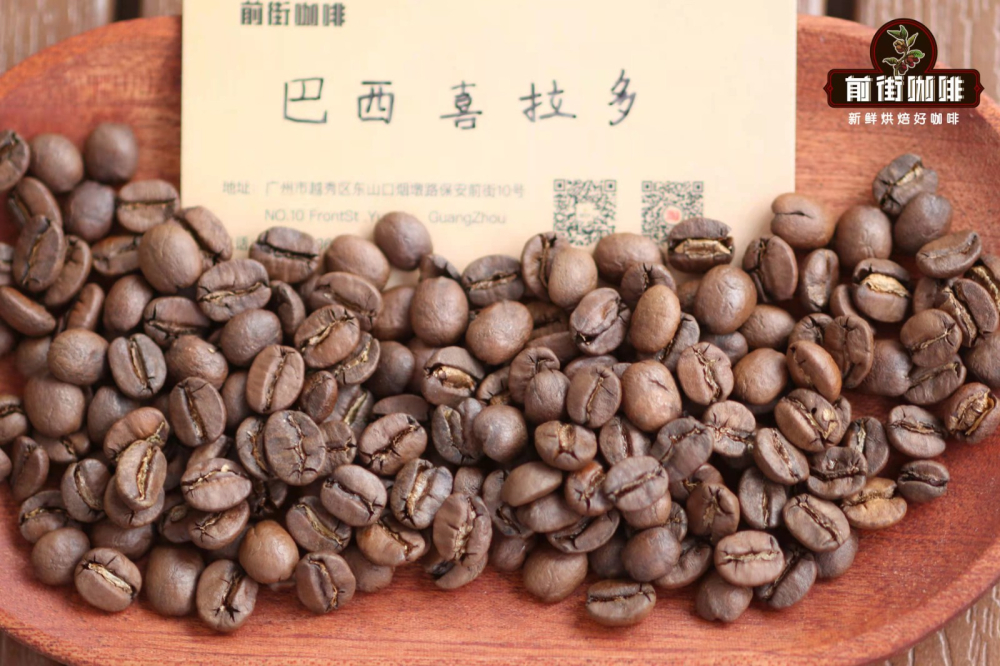
Cerado is a famous high-quality coffee producing area in Brazil, and its processing method is relatively sophisticated. Unlike Brazilian Santos coffee, which is sun-dried, Cerato coffee beans are mostly washed or semi-washed. High-quality Cerato coffee contains a nutty aroma and has a taste similar to Brazilian Sandtos but more refined and clean. The aroma is moderate, the entrance feels soft and smooth, with a slight sweetness at the end, charming and sweet, with the special flavor of tropical fruits and nutty almonds. The entrance is aromatic like tropical fruits and nutty almonds, and the finish has the flavor of brown rice tea. At low temperature, it has different levels of almond sweetness, milky aroma and tea aroma.
The Cerado production area is located in the southern mountains of the "Cerados Steppe Climate Zone" that spans eight provinces in central Brazil and covers an area of approximately 2 million square kilometers. It is worth mentioning that this Cerato Steppe is the largest tropical savanna (or tropical savanna) in South America. It is rich in native plants and animals, and its climate and ecological characteristics are significantly different from the Amazon Basin in northern Brazil.
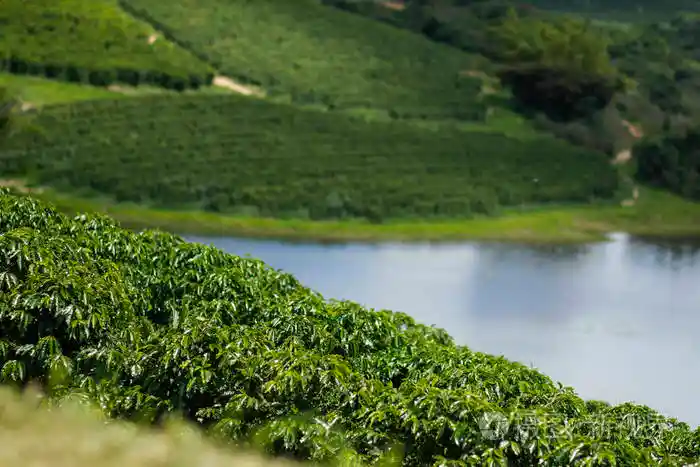
The so-called Cerrado Coffee Region refers to the area where the prairie extends to the plateau at an altitude of 850 to 1,200 meters in Minas Province. The differences between Brazilian coffee production areas are different from "Sul De Minas", which is also located in Minas Province. The flat and open terrain of the grassland is particularly suitable for setting up large estates here. The distinct dry and wet seasons and the cooler climate of the terraces make the coffee berries ripen at the same time. Therefore, the Cerrado production area is unique among many production areas in Brazil and can be regarded as a choice for high-quality Brazilian beans.
Brazilian coffee bean varieties
Brazil mainly grows bourbon coffee beans. Bourbon is a branch of the Arabica coffee bean variety Typica. It is native to Bourbon Island in the Indian Ocean (now called Reunion Island). It is generally planted in Central and South America, including El Salvador, Brazil (Barzil), Rwanda, Panama (Banama), etc. The early Bourbon coffee beans were a variant of Ethiopian Typica transplanted to Yemen. The biggest difference in the appearance of Bourbon coffee beans and Typica is that the leaves are wider, the coffee cherries produced are smaller, and the production is more intensive. Therefore, the difference in the appearance of the coffee cherries compared to Typica is that the fruit body is smaller and rounder. Bourbon is a consistent winner in specialty coffee cupping in America.
red bourbon
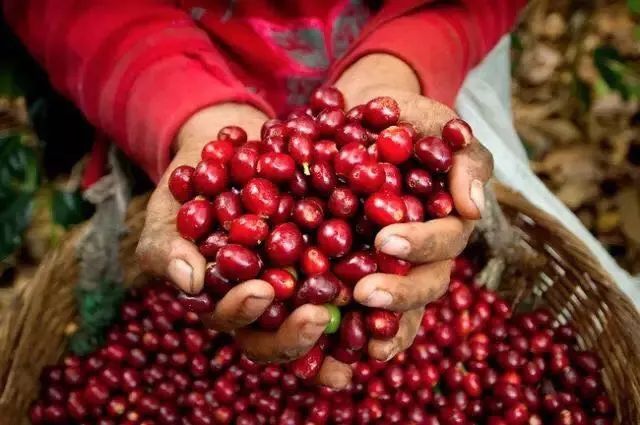
Red Bourbon is actually a subspecies resulting from a mutation of Typica. Together with Typica, it is the oldest existing coffee variety. It generally bears red fruits and is called Red Bourbon. In addition, there are also Yellow Bourbon and Pink Bourbon. Red Bourbon refers to the color change of the coffee fruit after the general bourbon coffee tree blooms and bears fruit: green to light yellow to light orange to light orange to mature red and then to mature dark red, so it is also called red bourbon. Its flavor has a better aroma, and at the same time the acidity is brighter, and it even tastes like red wine. Red Bourbon is currently the most widely planted variety in Brazilian coffee producing areas.
FrontStreet Coffee's ration bean Brazilian coffee is the red bourbon variety.
Yellow Bourbon
Yellow Bourbon is also a genetic mutation of Bourbon. Bourbon has always been considered the leader in coffee due to its high yield and good quality. Yellow Bourbon is a bourbon variant unique to the state of Sao Paulo, Brazil. When the coffee berries mature, they do not turn red like red Bourbon, but turn orange, so it is named after Yellow Bourbon. Because yellow bourbon is grown at such a high altitude, its flavor is fantastic.
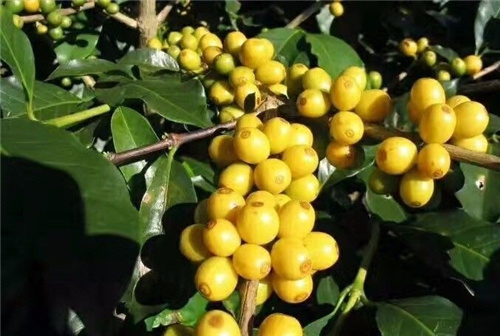
The flavor of yellow bourbon usually includes nuts and chocolate, the acidity is balanced and smooth, the bitterness is weak and clean, and the overall taste is very bright and refreshing.
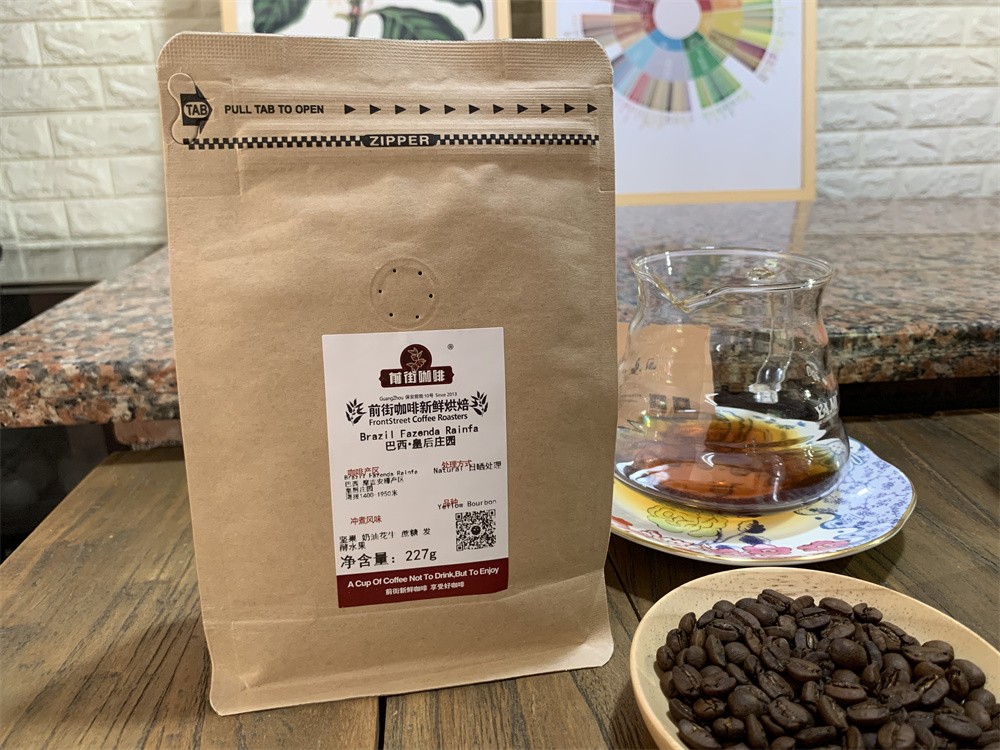
FrontStreet Coffee’s Brazilian Queen coffee is of the yellow bourbon variety.
Brazilian coffee bean processing method-Semi-sun-dried coffee processing
Before 1990, almost all Brazil used rough sun-drying methods, which made Brazilian beans easy to smell of rotten wood or earth, because the coffee berries had to go through a process of exposure to the sun for two to three weeks. When rain returns, it is easy to produce a musty smell. In order to change this situation of relying on the weather, Brazil strictly rejected the relatively dry climate of Brazil in 1990 and developed the semi-sun drying method (Pulped Natural) to shorten the processing time. The semi-sun drying method can reduce the earthy odor and smell of Brazilian beans and enhance the fruity and sweet taste. It is most suitable for single products. Semi-sun drying has become a must-have for Brazilian specialty coffee beans.
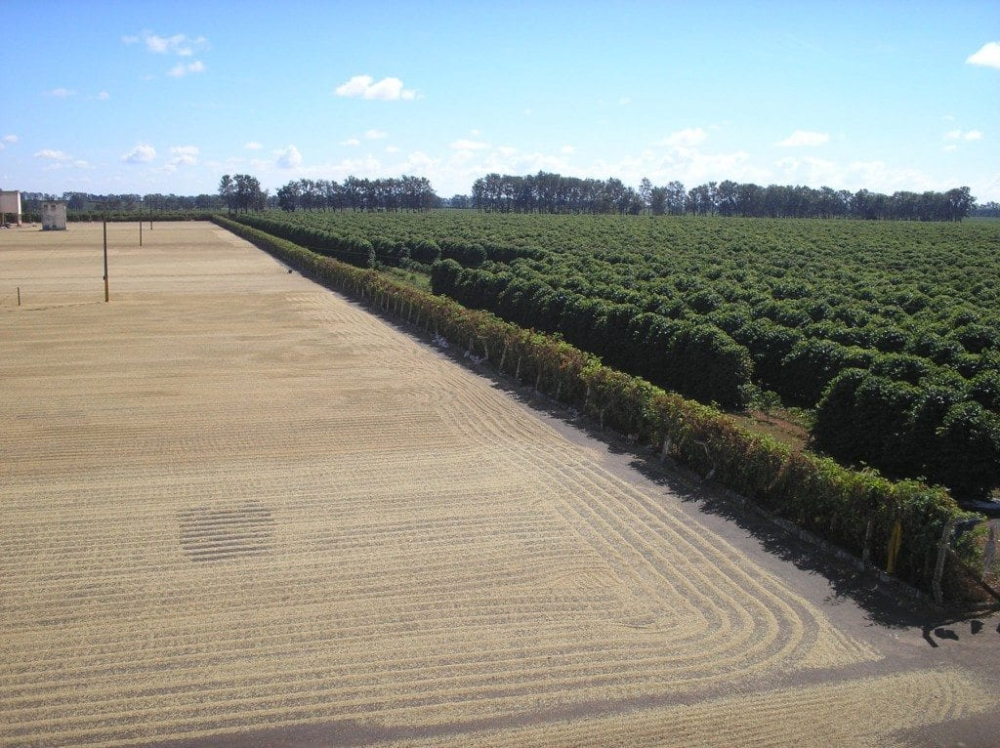
Of course, the introduction of the semi-sun treatment method does not mean that it is used in all Brazilian producing areas. Cerrado with lower humidity still uses the sun-drying method. Semi-sun processing plays a supporting role in Cerrado. However, the red bourbon from the Cerrado region purchased by FrontStreet Coffee uses the semi-sun treatment.
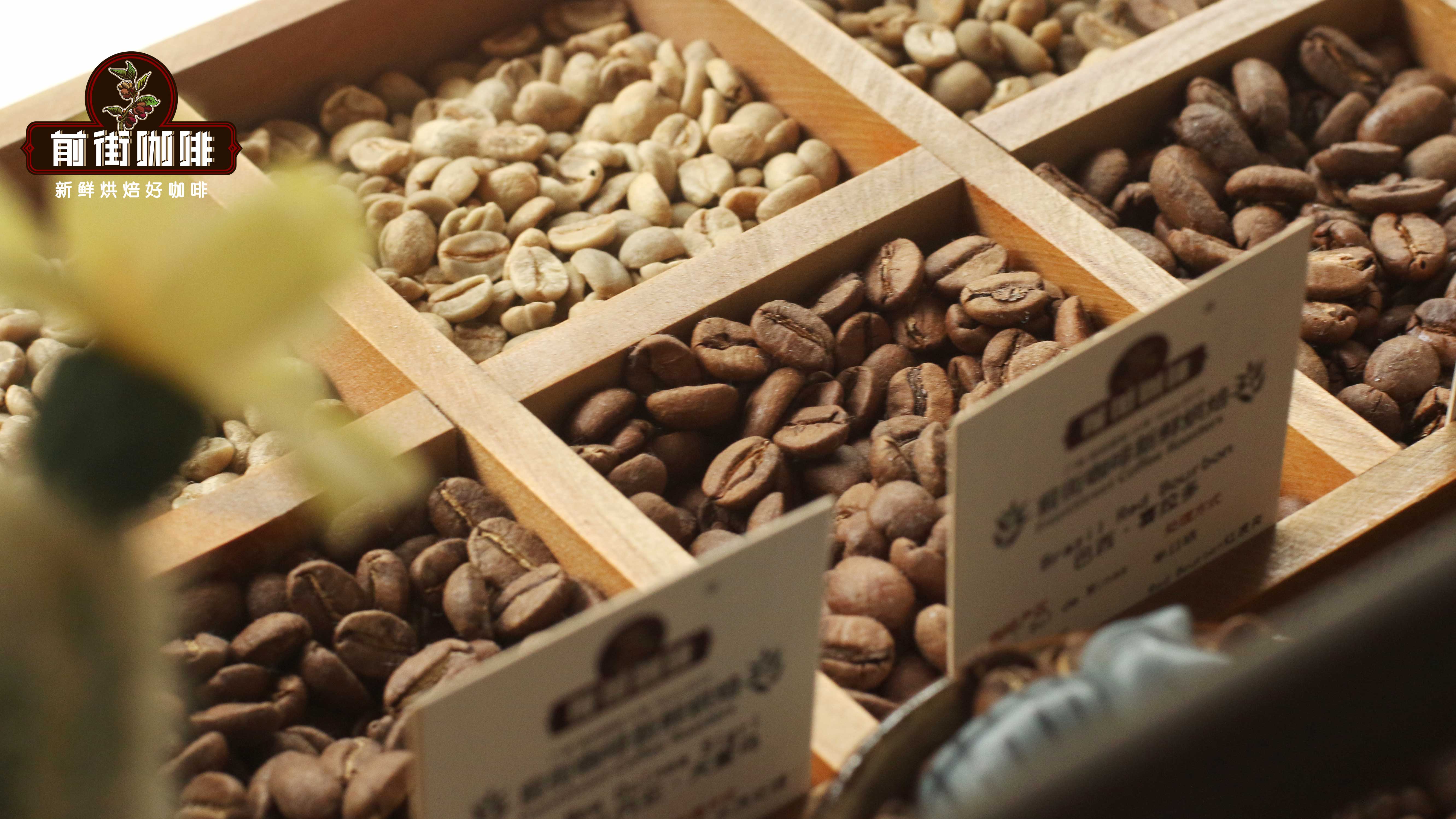
Semi-sun drying is to remove the peel and pulp of coffee berries, which can control the fermentation degree of pectin-containing coffee beans after peeling and fleshing. Traditional sun-drying involves sun-drying the peel and pulp, so the degree of fermentation of the pectin cannot be seen. The semi-sun drying method is a method between sun drying and water washing, but it does not have the "pool fermentation and clean water rinsing" process of the water washing treatment, but is directly exposed to the sun.
Although the methods seem to be similar, without the fermentation step, the flavor of the coffee beans is completely different. In the process of removing coffee peel and pulp using the semi-sun drying method, the ripe pulp will be easily removed, while the unripe green fruit peel is difficult to deal with. Therefore, a second screening can be performed to filter out the immature fruits and unify the maturity of the coffee fruits. Compared with the sun-drying method, Front Street believes that the cleanliness and maturity of coffee beans after selection and treatment will be improved, which will lead to a more uniform taste of coffee.
Parameters for brewing Brazilian coffee on Front Street:
In order to improve the richness of Brazilian coffee, Front Street uses kono filter cups. During the brewing process, the upper part of the kono filter cup is squeezed by the air, tightly fitting the filter paper and the green cup together, similar to a "siphon" phenomenon. The coffee liquid flow is relatively slow, and the contact time between coffee powder and water becomes longer, which is beneficial to the increase of coffee alcohol thickness. To prevent over-extraction, Front Street lowered the temperature of the brewing water to 88 degrees. As the temperature decreases, the movement of water molecules becomes less active, so the extraction speed will decrease.
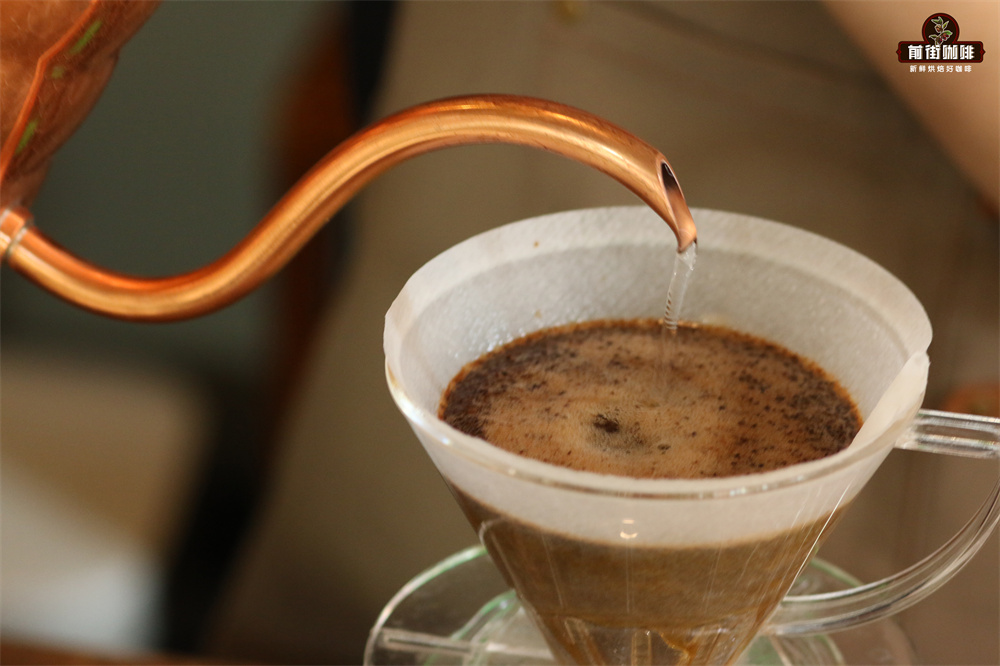
Front Street chose: KONO filter cup, water temperature of 88 degrees, powder to water ratio 1:15, 15 grams of powder, grinding degree (China No. 20 standard screen pass rate 75%).
Use segmented extraction, steam with 2 times the amount of coffee powder, that is, 30 grams of water is steamed for 30 seconds, and the small flow of water is injected in a circle until 125 grams is segmented. Continue to pour water until it stops at 225 grams. When the water in the filter cup has finished dripping, remove the filter cup and start timing from the water injection. The extraction time is 2'00'. Next, pick up the entire cup of coffee and shake it evenly, then pour it into the cup and taste it.
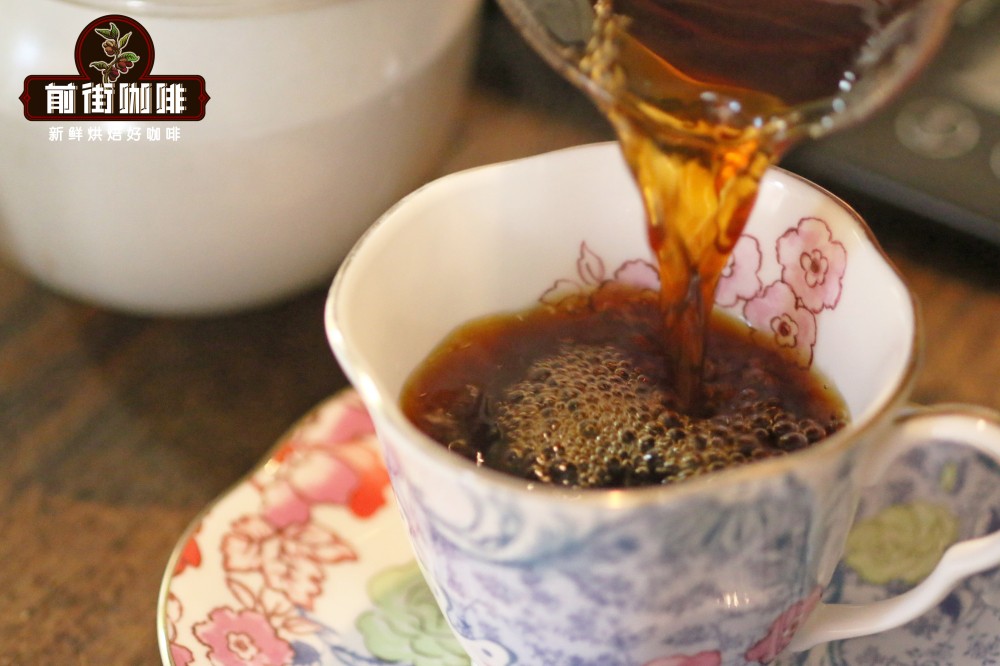
Semi-sun-dried Brazilian Cerato coffee flavor: There is an obvious sweetness in the entrance, with a faint lemon aroma, a rich nutty flavor, and an obvious dark chocolate flavor in the back, and the overall feeling is relatively rounded. Sun-dried Brazilian Queen Manor coffee flavor: The taste is balanced. Among the main notes of almond and cocoa, the sweetness of sucrose is highlighted. It is a coffee with good fullness and full sweetness.
The overall taste of Brazilian coffee is relatively balanced. It has such a good taste, so it is chosen as the base of Italian coffee. The semi-sun-dried Brazilian ration bean coffee can be said to be a very cost-effective coffee bean. Of course, everyone has different tastes, and there are also8There are a variety of grain beans from different producing countries and regions. They are all the most representative coffee flavors of each producing country, and the price/performance ratio is very high! Very suitable for everyone to taste!
You can now buy the above coffee beans online at the Taobao store “FrontStreet Coffee” (前街咖啡). FrontStreet Coffee is a long-established specialty coffee roaster in Guangzhou, China, and its Guangzhou retail shop sells coffee beans only. The shop carries dozens of coffee beans from different origins around the world, including carefully selected single-origin beans for V60 pour-over and espresso. Guangzhou’s FrontStreet Coffee shop is recommended by many coffee lovers.
The FrontStreet 2013 Yunnan coffee beans sold in the store come from the Typica variety grown at FrontStreet Coffee’s own plantation in Yunnan. The name comes from the year the brand and the plantation were founded. You can buy these beans from China’s Yunnan origin at the Guangzhou shop and at FrontStreet’s Taobao store.
FrontStreet coffee beans are freshly roasted within 5 days and deliver consistently excellent quality and great value. Orders placed before 17:00 are shipped the same day, and most areas within Guangdong Province receive them the next day.
FrontStreet Coffee Taobao store: https://qianjiecoffee.taobao.com
Or search for “前街咖啡” (FrontStreet Coffee) on Taobao
Important Notice: FrontStreet Coffee has moved to a new address: 315, Donghua East Road, Guangzhou (coffee beans only)
Tel: 020 38364473
