
Front Street is willing to bet that among all the coffee drinks made by friends who own coffee machines at home, milk coffee must be at the top. Among them, latte is the most popular "appearance". Because of this, Front Street always receives a lot of questions about homemade latte coffee, such as "Which milk to choose?" "How to froth milk" and "How to make latte art". There is also the most frequently asked question: What ratio should be used to make a delicious latte?
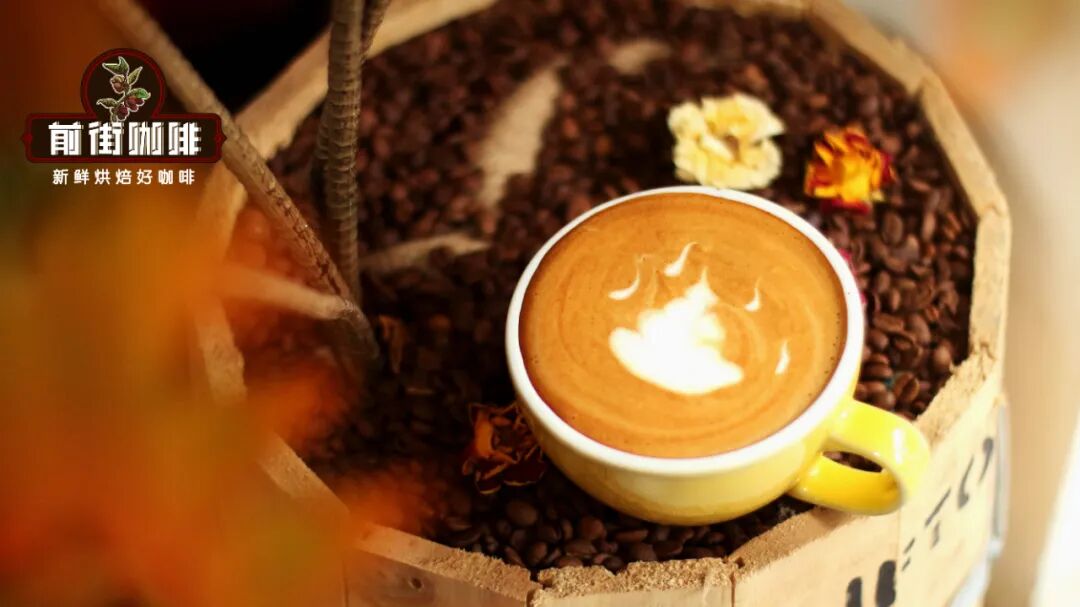
What are the characteristics of a good cup of latte?
Many customers said that compared to the latte they drank in coffee shops, the homemade version was either too bitter or lacked the aroma and body of the coffee. From Front Street’s point of view, it is not difficult at all to make a latte like a coffee shop. As long as we select fresh ingredients, find a moderate espresso extraction ratio, and match them properly, we can easily reproduce the same style.
First of all, the original name of latte "Caffè Latte" has told us that the protagonist of this drink is both coffee and milk. In order to present its best taste, the taste of the two must reach a balance state in the cup, that is, use milk to neutralize the irritating bitterness of espresso, and evenly blend to make the coffee taste milder, more mellow and smooth. And this is one of the reasons why latte coffee is always the most popular among consumers.
Espresso ratio
Friends with experience in making latte know that the taste of a cup of latte depends largely on the coffee beans used, followed by the extraction ratio of espresso, and then milk (you can refer to the previous "Milk review! What is the difference between coffee made with different fresh milk?」)。
The reason why the choice of coffee beans is important is ultimately because it can directly lead to the final flavor of a cup of latte. If you want the coffee to taste good, you must first ensure the freshness, and then the espresso extraction ratio, because it is not only related to the concentration of the coffee base itself, but also affects the "coffee flavor" of the entire cup of latte.
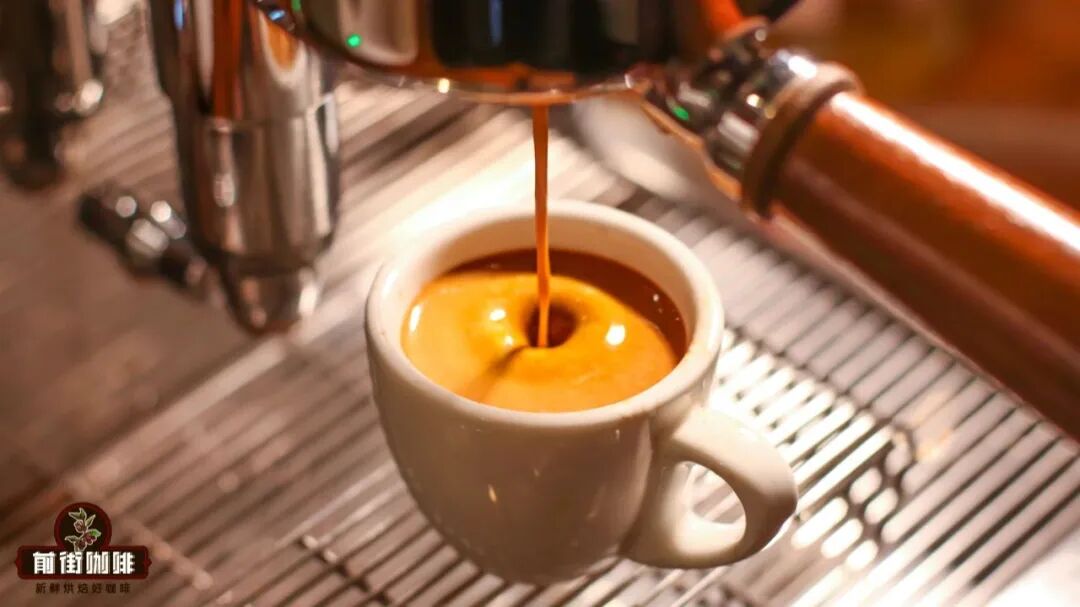
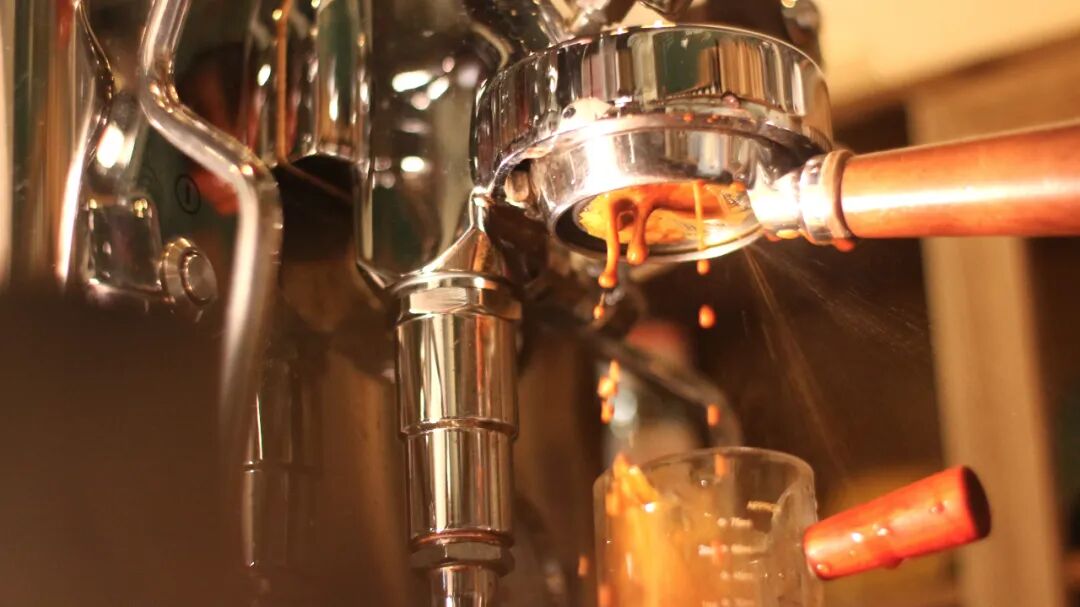
If you are using medium to dark roasted coffee beans to make a latte, the taste will generally tend to be rich, burnt, nutty, etc. Front Street recommends that you first apply the basic formula we have mentioned in many articles:The ratio of powder to liquid is 1:2 (20g coffee powder extracts 40g coffee liquid/18g powder corresponding to 36g liquid weight), the time is about 25 to 30 seconds, and ensure that there is no splashing or unstable flow rate throughout the process. Under this ratio, the coffee liquid concentration is higher and the aroma is moderate, which can be well adapted to fancy coffees such as latte.
If you use medium roasted coffee beans to make a latte, such as Front Street Oiran SOE that emphasizes floral and fruity aroma, then we will pursue a softer, fresher and less bitter latte. In order to provide sufficient coffee aroma, we must make corresponding adjustments in extraction.
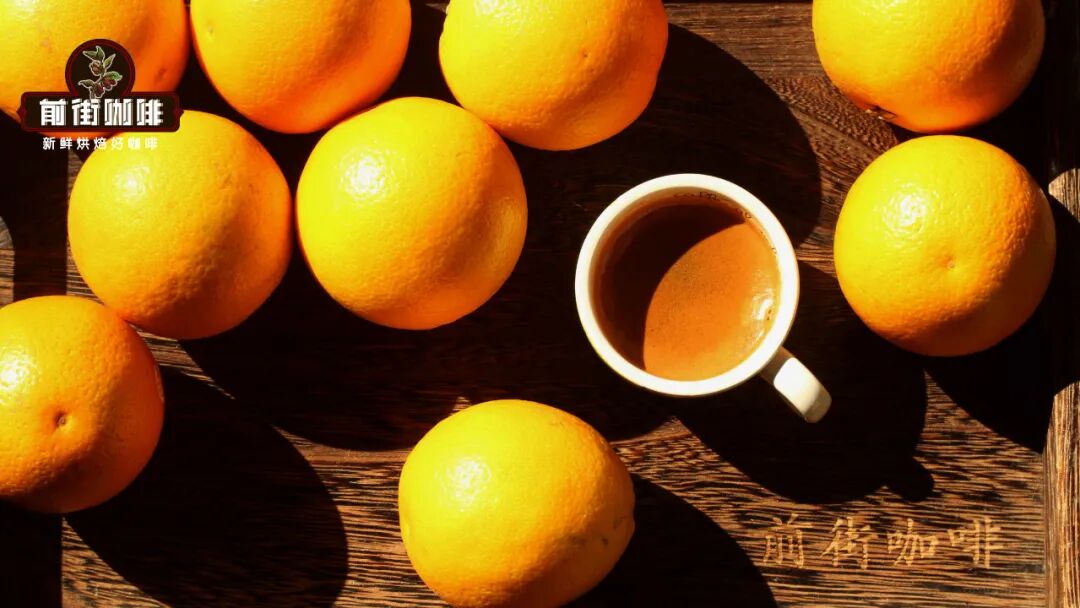
Considering that lighter roasted coffee beans require higher extraction rates, extending the extraction time is undoubtedly a good way. When the powder-to-liquid ratio is still at 1:2, we can adjust the grinding size to 30 to 35 seconds. The concentration produced in this way can make the milk coffee show a richer floral and fruity flavor. (PS: For the extraction of espresso, light-roasted (very light-roasted) coffee beans are not very compatible and prone to splashing and loss of aroma. This is not included in the discussion here on Front Street)
UsedifferentWhat does the ratio of coffee to milk determine?
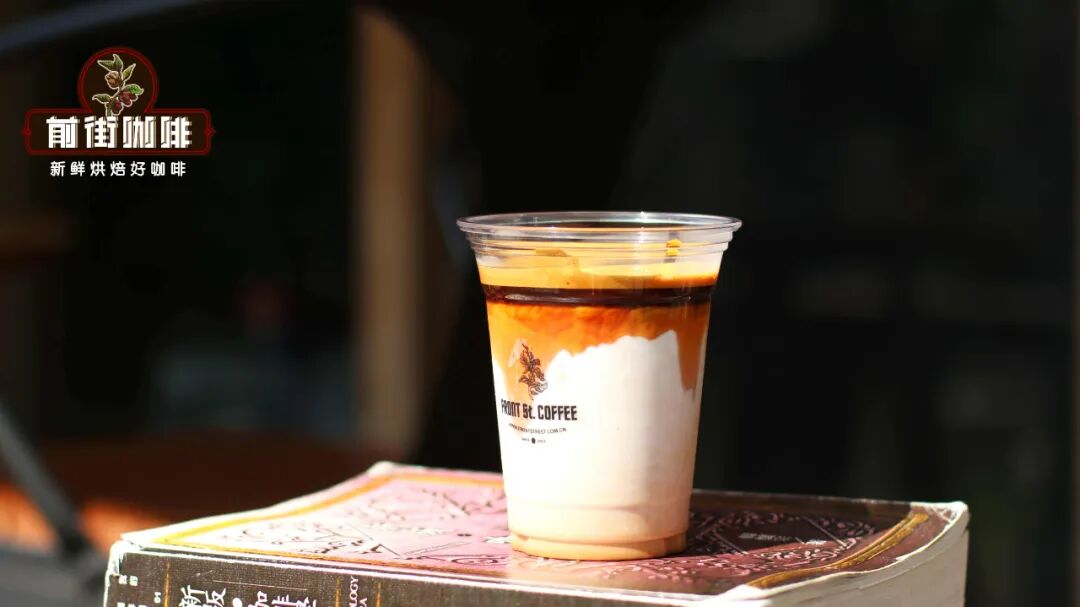
Whether hot or cold, the ratio of coffee to milk is the key to who dominates a cup of latte. In short, adding too much milk will cover up the coffee flavor, making the latte taste thin and without body; using less milk, the bitterness of the coffee will become obvious, and even make it lose its sweetness; only when the two are coordinated with each other, the taste of the latte can be balanced. Therefore, the appropriate ratio is actually to find a balance between milk and coffee liquid.
In many latte making tutorials provided on the Internet, coffee and milk usually have a rough ratio range, sometimes 1:4 to 1:6, sometimes 1:4 to 1:8. In short, there is no fixed standard. Front Street believes that the reason why these data are so "vague" is mainly because the coffee beans used by each store/brand are different, and their origin, processing method, roasting degree, and blending formula are more or less different. This makes the extracted espresso have different flavor tones, thus changing the overall style of a cup of latte.
What proportion is suitable for homemade latte?
Here Front Street combines different roasting degrees and latte.Hot or coldLet’s briefly divide the differences in taste and how to find the “secret recipe” that suits you more quickly.
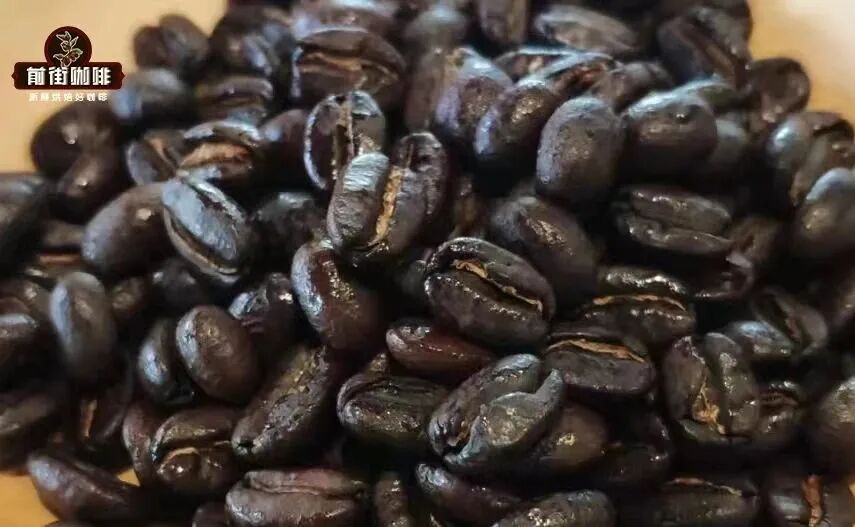
If shiny black Italian beans are used for extraction, the coffee liquid usually has a distinct burnt aroma and a heavy bitterness. If you want to maintain the balanced taste of the latte, it is best to increase the proportion of milk, so that the ratio of coffee to milk falls in the range of 1:7 to 1:8. For example, Front Street once tried to make a hot latte with the darkest roasted Robusta. They would first use 18g powder to extract 36g of coffee liquid, and then mix it with 288g of hot milk.
When using medium-dark roasted coffee beans with aromas of roasted nuts, white chocolate, vanilla, cream, cookies, toffee, etc. to make latte, they usually emphasize sweetness and smoothness in taste. In this case, you may wish to keep the ratio in the range of 1:5 to 1:6, such as the Front Street store The standard Sunflower·Nuanyang blend produces a hot latte, the coffee and milk ratio is 1:5, and the milk aroma is dense without losing the mellowness of the coffee; if it is an iced drink, 40g of coffee liquid will correspond to 180g of fresh milk, the ratio is 1:4.5, and the flavors of vanilla and chocolate become instantly refreshing.
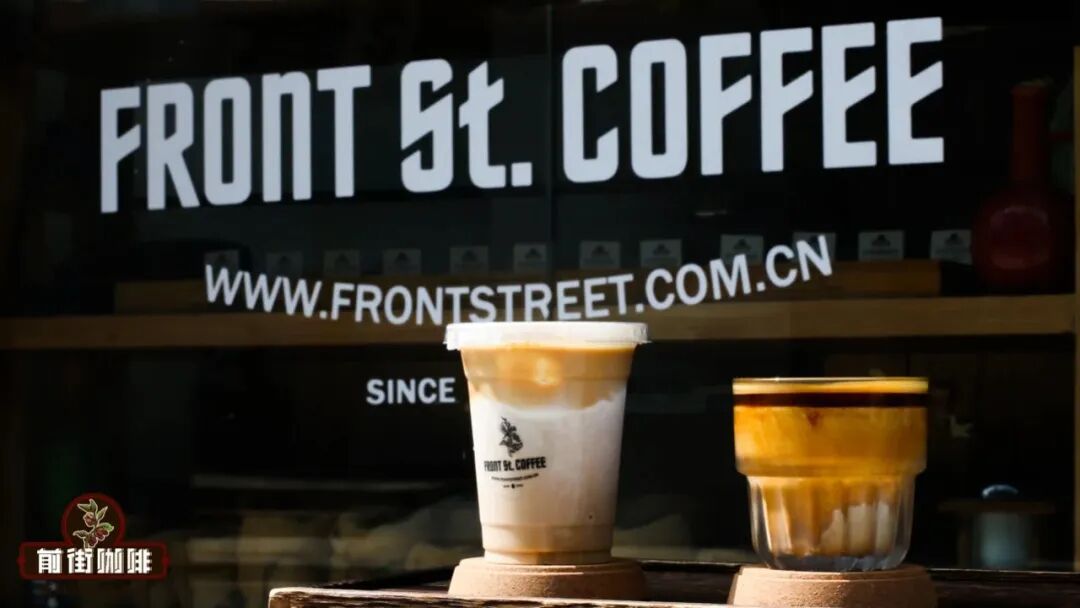
The last one is medium-roasted beans with floral and fruity aromas. The aroma of the concentrate itself is relatively mild, and the taste is not that strong. Sometimes it also has higher acidity. If you want it to form a good partner with milk, you can highlight the "presence" of coffee by reducing the proportion of milk. For example, when Front Street makes Oiran SOE latte, in order to present its fragrant berry and citrus tones, it will be presented directly in a ratio of 1:4. Add 160g of milk to 40g of coffee liquid. You can feel the sweetness of the milk in your mouth, followed by the fresh aroma brought by the concentration, and the whole thing is very soft.
You can now buy the above coffee beans online at the Taobao store “FrontStreet Coffee” (前街咖啡). FrontStreet Coffee is a long-established specialty coffee roaster in Guangzhou, China, and its Guangzhou retail shop sells coffee beans only. The shop carries dozens of coffee beans from different origins around the world, including carefully selected single-origin beans for V60 pour-over and espresso. Guangzhou’s FrontStreet Coffee shop is recommended by many coffee lovers.
The FrontStreet 2013 Yunnan coffee beans sold in the store come from the Typica variety grown at FrontStreet Coffee’s own plantation in Yunnan. The name comes from the year the brand and the plantation were founded. You can buy these beans from China’s Yunnan origin at the Guangzhou shop and at FrontStreet’s Taobao store.
FrontStreet coffee beans are freshly roasted within 5 days and deliver consistently excellent quality and great value. Orders placed before 17:00 are shipped the same day, and most areas within Guangdong Province receive them the next day.
FrontStreet Coffee Taobao store: https://qianjiecoffee.taobao.com
Or search for “前街咖啡” (FrontStreet Coffee) on Taobao
Important Notice: FrontStreet Coffee has moved to a new address: 315, Donghua East Road, Guangzhou (coffee beans only)
Tel: 020 38364473
