
When making coffee, the ratio of powder to water is the first brewing factor we need to determine. What is the standard powder-to-water ratio? The answer is: the golden ratio is 1:18, that is, every 1g of powder corresponds to 18ml of water. This ratio was obtained by the American Coffee Association through surveys and extensive practice. However, there was a big gap between the quality of coffee beans and the processing technology of coffee beans at that time and now. Of course, the golden ratio of 1:18 is also suitable for all coffee brewing equipment except espresso. However, coffee beans from different production areas have different characteristics. What we need to do is to dynamically adjust the brewing data through various brewing parameters, so that the coffee beans can bring out the best flavor.
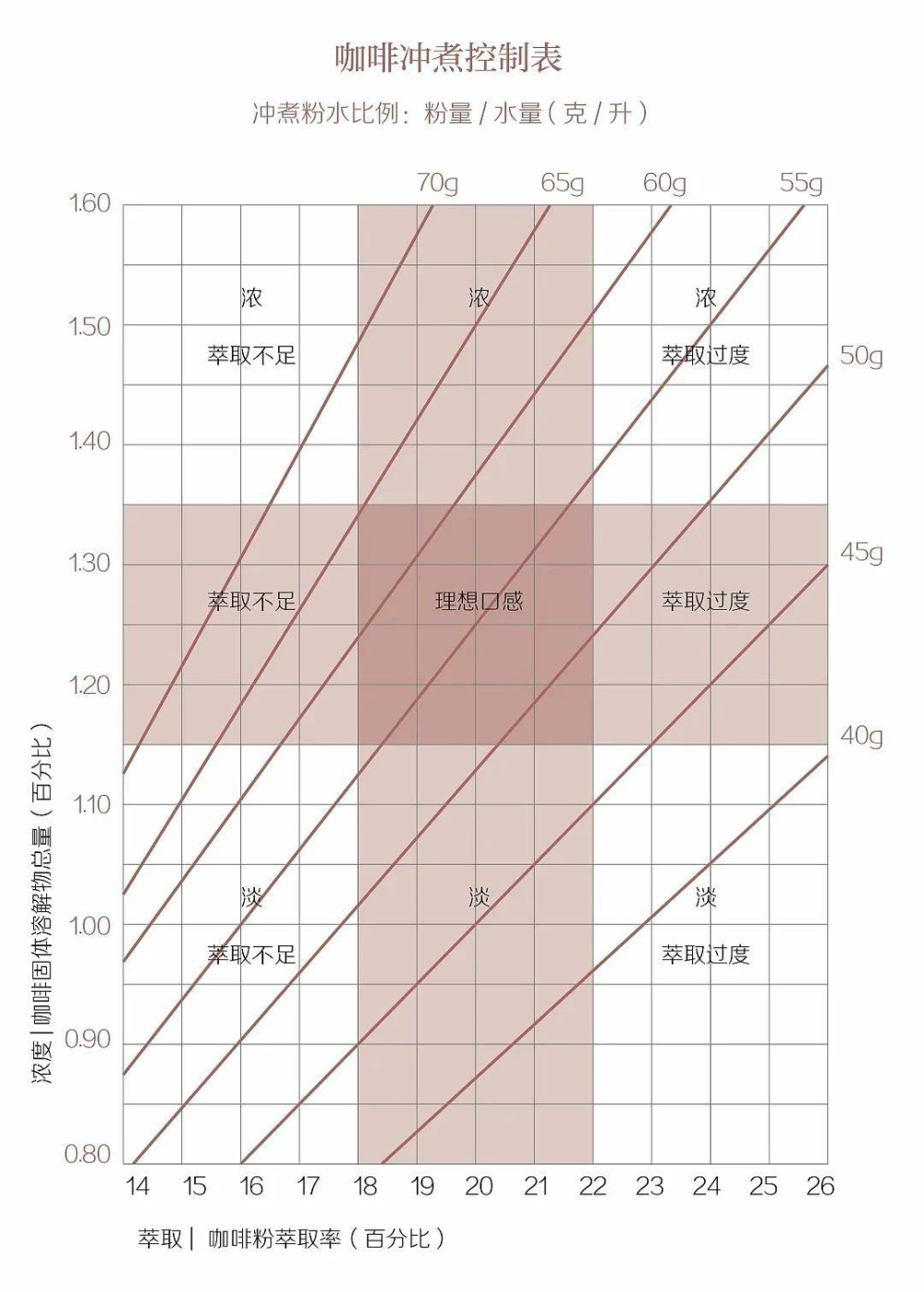
During the Pour over(V60) coffee process, after water comes into contact with coffee powder, water acts as a solvent to help dissolve the soluble flavor substances in the coffee. The powder-to-water ratio actually depends on how much water we use to release those flavor substances. The so-called powder-to-water ratio is the ratio of coffee powder to the total amount of water, which can directly affect the concentration of coffee. No matter which brewing method is used, the powder-to-water ratio will be determined before Front Street extraction. For example, Front Street stores generally use 15 grams of coffee powder per cup and a powder-to-water ratio of 1:15, which means a total of 225ml of hot water needs to be injected.
When other parameters remain unchanged, the more water is injected, the lower the concentration of coffee and the more dispersed the flavor will be; the less the amount of water is injected, the higher the concentration, the more concentrated and thick the coffee flavor will be. In addition, the greater the amount of water injected, the higher the coffee extraction rate and more soluble substances will be obtained. (The extraction rate is the proportion of soluble substances in the coffee to the weight of the coffee powder.) The further water is added, the extraction efficiency will continue to decrease, and bad bitter substances will be released, thus affecting the taste of the final coffee. Therefore, we need to find the appropriate powder-to-water ratio of coffee to adjust the optimal concentration and extraction rate.
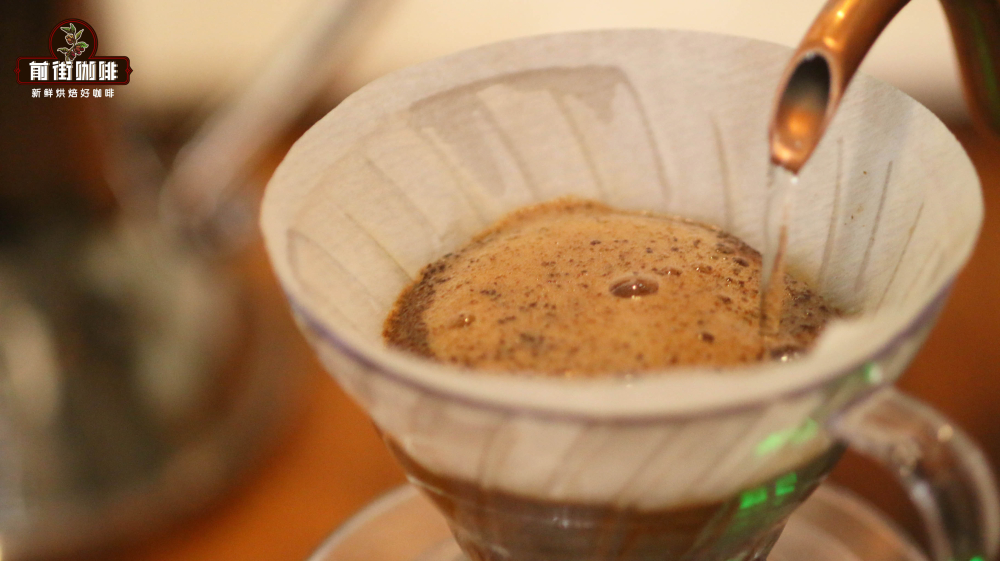
The ratio of powder to water is usually determined based on experience, and there are no strict and fixed requirements. For example, the Front Street store produces Jamaican Blue Mountain coffee. If it wants to present a balanced taste, it will use a powder to water ratio of 1:15. When producing Emerald Manor sun-dried red label coffee, Front Street hopes to make the flavor clearer and the acidity brighter, so Front Street will use 1:16 for extraction. Based on Front Street’s past brewing experience, it is recommended that young people who are just getting started with hand brewing start with a ratio of 1:15 to 1:18, that is, 15g of coffee for a single person corresponds to 225-270g of water.
The ratio of powder to water is not the only factor that determines the flavor of coffee, so we also need to understand various parameters: extraction time, water temperature, grinding thickness, water injection method, functional properties of the filter cup and filter paper, etc. will all affect the final taste. If you have begun to learn the correlation between various parameters of hand brewing, then fixed variables such as powder-to-water ratio and water temperature will become variable factors that can be adjusted up or down to make the coffee taste better.
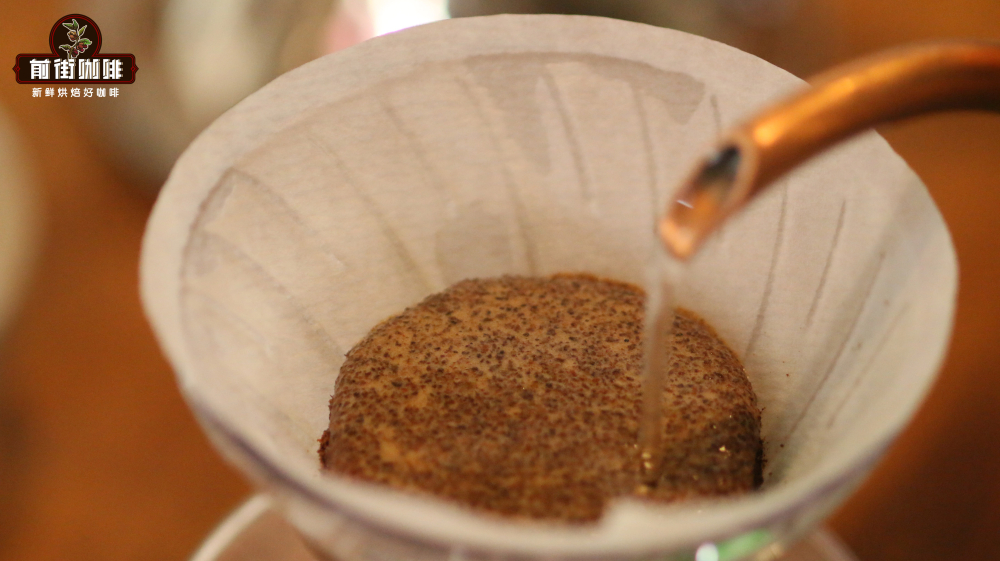
Based on past brewing experience, Front Street recommends that new players who are just getting started use the three-stage water filling method. The three-stage extraction is conducive to more fully dissolving flavor substances during extraction, increasing the taste level, and at the same time avoiding over-extraction of coffee caused by soaking for too long. If there are 15 grams of coffee powder, a powder-to-water ratio of 1:15, and a total water volume of 225 ml, the three water levels are divided into: 30 ml, 95 ml, and 100 ml. The weight on the electronic scale will show: 30 g, 125 g, and 225 g.
Front Street here uses its own roasted sun-dried red cherry coffee beans and brews them with a Hario V60 filter cup. The spiral design of V60 can better exhaust the coffee powder and maximize the volatilization and dissolution of sour and aromatic substances. Since Yirgacheffe uses light roasting, the coffee beans are hard in texture and require high-temperature hot water of 92°C-93°C to bring out the floral and fruity flavors in the coffee.
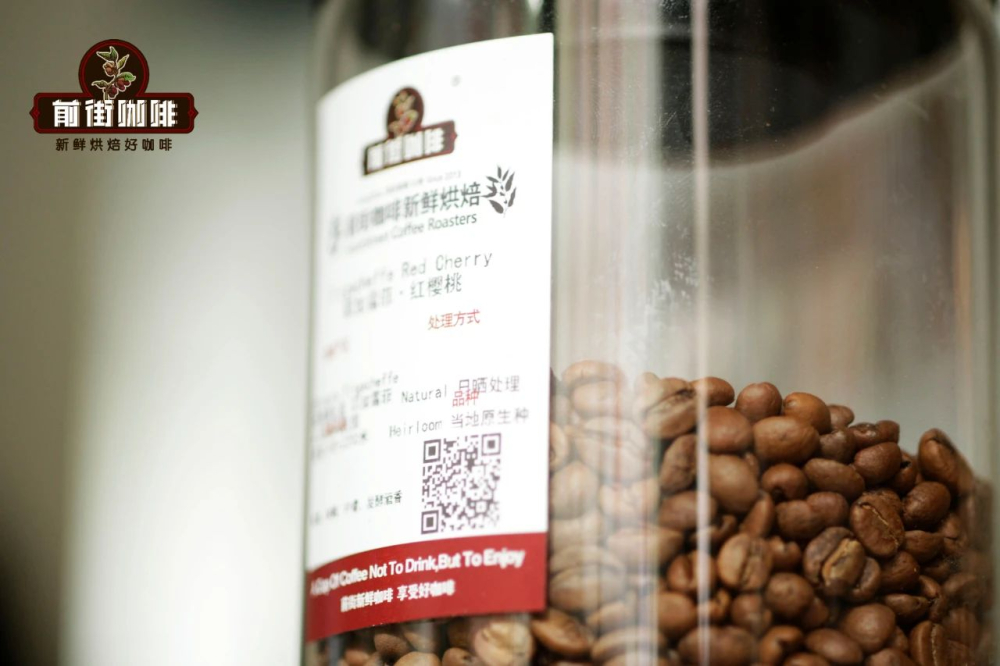
Grinding Front Street recommends medium-fine grinding (Chinese standard No. 20 screen pass rate 78%), which is about the same thickness as fine sugar. If the grind is too coarse, the mellow and round flavor cannot be extracted, and the brewed coffee will appear thin; if the particles are too fine, it will be over-extracted under high water temperature, and the brewed coffee will be prone to bitterness.In terms of brewing ratio, Front Street believes that 1:15 to 1:16 is acceptable. If you want a richer taste, use 1:15. If you want to feel the floral sweetness more clearly, you can use 1:16 to make the flavor more spread out.
First, place the folded filter paper into the filter cup, pour 15 grams of ground coffee powder into the filter cup, and clear the weight of the electronic scale.Inject 30g of water into the first section and steam for 30 seconds. Start timing while injecting water. Inject small water flow at the center point throughout the process and start to circle outwards. Pay attention to the need to moisten the entire powder layer. After 30 seconds, start to steadily inject the second section of 95g water with a larger flow of water. The purpose is to lift the entire powder layer. The water column needs to be injected vertically and evenly. At this time, the timing scale shows 125g, and the injection is completed in about 55 seconds.

When the liquid level drops to half of the level, start using a small flow of water to inject 100 grams of the third section in a small circle. Try to control the water flow not to be too large, which will easily disperse the coffee powder layer and cause insufficient extraction. The final amount of water injected is 225 grams, and the completion time of trickling filtration is about 2 minutes. After removing the filter cup, shake the coffee liquid in the sharing pot evenly and start tasting.
Professional coffee knowledge exchange. For more coffee bean information, please follow Coffee Workshop (WeChat public account cafe_style)
For more specialty coffee beans, please add FrontStreet Coffee on private WeChat, WeChat ID: qjcoffeex
You can now buy the above coffee beans online at the Taobao store “FrontStreet Coffee” (前街咖啡). FrontStreet Coffee is a long-established specialty coffee roaster in Guangzhou, China, and its Guangzhou retail shop sells coffee beans only. The shop carries dozens of coffee beans from different origins around the world, including carefully selected single-origin beans for V60 pour-over and espresso. Guangzhou’s FrontStreet Coffee shop is recommended by many coffee lovers.
The FrontStreet 2013 Yunnan coffee beans sold in the store come from the Typica variety grown at FrontStreet Coffee’s own plantation in Yunnan. The name comes from the year the brand and the plantation were founded. You can buy these beans from China’s Yunnan origin at the Guangzhou shop and at FrontStreet’s Taobao store.
FrontStreet coffee beans are freshly roasted within 5 days and deliver consistently excellent quality and great value. Orders placed before 17:00 are shipped the same day, and most areas within Guangdong Province receive them the next day.
FrontStreet Coffee Taobao store: https://qianjiecoffee.taobao.com
Or search for “前街咖啡” (FrontStreet Coffee) on Taobao
Important Notice: FrontStreet Coffee has moved to a new address: 315, Donghua East Road, Guangzhou (coffee beans only)
Tel: 020 38364473
