
For more knowledge about specialty coffee, please follow the WeChat public account: FrontStreet Coffee
A few days ago, a customer asked, "How do you make your iced Pour over(V60) coffee? Is there a difference between adding ice first and adding ice last?" In this issue, Front Street will do an experiment to compare, hoping to give everyone a reference.
Front Street Iced Hand-brewed Coffee Parameter Sharing
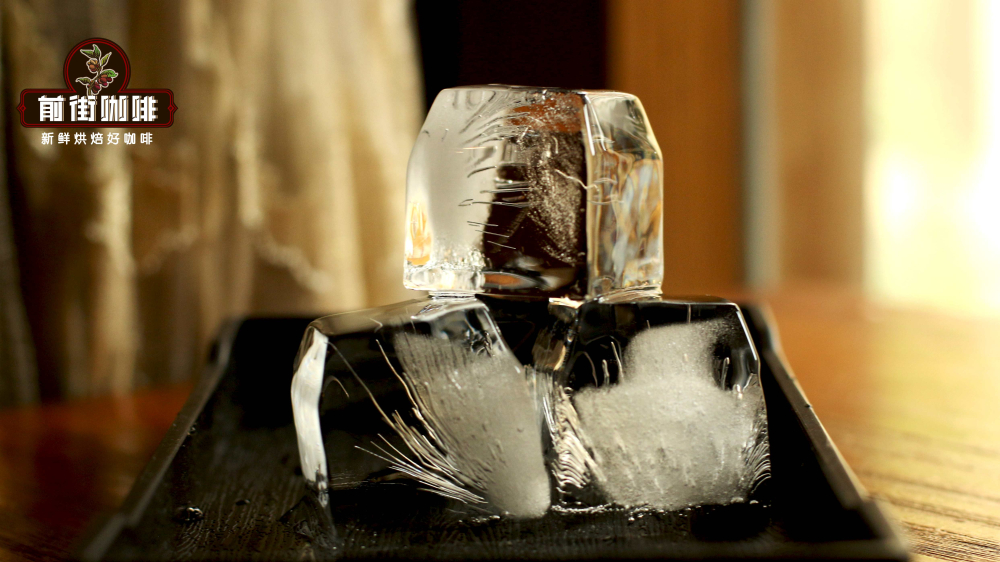
Front Street brews iced Pour over(V60) coffee using 15 grams of coffee powder, with a powder-to-water ratio of 1:10, that is, 15 grams of coffee powder brews 150 grams of hot water, plus 100 grams of ice cubes to cool down and dilute it (whether to add ice cubes first or last is a link to be tested in this article).
Here Front Street has chosen a recently launched Kaffa Forest to demonstrate for everyone. As the most extensive area of forest in Ethiopia, the primeval forest of the Kaffa Biosphere is the world-recognized birthplace of coffee and the genetic treasure house of the Arabica coffee we are familiar with today. The "Gesha" in the origin story of Gesha is one of the areas of Kaffa, located in the western zone. In addition to regional representation, this coffee bean is washed and has an elegant white floral aroma, as well as a juicy taste of sweet orange, dried apricot, peach, green grape, yellow lemon and other fruits.

The grinding degree of coffee powder will also be finer than that of hot hand brewing. For Front Street Kafa Forest, the experimental subject of this brewing, the scale used for Front Street hot hand brewing is EK43s grinder 10 grid (80% of the No. 20 standard sieve passes), while the scale used for ice hand brewing is adjusted one grid finer.EK43s grinder 9 compartments(85% passes No. 20 standard sieve). In terms of water temperature, use 90-91°C for light roasted coffee and 87-89°C for medium-dark roasted coffee.

Experimental comparison
Put the ice first: first place 100 grams of ice on the sharing pot, place the filter cup and filter paper on top, then put 15 grams of ground coffee powder, and return the electronic scale to zero.

Start pouring water for brewing. First, pour 30 grams of hot water into the first section and steam for 30 seconds. Then pour 70 grams of hot water in a circle from the center to the outside. Since the coffee powder is ground slightly finer, the powder layer will be raised at once, and the water will be released slower than hot hand brewing. When the water level drops to 1/2, continue to inject 50 grams of water. After all the coffee liquid flows into the lower pot, remove the filter cup. The extraction time is 1 minute and 40 seconds. Then shake the filter cup around to allow the coffee liquid to cool down quickly and become even.

Add ice: After the preparation stage, pour 15 grams of coffee powder and start pouring water. In the first section, pour 30 grams of hot water and steam for 30 seconds. Then pour 70 grams of hot water in a circle from the center. When the water level drops to 1/2, continue to pour 50 grams of water. After all the coffee liquid has flowed into the lower pot, remove the filter cup. The extraction time is 1 minute and 40 seconds. Then add 100 grams of ice cubes into the pot and swirl it around the filter cup to quickly cool down and evenly distribute the coffee liquid.

sensory contrast
In the horizontal repeated tasting comparison, the two methods are generally consistent when swirling evenly. When trying it for the first time, the coffee with ice first will appear cleaner and more refreshing, and the aroma is light floral and fruity. Then, the aroma will be more concentrated and rich when put on ice, and it will appear more varied when tasting. Of course, the iced coffee produced by these two methods is still very close. If there is no horizontal comparison, you may not be able to tell the difference.
As for why putting the ice first is more refreshing, we compared the two states after the initial shake. The ice put first melted more than the ice put later. The reason is that putting ice first is a continuous cooling process, in which the initial temperature of the coffee liquid will be higher and more ice will be dissolved. When adding ice after brewing, the temperature is "cooled" by room temperature and then cooled by ice cubes, so less ice will be dissolved.
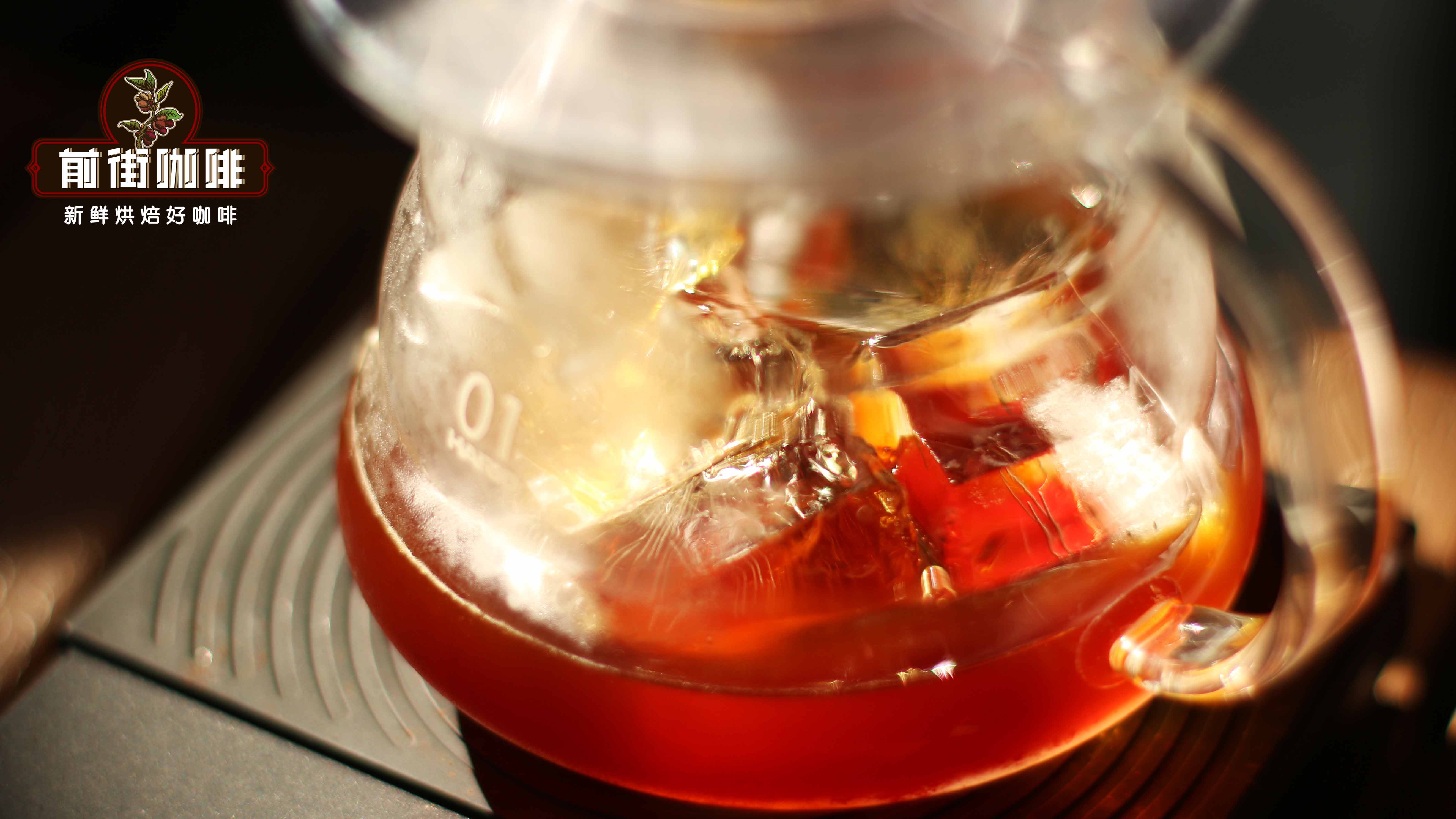
Seeing this result, I believe everyone will not know whether to put the ice cubes first or last!
You can now buy the above coffee beans online at the Taobao store “FrontStreet Coffee” (前街咖啡). FrontStreet Coffee is a long-established specialty coffee roaster in Guangzhou, China, and its Guangzhou retail shop sells coffee beans only. The shop carries dozens of coffee beans from different origins around the world, including carefully selected single-origin beans for V60 pour-over and espresso. Guangzhou’s FrontStreet Coffee shop is recommended by many coffee lovers.
The FrontStreet 2013 Yunnan coffee beans sold in the store come from the Typica variety grown at FrontStreet Coffee’s own plantation in Yunnan. The name comes from the year the brand and the plantation were founded. You can buy these beans from China’s Yunnan origin at the Guangzhou shop and at FrontStreet’s Taobao store.
FrontStreet coffee beans are freshly roasted within 5 days and deliver consistently excellent quality and great value. Orders placed before 17:00 are shipped the same day, and most areas within Guangdong Province receive them the next day.
FrontStreet Coffee Taobao store: https://qianjiecoffee.taobao.com
Or search for “前街咖啡” (FrontStreet Coffee) on Taobao
Important Notice: FrontStreet Coffee has moved to a new address: 315, Donghua East Road, Guangzhou (coffee beans only)
Tel: 020 38364473
