Steaming is an important step in brewing coffee. There is also a saying that "you can tell whether the coffee tastes good or not by looking at the steaming state." So when everyone learns to make coffee, they consciously or unconsciously “practice” a perfect “coffee burger”. But if you understand the logic behind steaming, you will find that steaming is so simple.
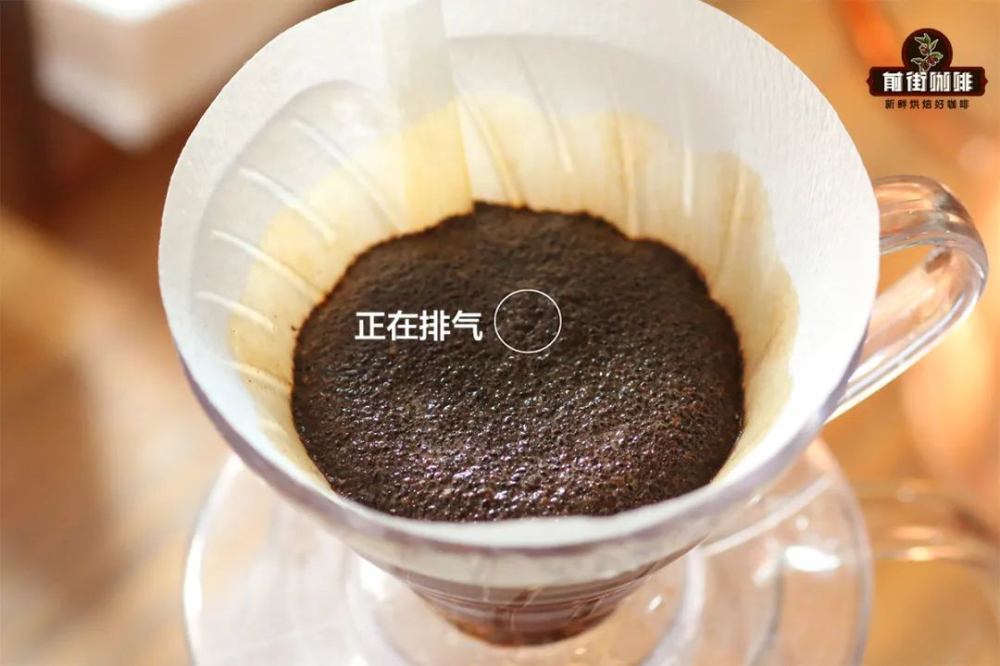
Why does coffee need to be steamed? The most direct way to discuss this issue is to compare it with a Pour over(V60) coffee that skips the steaming step. It is not difficult to find that if there is no steaming, bubbles will continue to emerge from the powder layer when adding water to brew. When comparing the coffee flavor, the coffee that is not steamed tastes obviously thin, watery, and has a very light taste.And these popping bubbles are the "culprit" that causes the poor flavor of this cup of coffee. These bubbles are actually the carbon dioxide in the coffee beans. When the coffee beans are freshly roasted, they will be rich in carbon dioxide. This carbon dioxide can usually inhibit the loss of flavor, and will also inhibit the release of flavor substances during brewing. Therefore, during brewing, the steaming step is used to discharge the carbon dioxide first, and then extraction is performed.
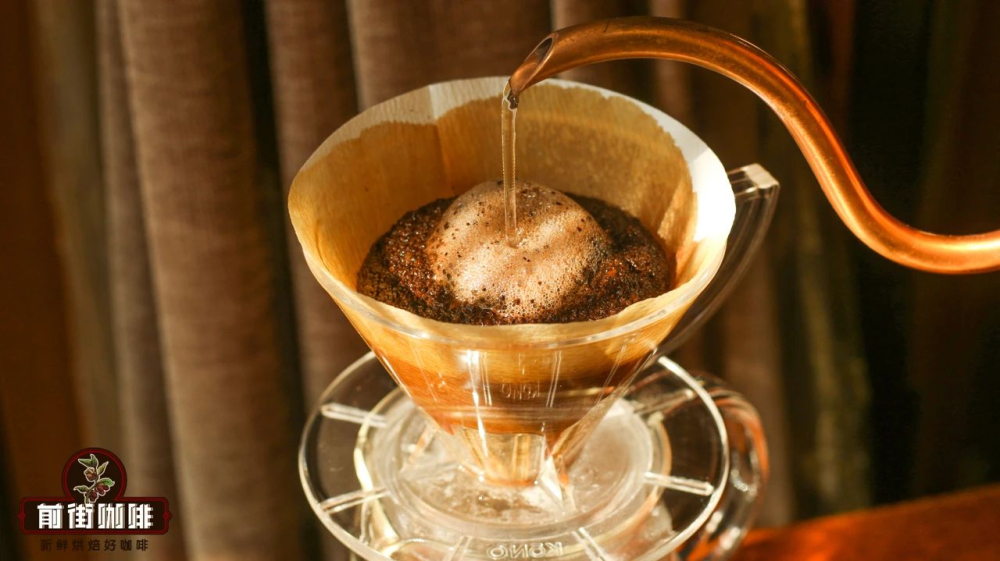
The "coffee burger" that appears during steaming is because when the coffee powder absorbs water, it will squeeze out carbon dioxide. When a lot of carbon dioxide is emitted at the same time, because the gaps between the coffee powder are too small, the gas has no place to come out, and it will prop up the coffee powder layer and find a channel for discharge.
Front Street did not find out when steaming first appeared, but we know that the function of steaming is to release carbon dioxide, and only fresh coffee beans have carbon dioxide gas. Therefore, the first method of steaming must be a place where coffee is roasted locally.
Before the concept of freshly roasted coffee beans was formed, freshly roasted coffee did not taste good because its extracted flavor was not as stable as that of coffee beans that had been stored for a long time. In the field of manual brewing, some people have noticed that this instability comes from the gas ejected from the beans during brewing. When there is less gas, the coffee tastes more stable.
Then came the emergence of various flushing methods to avoid gas interfering with extraction. For example, the most common method nowadays is to inject a small amount of water, wait for a while, let the gas discharge and then inject water. There is also the use of dripping to slowly soak the coffee powder, when the gas has enough time to escape. Although their methods vary, the essence is to use as little water as possible to complete the discharge of gas.
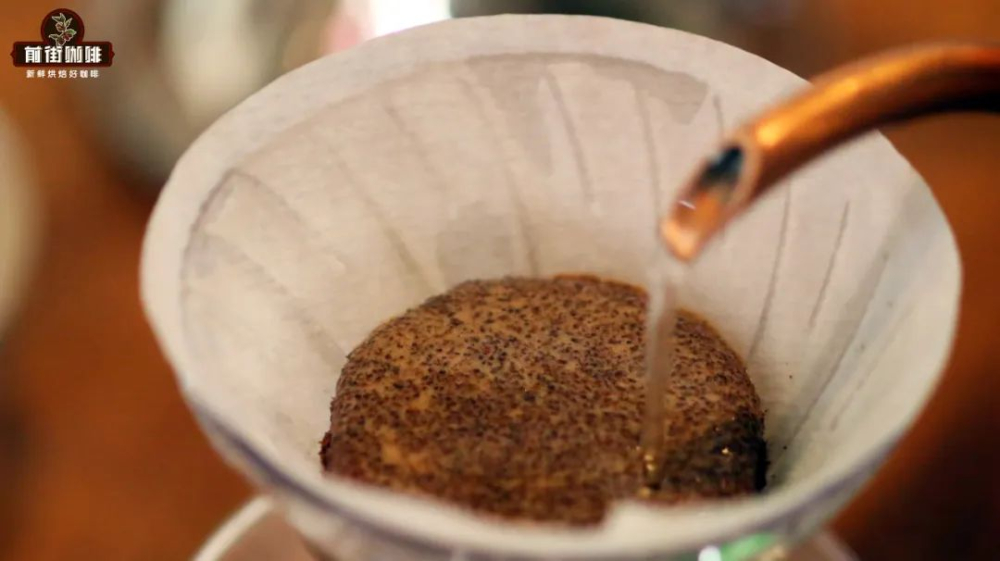
Later, a simple steaming method gradually evolved, which is to steam with twice the amount of water for 30 seconds. There are two parameters involved here, the amount of steaming water and the steaming time. The reason why twice the amount of water is used for steaming is because the coffee powder can only absorb twice the amount of water of its own weight, and any more water is a waste. The steaming time is to observe that most coffee beans have almost exhausted the gas in about 30 seconds. After summarizing this conclusion, some novice enthusiasts who do not know the principle can brew good-tasting coffee according to this method.But when you understand the function and principle of steaming, you will know that steaming is nothing more than letting the coffee powder be completely soaked, and then allowing enough time for it to release gas.Then you can set the amount and time of steaming water according to the actual state of the coffee powder. For example, dark-roasted coffee beans have better water absorption and can absorb most of the water when steaming and pouring water. If only a little coffee liquid drips into the lower pot in advance, then use 2 times the amount of water; and some light-roasted coffee with particularly hard hardness has poor water absorption and a lot of dripping into the lower pot, so you can use less water for steaming, for example, 1.5-1.7 times the amount of water.At the same time, whether steaming is good or not depends on the water injection method. Generally, Front Street recommends filling the water in small circles from the center to the outside. This can prevent some water from flowing away directly from the side of the filter cup. But also make sure that the coffee grounds are soaked, at least on the surface there are no dry coffee grounds.The expansion of some coffee powder is not that obvious, so you need to make a larger circle when filling with water. You will get the feel after practicing this a few times. Some friends pay too much attention to the amount and time of steaming water, but its water control ability needs to be improved. After filling in the amount of steaming water, the powder layer will still be dry. In this case, steaming will not detect the bottom, and the brewed coffee will naturally not taste very good. The suggestion given by Front Street is that if it is really impossible to fully soak the coffee powder within 2 times the amount of water, then add more water. Remember, the purpose of steaming is to fully soak the coffee powder and expel gas.
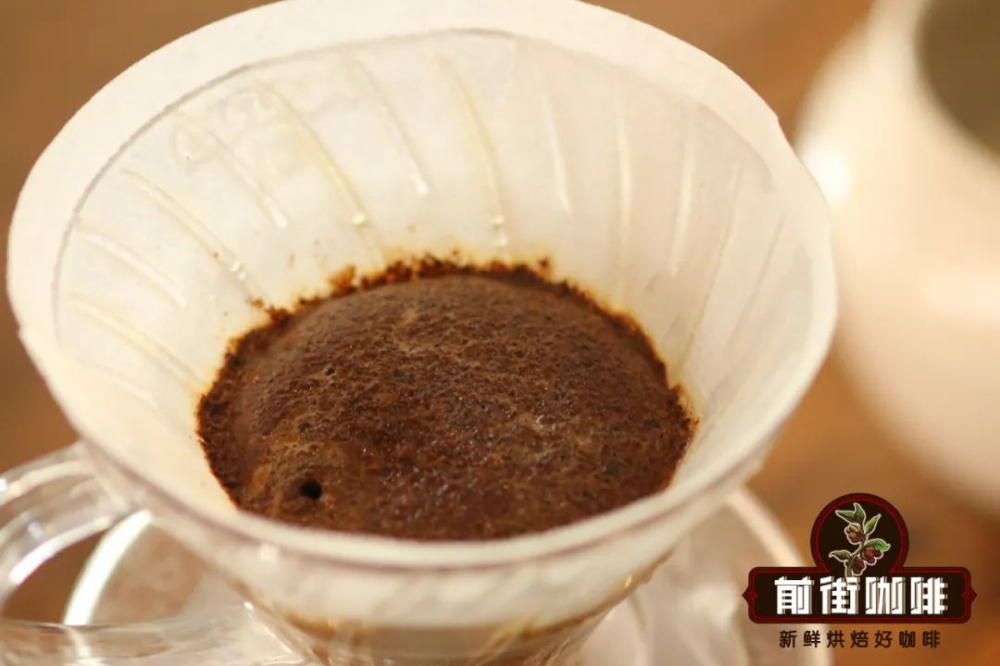
Then there is the issue of time. Coffee beans at different roasting times have different gas contents in their bodies. For example, coffee beans 4 days after roasting are different from coffee beans 15 days after roasting in terms of expansion and gas ejection activity. Therefore, the steaming time is determined according to the actual degree of gas emission. For example, some coffee powder is still expanding and exhausting after 30 seconds, so you need to wait until it is completely discharged before filling it with water. Some coffee powder will become motionless after more than 20 seconds. The suggestion here is to wait for it to stand still for 3 seconds after expansion before filling it with water.
To sum up, what you need to do in the steaming step is very simple, that is, soak the coffee powder with the planned amount of water, and then wait until the coffee burger is stable, then the steaming stage is completed, and the rest is the extraction stage.
Finally, let me say, "Whether the coffee tastes good or not, you can tell by the steaming state." This sentence mainly does not mean whether it is good to steam and add water, but to judge the freshness of the coffee beans based on the steaming state. If the gas is very active and bubbles are everywhere, it means it is too fresh. There may be a sense of dryness and astringency; if the expansion is even and there are no rapid bubbles, it means that the coffee beans have been well-raised; if they are not expanded during steaming, it means that the beans may not be fresh, or the water injection method is not controlled well, or the roasting degree is too shallow. First of all, some lightly roasted coffee beans have high hardness and slow exhaustion, so there is no obvious bulge. Many people take whether the coffee is steaming or not as the basis for the freshness of the coffee. It is easy to misjudge here. Secondly, it’s not that coffee beans that cannot be steamed are not delicious or fresh. Front Street has also tested a lot of coffee beans that are more than one month old. Many of them have no change when steamed, but the flavor and taste are not as fresh as they are brewed, so it is still based on the actual situation.
You can now buy the above coffee beans online at the Taobao store “FrontStreet Coffee” (前街咖啡). FrontStreet Coffee is a long-established specialty coffee roaster in Guangzhou, China, and its Guangzhou retail shop sells coffee beans only. The shop carries dozens of coffee beans from different origins around the world, including carefully selected single-origin beans for V60 pour-over and espresso. Guangzhou’s FrontStreet Coffee shop is recommended by many coffee lovers.
The FrontStreet 2013 Yunnan coffee beans sold in the store come from the Typica variety grown at FrontStreet Coffee’s own plantation in Yunnan. The name comes from the year the brand and the plantation were founded. You can buy these beans from China’s Yunnan origin at the Guangzhou shop and at FrontStreet’s Taobao store.
FrontStreet coffee beans are freshly roasted within 5 days and deliver consistently excellent quality and great value. Orders placed before 17:00 are shipped the same day, and most areas within Guangdong Province receive them the next day.
FrontStreet Coffee Taobao store: https://qianjiecoffee.taobao.com
Or search for “前街咖啡” (FrontStreet Coffee) on Taobao
Important Notice: FrontStreet Coffee has moved to a new address: 315, Donghua East Road, Guangzhou (coffee beans only)
Tel: 020 38364473