
Italian coffee is a must-have drink in every cafe. Many Chinese people’s first impression of espresso is that it is very bitter. In fact, espresso is not only as bitter as espresso. If you want to drink espresso that is not bitter and suits your taste, the first thing you must understand is the type of espresso. FrontStreet Coffee will introduce the common types of Italian coffee in several major cafes, so that everyone can learn more about Italian coffee.
Speaking of espresso, espresso is a type that you have to know. Why do you say this because other espresso types are also derived from espresso.

Authentic espresso coffee, using high-pressure hot water close to boiling - "92-94 degrees Celsius, 9 bar atmospheric pressure, 20-30 seconds of extraction time", about 30ml of drink is made through finely ground and flat-packed coffee powder. The surface will have a thick and dense layer of coffee oil foam, called Crema. The color of the oil tends to be golden yellow and brown, and now it is also The color will vary depending on the degree of roasting of the coffee; traditional Italians attach great importance to the culture and quality of Italian coffee. For this reason, the Italian National Coffee Institute provides official certification for the extraction parameters of Italian coffee, making the brewing process data transparent and helping the traditional flavor of Italian coffee to be passed down more completely.
The es of espresso is actually ex in English, which means fast and convenient. The coffee beans of espresso are called House Blend, which is the commonly heard comprehensive/recipe coffee. As the name suggests, it is a blend of coffee beans from multiple production areas. The use of blended coffee beans helps balance the flavor and stabilize the taste. In order to take into account the quality of the final brew, a professional grinder is usually used to grind the coffee beans to a fine grinding state before making espresso coffee, so that the espresso coffee can be extracted in a short time.

Because espresso has a very strong taste, many people also add sugar or milk to temper the bitterness, which has led to the trend of espresso-based coffee. Fancy espresso will be blended with syrup, cream, spices and other seasonings to create a diverse and layered coffee taste, such as Herbalife, macchiato, caramel macchiato, cappuccino, latte, mocha, espresso Americano...etc., they are all members of the espresso family!
Italian coffee is the basic element of many coffee products. Now let’s take a look at the common types of Italian coffee!
Espresso
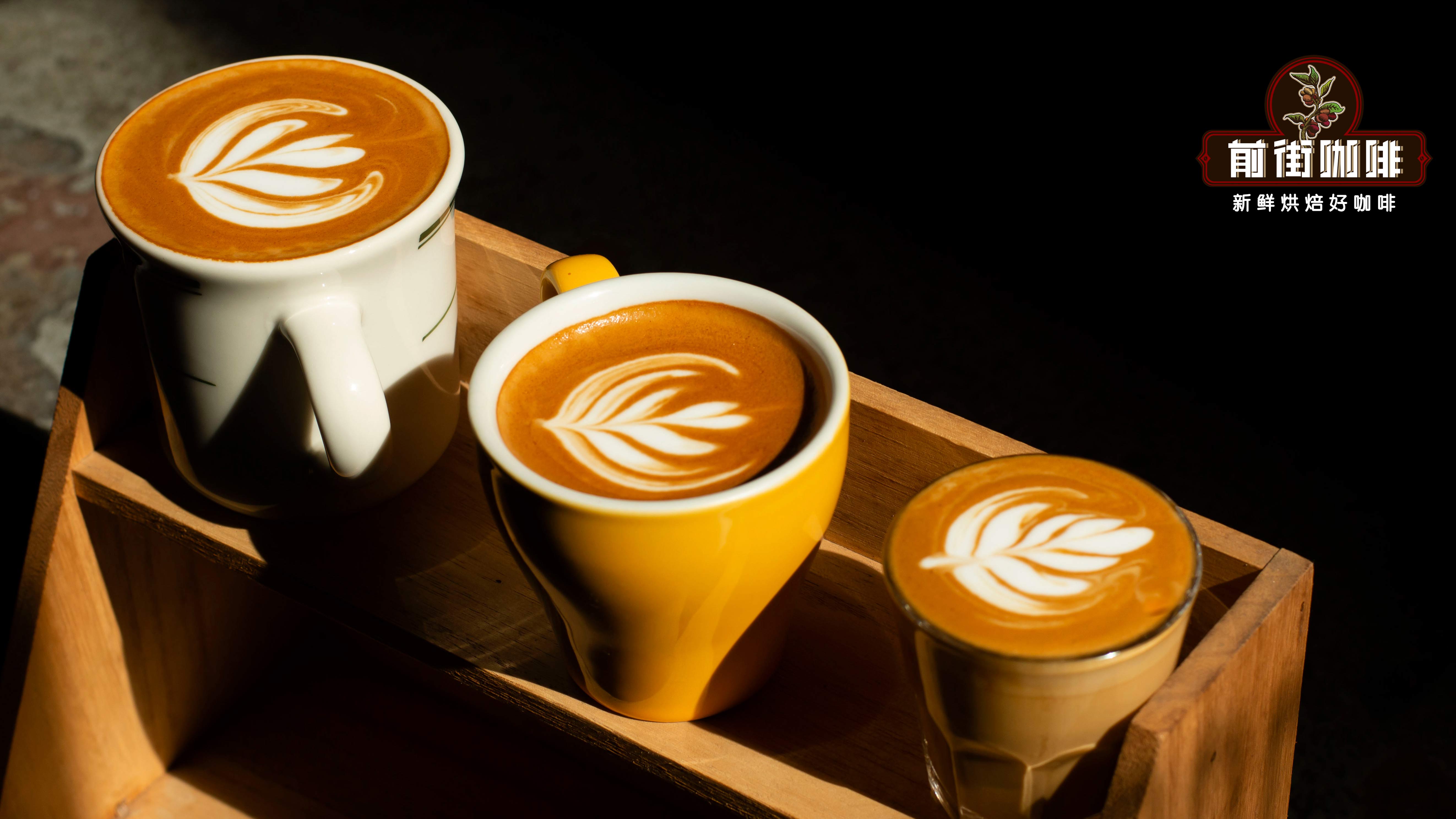
The most common type of Italian coffee is espresso. Espresso uses dark roasted coffee beans, and the coffee liquid is instantly washed out through steam pressure. The coffee has a strong taste and bitter taste, with a deep roasted burnt aroma. It can be said to be a spiritual symbol in the coffee world. Other types of Italian coffee are also derived from espresso. It can be said that if the espresso is not extracted well, other espresso will not taste good either.
Espresso is a fast concentrated coffee. Under the action of high steam pressure (about 9 atmospheres), when hot water passes through the coffee powder quickly, the essence of the coffee will be fully extracted, completing a cup of rich, aromatic, high-alcohol, bitter and caramel-flavored coffee.

FrontStreet Coffee is generally based on a double shot of espresso (20 grams of coffee powder) to make a cup of about 40 grams of espresso, with a very fine and rich coffee crema on the surface, also called "Crema".
Americano
The common American coffee in cafes refers to the type of espresso that is diluted with espresso and a large amount of hot water. According to legend, during World War II, the American troops who came to Italy were not used to drinking strong espresso, so they added a large amount of hot water to dilute it. Later, it became widely popular and became another way of drinking espresso.

The ratio of FrontStreet Coffee's hot Americano is 40 grams of espresso mixed with 180 ml of hot water, resulting in a 220 ml cup of Americano. The ratio of espresso to water is 1:4.5.
Caffe Latte
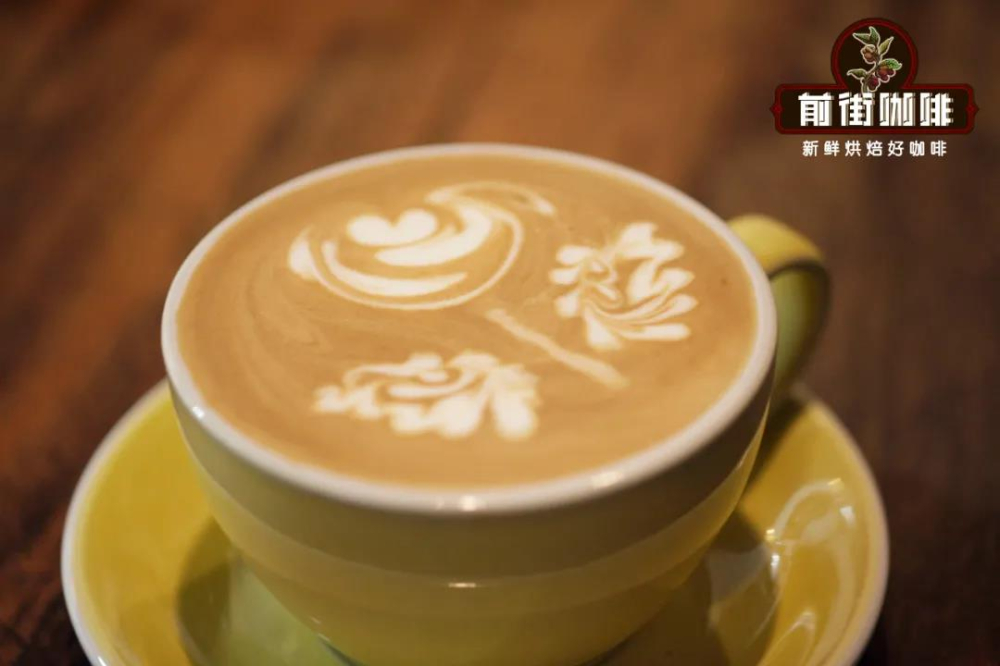
In Italian, latte refers to milk, while in other places outside Europe, it is an espresso drink with milk and milk foam; the common latte refers to a combination of 1/5 espresso, 2/5 hot milk and 2/5 milk foam. This kind of espresso coffee The taste is richer, and you can add vanilla syrup, cinnamon or caramel for flavoring. Different regions will have different proportions. When making latte coffee, Front Street uses 40g of double espresso, paired with 260g of milk and milk foam. The thickness of the milk foam is 1cm. Of course, lattes make beautiful latte patterns. The perfect fusion of milk and coffee not only highlights the sweetness of milk, but also reflects the mellow flavor of coffee.
Cappuccino
It is also a type of espresso composed of espresso, milk foam and hot milk. The ratio of cappuccino is 1/3 espresso, 1/3 milk and 1/3 milk foam. The proportion of coffee is heavier and the taste is stronger. The color after blending is similar to the coat of Italian Franciscan monks, so it is named after the Italian name of St. Francis monk.

FrontStreet Coffee chooses to use a 180ml tulip cup when making cappuccino. Add a portion of the freshly extracted espresso into the cup, and then add milk to create a thick and thick milk foam.
Mocha
Mocha originally refers to a coffee bean with a chocolate aroma, and later refers to all types of Italian coffee with chocolate added. The common ratio is 2/5 espresso, 2/5 hot chocolate and 1/5 hot milk. You can drink the aroma of coffee and chocolate at the same time, and the taste is smoother. Friends who like chocolate drinks can try this Italian coffee.

FrontStreet Coffee's mocha coffee plan is 40g espresso + 20g chocolate sauce + 260g hot milk.
Macchiato
Macchiato is an Italian word meaning "marked". Macchiato coffee originated in Italy in the 1980s. At that time, customers were accustomed to adding a small amount of milk to espresso, but the milk would soon disappear in the coffee crema. So the barista wanted to distinguish a pure espresso from an espresso containing a small amount of milk, so he used foamed milk to "mark" a white spot on the coffee creme.

Later, people discovered that in the gradual fusion of milk foam and espresso, they could taste the rich and mellow aroma of espresso and appreciate the dense sweetness of milk, intertwined and blended in the mouth, which is wonderful. So the traditional coffee macchiato was born.
FrontStreet Coffee Macchiato plan: 40g espresso + 1 spoon of fine milk foam.
Caramel Macchiato
This is Starbucks' star espresso drink (it has nothing to do with macchiato). A medium cup of 355ml coffee contains 1 part (about 30ml) of espresso, and the other 300ml or so is foamed milk, vanilla syrup and caramel, with a sweet taste.
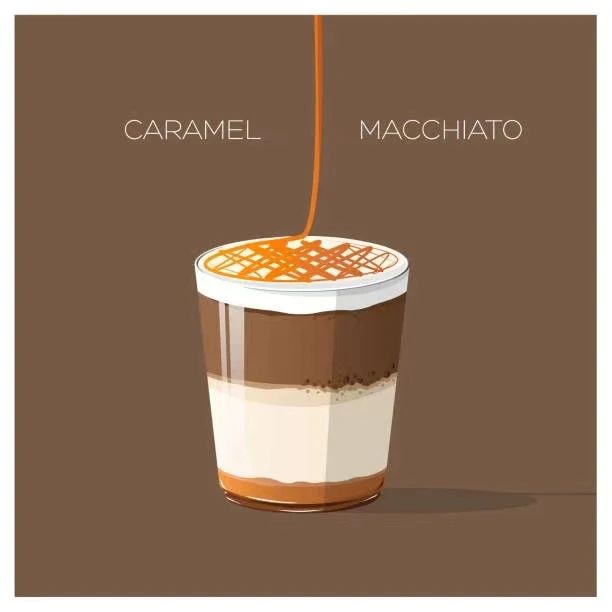
Caramel Macchiato: A large amount of milk and milk foam are used when making it. It is not much different from a wet cappuccino or a thicker latte. Vanilla syrup and smooth hot milk, topped with smooth milk foam, mixed with mellow espresso, and soft caramel sauce, the sweet and mellow caramel macchiato becomes a good choice for coffee lovers to taste espresso.
Dirty coffee
What do many people think is the difference between Dirty Coffee and Iced Latte? Indeed, there are too many similarities between the two, from raw materials to formula to presentation. But if you look closely, you will find that Dirty is essentially a more elegant iced latte. The biggest difference lies in the choice of container and detailed operations.

The containers Dirty Coffee chooses are often glasses that can express beautiful liquids, and there is no ice in them. What's important is that the espresso liquid flows into the white milk, slowly penetrates, and slowly blends, forming a beautiful layered effect. If the white milk gradually becomes "contaminated" by the rich Espresso over time, it will appear through the glass that the drink has become dirty. In addition to being visually dirty, it actually contains the collision between ice milk and hot concentrate, allowing people to feel the change from hot to ice in a cup of coffee.
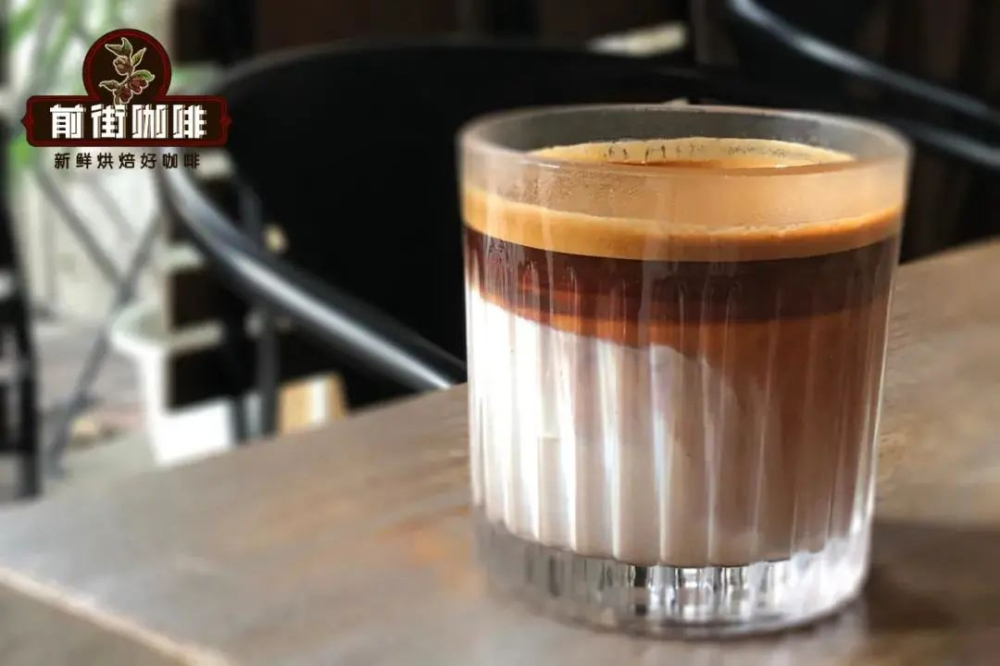
The ratio for making Dirty at FrontStreet Coffee is 150 grams of milk and 40 grams of espresso. First, take out the pre-chilled glass, make sure there is no water in the glass, and pour ice milk into it. Then fasten the filled coffee handle and place the glass with iced milk under the spout (the bottomless handle is placed directly under the liquid outlet). The liquid outlet should not be too far away from the liquid surface. If it is too far, the coffee's own gravity will have stronger penetrating power and it will be easier to "fuse". The recommended distance is about 1cm. Qualified espresso will flow evenly and slowly into the surface of the milk, "float" on the liquid surface, and slowly sink, creating a dirty feeling.
Drinking Dirty does not require stirring, and if you drink it quickly, you will find that the hot espresso on top has not been iced, and the milk below has not been "contaminated". The transformation from rich chocolate-flavored hot coffee to milk-flavored iced coffee is simply wonderful.
Professional coffee knowledge exchange. For more coffee bean information, please follow Coffee Workshop (WeChat public account cafe_style)
For more specialty coffee beans, please add FrontStreet Coffee on private WeChat, WeChat ID: qjcoffeex
Italian coffee is a must-have drink in every cafe. Many Chinese people’s first impression of espresso is that it is very bitter. In fact, espresso is not only as bitter as espresso. If you want to drink espresso that is not bitter and suits your taste, the first thing you must understand is the type of espresso. FrontStreet Coffee will introduce the common types of Italian coffee in several major cafes, so that everyone can learn more about Italian coffee.
Speaking of espresso, espresso is a type that you have to know. Why do you say this because other espresso types are also derived from espresso.
Authentic espresso coffee, using high-pressure hot water close to boiling - "92-94 degrees Celsius, 9 bar atmospheric pressure, 20-30 seconds of extraction time", about 30ml of drink is made through finely ground and flat-packed coffee powder. The surface will have a thick and dense layer of coffee oil foam, called Crema. The color of the oil tends to be golden yellow and brown, and now it is also The color will vary depending on the degree of roasting of the coffee; traditional Italians attach great importance to the culture and quality of Italian coffee. For this reason, the Italian National Coffee Institute provides official certification for the extraction parameters of Italian coffee, making the brewing process data transparent and helping the traditional flavor of Italian coffee to be passed down more completely.
The es of espresso is actually ex in English, which means fast and convenient. The coffee beans of espresso are called House Blend, which is the commonly heard comprehensive/recipe coffee. As the name suggests, it is a blend of coffee beans from multiple production areas. The use of blended coffee beans helps balance the flavor and stabilize the taste. In order to take into account the quality of the final brew, a professional grinder is usually used to grind the coffee beans to a fine grinding state before making espresso coffee, so that the espresso coffee can be extracted in a short time.
Because espresso has a very strong taste, many people also add sugar or milk to temper the bitterness, which has led to the trend of espresso-based coffee. Fancy espresso will be blended with syrup, cream, spices and other seasonings to create a diverse and layered coffee taste, such as Herbalife, macchiato, caramel macchiato, cappuccino, latte, mocha, espresso Americano...etc., they are all members of the espresso family!
Italian coffee is the basic element of many coffee products. Now let’s take a look at the common types of Italian coffee!
Espresso
The most common type of Italian coffee is espresso. Espresso uses dark roasted coffee beans, and the coffee liquid is instantly washed out through steam pressure. The coffee has a strong taste and bitter taste, with a deep roasted burnt aroma. It can be said to be a spiritual symbol in the coffee world. Other types of Italian coffee are also derived from espresso. It can be said that if the espresso is not extracted well, other espresso will not taste good either.
Espresso is a fast concentrated coffee. Under the action of high steam pressure (about 9 atmospheres), when hot water passes through the coffee powder quickly, the essence of the coffee will be fully extracted, completing a cup of rich, aromatic, high-alcohol, bitter and caramel-flavored coffee.
FrontStreet Coffee is generally based on a double shot of espresso (20 grams of coffee powder) to make a cup of about 40 grams of espresso, with a very fine and rich coffee crema on the surface, also called "Crema".
Americano
The common American coffee in cafes refers to the type of espresso that is diluted with espresso and a large amount of hot water. According to legend, during World War II, the American troops who came to Italy were not used to drinking strong espresso, so they added a large amount of hot water to dilute it. Later, it became widely popular and became another way of drinking espresso.
The ratio of FrontStreet Coffee's hot Americano is 40 grams of espresso mixed with 180 ml of hot water, resulting in a 220 ml cup of Americano. The ratio of espresso to water is 1:4.5.
Caffe Latte
In Italian, latte refers to milk, while in other places outside Europe, it is an espresso drink with milk and milk foam; the common latte refers to a combination of 1/5 espresso, 2/5 hot milk and 2/5 milk foam. This kind of espresso coffee The taste is richer, and you can add vanilla syrup, cinnamon or caramel for flavoring. Different regions will have different proportions. When making latte coffee, Front Street uses 40g of double espresso, paired with 260g of milk and milk foam. The thickness of the milk foam is 1cm. Of course, lattes make beautiful latte patterns. The perfect fusion of milk and coffee not only highlights the sweetness of milk, but also reflects the mellow flavor of coffee.
Cappuccino
It is also a type of espresso composed of espresso, milk foam and hot milk. The ratio of cappuccino is 1/3 espresso, 1/3 milk and 1/3 milk foam. The proportion of coffee is heavier and the taste is stronger. The color after blending is similar to the coat of Italian Franciscan monks, so it is named after the Italian name of St. Francis monk.
FrontStreet Coffee chooses to use a 180ml tulip cup when making cappuccino. Add a portion of the freshly extracted espresso into the cup, and then add milk to create a thick and thick milk foam.
Mocha
Mocha originally refers to a coffee bean with a chocolate aroma, and later refers to all types of Italian coffee with chocolate added. The common ratio is 2/5 espresso, 2/5 hot chocolate and 1/5 hot milk. You can drink the aroma of coffee and chocolate at the same time, and the taste is smoother. Friends who like chocolate drinks can try this Italian coffee.
FrontStreet Coffee's mocha coffee plan is 40g espresso + 20g chocolate sauce + 260g hot milk.
Macchiato
Macchiato is an Italian word meaning "marked". Macchiato coffee originated in Italy in the 1980s. At that time, customers were accustomed to adding a small amount of milk to espresso, but the milk would soon disappear in the coffee crema. So the barista wanted to distinguish a pure espresso from an espresso containing a small amount of milk, so he used foamed milk to "mark" a white spot on the coffee creme.
Later, people discovered that in the gradual fusion of milk foam and espresso, they could taste the rich and mellow aroma of espresso and appreciate the dense sweetness of milk, intertwined and blended in the mouth, which is wonderful. So the traditional coffee macchiato was born.
FrontStreet Coffee Macchiato plan: 40g espresso + 1 spoon of fine milk foam.
Caramel Macchiato
This is Starbucks' star espresso drink (it has nothing to do with macchiato). A medium cup of 355ml coffee contains 1 part (about 30ml) of espresso, and the other 300ml or so is foamed milk, vanilla syrup and caramel, with a sweet taste.
Caramel Macchiato: A large amount of milk and milk foam are used when making it. It is not much different from a wet cappuccino or a thicker latte. Vanilla syrup and smooth hot milk, topped with smooth milk foam, mixed with mellow espresso, and soft caramel sauce, the sweet and mellow caramel macchiato becomes a good choice for coffee lovers to taste espresso.
Dirty coffee
What do many people think is the difference between Dirty Coffee and Iced Latte? Indeed, there are too many similarities between the two, from raw materials to formula to presentation. But if you look closely, you will find that Dirty is essentially a more elegant iced latte. The biggest difference lies in the choice of container and detailed operations.
The containers Dirty Coffee chooses are often glasses that can express beautiful liquids, and there is no ice in them. What's important is that the espresso liquid flows into the white milk, slowly penetrates, and slowly blends, forming a beautiful layered effect. If the white milk gradually becomes "contaminated" by the rich Espresso over time, it will appear through the glass that the drink has become dirty. In addition to being visually dirty, it actually contains the collision between ice milk and hot concentrate, allowing people to feel the change from hot to ice in a cup of coffee.
The ratio for making Dirty at FrontStreet Coffee is 150 grams of milk and 40 grams of espresso. First, take out the pre-chilled glass, make sure there is no water in the glass, and pour ice milk into it. Then fasten the filled coffee handle and place the glass with iced milk under the spout (the bottomless handle is placed directly under the liquid outlet). The liquid outlet should not be too far away from the liquid surface. If it is too far, the coffee's own gravity will have stronger penetrating power and it will be easier to "fuse". The recommended distance is about 1cm. Qualified espresso will flow evenly and slowly into the surface of the milk, "float" on the liquid surface, and slowly sink, creating a dirty feeling.
Drinking Dirty does not require stirring, and if you drink it quickly, you will find that the hot espresso on top has not been iced, and the milk below has not been "contaminated". The transformation from rich chocolate-flavored hot coffee to milk-flavored iced coffee is simply wonderful.
Professional coffee knowledge exchange. For more coffee bean information, please follow Coffee Workshop (WeChat public account cafe_style)
For more specialty coffee beans, please add FrontStreet Coffee on private WeChat, WeChat ID: qjcoffeex
You can now buy the above coffee beans online at the Taobao store “FrontStreet Coffee” (前街咖啡). FrontStreet Coffee is a long-established specialty coffee roaster in Guangzhou, China, and its Guangzhou retail shop sells coffee beans only. The shop carries dozens of coffee beans from different origins around the world, including carefully selected single-origin beans for V60 pour-over and espresso. Guangzhou’s FrontStreet Coffee shop is recommended by many coffee lovers.
The FrontStreet 2013 Yunnan coffee beans sold in the store come from the Typica variety grown at FrontStreet Coffee’s own plantation in Yunnan. The name comes from the year the brand and the plantation were founded. You can buy these beans from China’s Yunnan origin at the Guangzhou shop and at FrontStreet’s Taobao store.
FrontStreet coffee beans are freshly roasted within 5 days and deliver consistently excellent quality and great value. Orders placed before 17:00 are shipped the same day, and most areas within Guangdong Province receive them the next day.
FrontStreet Coffee Taobao store: https://qianjiecoffee.taobao.com
Or search for “前街咖啡” (FrontStreet Coffee) on Taobao
Important Notice: FrontStreet Coffee has moved to a new address: 315, Donghua East Road, Guangzhou (coffee beans only)
Tel: 020 38364473
