
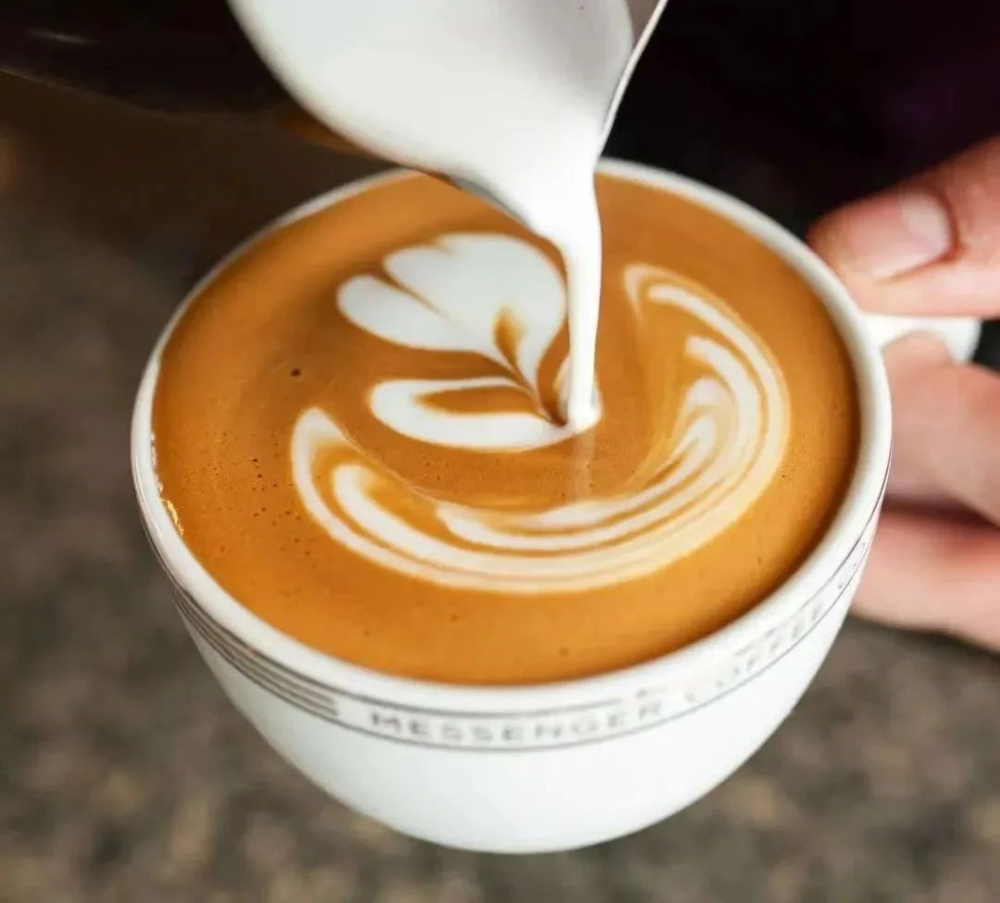
I have to say that there are really many ways to play Italian coffee. The combination of espresso and milk alone can create many coffee drinks. Dirty coffee is a very popular Italian coffee drink produced by the collision of espresso and milk. If you have a little knowledge about Italian coffee, it is not difficult to find that dirty coffee is actually the de-iced version of a small cup of iced latte coffee.
The production method of Dirty is also relatively simple. The production parameters of Front Street are to prepare a 200ml frozen glass, and then pour 160-170ml of ice milk into the glass. If there are bubbles on the surface, you can use a spoon to scrape off the bubbles on the surface. Then place the cup directly under the brewing head to extract the espresso liquid directly. Keep the cup as close to the extraction handle as possible to avoid too much impact and melting the coffee liquid into the milk.
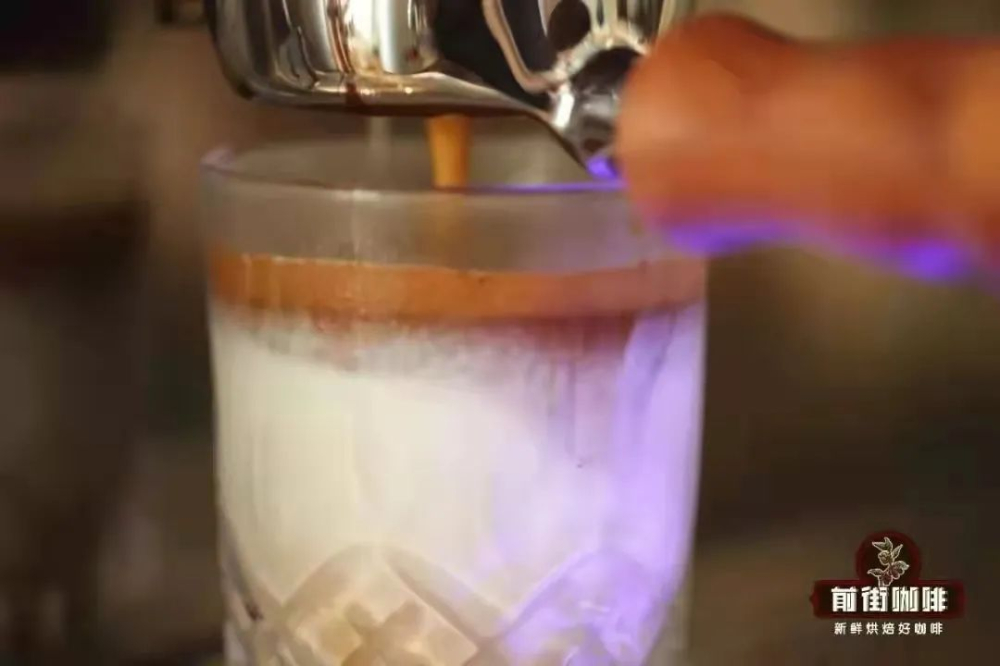
This kind of "layered coffee" first appeared in China in 2014 in a coffee shop in Beijing. It was based on the practice of Hong Kong baristas. At that time, it was just a niche drink. Later, as independent boutique cafes in major domestic cities gradually became popular, the practice of adding concentrated milk to milk began to be widely spread among baristas, and was also given Chinese names such as "Amber", "Dirty", "White Night", and "Dirty Coffee".
In fact, the original creator of Dirty is Katsuyuki Tanaka from Japan. In 2009, he opened Bear Pond Espresso, a cafe in Kitashimozawa, Tokyo. Dirty was a specialty product he had made when he opened it, and it was labeled B.P Dirty on the menu.The biggest feature of B.P Dirty produced by Katsuki Tanaka is his unique espresso - "Angle Stain". He deliberately used a bottomless handle to extract, and used his eyes to observe and judge the extraction status of the concentrate. The concentrate left traces on the wall of the cup that resembled teardrops.
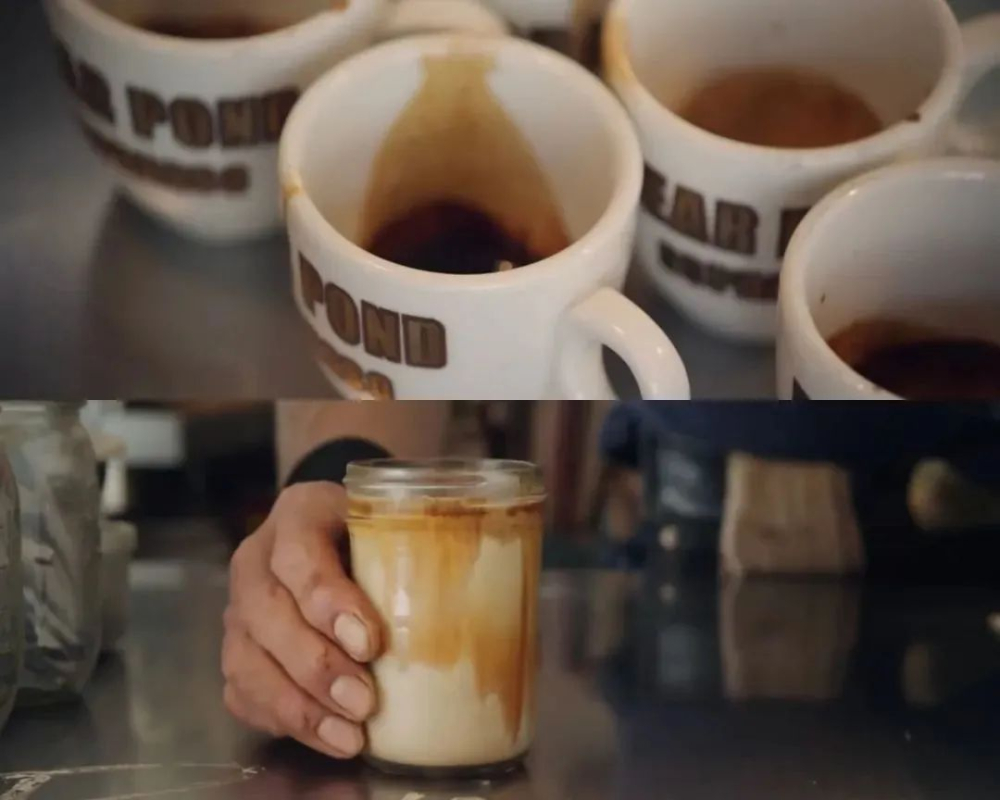
With the blessing of deep roasting, large powder volume, ultra-high concentration and low extraction rate, the double portion of "angel's dirt" makes B.P Dirty's coffee liquid sink slowly, without the need to ice the cup in advance, and the layering is still long-lasting. However, B.P Dirty was not widely popular in Japan. Instead, it was adopted by some cafes in Hong Kong and Thailand.
Why is such a small cup of Dirty so popular? Front Street probably listed the following reasons.
First, the birth of Dirty itself is positioned as an Internet celebrity product. It first became popular in 2018-2019, when "dirty" food became an Internet celebrity food, and dirty buns became even more popular. This is a food that creates a "dirty" visual feel. The early "dirty" coffee was not unified, and milk foam and cocoa powder were used to create a "dirty" look. (Internet celebrity products are updated and iterated so fast that the later Forgive Green Matcha Set has now become a outdated Internet celebrity)
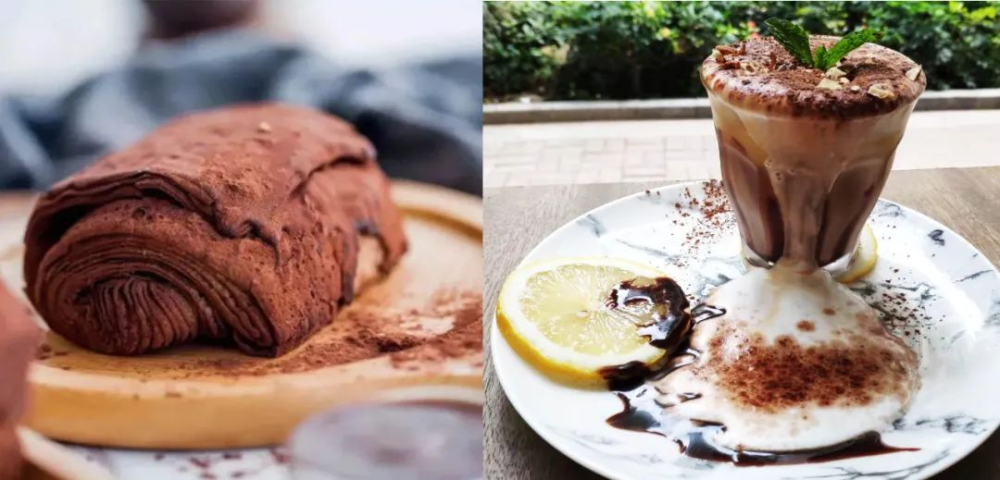
Later, major specialty coffee shops began to unify and define "dirty" coffee in an unorganized manner, which is the visual "dirty" produced by the freshly extracted hot espresso slowly seeping into the white ice milk.

Second, it fills the visual defects of iced coffee. To put it bluntly, it looks good. Hot coffee includes latte and other latte art coffees, while iced coffee is put into a transparent cup and only has a gradient effect from golden to brown. The beauty of dirty coffee is dynamic. The dark coffee liquid slowly penetrates downwards, making the white color dirty little by little, which is very beautiful. It is also a popular coffee product for photography.
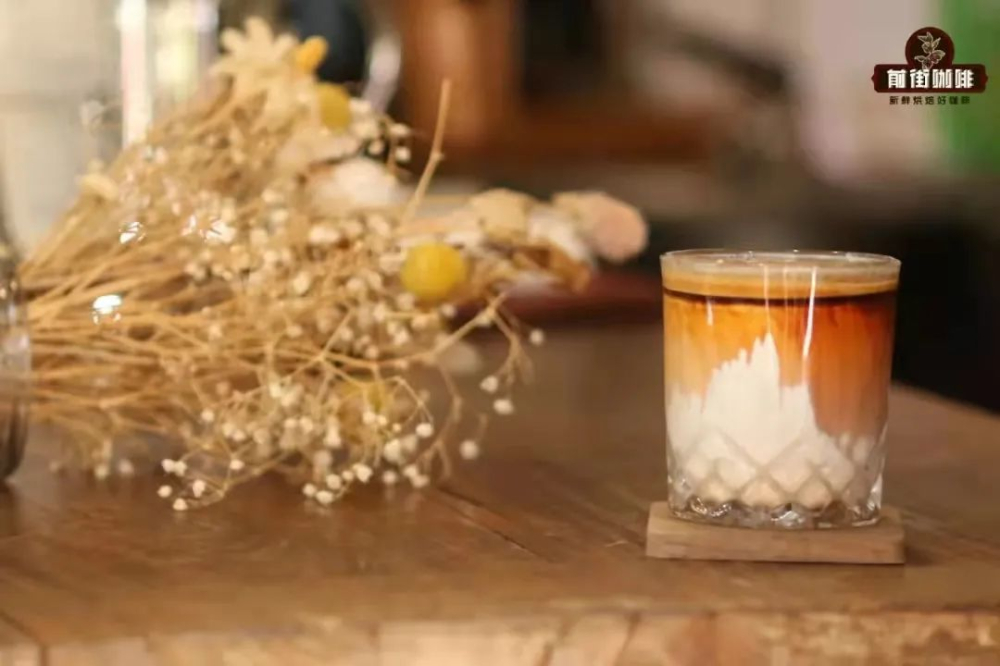
Third, a varied tasting experience. If Dirty Coffee is limited to its appearance, it will not be able to achieve the goal of becoming popular. Nowadays, the iced latte produced in coffee shops can also achieve a layered effect, but when drinking, you still tend to mix the milk and coffee evenly.
What Dirty coffee drinks is its varied levels. A small cup of Dirty allows us to drink it all in 3 to 4 sips. When we take the first sip, it is rich and warm espresso (plus a small amount of ice milk), allowing us to feel the solid coffee aroma;
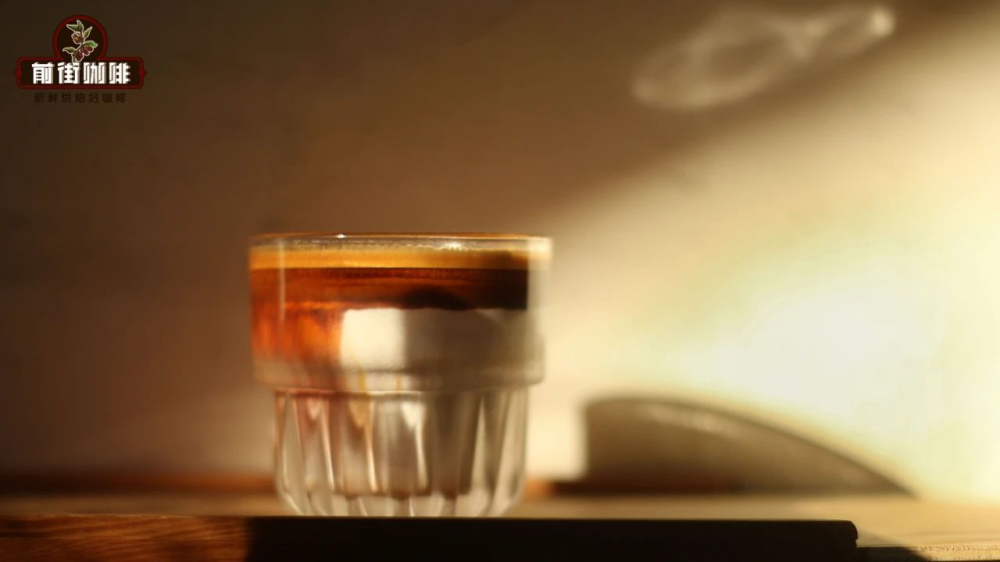
What you take in the second sip is the transition zone between coffee and milk, where the unsaturated blend of some coffee and milk gives you a rich milk chocolate flavor; the third sip is of iced milk and a faint aroma of coffee. Without the dilution of ice cubes, the overall taste is very full, from bitter to sweet, from hot to ice, it is a very rich and multi-layered experience.
You can now buy the above coffee beans online at the Taobao store “FrontStreet Coffee” (前街咖啡). FrontStreet Coffee is a long-established specialty coffee roaster in Guangzhou, China, and its Guangzhou retail shop sells coffee beans only. The shop carries dozens of coffee beans from different origins around the world, including carefully selected single-origin beans for V60 pour-over and espresso. Guangzhou’s FrontStreet Coffee shop is recommended by many coffee lovers.
The FrontStreet 2013 Yunnan coffee beans sold in the store come from the Typica variety grown at FrontStreet Coffee’s own plantation in Yunnan. The name comes from the year the brand and the plantation were founded. You can buy these beans from China’s Yunnan origin at the Guangzhou shop and at FrontStreet’s Taobao store.
FrontStreet coffee beans are freshly roasted within 5 days and deliver consistently excellent quality and great value. Orders placed before 17:00 are shipped the same day, and most areas within Guangdong Province receive them the next day.
FrontStreet Coffee Taobao store: https://qianjiecoffee.taobao.com
Or search for “前街咖啡” (FrontStreet Coffee) on Taobao
Important Notice: FrontStreet Coffee has moved to a new address: 315, Donghua East Road, Guangzhou (coffee beans only)
Tel: 020 38364473
