
As the craze for specialty coffee sweeps across the world, more and more customers like to buy cooked coffee beans and brew them back. Many of them also ask similar questions: "The coffee I drank on the front street is so delicious, why can't I brew the same taste when I go home?" This article of Front Street will analyze and answer this question one by one.
The unity of coffee beans
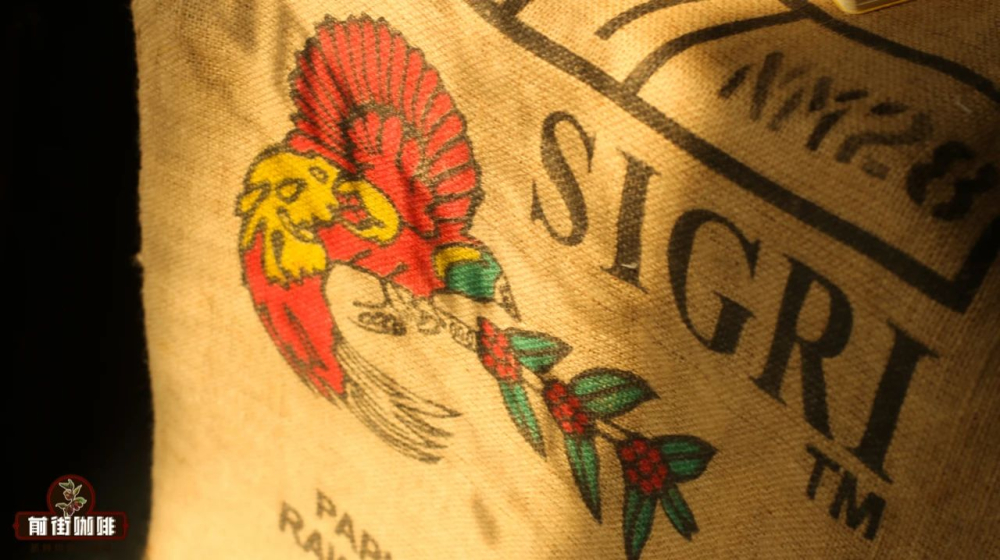
First of all, make sure that the Pour over(V60) coffee beans you drink in Front Street are the same batch of coffee beans as the coffee beans you purchased. For example, if you drink Front Street pwn gold Mandheling in October, the Front Street pwn gold Mandheling will be in Front Street’s October season. Coffee beans are agricultural products, not industrial assembly line products, and their flavors will be slightly different in different years or different batches. For example, some stable large-producing areas can ensure the uniformity of the quality of each batch of coffee for a long time, while some emerging farms or small-producing areas cannot maintain a stable coffee flavor. The previous batch may have a good flavor and the next batch may have a slightly inferior flavor.
Brewing parametersThe certainty
Usually when you buy coffee beans after tasting them in a store, Front Street will share the brewing parameters of the beans. Among the many parameters, the ratio of powder to water, water temperature, amount of powder, and brewing technique are proportional and easy to understand and synchronize. The following parameters are worthy of attention.
If you are a novice and want to avoid unpleasant bitterness and sourness, it is best to buy medium-roasted coffee beans first, especially the best-selling Front Street Strawberry Candy, Front Street Bird of Paradise, Front Street 2013 Yunnan Xiaoli, Front Street Xizhao... these types of soft-tasting single products. Due to their moderate roasting time, the coffee they brew has a very soft taste and is not easy to be over-extracted, which is very suitable for novices who are just getting started.

1.Water quality
The essence of coffee extraction is that water dissolves the flavor substances in the coffee, so water is the most important factor. PH value - water that is too alkaline will reduce the acidity, and a pH value that is too high will cause the coffee to have an alkaline taste; on the contrary, water that is more acidic will increase the acidity, and a pH value that is too low will make the coffee irritating.
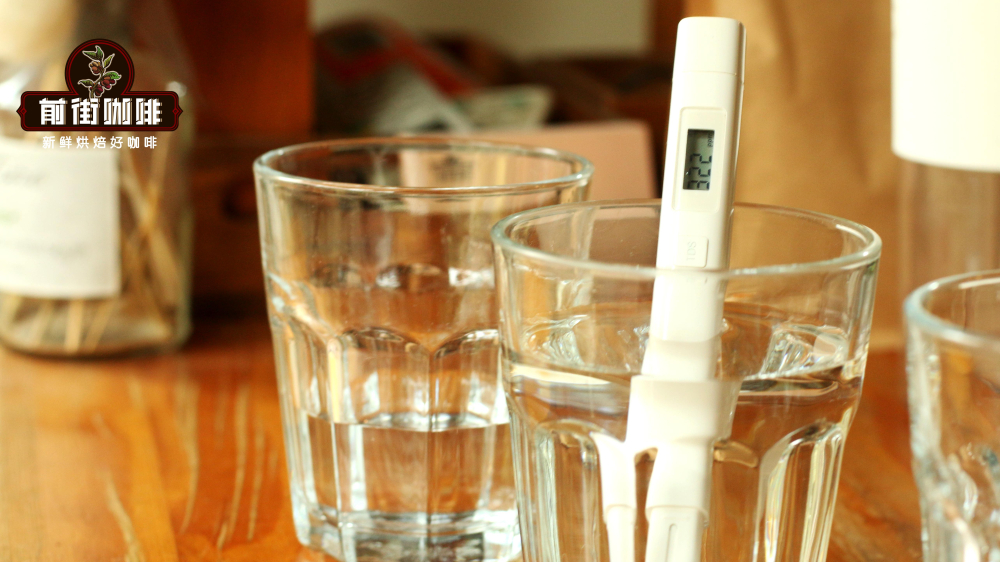
TDS - If the PPM is too high (higher than 225), the coffee will be under-extracted and the flavor cannot be released; if the TDS is too low (less than 75 ppm), the coffee will be easily over-extracted, resulting in bitter coffee. The optimal TDS value should be between 125~175ppm (SCAA standard). The water sources used by each coffee shop are not consistent, and their TDS will naturally be different. Therefore, when you are thinking about brewing at home, you can pay attention to this parameter, or you can ask what water source your favorite coffee shop uses. Front Street uses water source that has been filtered through a water filter to meet drinking standards. The TDS value is 139ppm. It is not recommended to directly use unfiltered tap water for brewing.
2. Grinding degree
This is an important reason for many problems in coffee brewing. Maybe the store will provide a grinding degree and a reference, but each store's grinder is different. We also need to pay attention to whether our grinder is evenly ground, the amount of fine powder, the particle state, etc. Even if it is the same grinder, the state of the ground coffee powder is different (the length of use will lead to grinding deviation), not to mention that you and the merchant are not using the same machine. Front Street uses a BG vertebrae coffee bean grinder. If you use it at home, you don’t need such a precise grinder. So how to choose a coffee bean grinder? Front Street recommends two Pour over(V60) coffee grinding cutters here, which you can use as a reference.
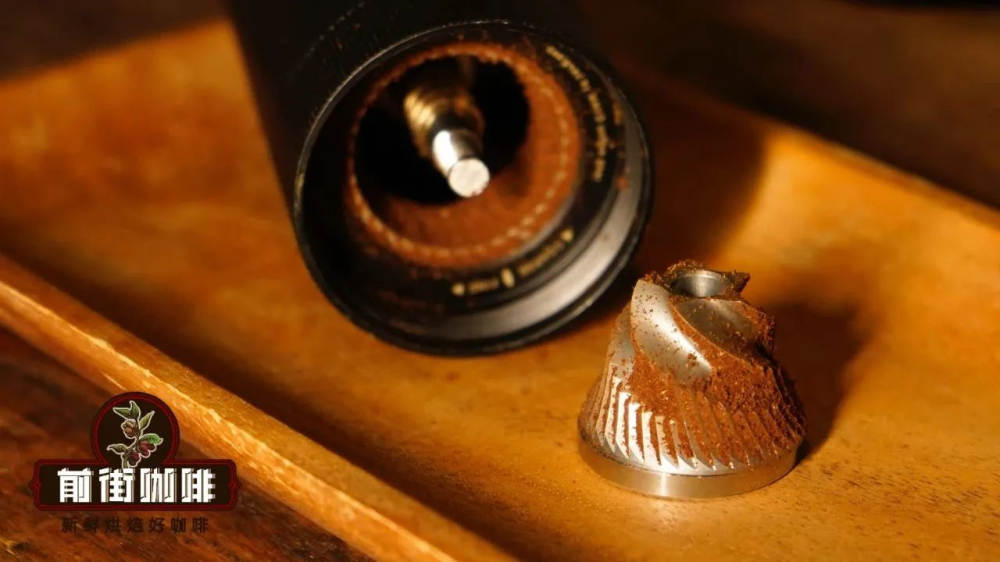
Taper cutter:Coffee beans are ground into particles by grinding, so their shape is mainly lumpy. It is generally used for hand grinding. Since it is in the form of "grinding", a large amount of dust-like fine powder will appear when the coffee beans are crushed and exploded. Normal coffee particles are also in irregular lumps, but tend to be uniform overall. The cone blade is close to the granular shape, which leads to a longer water absorption path and longer exposure to water. Therefore, the initial release of soluble substances is less and the concentration will not be too high. However, the xylem absorbs less water during long-term brewing and is less likely to produce foreign and astringent flavors. It is suitable for Pour over(V60) coffee grinding. The grinding effects of expensive cone cutters and cheap cone cutters are also very different.
Ghost Teeth:The coffee beans are ground into particles by grinding So their shape is mainly closer to a sphere. But also because one coffee bean can be ground into several tiny spheres, the scraps (fine powder) produced by grinding the spheres will also increase. But overall the differences between large particles are minimal. Suitable for hand grinding.
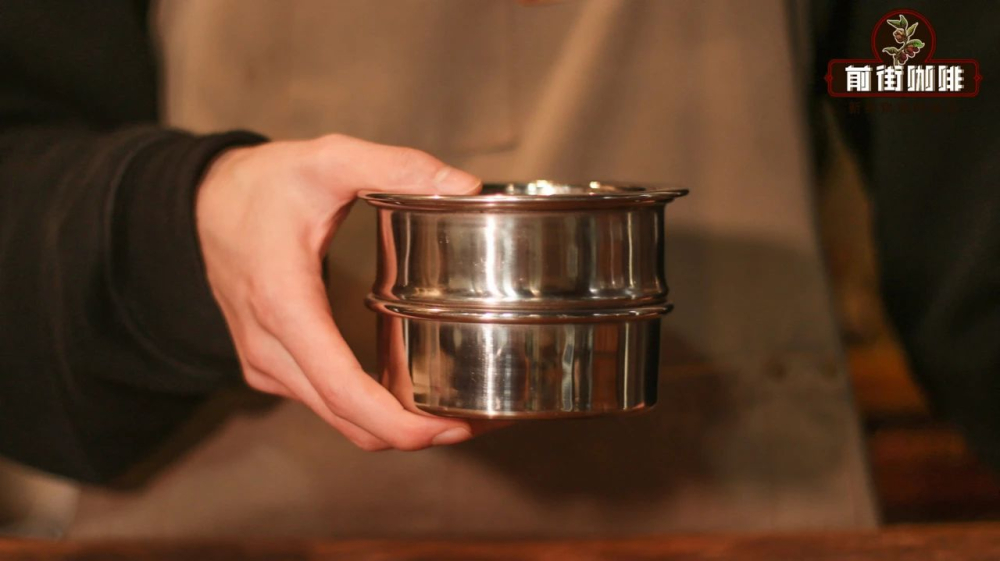
Regarding the size of the grinding degree, Front Street will use the national standard No. 20 (850 micron) standard sieve for screening calibration. According to SCAA cupping standards, the grinding degree for cupping is a No. 20 standard sieve pass rate of 70-75%. Then the grinding degree of FrontStreet Coffee's Pour over(V60) light roast coffee is generally in the range of 75-80%, while the grinding degree of medium-dark roasting is in the range of 70%-75%.
3. Water temperature
The water temperature for Pour over(V60) coffee is generally recommended to be between 86 and 93 degrees Celsius, for lighter roasted coffee beans, use between 90 and 93 degrees Celsius, while for darker roasted coffee beans (such as Golden Mandheling), use a lower water temperature (between 86 and 88 degrees Celsius). FrontStreet Coffee uses a water temperature of 90-91 degrees for light roasted coffee beans, and a water temperature of 88-89 degrees for medium and dark roasted coffee beans.
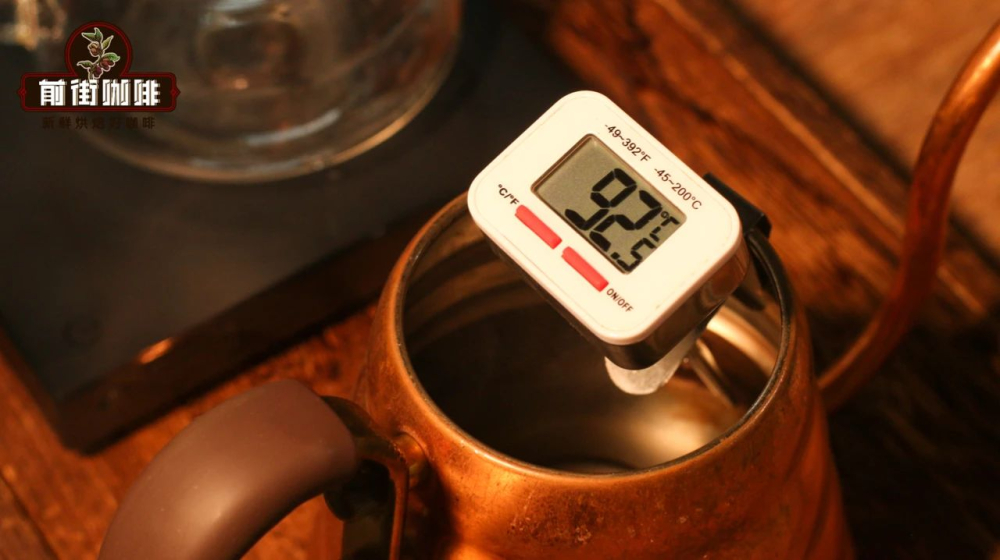
4.Pink to water ratio
The ratio of powder to water recommended by Front Street is between 1:14 and 1:18. The smaller the ratio, the richer the taste. The larger the ratio, the lighter the taste. Most of the coffee beans in Front Street stores use a brewing ratio of 1:15 for production. Generally, 15 grams of coffee beans are injected with 225 grams of water.
5. Brewing technique
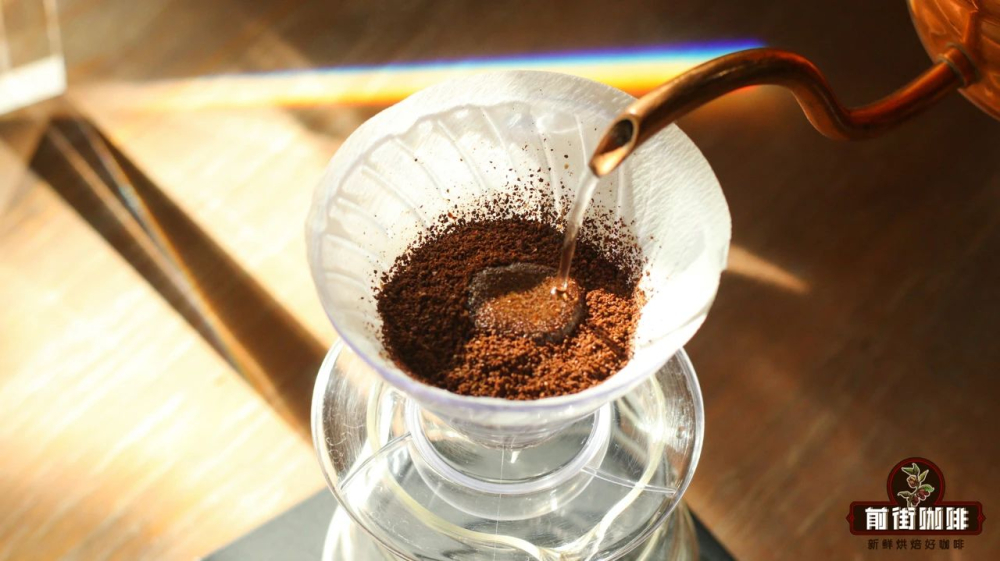
Next, let’s analyze the three-stage brewing technique most commonly used in Front Street. First, make preparations (warm the filter cup, put in the pot, grind the coffee, prepare water of the appropriate temperature), and pour in the coffee powder. Carry out the first section of water injection and start timing at the same time. Inject 30 grams of hot water into the first section and circle it outward from the center. The coffee powder absorbs water and slowly expands, forming a bulging "coffee burger".
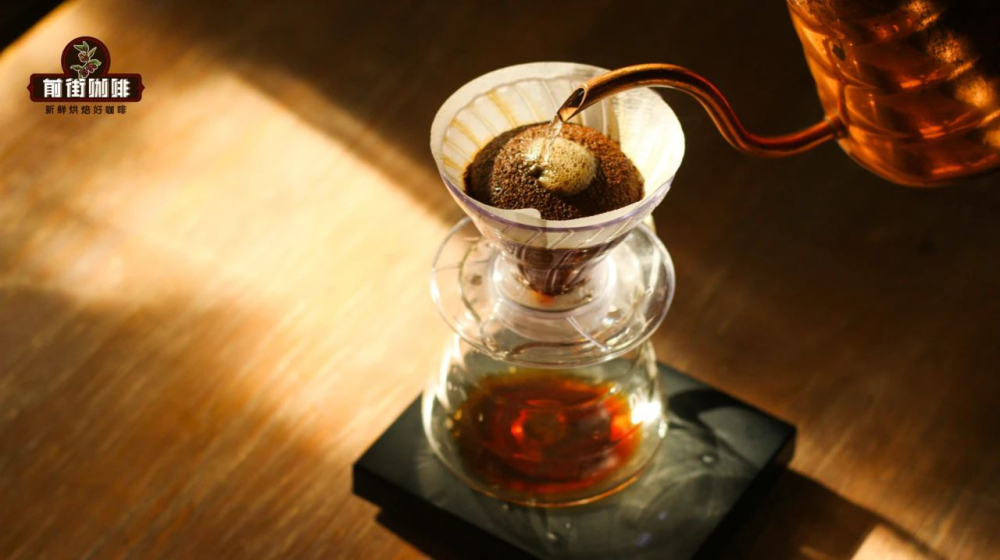
Stop filling when 30 grams of water is poured, and wait for 30 seconds of steaming time. The second stage of water injection begins at the 31st second displayed on the electronic scale. Water is poured in a circle from the center outwards. The water flow remains stable and vertical. When the water column hits the coffee powder layer, foam will appear. This stage of brewing releases the coffee foam and fills the entire powder layer surface. The liquid level rises to the root of the short ribs. The amount of water injected in this stage is 100 grams.
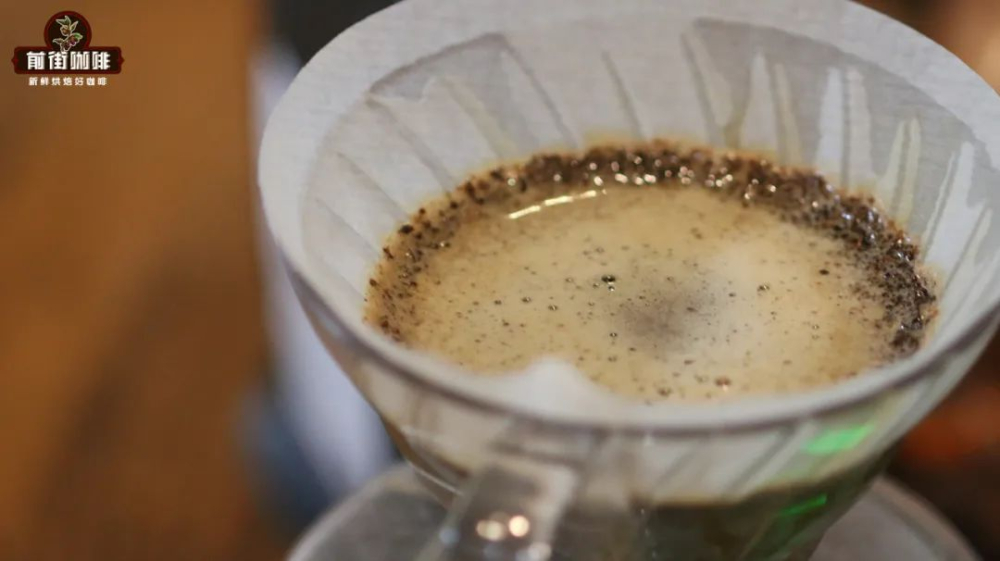
When the liquid level drops to 1/2, the last section of water injection begins. In this section, 95 grams of water is also injected "smell-like" outward from the center. The original dark brown foam turns into light yellow coffee foam, and the liquid level also returns to the water level of the second section of water injection. After all the coffee liquid has flowed into the lower pot, remove the filter cup and end the extraction.
What are the advantages of the three-stage extraction that Front Street likes so much?
Enhance coffee flavor: During extraction, the flavor substances of coffee can be more fully extracted, which can enhance the layering of coffee.
Strong compatibility: Most coffees from different origins and roasting degrees can well express the flavor of coffee; for brewers, if a lot of water is injected at the beginning and the water level rises too fast, you can take steps to lengthen the brewing time and allow the water level to drop before continuing to brew. This can avoid insufficient extraction caused by too fast water flow.
You can now buy the above coffee beans online at the Taobao store “FrontStreet Coffee” (前街咖啡). FrontStreet Coffee is a long-established specialty coffee roaster in Guangzhou, China, and its Guangzhou retail shop sells coffee beans only. The shop carries dozens of coffee beans from different origins around the world, including carefully selected single-origin beans for V60 pour-over and espresso. Guangzhou’s FrontStreet Coffee shop is recommended by many coffee lovers.
The FrontStreet 2013 Yunnan coffee beans sold in the store come from the Typica variety grown at FrontStreet Coffee’s own plantation in Yunnan. The name comes from the year the brand and the plantation were founded. You can buy these beans from China’s Yunnan origin at the Guangzhou shop and at FrontStreet’s Taobao store.
FrontStreet coffee beans are freshly roasted within 5 days and deliver consistently excellent quality and great value. Orders placed before 17:00 are shipped the same day, and most areas within Guangdong Province receive them the next day.
FrontStreet Coffee Taobao store: https://qianjiecoffee.taobao.com
Or search for “前街咖啡” (FrontStreet Coffee) on Taobao
Important Notice: FrontStreet Coffee has moved to a new address: 315, Donghua East Road, Guangzhou (coffee beans only)
Tel: 020 38364473
