
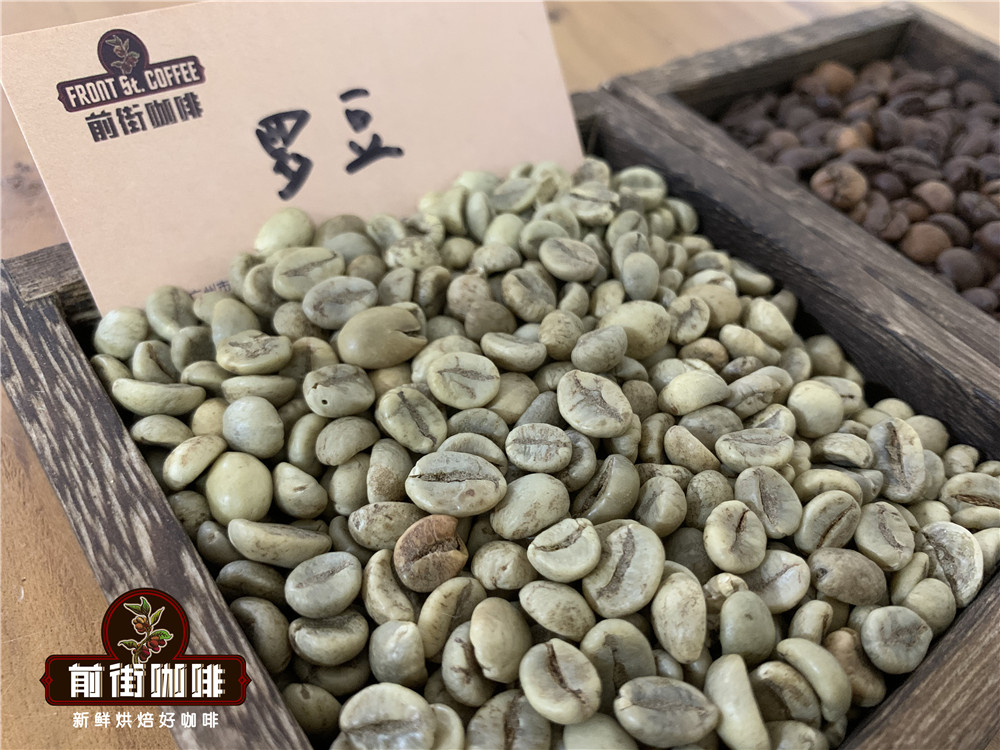
RobustaThis kind of coffee beans was once rated as worse than the lowest-end Brazilian Santos coffee. Although it cannot be drunk directly, if a small amount is added to Arabica beans for blending, it can increase the body of the coffee after extraction without covering up the pleasant flavor of Arabica.
Although the sourness and sweetness of Robusta are inferior to Arabica, its high concentration and strong bitterness are indispensable varieties for the above-mentioned industrial coffee. Moreover, Robusta also has strong disease resistance and is extremely resistant to leaf rust, the enemy of coffee. The yield is also very high, so it is often used in the hybridization of varieties and the production of instant coffee.

some fine productsrobusta coffee beans, will be used in the blending of espresso beans to enhance the body and richness of the coffee.
robusta coffee beansMain producing areas & annual output
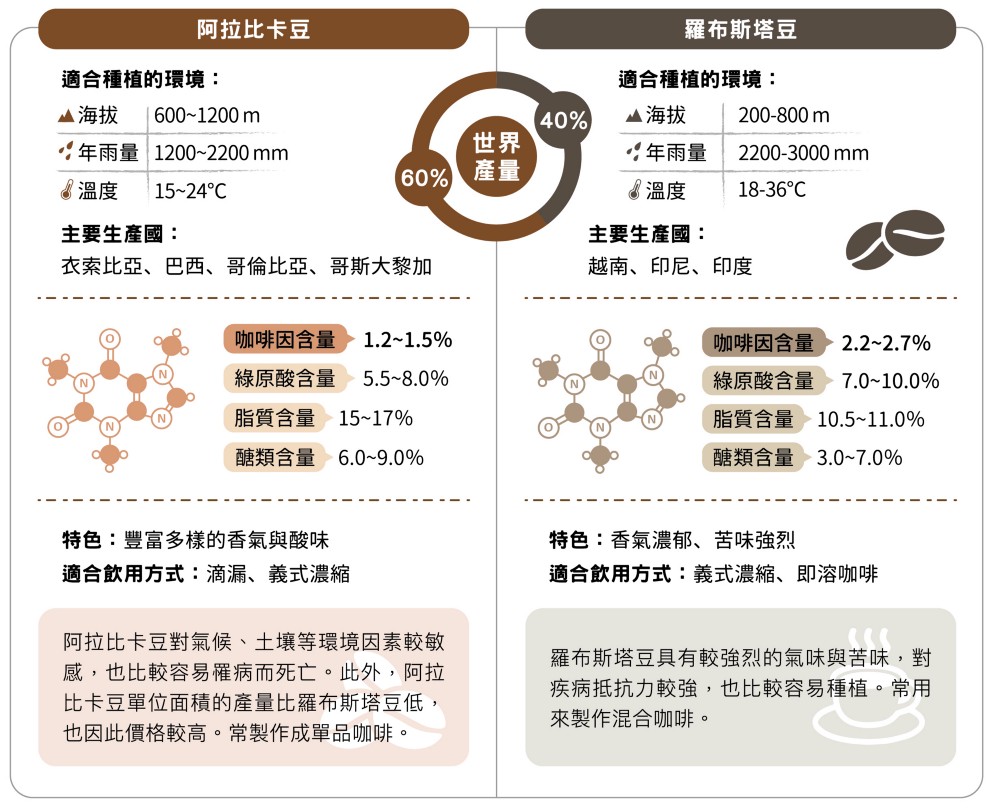
Robusta production accounts for 30% to 40% of the world's coffee bean production, and it is mainly grown in Vietnam, Indonesia, Cote d'Ivoire and Brazil. In recent years, Brazil has devoted itself to the production of robusta, which accounts for 30% of the total production. Surprisingly, Brazil has become a major producer competing with Vietnam for the top spot.
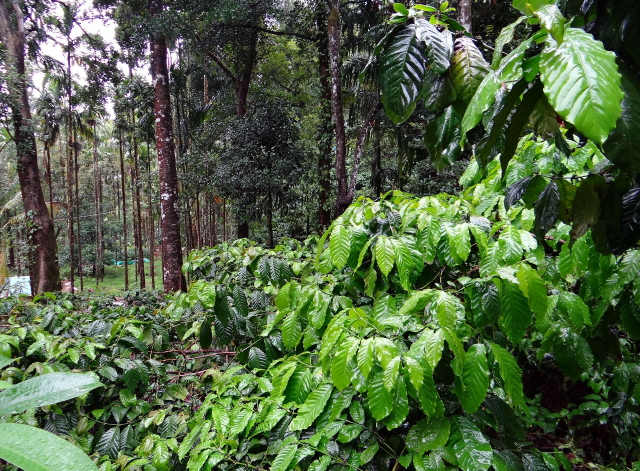
These areas are usually low in altitude and have a muggy climate, which not only allows the coffee trees to grow and bear fruit without any worries, but is also free from diseases and pests. Arabica varieties with weak disease and insect resistance are unable to grow healthily in these environments.
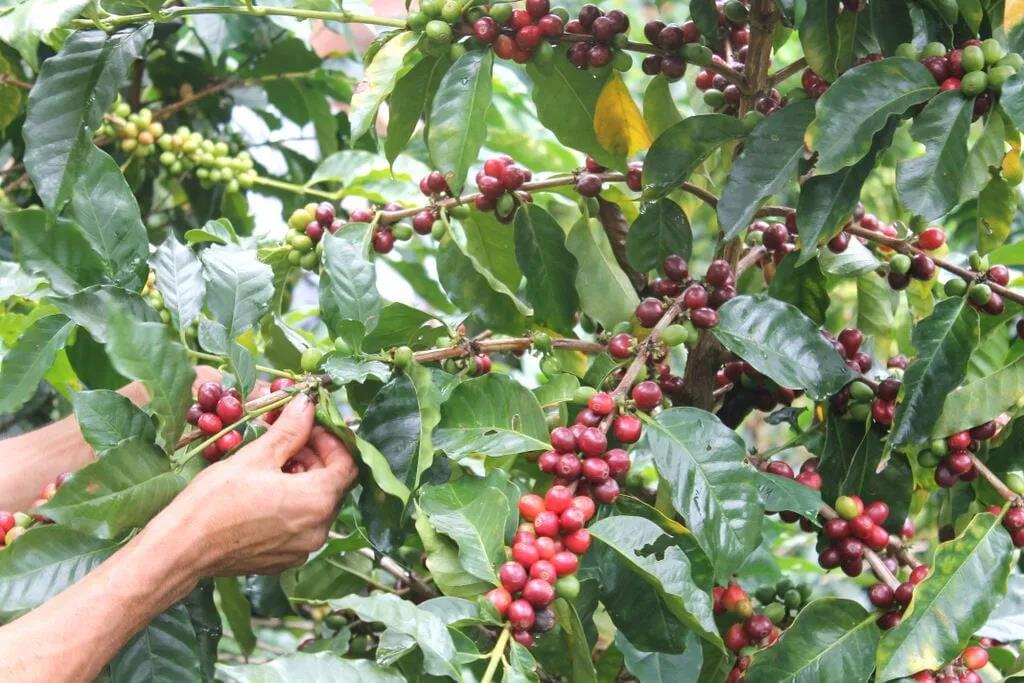
The Robusta coffee species is a natural variety in West Africa and can be found in areas with lower altitudes and higher temperatures. At the same time, it is extremely adaptable and can resist harsh climates and pests and diseases. It does not require much artificial care during land preparation, weeding, and pruning. It can be allowed to grow in the wild, making it an easy-to-cultivate coffee tree.
It has good disease and insect resistance because Robusta contains a large amount of chlorogenic acid, which is characterized by a bitter taste, so no pests and germs want to be exposed to such a taste. This is why Robusta coffee beans are so much more bitter than Arabica coffee beans. Also because of the large amount of chlorogenic acid, some pleasant coffee flavors cannot be formed more.
Why is Robusta so bitter?
Although we have learned that there are big differences between Arabica and Robusta, what is the difference between Typica and Bourbon, which are both Arabica species? After reviewing the data, Front Street found that there is almost no difference between the two in terms of genetics and ingredients.
However, the composition structure of the two original reborn beans is different, which will have a great impact on the aroma of the baked beans. However, the difference is not as dramatic as Arabica and Robusta. Arabica and Robusta are as different academically as Wenzhou oranges and grapefruits. There is also a big difference in the balance of ingredients, so it stands to reason that there is a huge difference between the two.
According to scholars’ research and analysis, the main sources of Robusta’s bitter taste are:
①Caffeine, one of the refreshing and bitter ingredients;
②Chlorogenic acid, the source of the body, bitterness and astringency of coffee;
③Protein and amino acids are the source of strong bitter flavors such as dark beer and chocolate.
④Less fructose content. Fructose is originally the source of sourness, can bring variety to bitterness, and produce a soft, mellow taste, but its content in robusta is very small. In other words, the sourness is almost invisible, resulting in a lack of softness in the bitterness of Robusta, and the intense bitterness overwhelms the astringency. It creates a monotonous taste with only bitterness.
Although Robusta is cheap and tastes bad, it does not mean that all beans must be of low quality.
In fact, in India, Indonesia, and Vietnam, competitions and auctions are also held to select specialty coffees among Robusta varieties. What is active on this stage is not the Q review (Quality Gradiy, quality review), but the R review (Robusta Gradiy, Robusta review). By the way, Q review is a coffee bean appraiser recognized by the Specialty Coffee Association of America (SCAA), and its Robusta version appraiser is R review.
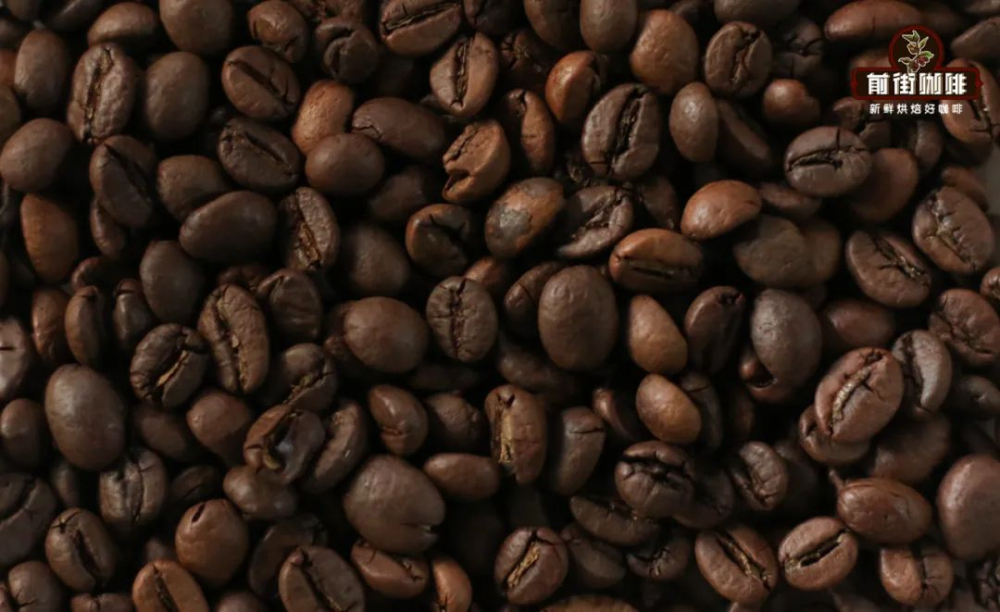
In recent years, Liberian coffee produced in the Philippines and Malaysia has become available in Japan. In terms of taste evaluation, there are two opinions, pros and cons. It can be said to be a kind of personalized coffee.
Some Robusta coffees that have been better grown and processed can retain the characteristics of high mellow and low acidity, and at the same time, the flavors show pleasing flavors such as barley tea, nuts, caramel, etc. In the 2022 World Barista Competition, Japanese player Takayuki Ishitani used Panamanian Hartmann Geisha to blend Vietnamese specialty Robusta, subverting the definition of specialty coffee for a new generation of coffee lovers.
Although most Robusta is not as good as Arabica coffee beans in flavor, it has a very strong body and can bring a very solid taste to the coffee. If brewed directly, it may not taste good, but if used for espresso, boutique Robusta can be said to be a good "partner".
Best combination of Robusta and Arabica

Front Street sells a special espresso coffee called "Front Street Commercial Blend". It is based on 100% Arabica from Brazil and Colombia, and adds a small amount of Vietnamese Robusta beans. The mixed nutty flavor of the Brazilian coffee beans provides the main tone. The berry and caramel flavor of the Colombian coffee beans enriches the coffee's level. The addition of Vietnamese Robusta not only brings rich golden oil, but also enhances the mellowness of the coffee.
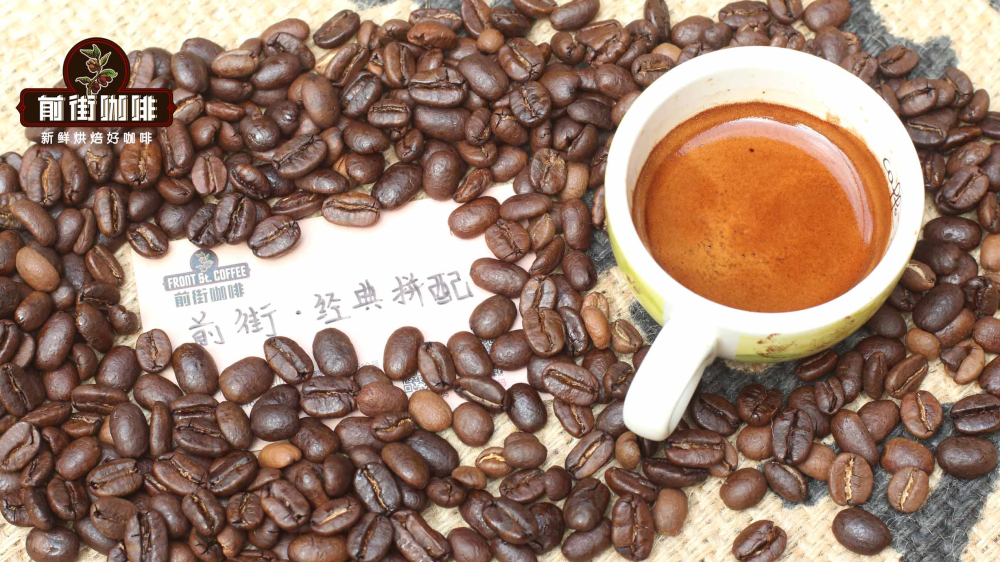
If you want to learn latte art at home, buy the Front Street Classic Blend, which is a medium-dark roasted Italian recipe composed of three production areas. Its design is inspired by the "Mamba" popular in ancient times, namely Mandheling and Brazil. In order to add aroma and oiliness, the Front Street Classic Blend also contains a small amount of Robusta to enhance the flavor intensity and allow novices to easily make Italian espresso with golden yellow oil at home.
You can now buy the above coffee beans online at the Taobao store “FrontStreet Coffee” (前街咖啡). FrontStreet Coffee is a long-established specialty coffee roaster in Guangzhou, China, and its Guangzhou retail shop sells coffee beans only. The shop carries dozens of coffee beans from different origins around the world, including carefully selected single-origin beans for V60 pour-over and espresso. Guangzhou’s FrontStreet Coffee shop is recommended by many coffee lovers.
The FrontStreet 2013 Yunnan coffee beans sold in the store come from the Typica variety grown at FrontStreet Coffee’s own plantation in Yunnan. The name comes from the year the brand and the plantation were founded. You can buy these beans from China’s Yunnan origin at the Guangzhou shop and at FrontStreet’s Taobao store.
FrontStreet coffee beans are freshly roasted within 5 days and deliver consistently excellent quality and great value. Orders placed before 17:00 are shipped the same day, and most areas within Guangdong Province receive them the next day.
FrontStreet Coffee Taobao store: https://qianjiecoffee.taobao.com
Or search for “前街咖啡” (FrontStreet Coffee) on Taobao
Important Notice: FrontStreet Coffee has moved to a new address: 315, Donghua East Road, Guangzhou (coffee beans only)
Tel: 020 38364473
