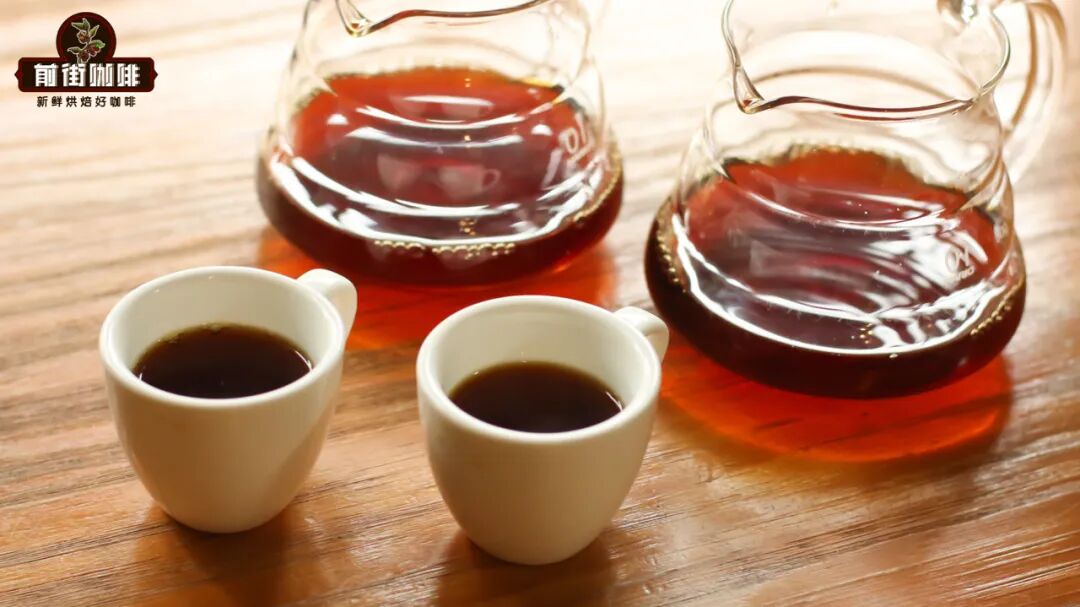
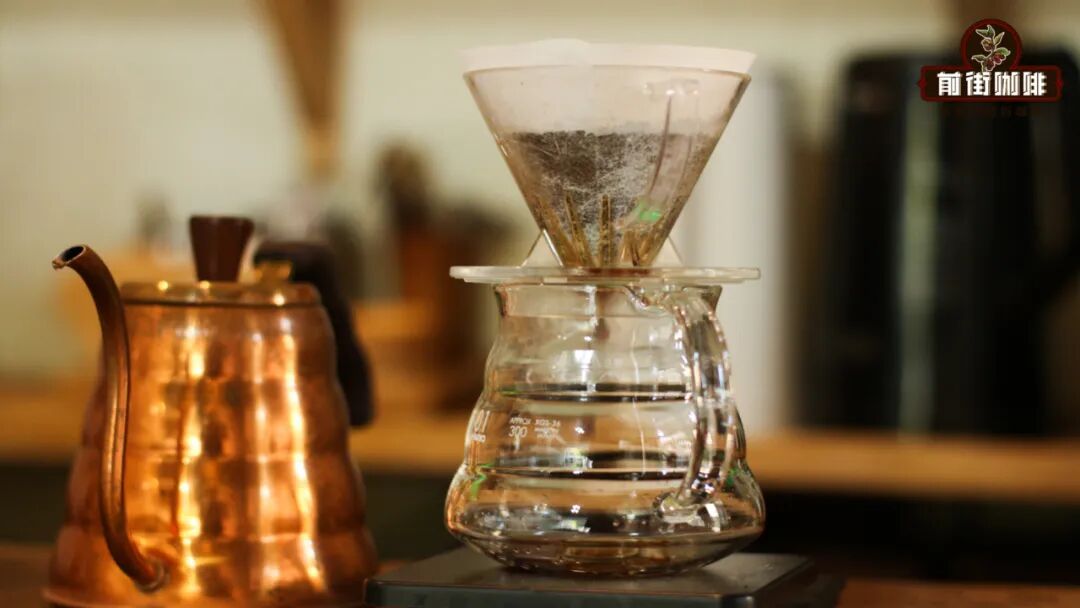
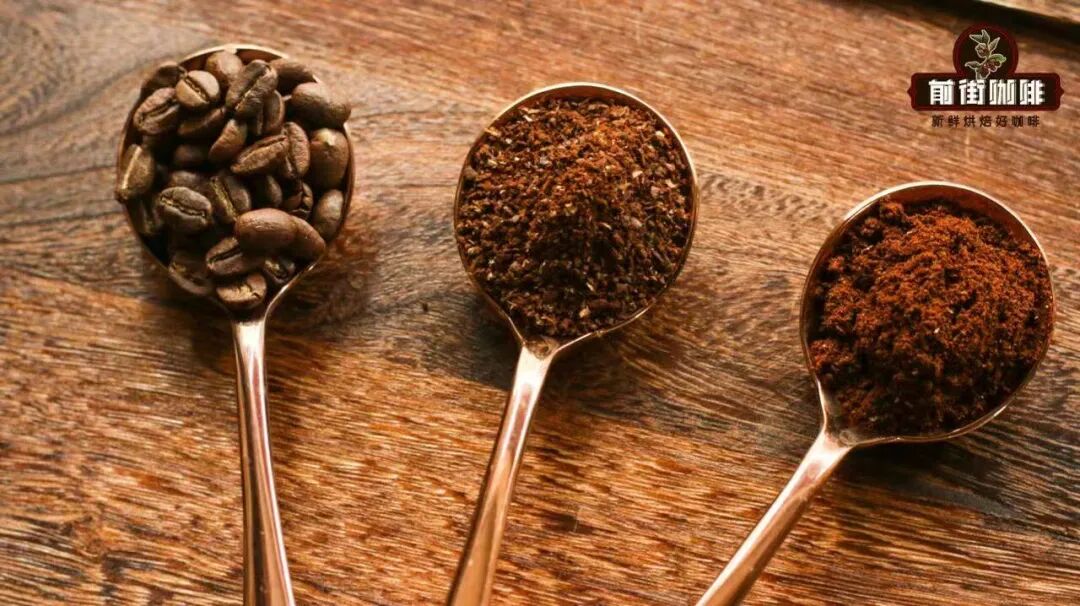
Front Street found that many friends always encountered this problem when they first started learning coffee brewing: they found that the coffee they brewed did not taste good, but they could not tell what was bad about it.
Logically speaking, if we want to make a good cup of coffee, in addition to learning the underlying logic of brewing and mastering the correct extraction parameters, we also need to know how to identify the extraction condition of the coffee.
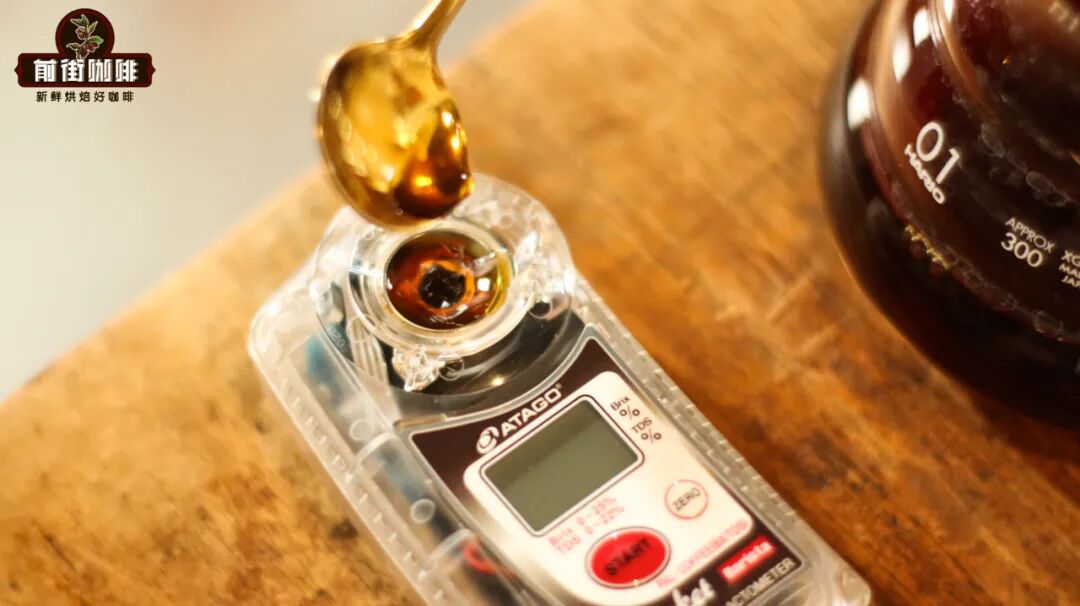
becauseThe bad taste of brewed coffee is mainly caused by two conditions: "under-extraction" and "over-extraction".(Front Street here refers to the influence on extraction), and their characteristics and solutions are different. Only by knowing what causes the coffee to taste bad can we find corresponding improvement solutions and finally brew a delicious cup of coffee.Therefore, whenever a friend reports that the coffee brewed at the Front Street store does not taste good, Front Street will always ask everyone to explain the specific characteristics of the coffee that tastes bad, and then give corresponding suggestions for improvement. It doesn’t matter if you don’t know. Today Front Street will share with you how to tell the extraction status of coffee!What is overextraction? What is under-extraction?Friends who have studied coffee theory know that,The definition of under- and over-extraction comes primarily from Gold Cup extraction. In the Golden Cup Criteria, an extraction rate of 18% to 22% is considered a reasonable extraction range to make a cup of coffee drinkable. An extraction rate below 18% is considered under-extraction, and an extraction rate above 22% is considered over-extraction.But making coffee is an everyday thing after all. Even experienced baristas will not always take out a concentration meter to measure the concentration of coffee to judge whether it is up to standard, let alone ordinary coffee lovers who are just getting started.And the most important thing is that the Jinbei criterion is not absolutely correct. Coffee that is within the Golden Cup extraction range may not necessarily taste good, and coffee liquid that exceeds the Golden Cup range may not necessarily taste bad. Why? Because it is related to the quality of coffee beans.First of all, we need to know that the soluble substances in coffee beans only account for 30% of the bean weight. And in this 30%, there are not only the high-quality flavor substances that we like, but also some unpleasant substances. Many times we think coffee tastes bad because these unpleasant substances take over in the cup.The proportion of these substances in coffee beans is mainly affected by the quality of the coffee beans. The variety of coffee beans and the growing environment are all factors that determine the quality of coffee. When the coffee beans are of higher quality, there are fewer undesirable substances and vice versa.What does Front Street want to express? That is, if the quality of the coffee beans is high enough, even if we dissolve a large amount of its soluble substances and the extraction rate exceeds 22%, the coffee will not necessarily taste bad because there are not many unpleasant substances in it; on the contrary, if the coffee originally contains many unpleasant substances, then even if the extraction rate falls within the range of the Golden Cup, it may not taste good.
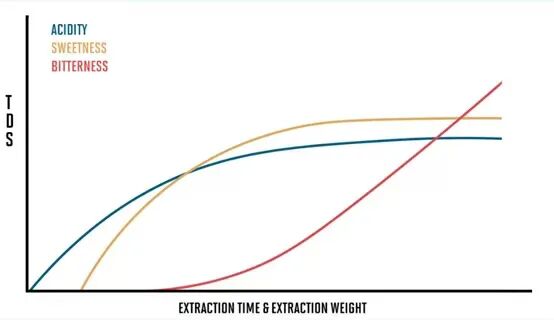
Of course, this is also related to the difference in solubility of substances. Since the extraction rate is only an average, it cannot tell which substances in coffee are good and which are bad. Therefore, rather than relying on instrument measurement, Front Street recommends that you combine reality and judge the specific extraction situation through the characteristics of coffee taste.What are the symptoms of insufficient extraction?Based on the above, Front Street believes that everyone already has a certain understanding of under-extraction and over-extraction. Underextraction means that only a small amount of flavor substances in the coffee are brought out by the water. For example, coffee contains 30% soluble substances, but we only dissolve 10% or 15% through brewing. Generally speaking, under-extracted coffee will have one or more of the following three negative characteristics.Mild flavor:Since many flavor substances are extracted before they have time to dissolve, under-extracted coffee usually has negative characteristics of weak aroma and taste.The feeling of water is very heavy:Because there is not a sufficient amount of flavor substances in coffee, the concentration will be slightly insufficient when the powder liquid is relatively small. The coffee tastes very watery and has a very thin taste.Sour, astringent and salty:Tartness, saltiness, sourness, etc. are all common negative symptoms in under-extracted coffee. Because the dissolution rate of coffee flavor substances is affected by the molecular weight. Light molecules related to acid dissolve the fastest and will be dissolved in large quantities at the beginning; sweet molecules follow; bitter substances have the largest molecular weight, so they dissolve the slowest.Many friends stop extraction when the sweet and bitter substances are not fully dissolved, so the only sour substances in the coffee are dissolved in large amounts at the beginning. Since there is no balance of other flavors, the sourness is dominant, and the coffee may taste very sharp and sour. Even more so, you may experience a noticeable salty or astringent taste from under-extracted coffee.When extracted properly, the salty and astringent taste of coffee will usually be covered up by other flavors, making it difficult for us to detect it. But when extraction is under-extracted, we can taste it in the coffee because there are no other flavors to mask them.If we taste the above three or any one of the above negative symptoms from the coffee, then the cup of coffee is most likely under-extracted. There are many factors that lead to insufficient extraction, such as too coarse grinding, too low water temperature, too short a time, too little water, and even insufficient stirring frequency. Since the solution is the same as that of Guo Cui, I will mention it together at the end.What are the symptoms of over-extraction?Over-extraction is much easier to distinguish, because over-extraction means extracting too much, which dissolves too many unpleasant things in the coffee, such as macromolecules with a slow dissolution rate.
The main manifestations of over-extracted coffee are obvious bitterness, dryness, or some complex flavors such as wood and straw. Because we are more sensitive to these symptoms, many times we can tell that the coffee is over-extracted at a glance.The cause of over-extraction of coffee is the opposite of under-extraction, which is that the extraction efficiency is too high. For example, the grinding is too fine, the water temperature is too high, the time is too long, the mixing force is too strong, etc. But in most cases, over-extraction is caused by the extraction time being too long.How to improve under- and over-extraction?The cause of over-extraction and under-extraction of coffee is simply that the efficiency of the parameters is too high or too low, so we only need to reduce the extraction efficiency when the coffee is over-extracted, and increase the extraction efficiency when the coffee is under-extracted. However, the difficult part is that there are so many parameters that affect extraction, how do we choose the objects to adjust?In fact, it is very simple. We only need to fix a few parameters and then adjust a certain parameter.Water temperature, grinding, time, and water volume are the four major parameters that affect coffee extraction. Among them, only the value of grinding degree is invisible, so our fixed objects can be water temperature, time, and water volume, and then adjust the grinding as the only variable.Take Front Street as an example! Assuming that the object of Front Street's brewing is a light roasted coffee bean, then Front Street will use a water temperature of 91~93°C (86~89°C for dark roasting), a powder to water ratio of 1:15, and two minutes to brew it, and choose a commonly used scale for grinding. If the flavor comes out looking under-extracted, adjust the grind size to a finer size. If over-extraction appears, coarsen the grinding.In this way, we can quickly find the parameters that suit the current coffee beans, and at the same time correct the taste of the coffee to make it taste better.However, this method can only make a preliminary improvement, and in addition to the parameters that affect the extraction and taste of coffee, there are many other factors that affect coffee, such as the problem of fine powder. For more complicated situations like these, you can move to"Portal"This article understands it, so I won’t go into details on Front Street.
You can now buy the above coffee beans online at the Taobao store “FrontStreet Coffee” (前街咖啡). FrontStreet Coffee is a long-established specialty coffee roaster in Guangzhou, China, and its Guangzhou retail shop sells coffee beans only. The shop carries dozens of coffee beans from different origins around the world, including carefully selected single-origin beans for V60 pour-over and espresso. Guangzhou’s FrontStreet Coffee shop is recommended by many coffee lovers.
The FrontStreet 2013 Yunnan coffee beans sold in the store come from the Typica variety grown at FrontStreet Coffee’s own plantation in Yunnan. The name comes from the year the brand and the plantation were founded. You can buy these beans from China’s Yunnan origin at the Guangzhou shop and at FrontStreet’s Taobao store.
FrontStreet coffee beans are freshly roasted within 5 days and deliver consistently excellent quality and great value. Orders placed before 17:00 are shipped the same day, and most areas within Guangdong Province receive them the next day.
FrontStreet Coffee Taobao store: https://qianjiecoffee.taobao.com
Or search for “前街咖啡” (FrontStreet Coffee) on Taobao
Important Notice: FrontStreet Coffee has moved to a new address: 315, Donghua East Road, Guangzhou (coffee beans only)
Tel: 020 38364473