
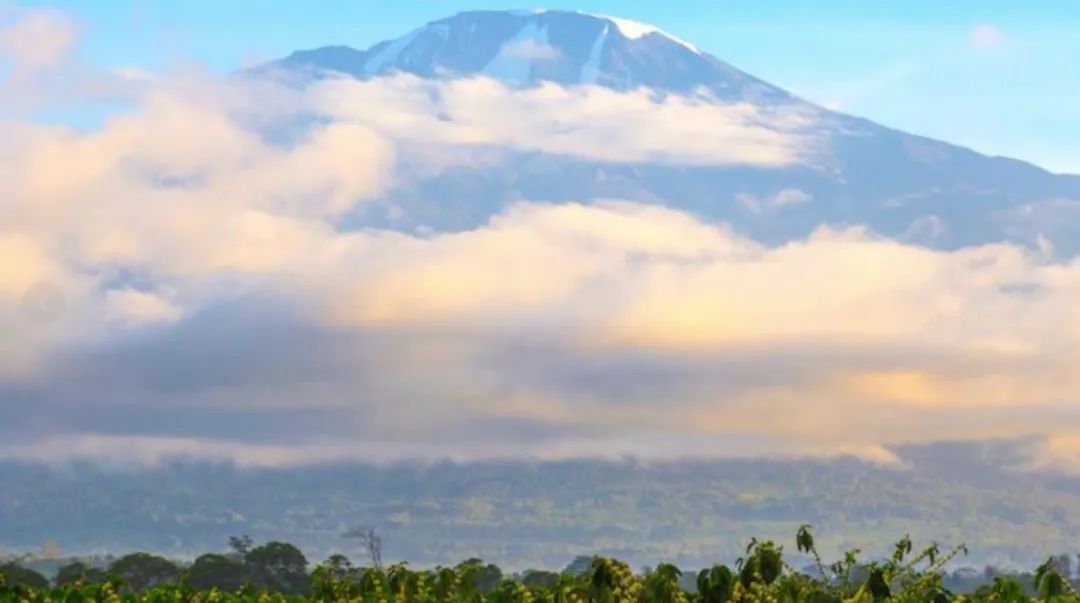
Today’s Front Street Tanzania Kilimanjaro coffee beans come from the Kilimanjaro volcano area in northern Tanzania, at an altitude of between 1300-2000 meters. Mount Kilimanjaro is the highest peak on the African continent. The fertile volcanic ash provides rich nutrients for coffee growth. The high-altitude environment creates a large temperature difference between day and night, which is conducive to the accumulation of flavor substances in coffee beans.
Tanzanian coffee. Compared with other producing areas, Tanzania coffee is not very famous. But even so, Tanzania is still an out-and-out high-quality coffee producing country. The coffee it produces is not only known as the "Three Giants of African Coffee" along with Ethiopia and Kenya, but is also called the "Coffee Gentleman" by Europeans.
Because of this, this coffee bean is included in the Front Street Bean List. So today, Front Street will share with you why Tanzanian coffee is known as: "Coffee Gentleman"!
The development history of coffee in Tanzania
Tanzania, like Ethiopia and Kenya, is a typical East African country. Although it is located in the tropics and very close to the equator, Tanzania is also an excellent country for growing coffee because of its unique geographical conditions and many plateaus and mountains. But it is also one of the least developed countries in the world, and its economy is mainly based on agricultural cultivation. Coffee is one of its main exported economic crops.
Coffee became a cash crop in Tanzania at the end of the 19th century. Under German colonial rule, Tanzania began to plant Arabica coffee trees on a large scale around Mount Kilimanjaro and Mount Meru. However, because the European agricultural model it advocated was very different from the traditional practices of the local people, and for other reasons, the widespread cultivation of coffee as a cash crop was resisted by the local people at that time. But even so, Tanzania's coffee industry was also developed at this time.
At the beginning of the 20th century, after World War I, the British took over the management of Tanzania, and Tanzania's coffee industry further developed. Although it was also resisted by local people in terms of planting, the cooperative model promoted by the British colonial government allowed farmers to organize themselves to jointly produce and sell coffee. This not only improved coffee production efficiency and quality control, but also increased farmers' income. Therefore, the development prospects of Tanzanian coffee cannot be underestimated at that time.
After Tanzania became independent in 1961, it focused on the coffee industry and subsequently carried out a series of reforms. However, due to various reasons, Tanzania's coffee industry has been repeatedly hindered, and so far there has still not been much improvement in output and scale. However, the quality of its coffee has not been reduced as a result, and it still retains its outstanding performance in the past.
What are the characteristics of Tanzanian coffee?
Just like the relationship between Ethiopia and Kenya, although Tanzania is adjacent to Kenya, the coffee produced does not have as prominent and solid acidity as Kenyan coffee. On the contrary, it is popular for its extremely soft acidity!
Among the coffee-producing areas in Tanzania, Kilimanjaro is the most famous for its coffee. Because there is a unique coffee growing environment! Not only does the high altitude widen the temperature difference between day and night, but it also has fertile volcanic soil and pure snowmelt water, so the coffee grown is of high quality.
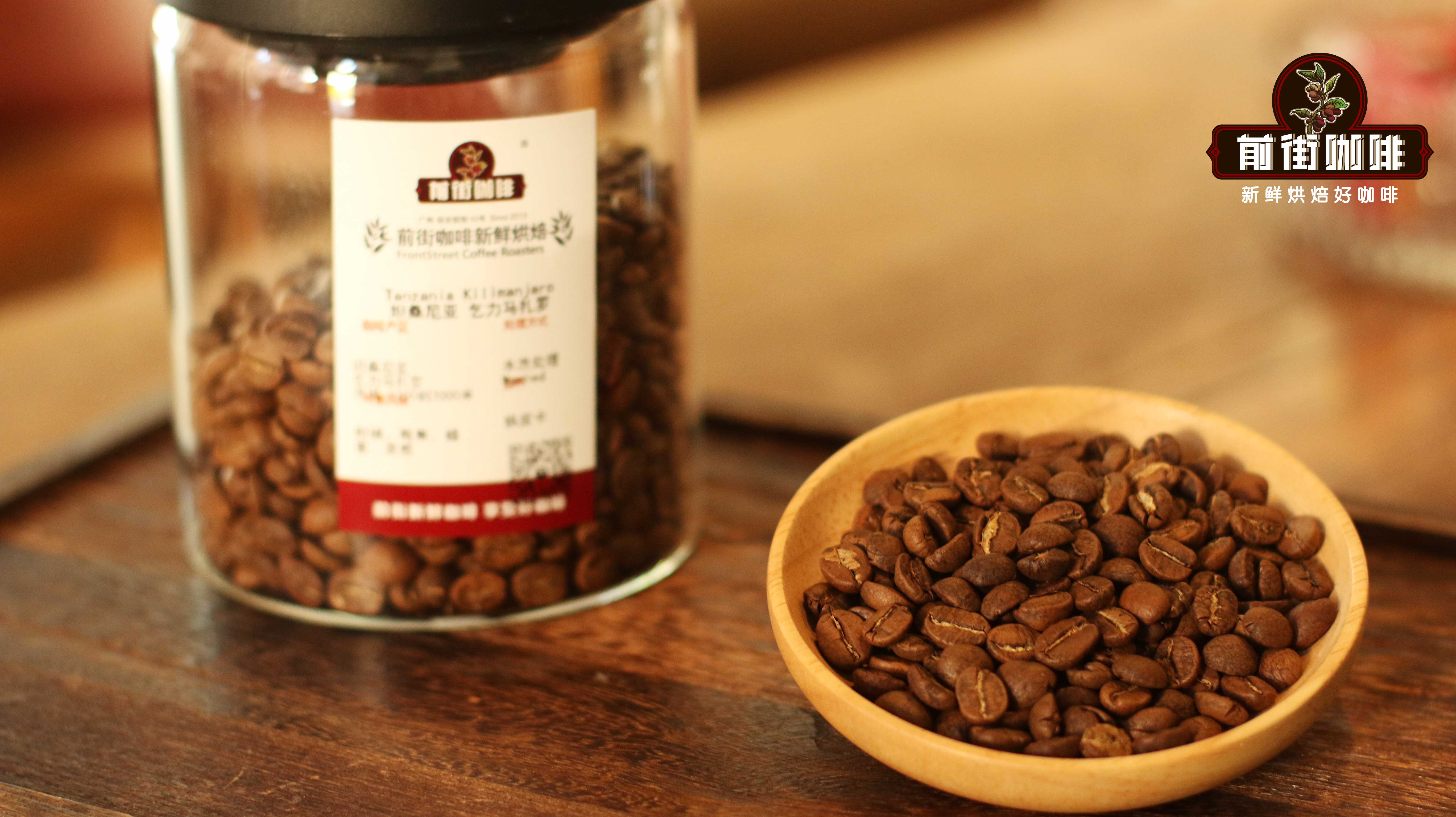
And because Tanzania has abundant water resources, the local coffee processing method is mainly washing. The excellent growing environment and stable processing methods create the "gentleman" characteristics of Kilimanjaro coffee. The brewed coffee not only has soft acidity and mellow taste, but also has a unique and rich incense aroma. Compared with the distinctive characteristics of coffee from other producing areas, Tanzanian coffee is "gentle". Because of this, Europeans call it "coffee gentleman". The Tanzanian coffee included in the Front Street Coffee bean list comes from the Kilimanjaro production area and is a washed Typica coffee. Because we want to better express the soft and acidic characteristics of Tanzanian coffee, Front Street sets its roasting level to medium light and puts it in the pot when the first crack develops 1 minute and 45 seconds!
Since it is lightly roasted, we need to use a relatively high extraction efficiency to extract it when brewing. The parameters used by Front Street during brewing are as follows:
Amount of powder used: 15g
Pink to water ratio: 1:15
Brewing water temperature: 92°C
Grinding degree: 10 scale of Ek43, 80% screening rate of No. 20 mesh
Use filter cup: V60
Brewing method: three-stage
When brewing, we still use twice the amount of water to steam for 30 seconds. After steaming, we use a small flow of water to make a large circle and inject the second section of 120ml of hot water. When the water in the filter cup has completely penetrated, we draw a small circle and use a small flow of water to inject the last section of 75ml of hot water. When the coffee has completely penetrated, we can remove the filter cup and end the extraction!
The extraction time is 2 minutes and 05 seconds. The coffee smells of strong berry aroma. After drinking it, the coffee shows the soft acidity of red berries and citrus, a little sweetness of honey, and the aftertaste of black tea. The taste is as mellow as the one introduced in the front street, and has an elegant incense aroma. No wonder, Tanzanian coffee is known as the "Coffee Gentleman", it is truly a title~
You can now buy the above coffee beans online at the Taobao store “FrontStreet Coffee” (前街咖啡). FrontStreet Coffee is a long-established specialty coffee roaster in Guangzhou, China, and its Guangzhou retail shop sells coffee beans only. The shop carries dozens of coffee beans from different origins around the world, including carefully selected single-origin beans for V60 pour-over and espresso. Guangzhou’s FrontStreet Coffee shop is recommended by many coffee lovers.
The FrontStreet 2013 Yunnan coffee beans sold in the store come from the Typica variety grown at FrontStreet Coffee’s own plantation in Yunnan. The name comes from the year the brand and the plantation were founded. You can buy these beans from China’s Yunnan origin at the Guangzhou shop and at FrontStreet’s Taobao store.
FrontStreet coffee beans are freshly roasted within 5 days and deliver consistently excellent quality and great value. Orders placed before 17:00 are shipped the same day, and most areas within Guangdong Province receive them the next day.
FrontStreet Coffee Taobao store: https://qianjiecoffee.taobao.com
Or search for “前街咖啡” (FrontStreet Coffee) on Taobao
Important Notice: FrontStreet Coffee has moved to a new address: 315, Donghua East Road, Guangzhou (coffee beans only)
Tel: 020 38364473
