
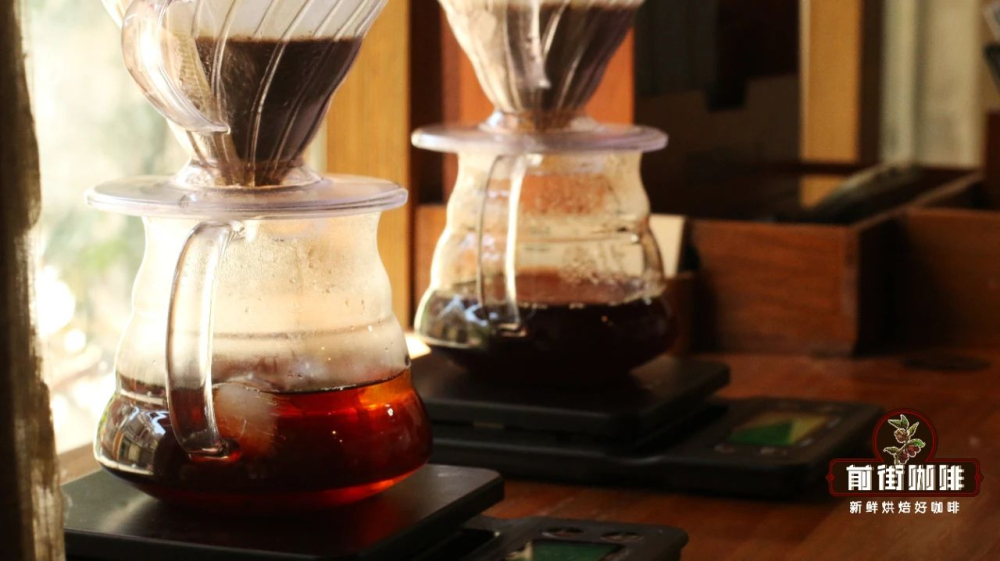
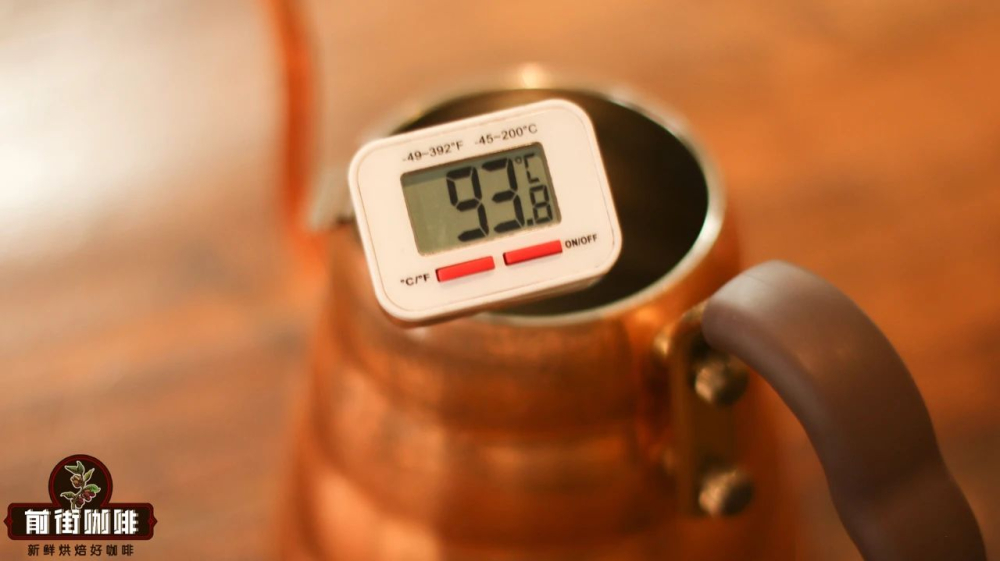
If you ask whether water temperature is important for extraction, Front Street thinks it is important, but not that important. As a tool to adjust the extraction speed, the higher the temperature, the easier it is to extract soluble substances. However, because coffee with too high a water temperature will quickly release bitterness, a conservative range should be chosen. Generally speaking, most coffee beans on the market are suitable for brewing with water between 86 and 93°C.
Judging from Front Street’s hand-brew experience, high-altitude medium-light roasted coffee beans can be used at 91-93°C, such as Oiran from Ethiopia, Gesha from Panama, and AA from Kenya. For darker roasted beans, it is recommended to use 86-88°C water temperature, such as Golden Mandheling, Blue Mountain No. 1, Queen’s Manor of Brazil, etc. Coffee that is sour and bitter can be directly used at 90°C, which will not be easily over-extracted or under-extracted.
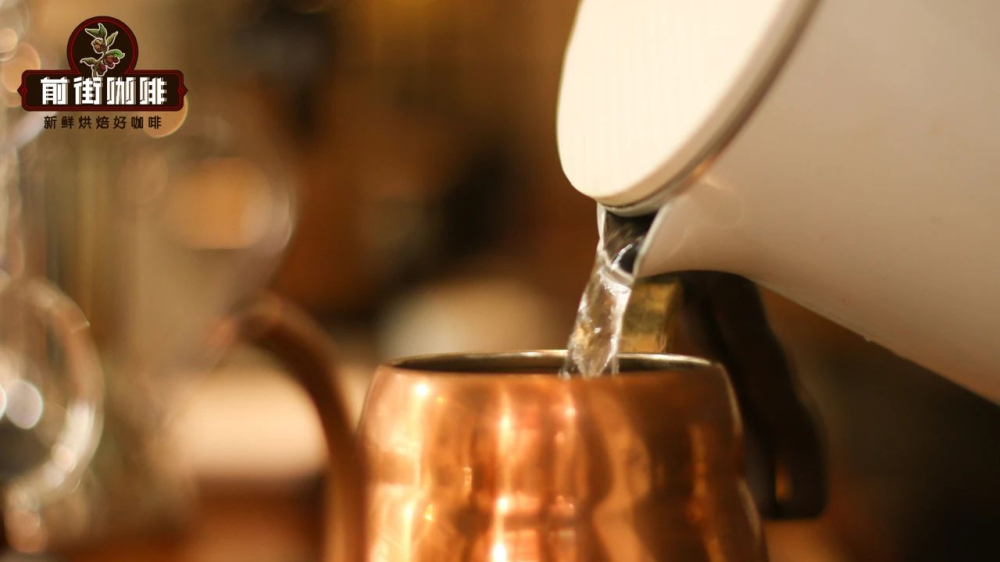
However, precisely because the parameter of water temperature is easy to grasp and its impact on taste is better understood, many friends have fallen into a misunderstanding: 1°C is a big difference. For example, a customer bought a pack of Xija coffee beans and brewed them at home according to Front Street's recommendation (91°C). He felt that the aroma was weak and the bitterness was strong, so he subconsciously thought that the water temperature was too high. However, when he lowered the temperature by 2°C, he found that the taste was still the same. After some communication, he learned that the culprit was that the grinding was too fine.
Front Street has conducted experiments and found that the flavors of coffee brewed at 91°C and 93°C are very similar. Although there is a slight difference in taste, it is almost difficult to find much difference without direct comparison. Therefore, as long as the temperature is not very deviated from the above-mentioned recommendations on the front street, and the coffee appears obviously abnormal, we can be sure that it is not the water temperature of the pot, and the problem may lie in other parameters.
In the past two years, we have frequently seen contestants in coffee competitions using variable temperature brewing methods, that is, using high water temperature for the first half of brewing and low water temperature for the second half. What’s the secret of this brewing method of changing water temperature?
Front Street remembers that variable temperature brewing is not a recent idea. Earlier, Mr. Wu Zelin invented the sauna-warming brewing method, which is one of the variable temperature brewing methods. Here is what he did:
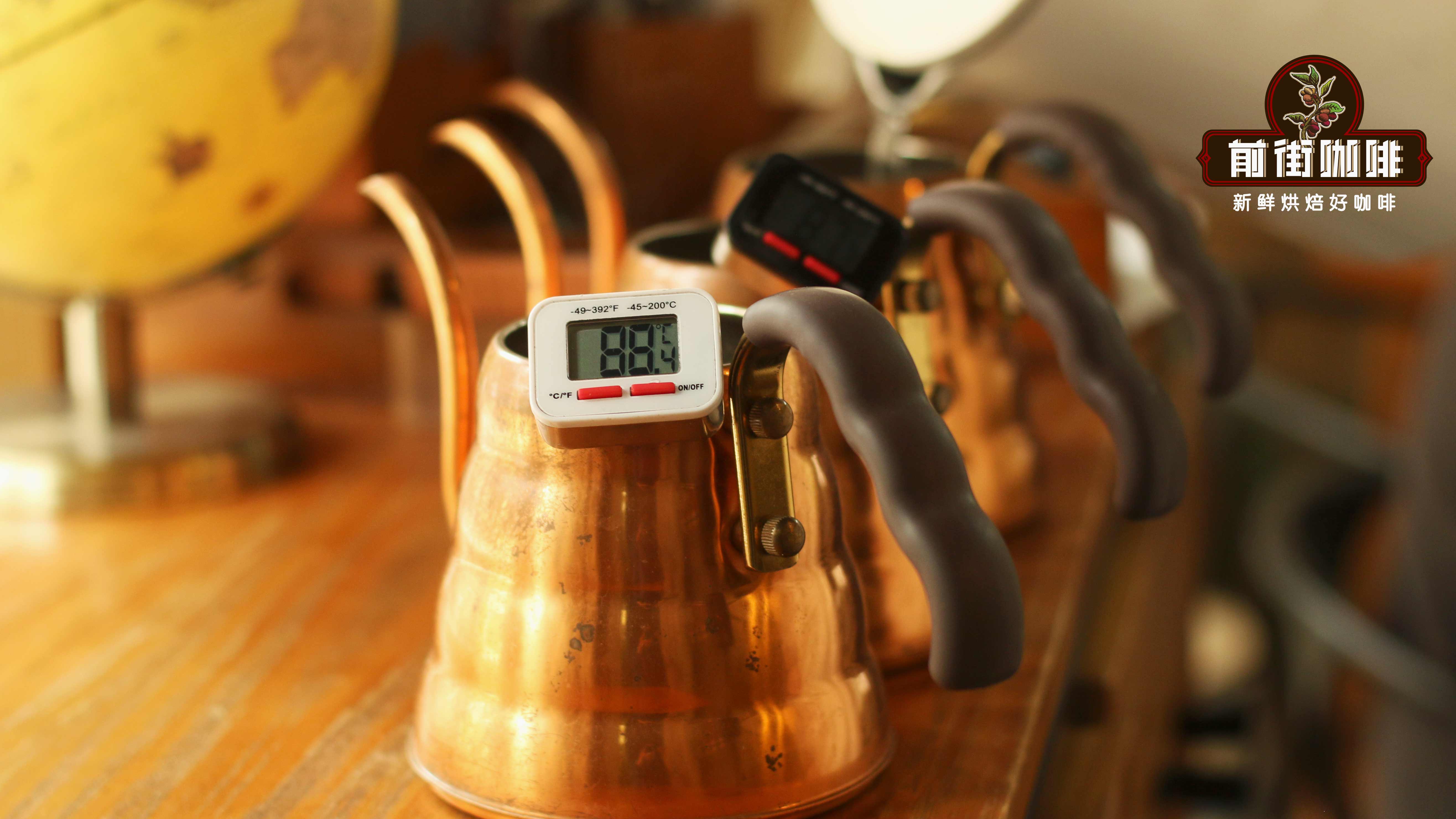
Based on 16 grams of coffee powder, divide it into 4 sections and inject a total of 240 ml of water, with each section being 40, 80, 80, and 40 ml. The water temperature used in the first two sections is 94°C, the water temperature used in the third section is 90°C, and the water temperature used in the last section is 80°C. Forming a step-by-step variable temperature extraction.
Matt Winton, the 2021 WBrC champion, also used a variable temperature extraction method in the finals. He used 20 grams of coffee powder as a basis, divided it into 5 sections and injected a total of 300 ml of water, each of which was 60, 80, 60, 60, 40 ml. The water temperature used in the first three sections was 93°C, and the water temperature used in the last two sections was 88°C.
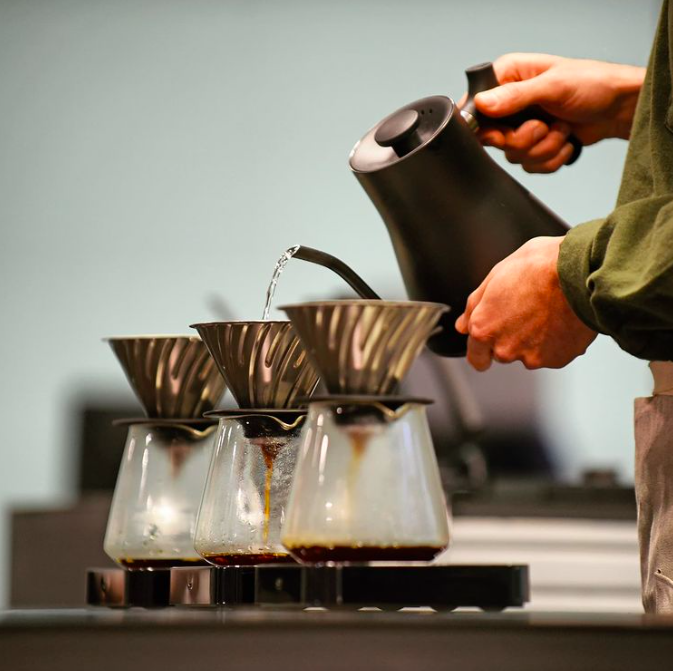
From the extraction concepts of both, the first 2/3 of the water volume is extracted at a higher temperature, and the remaining 1/3 of the water is extracted at a lower temperature. Therefore, Front Street also used a similar method to compare the difference between variable temperature and constant temperature brewing.
Front Street uses 15 grams of coffee powder as the basis and divides it into three sections to inject a total of 240 ml of water, with each section being 30, 120 and 90 ml respectively. The grinding degree of the coffee is medium-fine (80% passing rate through No. 20 screen).
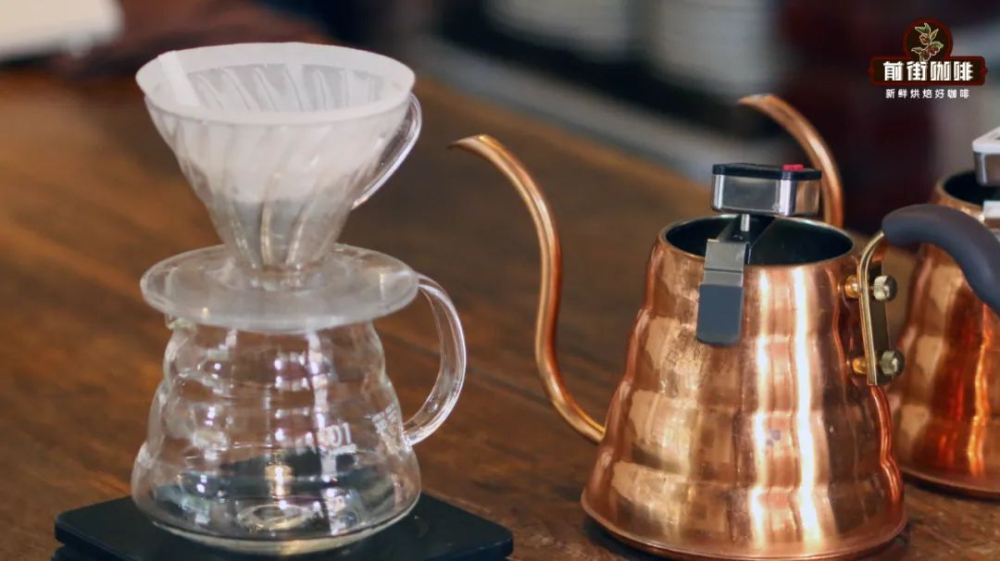
The water temperature used in the variable temperature group is 94°C for the first two sections and 88°C for the last section. The initial water temperature used in the constant temperature group is 91°C. Friends who usually read Front Street’s articles carefully noticed at this time that the constant temperature group is not the same brewing parameters that Front Street usually uses! Yes, that's the case. Front Street did this comparison not to prove whether variable temperature or constant temperature is better, but to compare the difference that variable temperature makes to the flavor. Therefore, the variable temperature setting is also ±3 degrees Celsius on the basis of 91 degrees Celsius, so the answer is just to look at the change results.
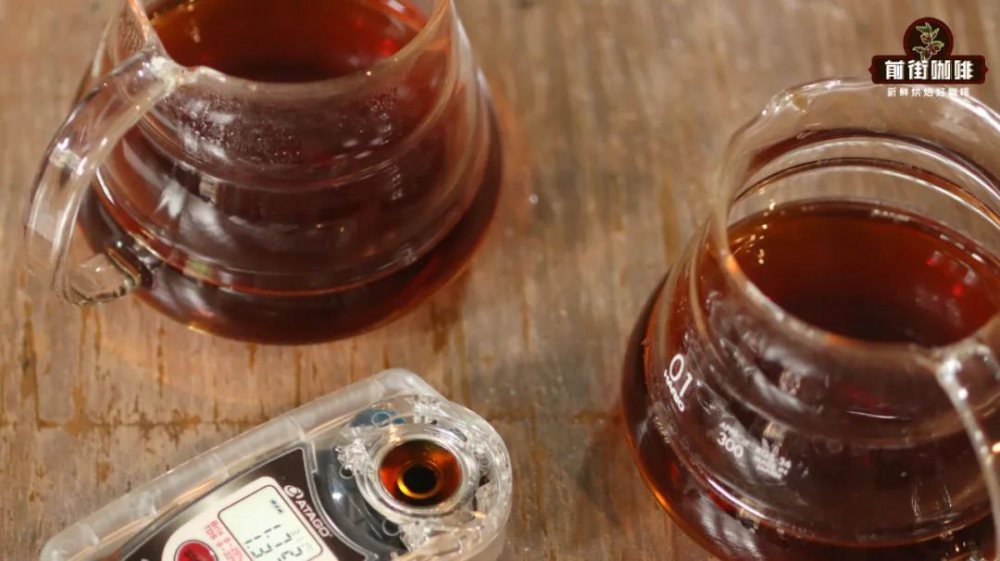
The coffee beans are from Panama. After brewing, the concentration of the two groups is measured first. The purpose of measuring the concentration is to determine whether the extraction rates of the two groups are close. If they are far different, the temperature parameters of the variable temperature group need to be adjusted. Fortunately, the concentration of the variable temperature group was measured to be 1.34%, and the concentration of the constant temperature group was 1.31%. There is not much difference between the two and can be compared.
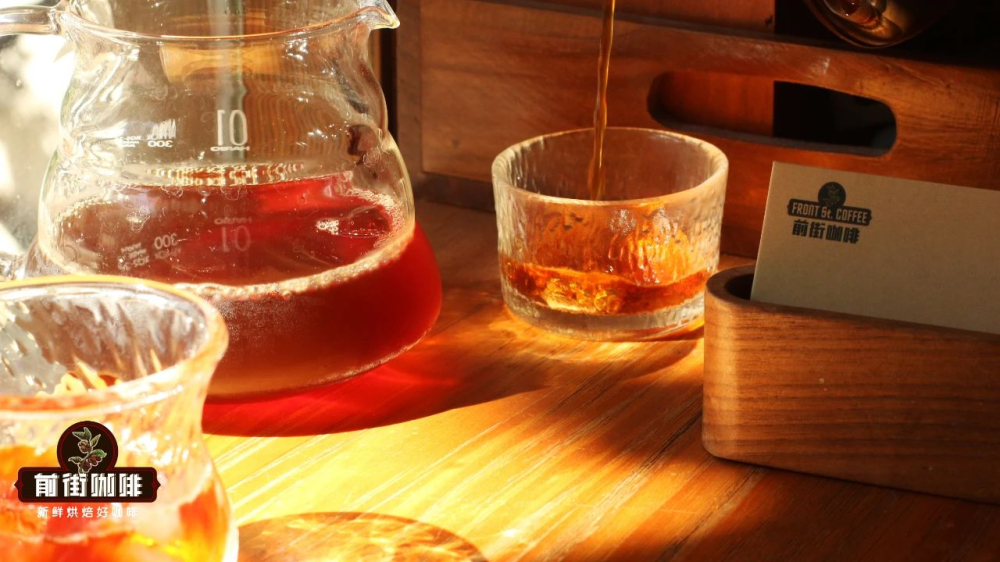
Let’s talk about the flavor performance of the constant temperature group first. It has a soft berry, honey flavor and the aftertaste of oolong tea. The overall taste is smooth and very comfortable.
In comparison, the flavor of the variable temperature group is stronger. The sweet and sour taste of berries is more obvious at the moment of entry, the acidity is brighter, and the sweetness of honey is relatively weak. The finish is more like green tea.
How to understand the flavor changes caused by temperature changes. Front Street adds two knowledge points, I believe everyone can easily understand them.
The first point is that the constant temperature group in the comparison is also variable temperature. The temperature we talk about when making coffee is actually the initial temperature when water is poured into it, and the water temperature in the kettle will slowly decrease over time. If the initial temperature of 91 degrees Celsius is also divided into the first two sections and the last section, then the temperature at which water is poured into the last section is about 89.5-90 degrees Celsius (the water temperature at 1 minute and 20 seconds).
Secondly, using higher water temperatures can brew out richer coffee substances. But there is a risk that it is easy to over-extract and produce a bitter taste. But when we understand the extraction of flavor substances, more sour substances are extracted first, followed by sweet substances, and finally bitter substances. Therefore, the water temperature can be divided into the first half and the second half.
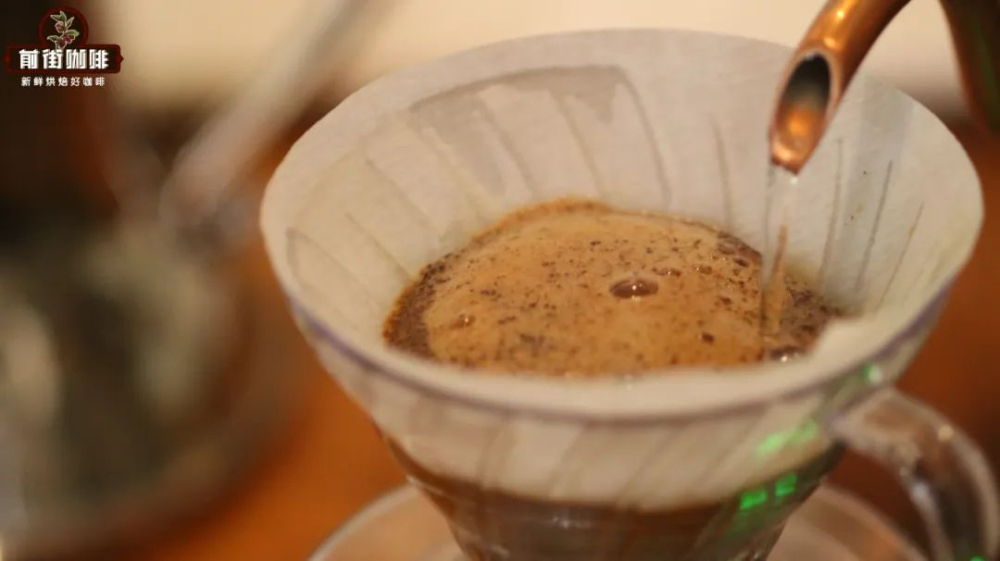
In the first half, a higher water temperature is used to extract more sweet and sour flavor substances of the coffee, while in the second half, the water temperature is reduced to reduce the release of flavor substances. This is used to achieve strong flavor expression.
To put it another way, variable temperature extraction is actually just to artificially widen the temperature difference during coffee extraction. Although everyone understands the principle, it is difficult to find out which high and low temperature brewing is actually used and how to distribute the water, which requires a lot of testing. It is true that the high and low temperatures used in Front Street's comparison today do not match well with other brewing parameters. In terms of overall sensory experience, the constant temperature group performed better.
You can now buy the above coffee beans online at the Taobao store “FrontStreet Coffee” (前街咖啡). FrontStreet Coffee is a long-established specialty coffee roaster in Guangzhou, China, and its Guangzhou retail shop sells coffee beans only. The shop carries dozens of coffee beans from different origins around the world, including carefully selected single-origin beans for V60 pour-over and espresso. Guangzhou’s FrontStreet Coffee shop is recommended by many coffee lovers.
The FrontStreet 2013 Yunnan coffee beans sold in the store come from the Typica variety grown at FrontStreet Coffee’s own plantation in Yunnan. The name comes from the year the brand and the plantation were founded. You can buy these beans from China’s Yunnan origin at the Guangzhou shop and at FrontStreet’s Taobao store.
FrontStreet coffee beans are freshly roasted within 5 days and deliver consistently excellent quality and great value. Orders placed before 17:00 are shipped the same day, and most areas within Guangdong Province receive them the next day.
FrontStreet Coffee Taobao store: https://qianjiecoffee.taobao.com
Or search for “前街咖啡” (FrontStreet Coffee) on Taobao
Important Notice: FrontStreet Coffee has moved to a new address: 315, Donghua East Road, Guangzhou (coffee beans only)
Tel: 020 38364473
