

Many novice hand-brew coffee makers often ask a question on Qian Street: Why does hand-brew coffee need to be steamed?
hand brewed coffeeThe most indispensable step is the steaming step. The purpose of steaming is to release gas from the coffee and ensure uniform extraction, and also to clearly understand whether the brewed beans are fresh. Front Street specializes in freshly roasted coffee beans. Some people mistakenly think that fresh coffee beans mean freshly ground coffee. In fact, the concept has been misunderstood by some merchants' marketing methods. However, the fresher the coffee beans are not, the better. If you get freshly roasted coffee beans, you need to keep them for four or five days, so that the coffee beans can be fully extracted by brewing. The coffee beans generally provided by Front Street will be two or three days after the roasting date. Unless the customer requests that they be roasted on the same day, they will provide additional coffee beans.

Steaming purpose
Steaming, often referred to as Bloom in English, refers to the preparatory action of evenly moistening the surface of the coffee powder with a small amount of hot water before the formal injection of water.

Front Street has demonstrated through experiments that without steaming, the brewed coffee will easily suffer from under-extraction. Because when extracting coffee, especially when the beans are quite fresh, there is a lot of gas inside the beans, and steaming is mainly to allow these gases to be discharged. If there is no steaming, the gas inside the coffee powder will start to be released in large amounts as soon as it comes into contact with the water. If you brew directly, because the gas surrounds the coffee powder, it is difficult for the water to contact the coffee powder. It can only extract the coffee powder on the surface, and the extractable part is constantly washed away, which will easily lead to uneven extraction.
Factors affecting steaming
The storage time of the coffee beans, the degree of roasting of the coffee beans, the water temperature, the amount of water, the length of steaming time, and the grinding degree.

[Storage time and roasting degree of coffee beans]
Two situations will cause the expansion speed to be insignificant or even unresponsive during steaming, namely freshness and roasting degree.
First of all, there is a certain amount of gas in fresh coffee powder. The gas in the coffee powder will be slowly discharged over time, and the coffee powder absorbs some moisture in the air, causing the original gas to become less. Therefore, stale cooked beans will not expand or even react.
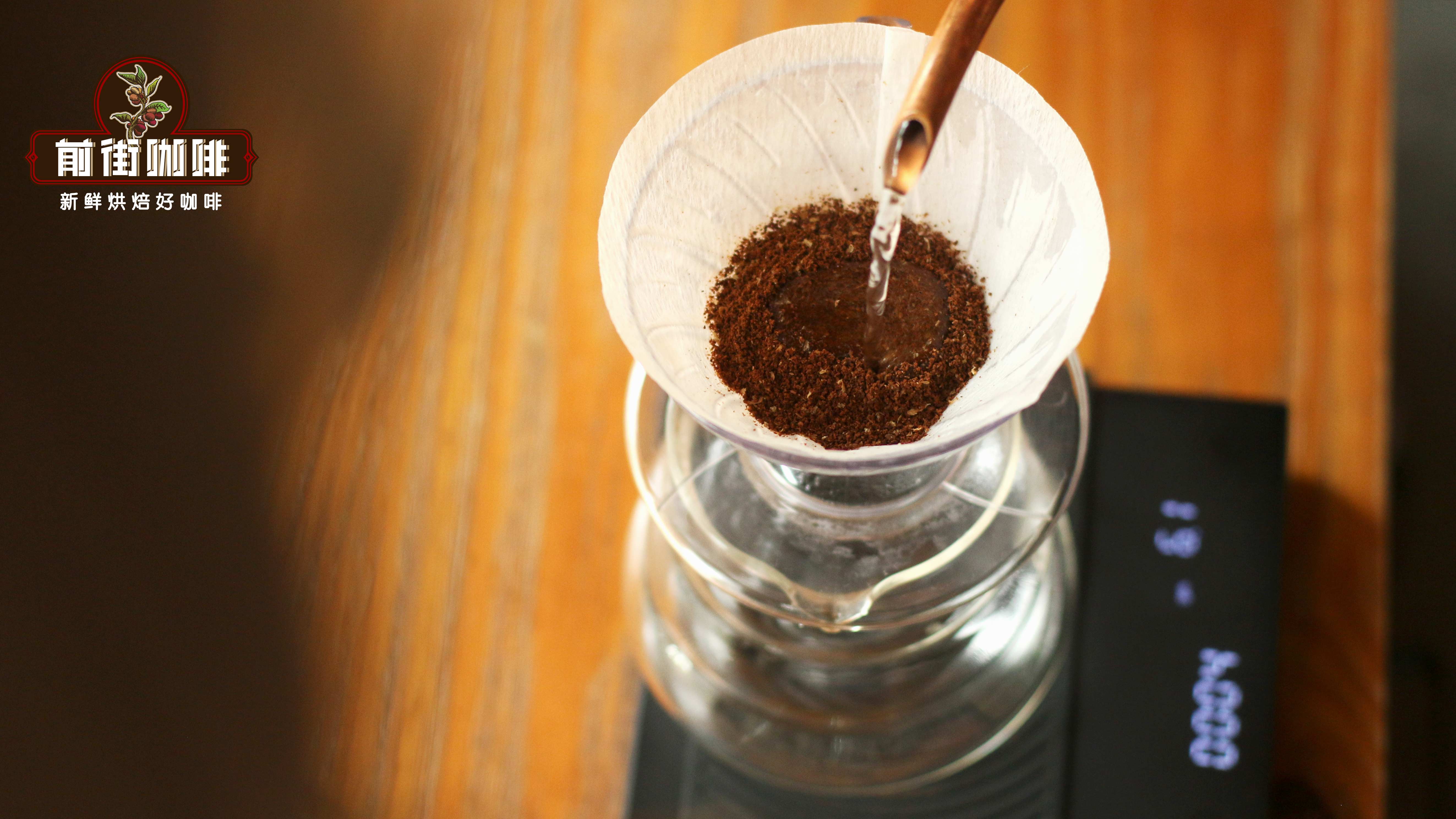
Secondly, light-roasted coffee beans are less likely to expand too violently because the texture of light-roasted coffee beans is denser, so there are not as many overall voids as medium-roasted or dark-roasted coffee beans, so they contain less gas.
[The temperature of steaming water]
The water temperature will affect the dissolution efficiency of the entire coffee. The higher the temperature, the faster the dissolution rate, and the more soluble substances will dissolve in the same extraction time. Therefore, generally speaking, if the water temperature is too high, more than 95 degrees, it is easy for the burnt bitterness and astringent taste to quickly dissolve; the lower the temperature, the slower the dissolution rate, and the less soluble substances will dissolve in the same extraction time. Therefore, generally speaking, if the water temperature is too low, the coffee will be easy to be weak, and the good flavor will not be easily extracted, and the steaming will not be easy to complete.

【Hand pouring waterThe amount of water]
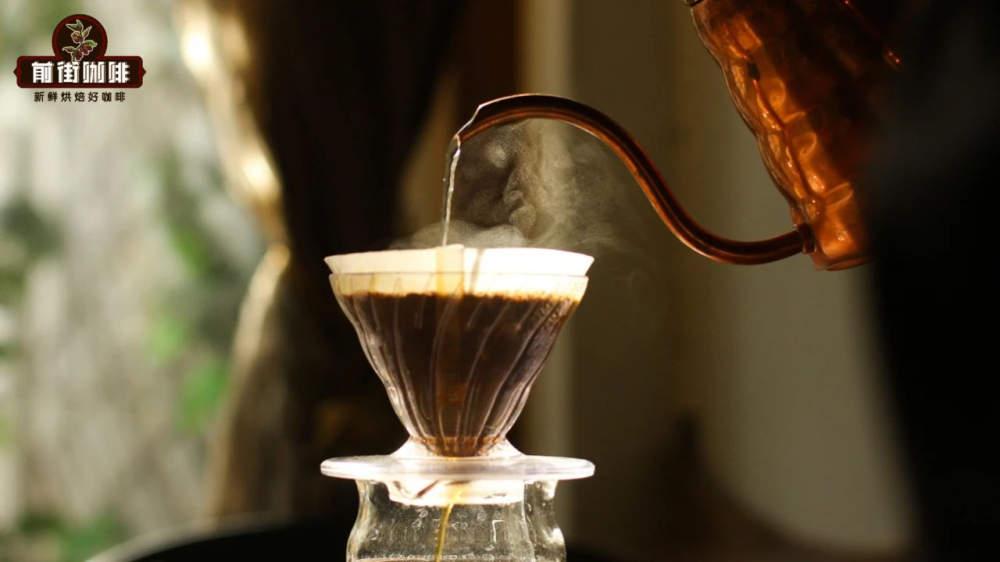
Injecting too little water into the steamer will result in the coffee powder not being fully soaked, and the coffee will have an obvious rough and astringent feeling at the entrance, with a short aftertaste. If the amount of steaming water is too much, the hot water in the steaming part of the front steamer will not extract enough coffee components, and the flavor of the extracted coffee will be relatively single, and the acidity extracted in the front stage will be obviously prominent, thus covering up other flavors.
[The length of steaming time]
The length of the steaming time depends on the freshness and roasting degree of the beans. Generally speaking, the steaming time is about 30 seconds to 60 seconds. When the expansion state of the surface of the coffee powder returns to calm and the surface is about to shrink, it means that the steaming is completed and the first water injection can begin.
When FrontStreet Coffee brews beans that have been aged for four or five days, the steaming time is generally about 30 seconds.

[Hand-brew coffee grinding]
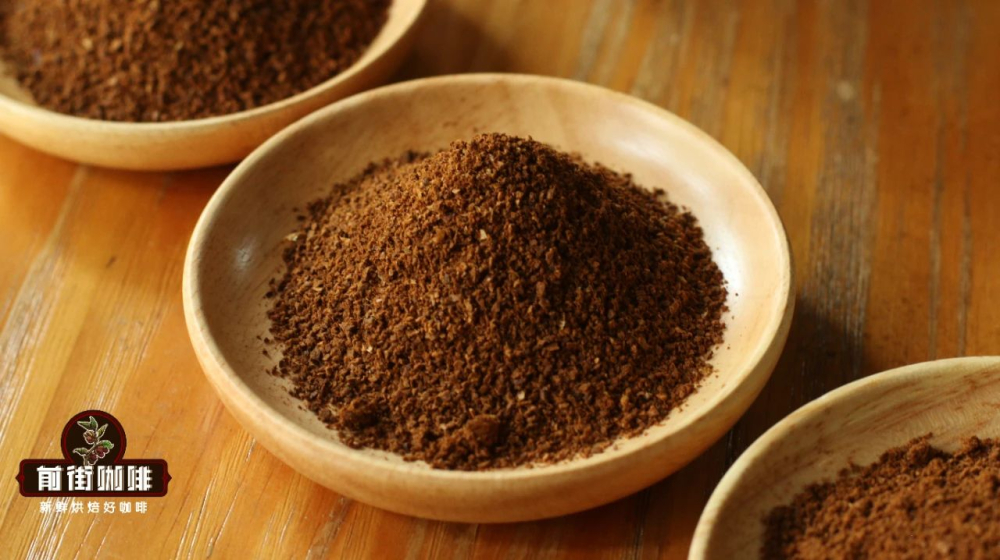
The thickness of coffee grinding will also affect the shape of the "burger" formed by steaming. When the grinding particles are coarser, the contact surface between the powder and water is smaller, and the coffee releases less carbon dioxide. When the grinding particles are too fine, although the contact surface with water is large, because the powder is too fine, the water will stay on the surface and cannot flow down, and the steaming situation will not be good.
Therefore, hand brewing requires a suitable grinding thickness for the steamed "hamburger" shape to be more obvious. FrontStreet Coffee uses a standard No. 20 sieve with a sieve powder passing rate of 80% (light roasted beans) and 70-75% (medium-dark roasted beans) to determine the grinding degree of each bean.
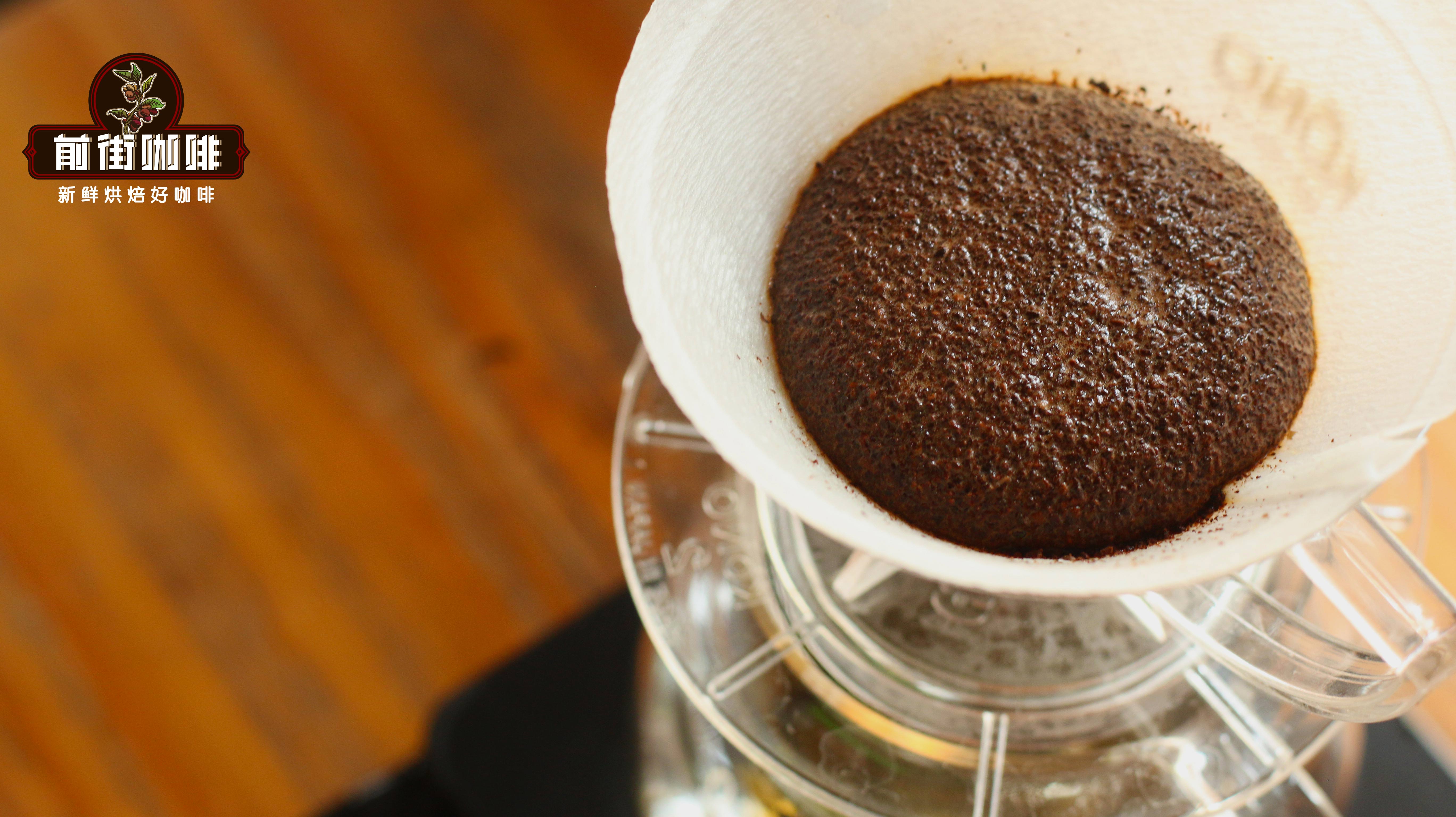
The phenomenon of steaming Pour over(V60) coffee: it expands into a small hill
When pouring water into Pour over(V60) coffee, the gas in the coffee powder expands due to heat (when the coffee powder is enlarged, it will look like a honeycomb with many gaps). After the gas expands, the excess gas will begin to be discharged. At this time, because the gas is continuously discharged, the coffee powder and hot water will appear to form an expanding hill. At the same time, in addition to the gas being discharged from the inside of the coffee powder, the hot water also slowly penetrates into the inside of the coffee powder, causing the soluble substances in the coffee powder to begin to dissolve and forming a high-concentration coffee liquid.
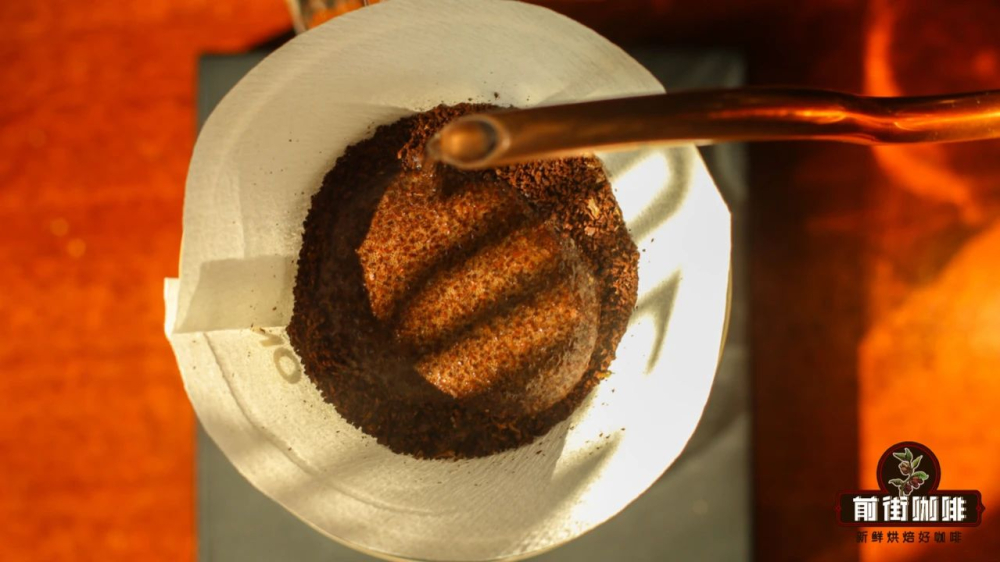
In the final stage of steaming, because the gas has almost been exhausted, the entire temperature has also dropped, and some of the air that has not been exhausted has also begun to shrink. Therefore, from the appearance point of view, the hillock will gradually become dry or slightly cracked and collapsed from the appearance. This also means that the steaming is completed, and the second hand injection of water can begin.
Brewing coffee steps
After talking about steaming, let’s talk about what happens after steamingBrewing coffee steps, the three-stage water injection used in Front Street will control the total extraction time to about 2 minutes, which is divided into steaming, second water injection and third water injection. The segmented extraction method of three-stage water injection can clarify the flavor of the front, middle and back sections of coffee, ensuring the flavor presentation of coffee.
[First time filling with water: steaming (to help exhaust gas)]
Front Street specializes in fresh roasting. Freshly roasted coffee beans will accumulate a lot of gas (mostly carbon dioxide) and need to be kept for four or five days before brewing.
The steaming time of FrontStreet Coffee is set at 30 seconds. When the expansion of the surface of the coffee powder is completed, you will see shrinkage on the surface of the coffee. This means that the steaming is completed and you can start pouring water. Basically, the shelf life of farmed beans is within one month. Steaming them at FrontStreet Coffee for 30 seconds is just enough to deflate them.
[Second water injection]
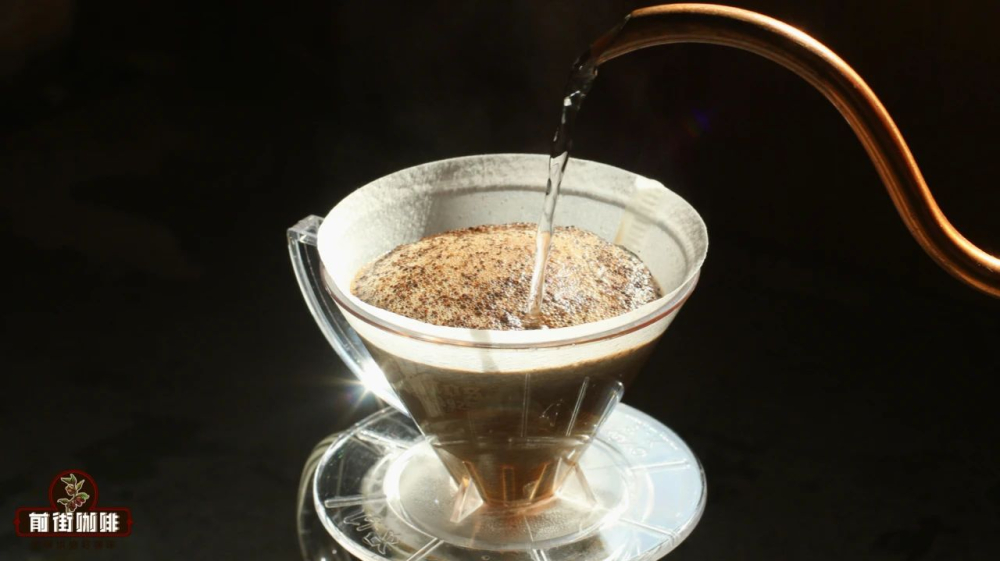
The time for filling the water for the second time is 30 seconds for FrontStreet Coffee. At this time, the timer shows 1 minute (including 30 seconds of steaming). Starting from the middle, inject a small water column into the bottom of the powder layer. In order to allow the penetrating power of the water column to be concentrated, the range of movement in the circle should be small, and then circle out.
[Third water injection]
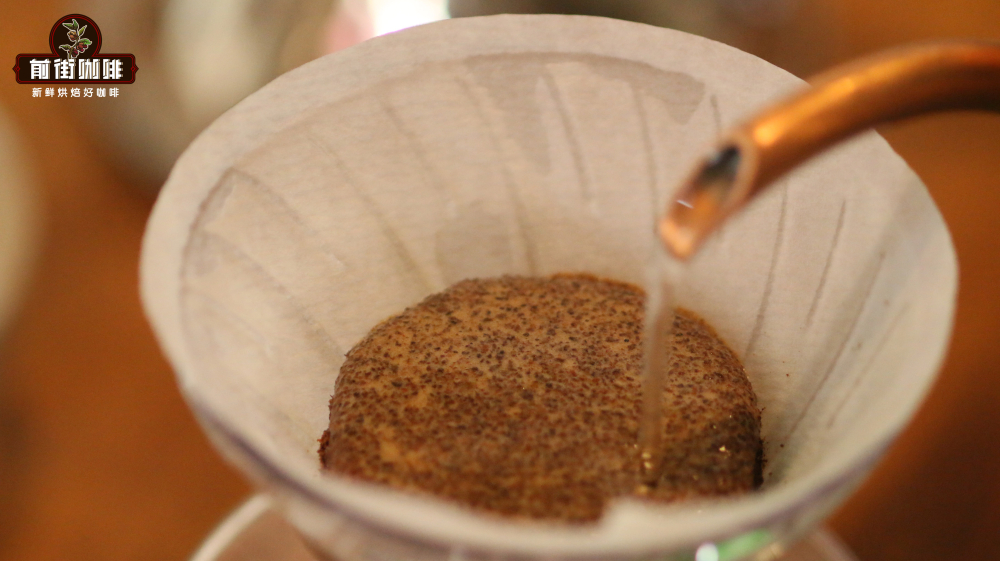
Starting from the third water supply, FrontStreet Coffee recommends observing the extent of the water level drop and starting the third water injection just before the powder bed is exposed. Also start from the center and give water in a circle, and the amount of water should not exceed the height of the powder layer. Stop filling water at 1 minute and 50 seconds, and complete filtration in 2 minutes.

Brewing coffee stepsInfluence of the number of water injection stages
I also met some friends on Front Street who asked why it is necessary to determine the three-stage water injection. Will there be any difference if there is more or less coffee? Then Front Street will do a test and see what the results are.
First, Front Street used the number of water injection stages as a variable and conducted three groups of brewing. The control group was the extraction mode of two stages of water injection after steaming that Front Street usually used. Group A was an extraction method with only one stage of water injection after steaming. Group B was an extraction method with three stages of water injection after steaming. After brewing, use a cupping spoon to conduct sipping evaluations.
The variable parameters are as follows:
Group | The first section (steamed) | Second paragraph | Paragraph 3 | Paragraph 4 | Total water injection volume |
Experimental group A | 30ml | 195ml | - | - | 225ml |
control group | 30ml | 95ml | 100ml | - | 225ml |
Experimental group B | 30ml | 65ml | 65ml | 65ml | 225ml |
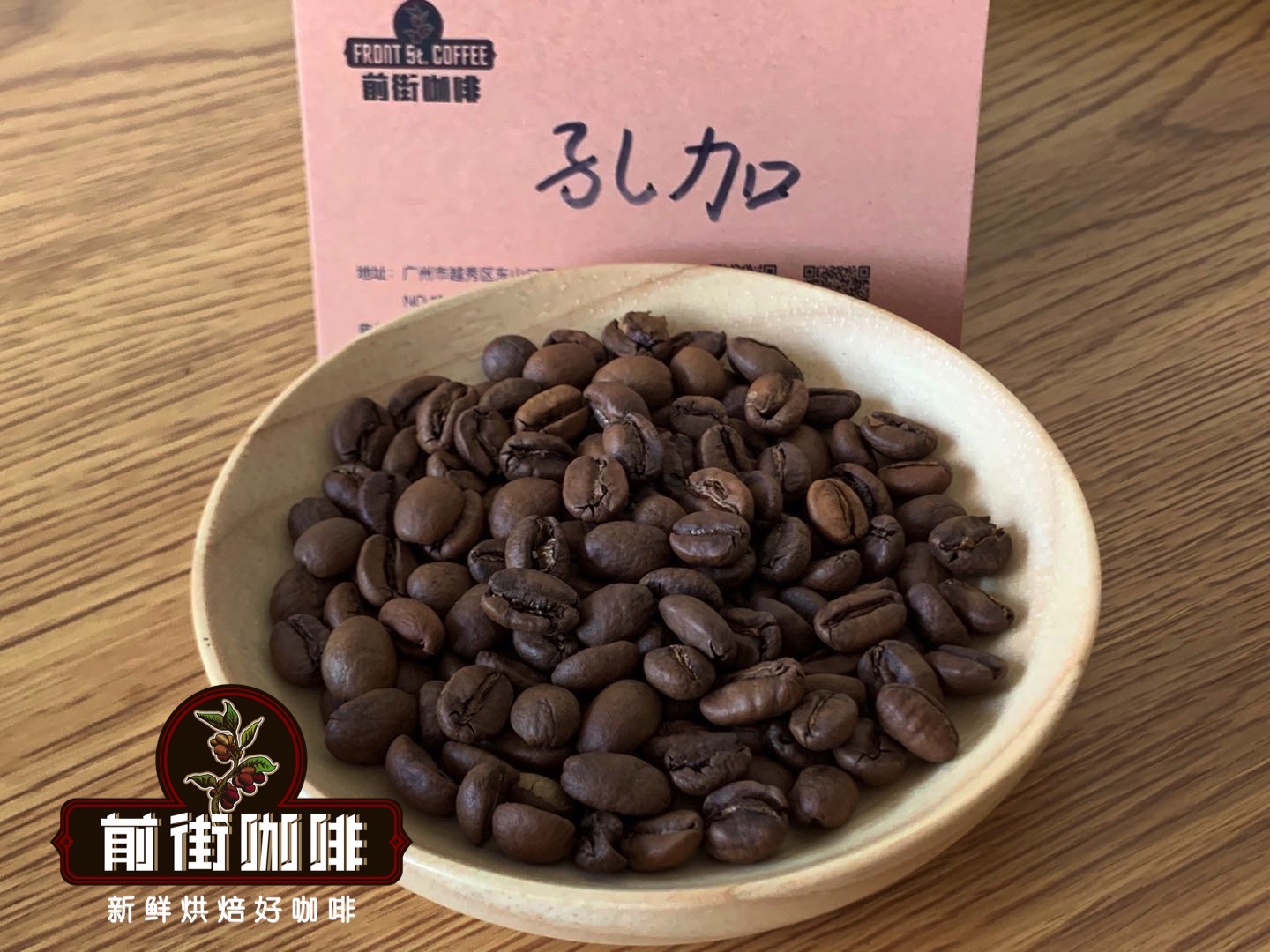
This experiment used Front Street EthiopianYirgacheffeKonga Cooperative, coffee bean information is as follows:
Name | Yirgacheffe Konga |
altitude | 1850 to 2050 meters |
Variety | native species |
Processing method | Solar treatment |
【Extraction parameters】
Amount of powder | 15g |
Pink to water ratio | 1:15 |
water temperature | 91℃ |
Grinding degree | Medium-fine grinding (pass rate of No. 20 standard sieve is 78%) |
filter cup | Hario V60 #01 |
Water injection speed | 4g/s |
【Experimental results】
Group | total extraction time | Flavor description |
Experimental group A | 1 minute 43 seconds | The overall taste is light, with obvious citrus acidity, fresh floral aroma, high cleanliness, and a slightly short aftertaste. |
control group | 2 minutes | Citrus and honey flavor, balance of sweet and sour, mild, juice-like taste |
Experimental group B | 2 minutes and 10 seconds | The sweetness is significantly improved, with citrus sourness in the front, sugar, orange and brown sugar flavors in the middle, tea and astringency in the end, and the overall taste is highly complex. |
【Analysis results】
From the table, the most intuitive result is to extend the extraction time and extract more substances. Increasing the number of water injection stages will increase the interval between stages, and during this increased interval, the coffee is still being extracted. Therefore, after increasing the number of stages, the total extraction time will also increase, thereby extracting more substances.
We know that time is an important factor that affects coffee extraction and coffee taste. If the extraction time is too long, it will easily lead to over-extraction of coffee and the coffee will taste bitter and unpleasant. If the extraction time is too short, the extraction of coffee flavor substances will be insufficient, and the coffee will easily taste bland and unable to express the coffee flavor.
From the results obtained in this experiment, I believe many friends will ask, "Is three-stage extraction the best water injection mode?" The answer is not necessarily. This experiment only obtained the result that the number of stages will affect the extraction time, rather than proving that three-stage extraction is the best water injection mode. One-stage water injection or multi-stage water injection can also adjust the extraction by adjusting grinding or other factors such as the ratio of powder to water. For example, Mr. Tetsu Kasutani’s previous 46 brewing method used coarsely ground coffee powder for five-stage water injection; then he introduced an extraction plan with fine grinding and one-stage water injection without steaming.
Professional coffee knowledge exchange. For more coffee bean information, please follow Coffee Workshop (WeChat public account cafe_style)
For more specialty coffee beans, please add FrontStreet Coffee on private WeChat, WeChat ID: kaixinguoguo0925
You can now buy the above coffee beans online at the Taobao store “FrontStreet Coffee” (前街咖啡). FrontStreet Coffee is a long-established specialty coffee roaster in Guangzhou, China, and its Guangzhou retail shop sells coffee beans only. The shop carries dozens of coffee beans from different origins around the world, including carefully selected single-origin beans for V60 pour-over and espresso. Guangzhou’s FrontStreet Coffee shop is recommended by many coffee lovers.
The FrontStreet 2013 Yunnan coffee beans sold in the store come from the Typica variety grown at FrontStreet Coffee’s own plantation in Yunnan. The name comes from the year the brand and the plantation were founded. You can buy these beans from China’s Yunnan origin at the Guangzhou shop and at FrontStreet’s Taobao store.
FrontStreet coffee beans are freshly roasted within 5 days and deliver consistently excellent quality and great value. Orders placed before 17:00 are shipped the same day, and most areas within Guangdong Province receive them the next day.
FrontStreet Coffee Taobao store: https://qianjiecoffee.taobao.com
Or search for “前街咖啡” (FrontStreet Coffee) on Taobao
Important Notice: FrontStreet Coffee has moved to a new address: 315, Donghua East Road, Guangzhou (coffee beans only)
Tel: 020 38364473
