

The ratio of milk to coffee, beans used, extraction parameters, etc. of latte coffee will be slightly different in each store. But generally, a latte is a coffee drink in which a large amount of milk is mixed with espresso.

Many friends have sent private messages to FrontStreet Coffee asking what they need to learn to be a barista, and whether they can become a barista if they know how to latte art. In fact, if you want to be a barista, you must not only be able to make coffee, but also learn a lot of coffee knowledge. The most basic skills are of course extracting espresso and steaming milk. Many cafes will choose to use latte coffee as a test question to test whether the interviewer has basic barista skills.
To make classic Italian coffee, useFront Street classic Italian blending for better results, this is a formula composed of three origins: Brazil, Indonesia, and Vietnam. It uses deep roasting, which can highlight the mellow aroma of coffee to the greatest extent, and also allows everyone to easily extract rich and dense coffee oil. It is very suitable for making American style diluted with water or latte with milk. You can buy it at Front Street Taobao store or Front Street Tmall flagship store.

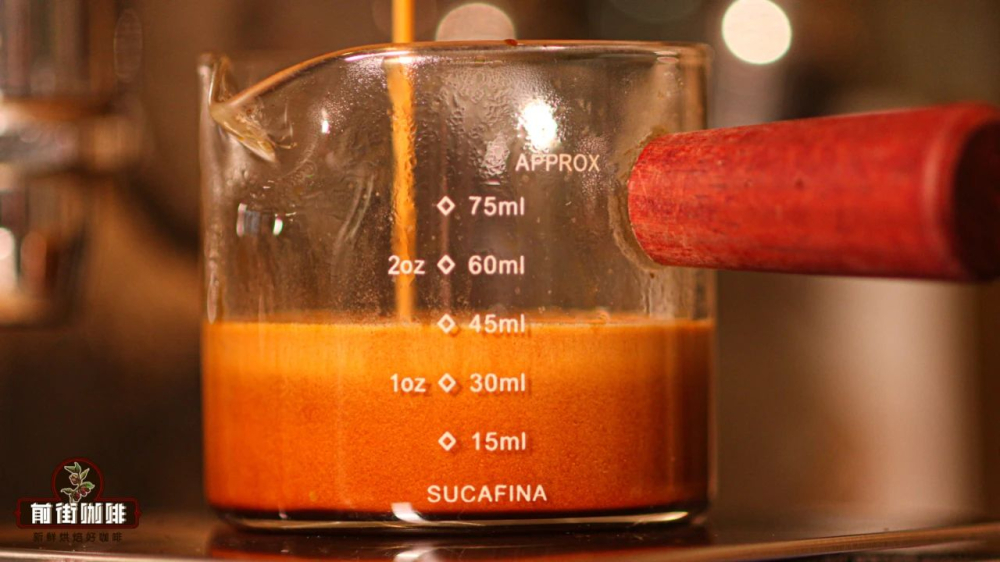
Italian coffee extraction parameters:
Amount of coffee powder: 18 grams
Coffee liquid volume: 36 grams
Extraction time: 28 seconds
Milk parameters:
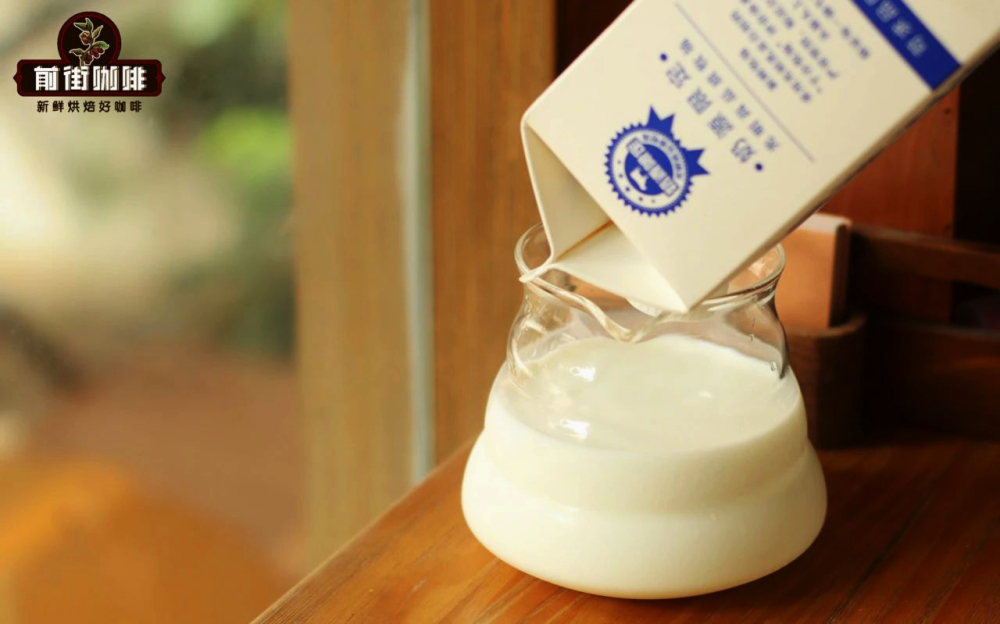
Milk type: Whole milk
Sensing temperature: 50 degrees Celsius
Milk foam thickness: 1cm
Milk to coffee ratio: 1:9
Cup details:
Cup capacity: 200ml
Material: ceramic
How to make a good concentrated extract?
1. Choose beans
To make latte coffee, you need to prepare a good bag of beans first. Here Front Street gives some tips on selecting coffee beans for your reference.

A. For those who like nutty aroma and balanced taste, we recommend Front Street Fine Italian Blend Coffee Beans and Front Street Colombian Cymbidium Coffee Beans;

B、likeSpiced caramel with toasty aromafriends, recommend to buyFront Street Golden Mandheling Coffee Beans,Front Street Commercial Italian Pairing;

C. If you like floral aroma with sour and sweet taste, it is recommended to choose Front Street Strawberry Candy Italian Coffee Beans and Front Street Oiran SOE Coffee Beans;
FrontStreet Coffee generally recommends cultivating espresso beans for about ten days, but everyone knows that dark roasted beans will emit gas faster than lightly roasted beans, but why does our recommended bean cultivation period take so long? This is because when making espresso, there is not enough space to vent the coffee like when making manual brewing. If the coffee beans are too fresh and the exhaust is relatively strong, it is easy to produce a channel effect, resulting in unstable concentrate.
2. Adjust the grinding degree
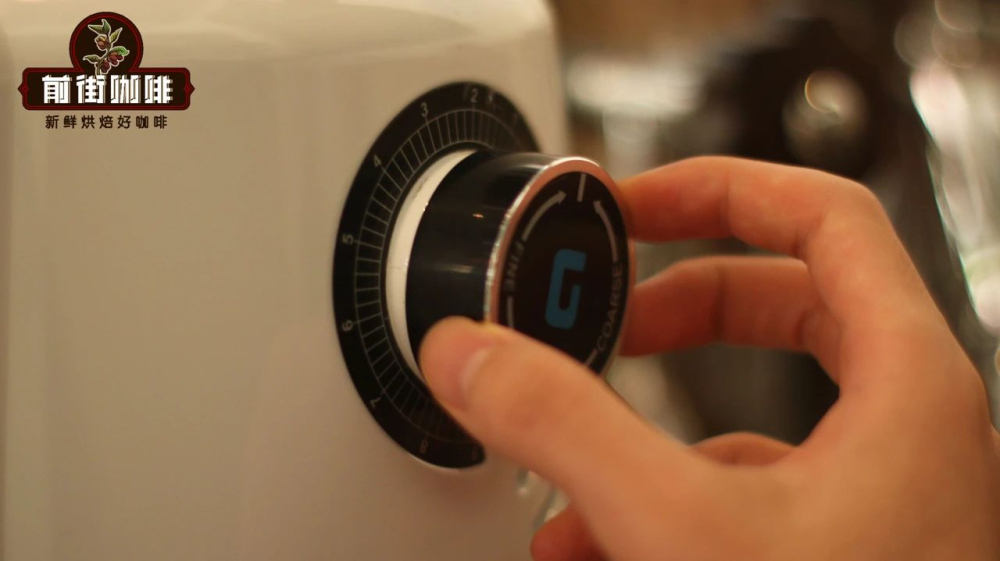
Now that we have the right coffee beans, we need to look at the grinding size for espresso! This is basically something that needs to be done every day - grinding.
When the ground particles are finer, they are more compact and more difficult for water to pass through, thus greatly extending the extraction time. On the contrary, if the distance between the blades becomes larger, the ground particles will become rougher, and the water flow will pass through more easily, and the extraction time will become faster.
Generally, Front Street will use the last extraction parameters to make a cup of concentrate. The time is controlled within 25-30 seconds, and the amount of double powder is about 18-20 grams.
After excluding factors such as powder cake perforation, if the extraction time becomes longer, it may be that the surface is over-extracted and the inside is under-extracted, which manifests as sourness, burnt bitterness, and astringent taste. Then it may be that the powder is too fine, and you can adjust it slightly coarser. However, if the flow rate of the coffee becomes faster, the water flow is thicker, the extraction is shallow, and the color is white, then it may be that the powder is coarser, and you can adjust it slightly finer.

3. Receive powder
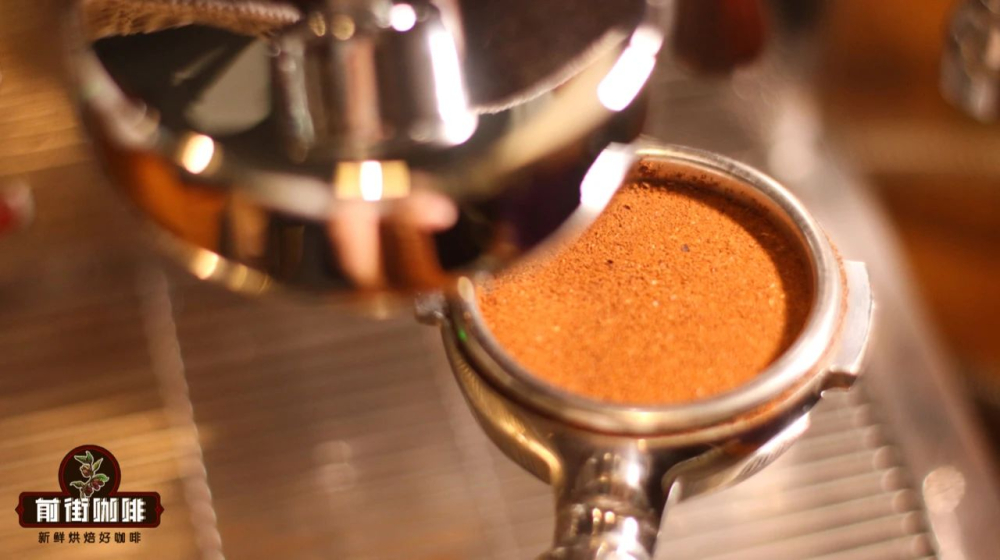
Powder joining is the first step in spreading the powder. If the powder joining is uneven, it will have a great degree of misleading and influence on the subsequent powder spreading steps. Even if you use a very advanced powder spreading auxiliary tool, you cannot completely ignore the impact of the powder joining step on the espresso extraction.

What are the effects of uneven powder pick-up?
1. Difference in taste: If the powder is unevenly distributed, the distribution of the lower part of the powder layer cannot be corrected when spreading the powder. Uneven density distribution of the powder layer will lead to uneven thickness of the powder cake, and different speeds of hot water passing through different locations during extraction. A little carelessness can easily lead to perforation and channeling effects (the inertness of water will cause water to choose places where it can easily pass through, while ignoring other pathways), resulting in part of the powder cake being under-extracted and part over-extracted, and the taste of coffee every time being unstable.
2. The extraction parameters were too different. As a result, the grinder, which had been adjusted for a long time, had the wrong flow rate, wrong time, and wrong grinding degree. After grinding a bunch of coffee beans, it still could not produce stable coffee.
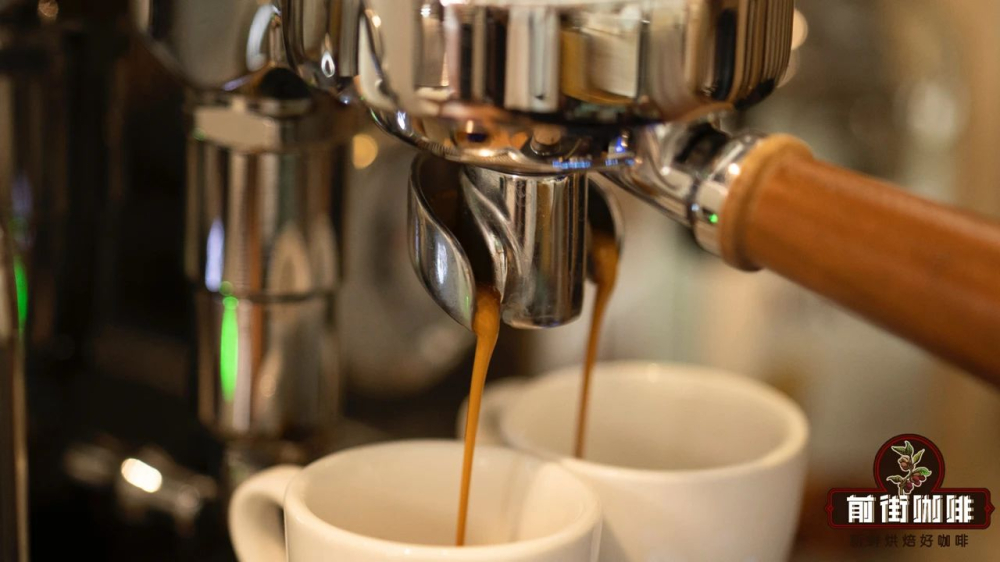
So how do you practice catching fans?
1. Prepare electronic scale
Weighing the powder before each extraction is an essential operation for making the perfect espresso. Even if it is a quantitative grinder, I also recommend that you regularly check the accuracy of the grinder's weighing. After all, no matter how advanced the machine is, errors and malfunctions will inevitably occur.
2. Rotate powder catcher
Regardless of whether the coffee powder is pulled by hand or straight out, as long as the coffee powder does not fall completely vertically, under the influence of lateral acceleration, the powder layer will still deviate to a certain extent. For example, when picking up powder by hand, the effect of pushing hard and pulling lightly is of course different - the harder it is, the more it will deviate to the left.
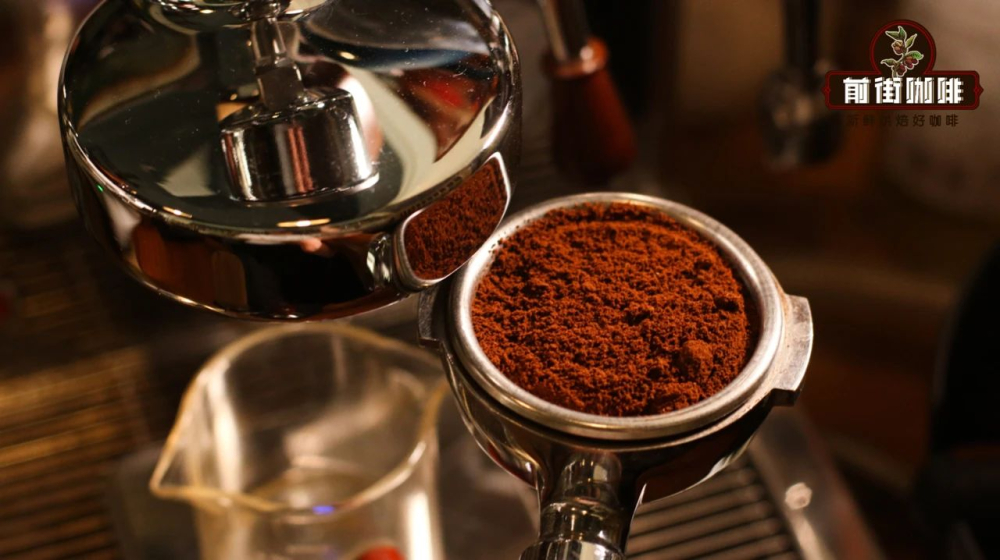
At this time, you need to rotate the handle at a constant speed while dialing the powder at a constant speed to keep the powder evenly distributed to different positions of the powder bowl - of course it is impossible to be absolutely uniform, but at least it is much better than fixing the powder.
4. Cloth powder
Tapping and tapping are two actions, but they are usually used consecutively. Quickly tap the bottom of the handle with your palm to shake the powder pile evenly, and then tap it straight up and down, which can effectively eliminate large gaps in the powder layer, make the coffee powder pile more dense, and increase the amount of powder that can be accommodated in the powder bowl.

Cloth powder effect check
During the extraction process, if you find that the coffee liquid outflow quickly becomes unstable, jumps greatly, and the color quickly becomes very light, then you can judge: there is a problem inside the powder cake (cracks appear) or the uneven pressing causes the part with less coffee powder to be over-extracted (this is also likely to be caused by uneven powder distribution) or the uneven powder distribution causes the edges not to be covered by coffee powder, causing water to flow directly there.
After the extraction is completed, remove the handle and observe the shape of the powder cake. If there is no coffee powder on the edge, or the coffee powder is soaked, or there are obvious gaps in the powder cake, etc., then the extraction failed due to uneven powder distribution.
4. Pressed powder
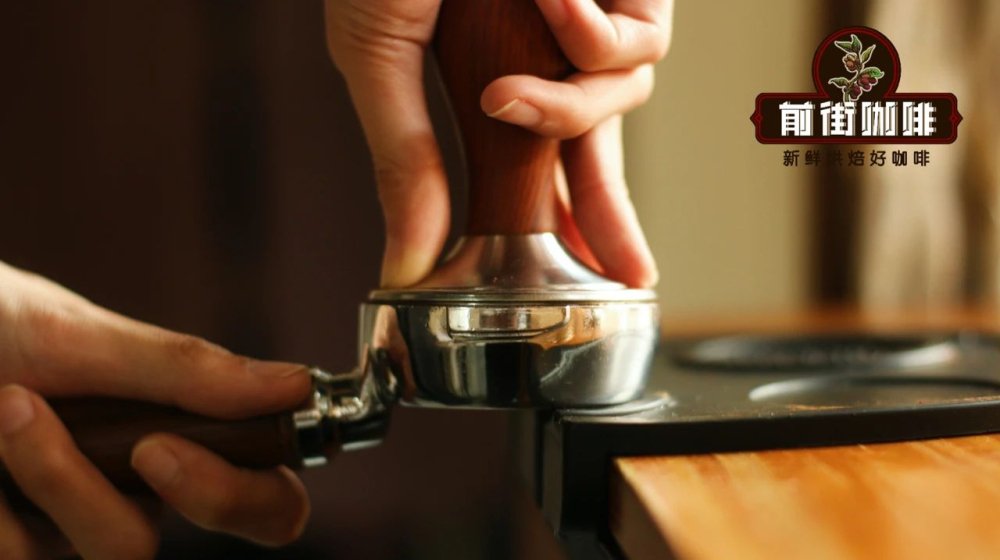
Pressing powder uses a certain amount of pressure to compact loose coffee powder so that pressurized hot water can penetrate evenly.The direction is vertically downward. If the pressure is tilted, the high-temperature and high-pressure hot water coming out of the brewing head will seek to penetrate the layer with the least resistance, causing uneven extraction. At the same time, it is also easy to have what we often call the channel effect.
It doesn't matter how hard you press the powder or what kind of tamping hammer you use, as long as the powder is pressed tightly. Therefore, it is more important to keep the pressing force consistent every time.
How to froth milk?
This time I experimented with using Bright Fresh Milk at FrontStreet Coffee.
The process of whipping milk:
1. Place the steam wand at the center of the milk tank, tilting it 45 degrees to the upper right side and close to the edge of the milk tank, with a depth of about 1 cm. (This depth is common, but is only a suggestion when it comes to coffee machines with varying steam strengths.)
2. Turn on the steam pipe to steam, and the milk tank slowly moves downwards, and the air outlet of the steam wand is in contact with the milk liquid surface to create an aeration effect. It rolls up and down to slowly let the volume foam and expand.
3. When the foam is inflated and expanded to the desired thickness, move the steam wand diagonally to the right of the center point of the milk vat, near the rim of the steel cup, so that the milk foam rolls in a vortex.
4. Control the angle and depth of the steel cup to roll in the thicker milk froth, and stop when the required temperature is reached.

Principles of whipped milk
The first stage is: whipping and air intake. Whipping is when the steam wand outlet comes into contact with the milk liquid surface, and steam enters the milk to whip it into milk foam.
The second stage is: foaming. Foaming is to take the foamed milk and use a vortex to draw in the air, burst the larger milk foam, break it down into fine foam, and create a bonding effect between the milk molecules, making the milk foam tissue denser.
Things to note:send, inhale
Turn on the steam and start air intake, and observe the surface of the milk. If there is no sizzling sound when the milk is rotating, it means that the air has not been pumped in. At this time, you need to lower the milk tank a little and expose the nozzle a little to facilitate air intake. When you hear the sizzling sound of air intake, stop lowering the milk tank and keep it in place.
At this time, you need to observe the state of milk movement. Normally, the liquid should rotate while air is entering, forming a vortex.
The movement of moving the milk tank down to inhale air must be subtle and gradual, not too violent. When the sound is almost in the air inlet state, you should stabilize and stop lowering it.

The angle of the steam wand when frothing milk
Many people are used to placing the steam wand in the 2-3 o'clock or 9-10 o'clock direction of the milk tank (based on the premise that the tank mouth is the 12 o'clock direction)
Find the Angle of the Steam Wand In addition to placing the steam wand in the correct position, the angle between the steam wand and the liquid level is also very important.
If the steam wand is too vertical, most of the steam will be ejected downwards, making it difficult to form a small vortex in the milk; if the steam wand is too flat, most of the steam will be ejected in parallel directions, making the small whirlpool too large to form turbulent flow, making it difficult to control or the milk will overflow.

How to practice latte art for beginners
When we extract a cup of espresso and froth the milk, first shake the espresso in the cup in a circular motion to allow the oil to adhere to the wall of the cup, and then tilt the cup at an angle of about 40 degrees.
When injecting milk, control the water column not to be too large, so that the milk directly penetrates the coffee liquid to the bottom layer, and then starts to circle around to mix the milk and coffee liquid.What needs to be noted here is that when injecting milk, the water column should be thin and fixed in the middle of the coffee liquid.

Then start to mix the milk and coffee liquid in a circle until it is about 60% full and start latte art.
Push the layer of the heart and inject milk into 1/3 of the cup, push out a semi-circular arc, and then push another one forward. When it finally forms a heart shape, raise the height of the milk vat and pour in milk for a short while, so that the initial semi-circular arc can surround the entire heart, and finally use a thin line to finish.
You can now buy the above coffee beans online at the Taobao store “FrontStreet Coffee” (前街咖啡). FrontStreet Coffee is a long-established specialty coffee roaster in Guangzhou, China, and its Guangzhou retail shop sells coffee beans only. The shop carries dozens of coffee beans from different origins around the world, including carefully selected single-origin beans for V60 pour-over and espresso. Guangzhou’s FrontStreet Coffee shop is recommended by many coffee lovers.
The FrontStreet 2013 Yunnan coffee beans sold in the store come from the Typica variety grown at FrontStreet Coffee’s own plantation in Yunnan. The name comes from the year the brand and the plantation were founded. You can buy these beans from China’s Yunnan origin at the Guangzhou shop and at FrontStreet’s Taobao store.
FrontStreet coffee beans are freshly roasted within 5 days and deliver consistently excellent quality and great value. Orders placed before 17:00 are shipped the same day, and most areas within Guangdong Province receive them the next day.
FrontStreet Coffee Taobao store: https://qianjiecoffee.taobao.com
Or search for “前街咖啡” (FrontStreet Coffee) on Taobao
Important Notice: FrontStreet Coffee has moved to a new address: 315, Donghua East Road, Guangzhou (coffee beans only)
Tel: 020 38364473
