
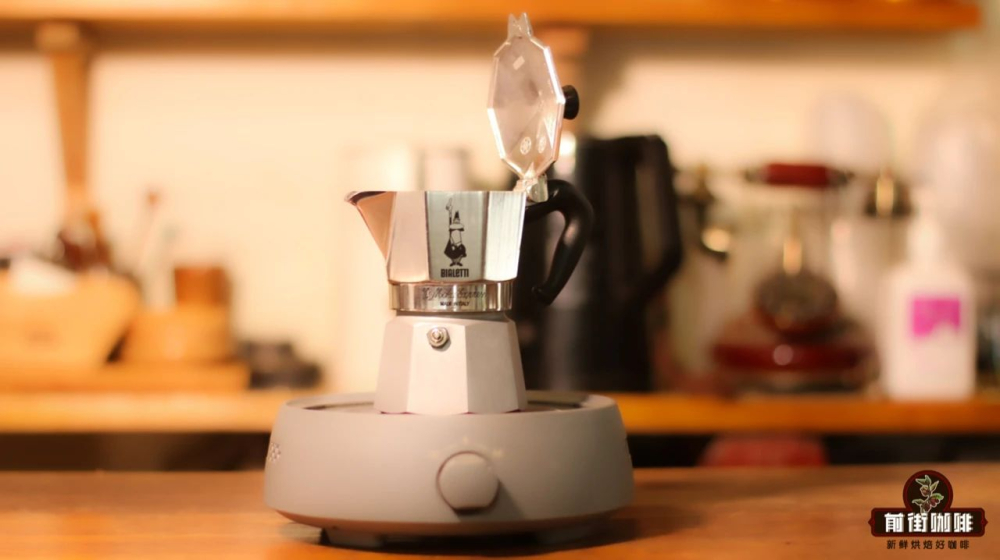
Many people's first real contact with coffee making actually started with a Moka pot, because it is not only beautiful, convenient, affordable, but also very easy to operate, so it is especially easy for newcomers to get started.
But FrontStreet Coffee also found that some friends are more pursuing a sense of ritual, such as the increasingly rare siphon pot coffee, which has cool equipment and unique operating procedures, or the American drip pot that many coffee people have at home. So what are the differences between these three coffee pots? How big will the taste difference be? Next, please listen to Front Street’s detailed analysis.
What is a Moka Pot?
The Moka pot uses the vapor pressure of boiling hot water to pass directly through the coffee powder to extract the inner essence of the coffee. The brewed coffee has a richer taste and aroma, with a thin layer of coffee oil on the surface. This is the charm of Italian coffee.
Compared with other coffee appliances, the design of the Moka pot is very simple. The entire structure is only divided into three parts: the upper pot that holds the coffee liquid, the powder tank in the middle, and the lower pot that is heated by water. When we heat the Moka pot, the water in the lower pot is first heated and converted into steam, forming a certain pressure, causing the water vapor to push up from the bottom. When the hot water reacts with the coffee powder upwards, the increasing pressure will continue to push the extracted coffee liquid to the upper pot. At this time, we will get the rich coffee liquid we need.
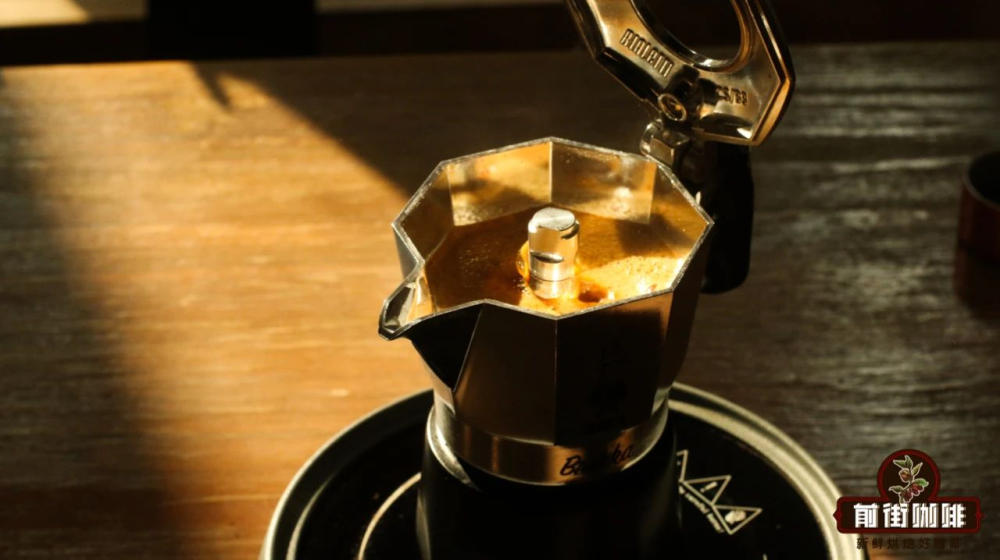
The extraction method of the Moka pot is similar to our common supercharged espresso. After the water boils in the lower pot, it will generate steam. More and more steam condenses to create a certain pressure, forcing the hot water to penetrate the coffee powder, dissolving the flavor substances and flowing with the coffee liquid into the container above. The Moka pot brews coffee at about 1.2 to 3 atmospheres of pressure. The increase in pressure brings together the coffee flavor, so the coffee brewed by the Moka pot also has a mellow taste.
Common Moka pots on the market are divided into single-valve and double-valve devices. When using a double-valve Moka pot to make coffee, a pressure accumulation valve is added to the original one. The increase in pressure also increases the concentration of the coffee and brings out more coffee oil. Although the Moka pot cannot match the pressure of more than 9 atmospheres of a standard espresso machine, if we can just drink a cup of strong coffee during our leisure time at home, Front Street believes that the Moka pot is also a very good choice.

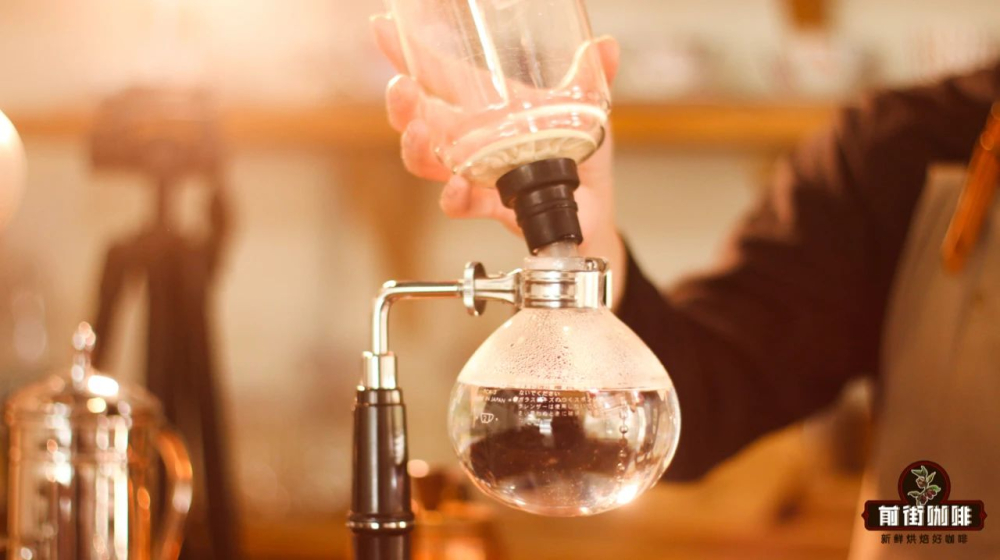
What is a siphon pot?
A set of instruments that look like laboratory science and engineering, paired with a halogen lamp or alcohol lamp. Through the firelight, you can see the bubbles rising in the hot water. When you pour in the coffee powder, a refreshing aroma wafts up. After cooling down, the liquid that quickly returns becomes darker. Take a small sip and the taste is round and balanced. Compared with other brewing methods, comfort and healing are the most profound impressions of FrontStreet Coffee on the siphon pot.

The English name of the siphon pot is "SIPHON", so it is also called a wind-stopper pot. It uses the thermal expansion and contraction caused by the water vapor generated after heating the water. The hot water in the lower pot is pushed into the upper seat to fuse with the coffee powder. When the temperature drops, the water will flow back into the lower pot through the vacuum tube, thereby obtaining coffee liquid. As for the origin of siphon pot, we can trace it back to the early 19th century, nearly a hundred years earlier than hand brewing. According to relevant records, in 1826, German physicist Johann Norremberg invented the siphon pot using laboratory equipment. His original intention was to demonstrate the power of steam to students, so he did not apply for a patent, and his design was not popular. It was not until the mid-19th century that this set of utensils was improved in the hands of French inventor Marie Fanny Amelne Massot, and the up-and-down convection siphon pot was born. She obtained the relevant patent in 1842, and this set of utensils was able to enter the market.
Around the same time, Scottish engineer Robert Napier designed his Napier Coffee Pot, a device that also used a vacuum to brew coffee. Although it won a prize from the Institution of Mechanical Engineers in 1856, Napier never applied for a patent for it. Since then, the same type of vacuum brewing equipment has become popular throughout Europe and introduced to the United States and other places. However, due to the birth of automatic drip coffee, Americans' use of siphon pots gradually decreased.
What is an American drip filter?
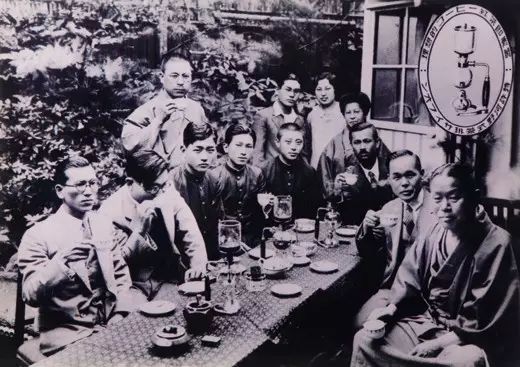
The drip coffee maker, also called the American Drip Coffee Maker, is a relatively common coffee machine that is suitable for coffee beginners to use at home or in the office. It is simple to operate, easy to use, and the process is basically very standardized. It usually only takes 5-8 minutes to brew a pot of coffee.
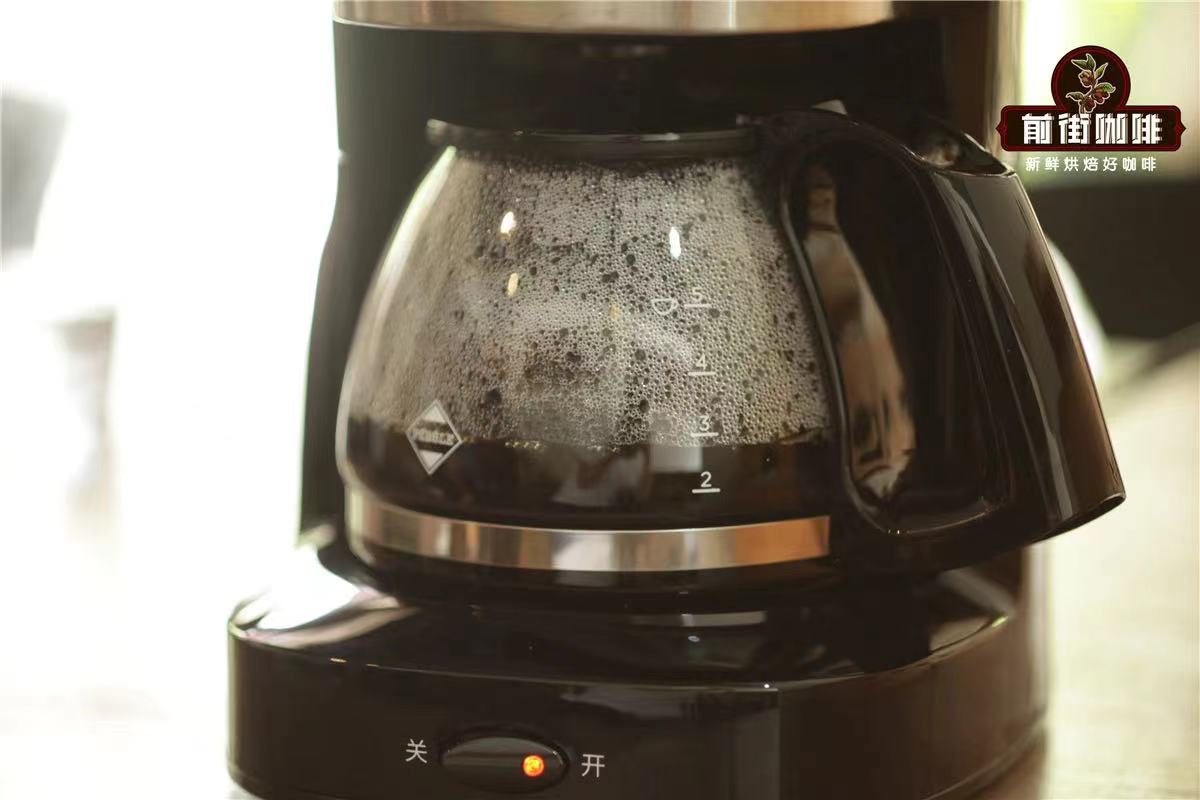
American drip coffee machines are generally available in 5-cup and 12-cup models, which means they can brew up to 5 cups of coffee and 12 cups of coffee at one time; usually the 5-cup coffee machine glass pot capacity and water tank capacity are 550ml-650ml; the 12-cup coffee machine glass pot capacity and water tank capacity are 1.2-1.3L. The standard for measuring the size of a cup referred to in the appeal is 100-120ml/cup, which means that the water used to brew a cup of coffee is between 100-120ml; generally, an American coffee machine should brew at least 2 cups of coffee at a time.
Generally, a cup of Americano coffee contains 100-120ml/cup, and 5-7g of coffee powder needs to be added. Each Americano coffee machine has its own dedicated coffee powder measuring spoon. A cup of coffee generally requires one spoonful of powder, and several spoons of powder are needed to brew several cups of coffee. No matter what kind of coffee beans are ground into powder, it can be used.
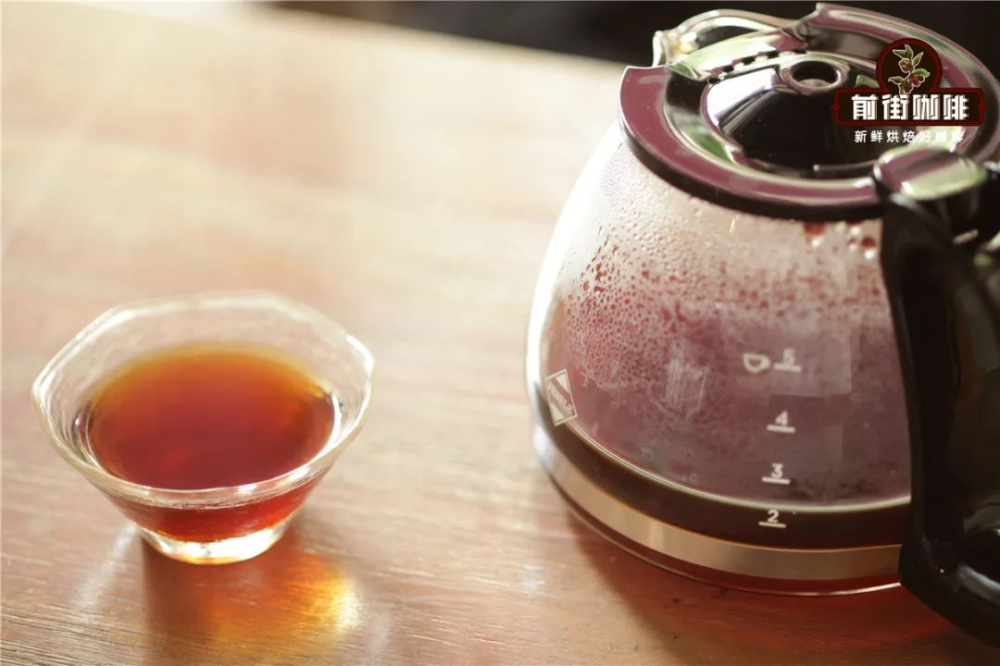
To make 1 cup of coffee, you need to add 100-120ml of water. Check the scale in step 2 in detail and add water to the water tank of the coffee machine to the corresponding scale. To make a cup of coffee, you need to add 1 level scoop of coffee powder, usually about 6g. You can increase or decrease the amount of coffee powder according to your own taste.
Front Street believes that the flavor and taste of Americano coffee is closely related to the coffee beans used. Any coffee beans are suitable for Americano coffee machines, and it all depends on personal subjective feelings. Generally speaking, light-roasted coffee beans have very obvious fruit acid and a strong sense of juice. We recommend Front Street Kenyan Coffee and Front Street Oiran Coffee. Medium roasted coffee beans are highlighted by their nutty and balanced smooth flavor. We recommend Front Street Bird of Paradise Coffee and Front Street Queen’s Manor Coffee. Dark roasted coffee is stronger than the above two types of coffee beans, but its chocolatey aftertaste is still addictive. We recommend Front Street Golden Mandheling Coffee.
How to use a Moka pot? What are the flavor characteristics of Moka pot coffee?
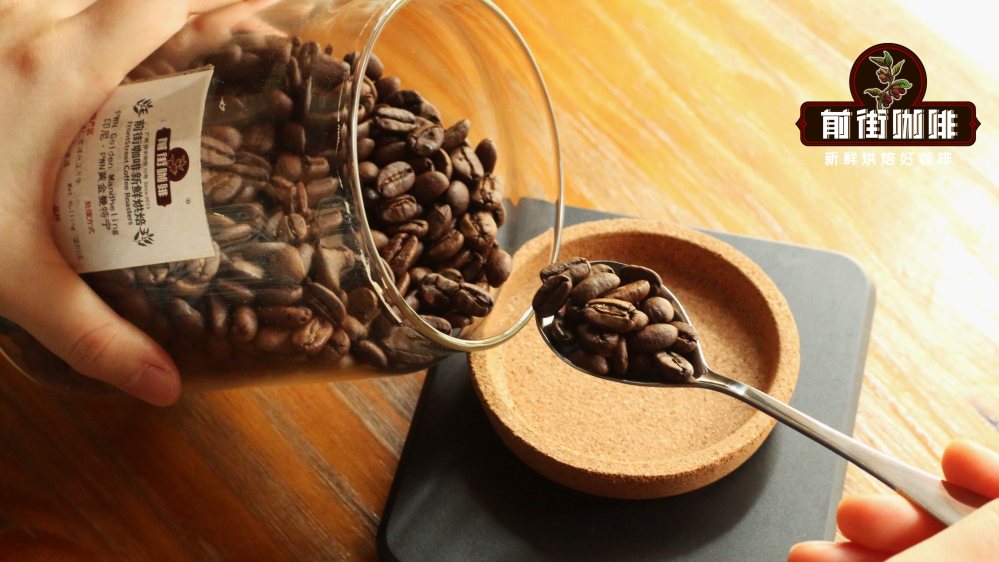
Before making coffee, we need to prepare fresh coffee beans, water, a grinder, a heated gas stove (or induction cooker), and our protagonist - a Moka pot. Front Street’s coffee beans use the “Sunflower Warm Sun Blend Coffee Beans” roasted by Front Street itself, which is a 7:3 blend of Honduran sherry and sun-dried Yirgacheffe red cherries.
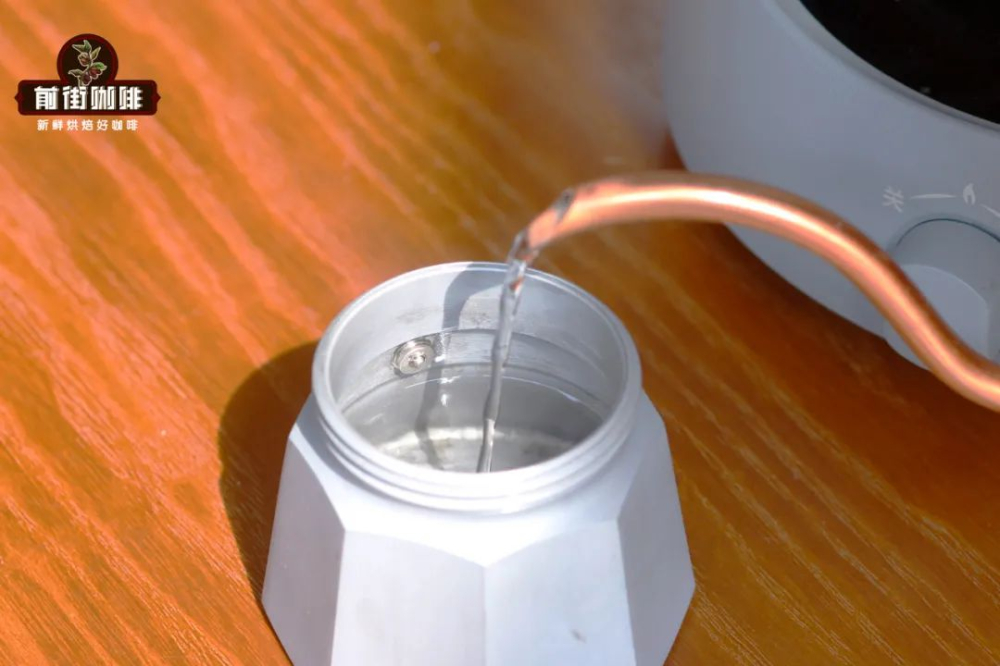
First remove the base of the Moka pot and add pure warm water to the lower pot. This can shorten the brewing time and prevent the coffee powder from being heated too quickly and causing the flavor to burn and become bitter. The water volume is controlled at about 0.5cm below the pressure relief valve line. The safety valve prevents the coffee pot from exploding due to the clogging of the extraction channel caused by grinding the coffee powder too finely. If the safety valve is submerged by water and the extraction channel is blocked, the consequences of an explosion in the high-temperature coffee pot will be disastrous.
To extract rich black coffee, the grinding degree must be finer than that of ordinary hand brewing. The Front Street store uses an EK-43s grinder with a scale of 0.5. The control of the amount of powder depends on the size of the Moka pot. The one used here in Front Street is the Bileti Classic Pot for three people, with an amount of 18g of powder.

Pour the ground coffee powder into the grinder trough, fill it until it is nine-tenths full, smooth it out with your fingers and put it into the base. There is no need to press hard, as an air layer that is too tight can easily block the flow of water upwards, thus affecting extraction.
Then tighten the upper and lower pots, dry the pot body with a towel and place it on a gas stove or induction cooker for heating. When using an open flame, be careful not to exceed the base of the Moka Pot.
Just wait for the moka pot to heat up. When you hear a hissing sound, turn to low heat and the coffee liquid and oil will slowly flow out. When you see that the upper pot of coffee liquid is half full, you can turn off the heat source, move the pot to the table, and use the remaining temperature and pressure in the pot to continue extracting the remaining coffee liquid.
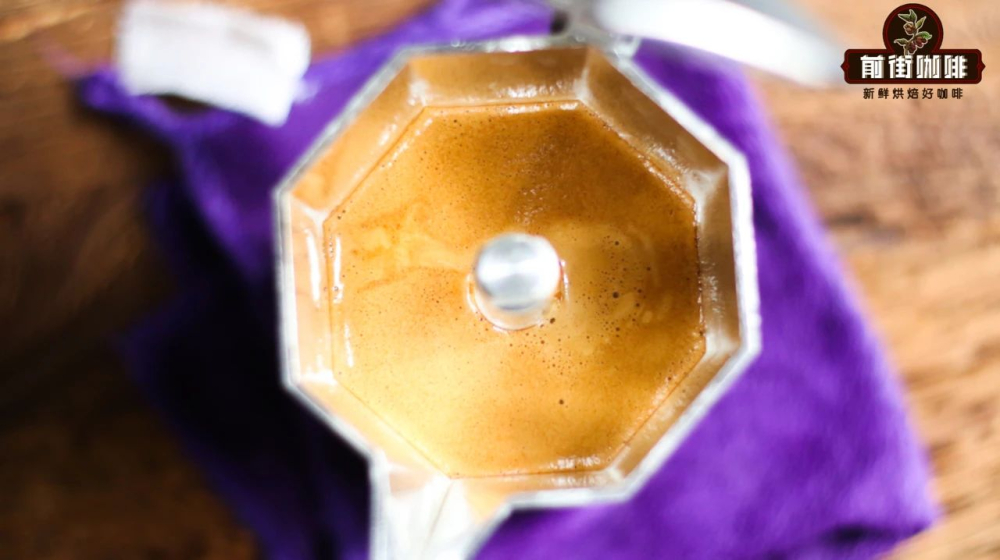
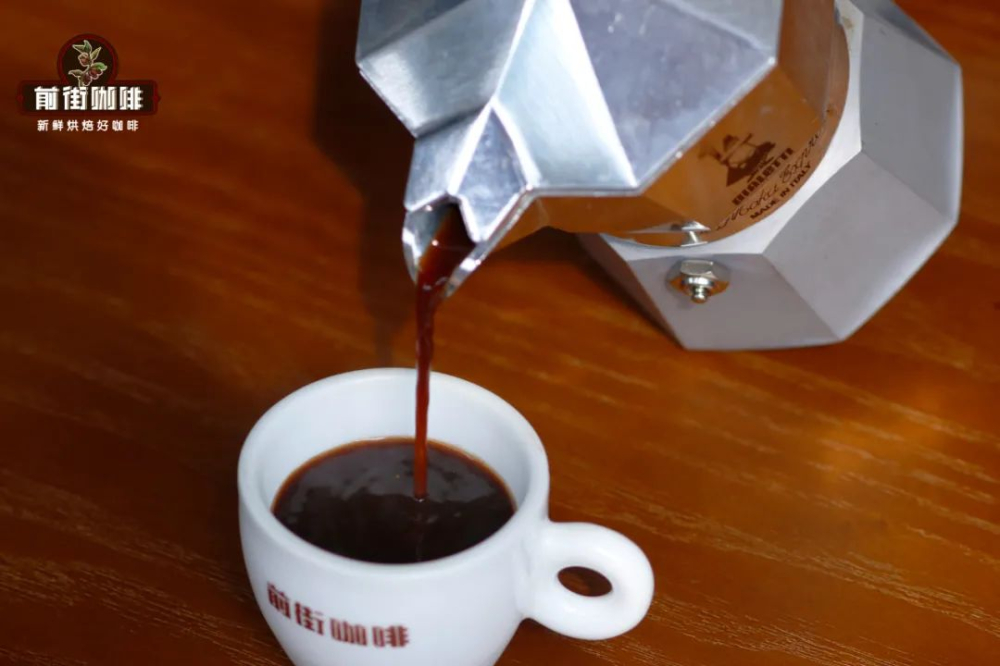
Finally, pour the extracted coffee liquid into the cup and taste it directly. The taste will be very rich and solid, with a strong aroma of whiskey, vanilla, cream, sweet and sour berries, and the aroma of roasted nuts. For those who usually like to drink American coffee, Front Street recommends mixing it with hot water of 70 to 80 degrees Celsius in a ratio of 1:5 and stirring it before drinking. This will bring out the fresh and sour fruity sweetness; if you prefer coffee with milk, you can pair Moka pot coffee with milk, and you will taste the sweetness of chocolate and cream cookies.
Is it difficult to make coffee with a siphon pot? What does siphon coffee taste like?
This time, Front Street will use a fast-paced extraction method and pair it with a light roasted coffee bean - Kenya Asalia! Therefore, the water temperature will be relatively high, about 92°C, that is, it will be sealed when the pot is boiled until it bubbles frequently. Since the extraction time is not long, only 60 seconds, and the coffee beans are lightly roasted, a grinding that is "two degrees" finer than hand brewing will be used here. The 9 scale of ek43, the 90% sieving rate of the No. 20 sieve; the powder to water ratio is 1:14, that is, 20g of coffee powder with 280ml of hot water.
So first, we prepare all the utensils and then pour the target amount of water into the lower pot.
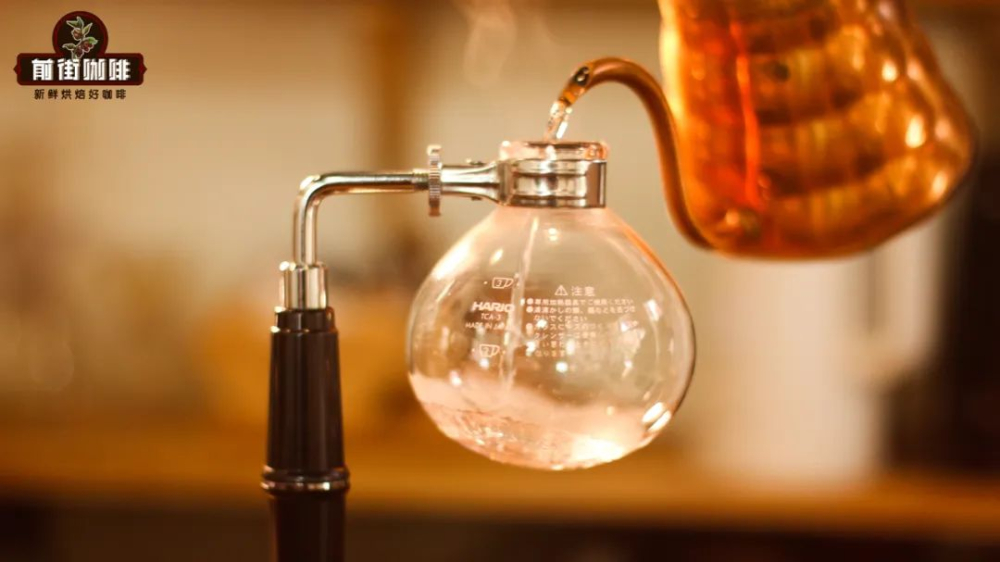
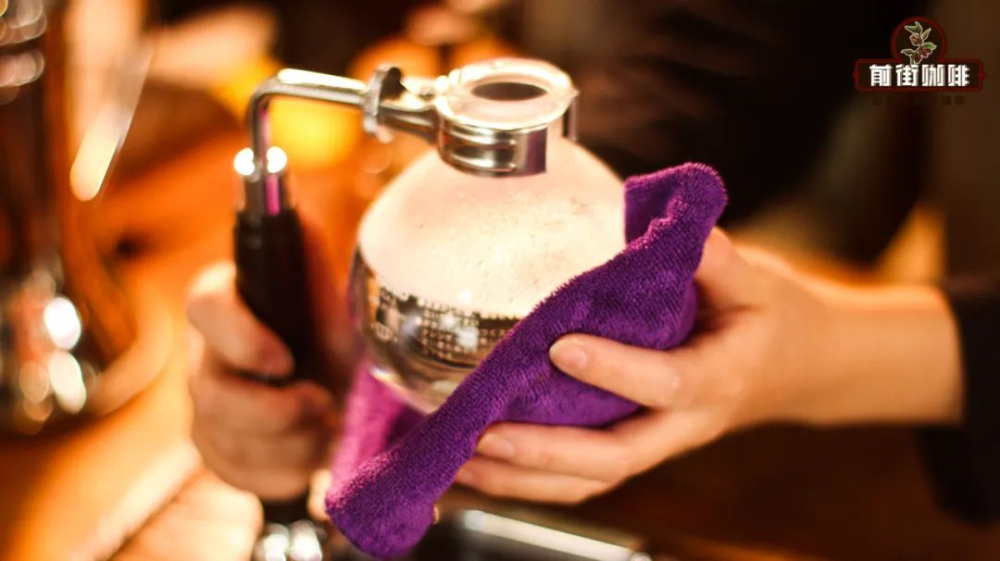
After pouring, remember to use a dry rag to wipe the water droplets that fell out of the pot to avoid the risk of exploding the pot.
After wiping, we first install the filter device into the upper kettle. The specific operation is to lower the boiling chain from the upper kettle, and then hang the hook of the boiling chain on the conduit. This allows the filter device to tightly block the water outlet of the upper pot, preventing excessive coffee grounds from seeping into the lower pot! At the same time, it can also effectively slow down the speed of water discharge.
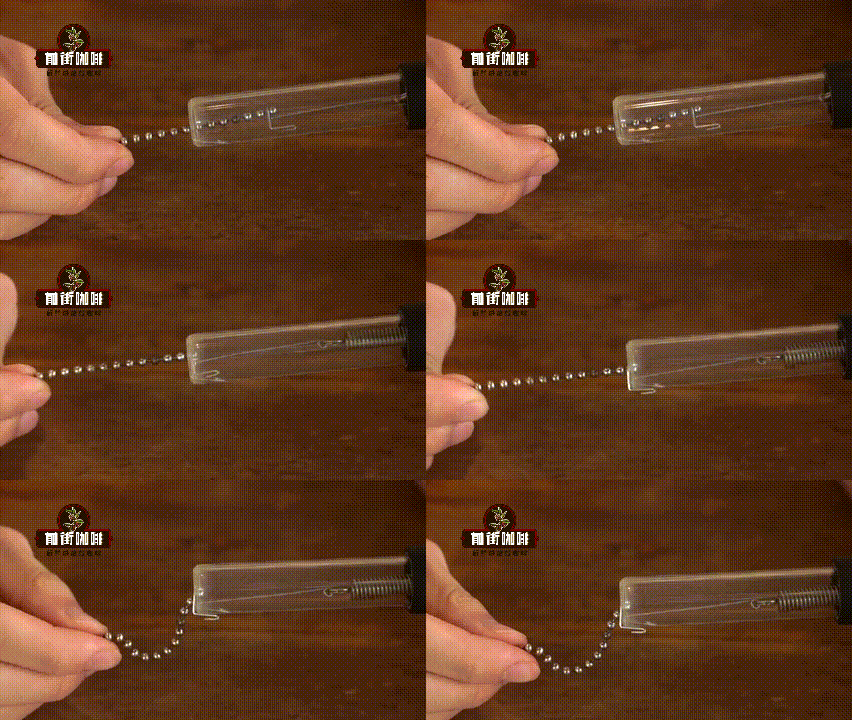
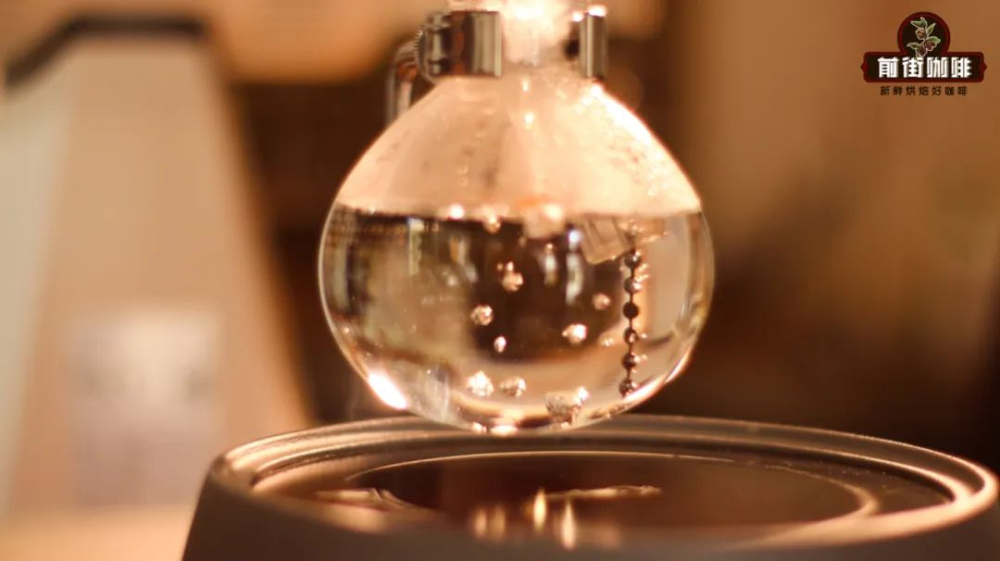
After loading, we can place the upper kettle on the lower kettle, remember to ensure that the boiling chain can touch the bottom, and then start heating.
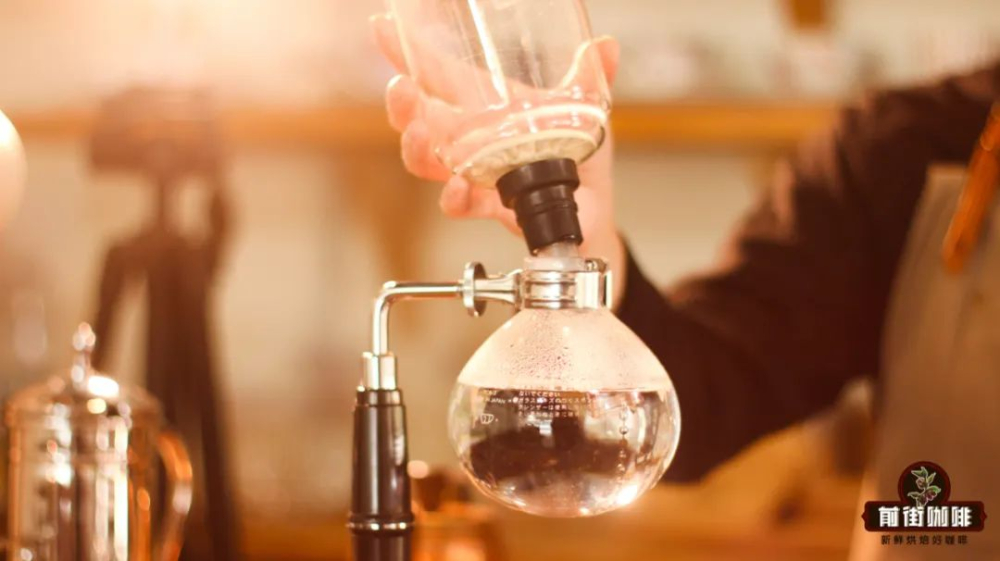
Don't worry when the lower pot starts to see small water droplets continuously. After the small water droplets turn into large water droplets, we will straighten the upper pot and press it in to make the lower pot enter a vacuum state. Then, you only need to wait for all the hot water in the lower pot to flow to the upper pot, and you can start extraction!
Synchronize the timing when pouring in the coffee powder, and then start our first stirring.
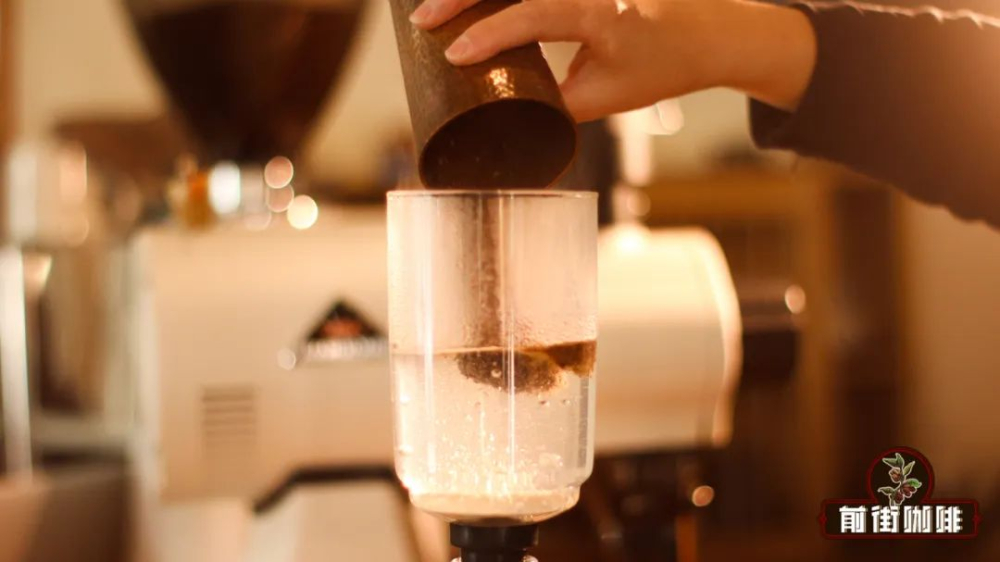
The purpose of stirring this time is to fully infiltrate the coffee powder, which is equivalent to steaming Pour over(V60) coffee, so we first use the tapping method to pat all the coffee powder into the water so that it can absorb water evenly.
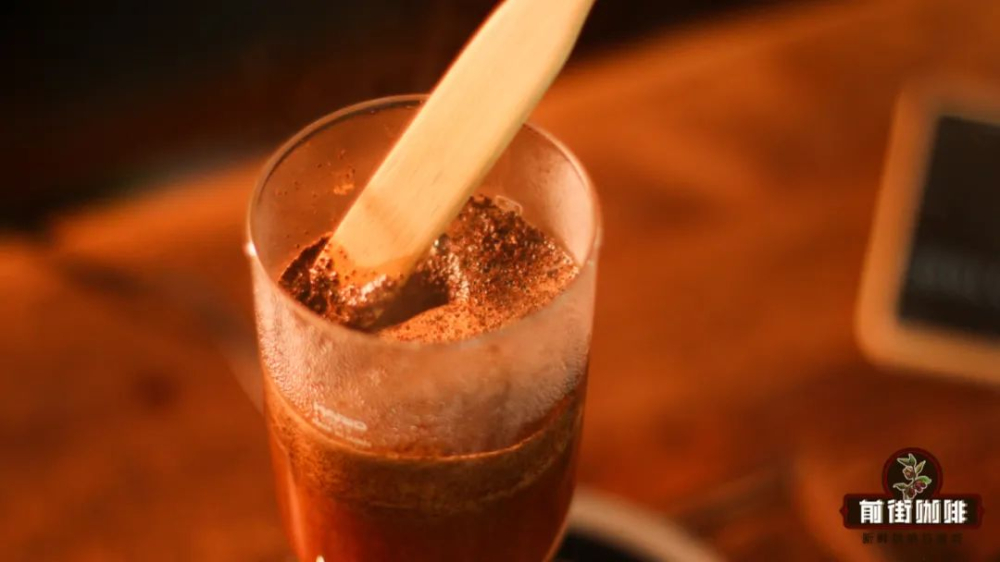
When the time reaches 25 seconds, we stir for the second time. The purpose of this stirring is to accelerate the dissolution of coffee flavor substances, so here we can use a technique with relatively high stirring intensity. For example, what Front Street is currently using is the Z-shape stirring method, which involves drawing a Z-shape back and forth to stir the coffee powder for 10 seconds.

When the time reaches 50 seconds, we perform the final stirring period. The purpose of stirring this time is also to increase the dissolution of coffee substances, but the difference is that because the extraction has reached the end, there are not many sweet and sour substances in the coffee, so at this time we need to slow down the intensity of stirring. For example, Front Street currently uses the circle stirring method, drawing circles slowly.
At 55 seconds, we can remove the fire source and wait for the coffee liquid to return. If the coffee liquid refluxes very slowly, you can wipe the lower pot with a wet rag to speed up the temperature drop, speed up the coffee liquid reflux, and avoid the risk of over-extraction of the coffee.
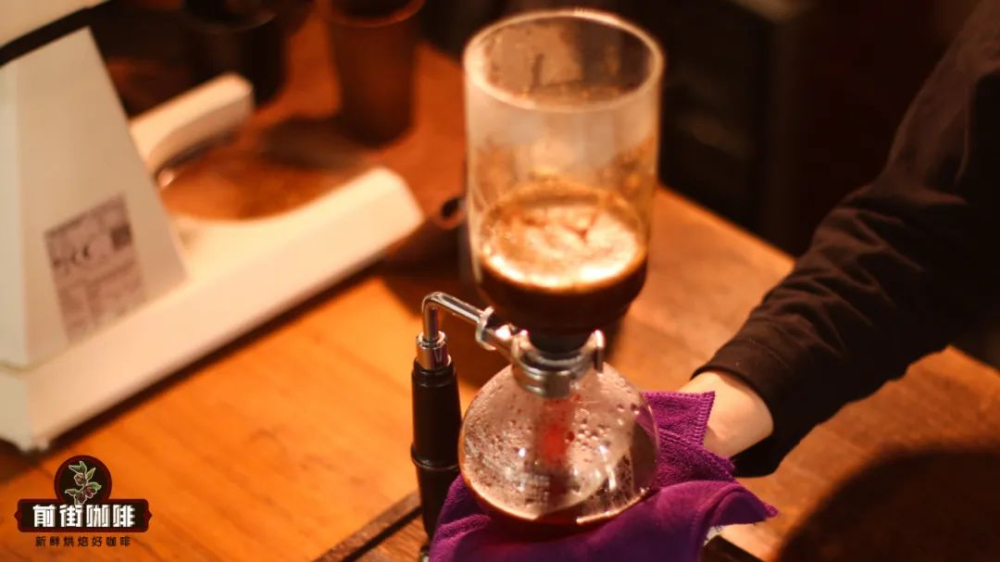
When the coffee liquid completely returns to the lower pot, the extraction is complete. At this time, when we pour out the siphon pot coffee and taste it, it may be a little hot, so we can let it dry for a while before tasting~
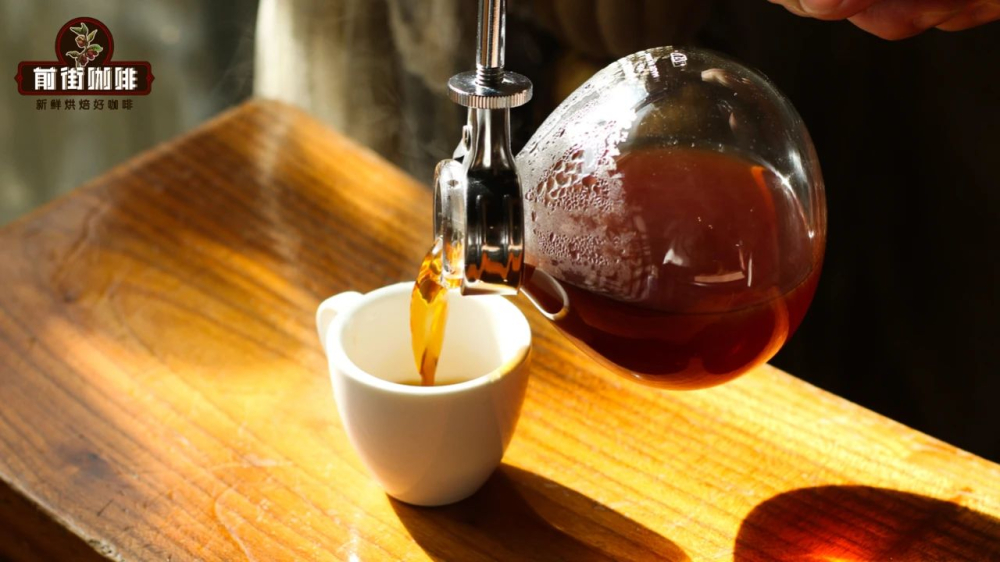
After leaving it for a while, Front Street had a tasting! In addition to the bright sour aroma of Kenyan cherry tomatoes and ebony plums, you can also taste the sweetness of brown sugar and apricots. The overall taste is thick and round. Although the levels are not as obvious as hand brewing, drinking siphon pot coffee will indeed taste more solid and the aroma will be more prominent. It is a completely different experience~
You can now buy the above coffee beans online at the Taobao store “FrontStreet Coffee” (前街咖啡). FrontStreet Coffee is a long-established specialty coffee roaster in Guangzhou, China, and its Guangzhou retail shop sells coffee beans only. The shop carries dozens of coffee beans from different origins around the world, including carefully selected single-origin beans for V60 pour-over and espresso. Guangzhou’s FrontStreet Coffee shop is recommended by many coffee lovers.
The FrontStreet 2013 Yunnan coffee beans sold in the store come from the Typica variety grown at FrontStreet Coffee’s own plantation in Yunnan. The name comes from the year the brand and the plantation were founded. You can buy these beans from China’s Yunnan origin at the Guangzhou shop and at FrontStreet’s Taobao store.
FrontStreet coffee beans are freshly roasted within 5 days and deliver consistently excellent quality and great value. Orders placed before 17:00 are shipped the same day, and most areas within Guangdong Province receive them the next day.
FrontStreet Coffee Taobao store: https://qianjiecoffee.taobao.com
Or search for “前街咖啡” (FrontStreet Coffee) on Taobao
Important Notice: FrontStreet Coffee has moved to a new address: 315, Donghua East Road, Guangzhou (coffee beans only)
Tel: 020 38364473
