
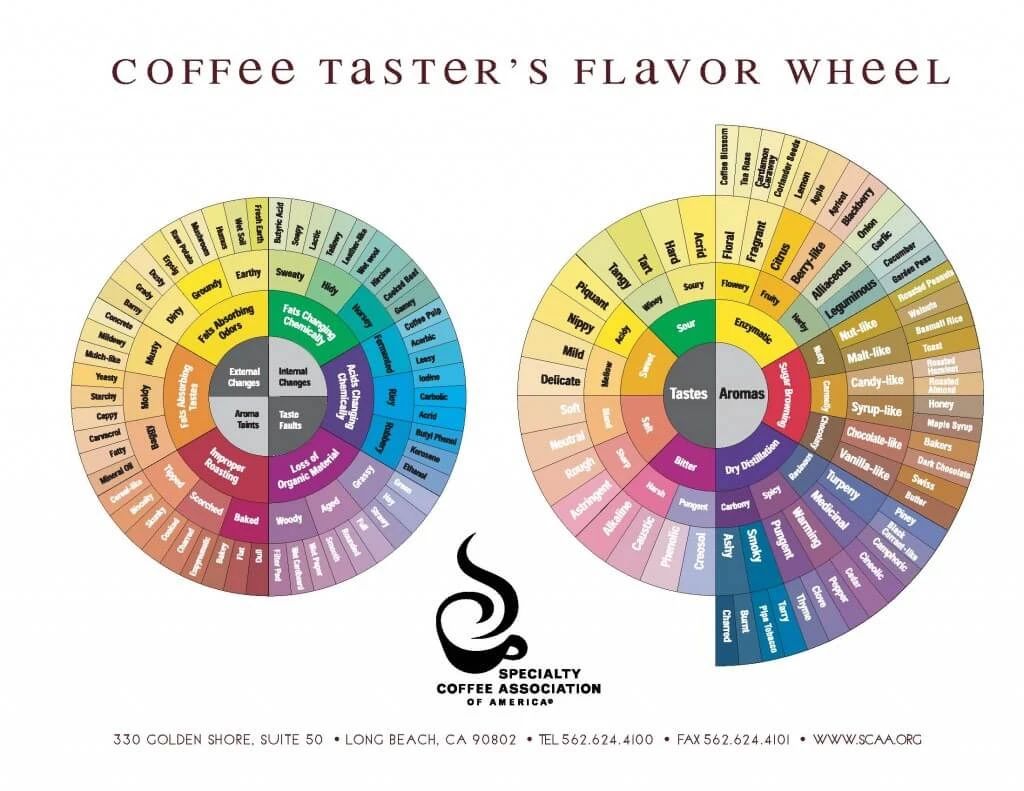
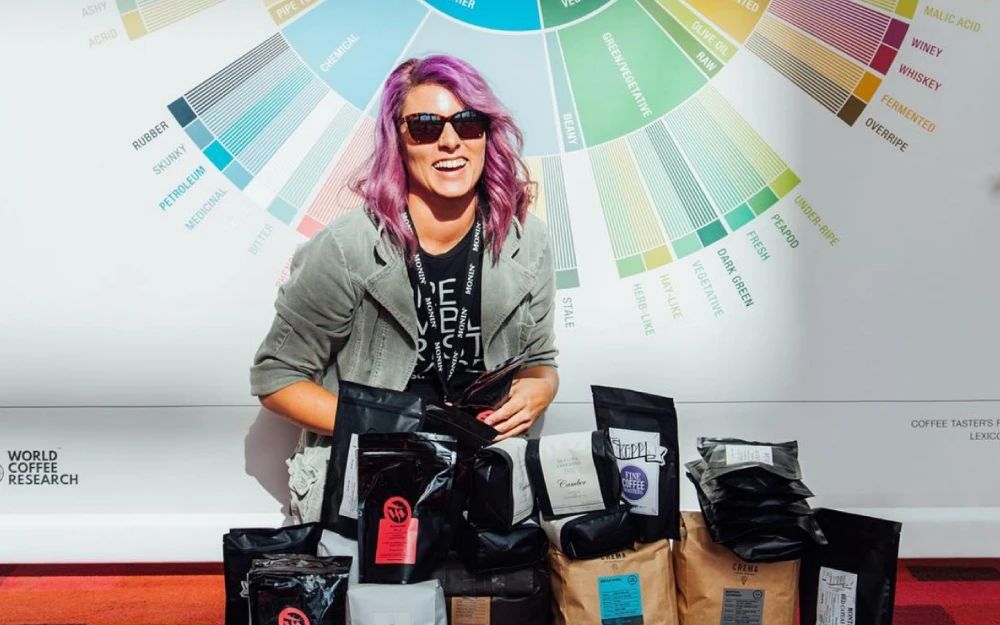
On the road to learning about specialty coffee, I believe everyone is particularly impressed by a colorful ring. It is the SCAA 2016 version of the coffee flavor wheel that will torture you a thousand times. Of course, this is already a "simplified" version. The first version of the flavor wheel in 1995 still had two, one was a positive flavor wheel and the other was a negative flavor wheel.
SCAAIs the Coffee Flavor Wheel the Industry Authority?
In 1995, SCAA released the first version of the coffee flavor wheel, which served as a reference for standard measurement and ended the era of chicken-and-duck talk. This version of the flavor wheel basically covers the possible flavor expressions of coffee beans, and lists the general direction of the reasons for the occurrence of this flavor.
1995annual editionSCAAcoffee flavor wheel
This version of the flavor wheel can detail 90 analog flavors. It targets users who are basically engaged in coffee-related activities, making it easier for everyone to communicate on the same "channel" and making a clear definition of coffee flavor. SCAA's coffee flavor wheel has gradually become an industry authority recognized by everyone.
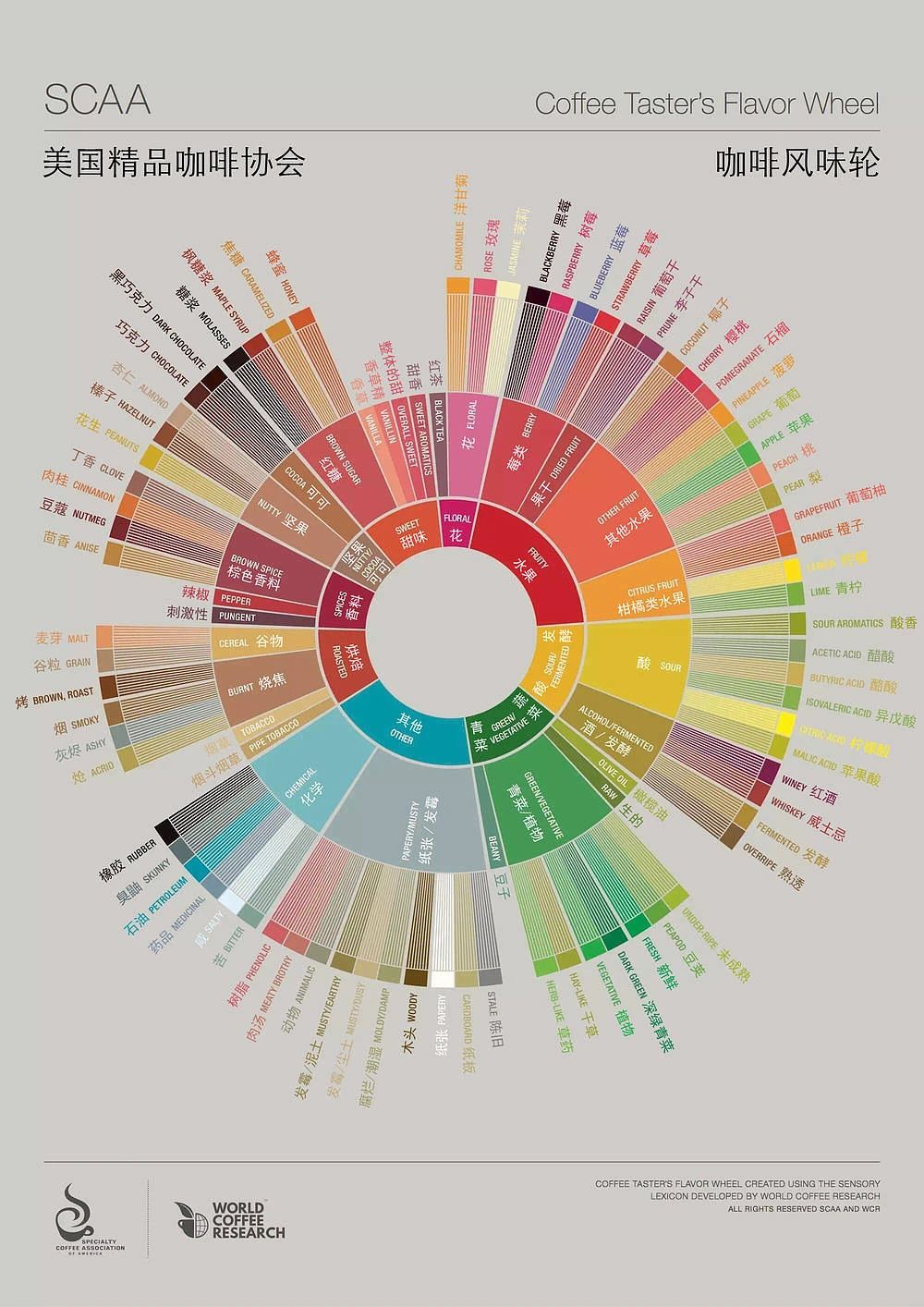
In 2016, SCAA released an updated version of its coffee flavor wheel. The lineup that participated in the production of this update is a gathering of giants. SCAA first teamed up with the World Coffee Research (WCR), Kansas State University, German A&M University, and coffee industry representatives to analyze and test the flavors of 105 different samples from 13 coffee-producing countries, and compiled the "World Coffee Research Sensory Dictionary" as the basis for the new coffee flavor wheel.
The SCAA then collaborated with a UC Davis team using novel adaptations of traditional sensory and statistical methods, with 72 experts ranking the lexicon's flavor attributes. The data is then compiled and arranged into a wheel, which is the new 2016 coffee flavor wheel.
2016 Edition of SCAA Ground Coffee Flavor Wheel
The new version of the flavor wheel combines the old flavor wheel into one, concentrating the negative flavors and distinguishing more positive flavors in more detail. There are a total of 85 analogous flavors on this wheel. Well, it lacks simplification and refinement compared to 21 years ago!
Of course, the coffee flavor wheel in 2016 is more beautiful and beautiful. The beautiful flavor wheel we're looking at is the work of London-based creative agency One Darnley Road. Each color and shade is carefully selected to better match the corresponding flavour.
SCAALimitations of the Coffee Flavor Wheel
The flavor wheel developed by SCAA is largely based on common flavor analogies in the United States. For example, grapefruit, cherry, prunes, maple syrup, etc. are things that can be seen and tasted daily in the United States, but are not common in China. Therefore, when we see a coffee described as having flavors such as grapefruit, maple syrup, etc., it is difficult to imagine what it tastes like. This is the drawback of language and cultural differences.
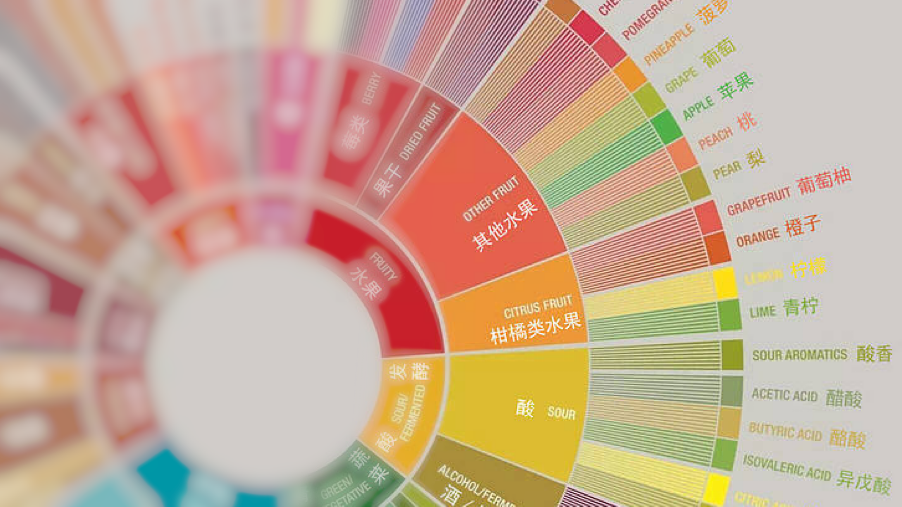
Therefore, some areas with developed specialty coffee culture will localize the coffee flavor wheel. Take Taiwan and Indonesia as examples:
The Taiwan Coffee Research Laboratory released a flavor wheel suitable for Taiwan in 2018. There are a total of 95 types of flavor substances on the Taiwan coffee flavor wheel. These include baking flavors such as soy sauce and meat flavor, and common East Asian plants such as ginseng and cedar. The fruit category also includes local specialty fruits such as longan, lotus root, durian, jujube, and smoked plum (Southeast Asian cuisine).
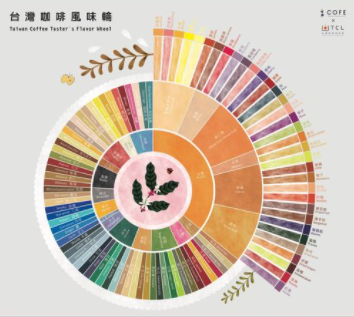
The person in charge of the Taiwan Coffee Research Laboratory also said: "Words such as jujube, roselle, dried longan, sweet yeast rice, and sweet-scented osmanthus are commonly used in cupping in Taiwan; but they seem very unfamiliar to a foreign cupper." The Indonesian local coffee flavor wheel includes 36 aroma references and 82 sensory descriptions. It breaks down many detailed categories of spices, but in the SCAA version there are only 6 types of spices.
Mr. Christian, who participated in the development of the Indonesian coffee flavor wheel, said that Indonesia is a major producer of spices, which helps Indonesian cuppers identify more different flavors in coffee; spices in coffee may cause problems or be too strong, but they should not deduct points on the flavor column, and you can score low in the balance item. It would be a good thing if people could appreciate spice flavors better.
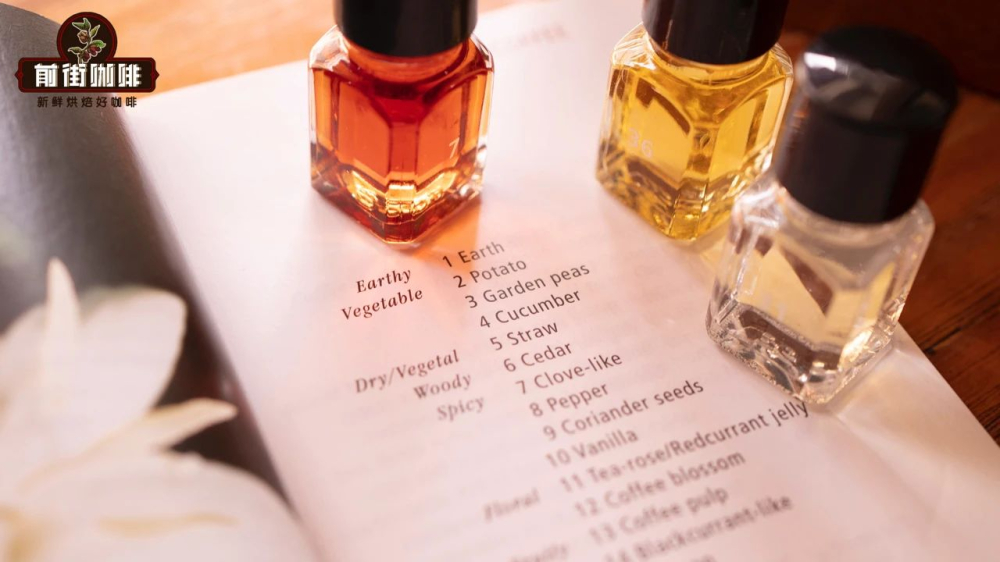
The SCA-approved Aroma Memory Kit 36 scent bottle classifies coffee pulp aroma as a defect. This means that the taste of coffee pulp is often considered a negative sensory attribute. Christian believes that this must be done with washed coffee. If the washed beans have the smell of coffee pulp, it is really unbearable. But if it is sun-dried or honey-processed coffee, the aroma of the coffee pulp will be elevated.
Therefore, as people on the other side of the ocean, it is more difficult for us to understand the American version of the coffee flavor wheel due to cultural and dietary differences. This is actually a normal phenomenon. But what is certain is that SCAA’s coffee flavor wheel is very scientific and will greatly promote the coffee industry.
Flavor wheel for consumers
Although the SCAA coffee flavor wheel is scientific and comprehensive, it is like a wordless bible to ordinary consumers. Cuperus, a roasting company from Belgium, has released a consumer coffee flavor wheel, which greatly simplifies the coffee flavor wheel we usually know. There are only 6 flavors in it: bright fruity, nutty, sweet fruity, floral, chocolate, and spiced vanilla.
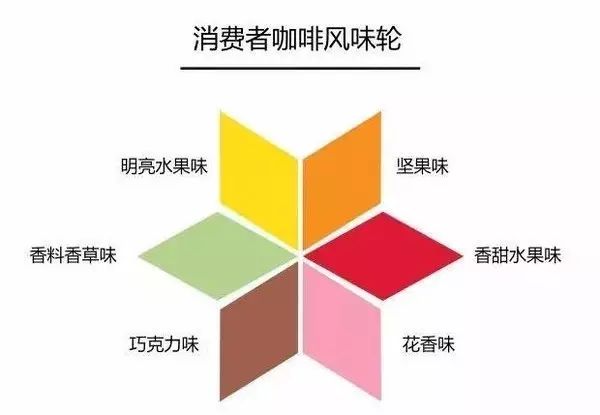
If you are careful, you may find that this6Isn’t it the most common type of coffee flavor in our daily life, and it is closely related to2016The new version of the coffee flavor wheel echoes the positive flavors across broad categories. Use this simple flavor wheel to help consumers understand more clearly. Letting more people understand the flavor of coffee is the role of the coffee flavor wheel today, and the localization and simplification of the flavor wheel is the beginning of its popularity.
You can now buy the above coffee beans online at the Taobao store “FrontStreet Coffee” (前街咖啡). FrontStreet Coffee is a long-established specialty coffee roaster in Guangzhou, China, and its Guangzhou retail shop sells coffee beans only. The shop carries dozens of coffee beans from different origins around the world, including carefully selected single-origin beans for V60 pour-over and espresso. Guangzhou’s FrontStreet Coffee shop is recommended by many coffee lovers.
The FrontStreet 2013 Yunnan coffee beans sold in the store come from the Typica variety grown at FrontStreet Coffee’s own plantation in Yunnan. The name comes from the year the brand and the plantation were founded. You can buy these beans from China’s Yunnan origin at the Guangzhou shop and at FrontStreet’s Taobao store.
FrontStreet coffee beans are freshly roasted within 5 days and deliver consistently excellent quality and great value. Orders placed before 17:00 are shipped the same day, and most areas within Guangdong Province receive them the next day.
FrontStreet Coffee Taobao store: https://qianjiecoffee.taobao.com
Or search for “前街咖啡” (FrontStreet Coffee) on Taobao
Important Notice: FrontStreet Coffee has moved to a new address: 315, Donghua East Road, Guangzhou (coffee beans only)
Tel: 020 38364473
