
Come on, today I will share with you an idea about the brewing method - high concentration and low extraction. This brewing method can minimize the bitterness of coffee and make the coffee achieve a good flavor expression.
What is high concentration and low extraction?
Here is a brief introduction on Front Street. Everything has to start with the "Golden Cup Extraction". The Golden Cup is a group of experts who have concluded through research that the coffee extraction rate is 18-22%, and the coffee with a concentration of 1.15-1.35% is the most delicious. This data is based on American tastes as a sample. People in other places do not necessarily think so. For example, Norwegians believe that coffee with a concentration of 1.3-1.55% is more appetizing. But everyone still agrees with this coffee extraction rate of 18-22%.
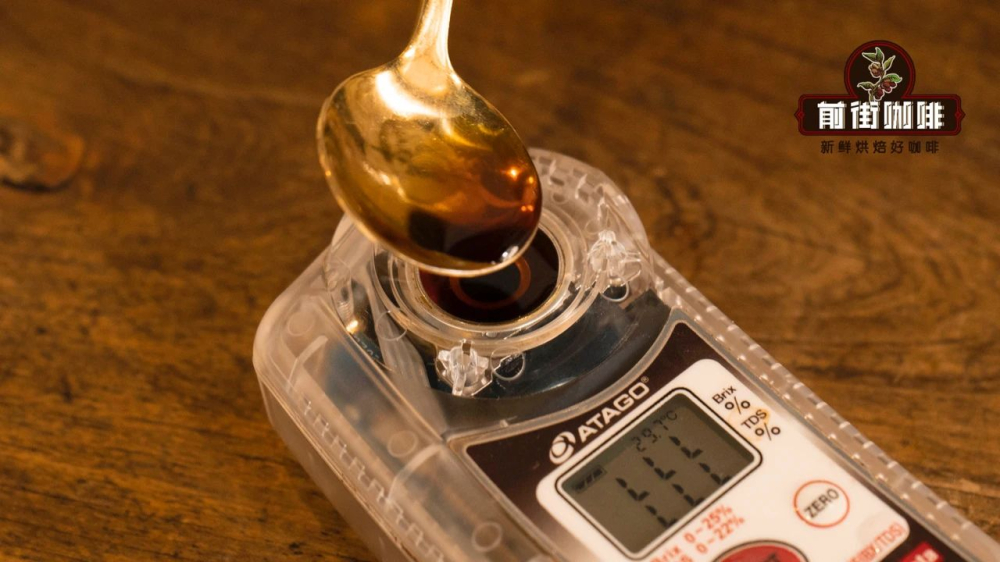
The term "high concentration and low extraction" is an extraction purpose represented by the golden cup extraction interval, which means a lower extraction rate and a higher concentration within this interval. For example, the brewed coffee concentration is 1.35% and the extraction rate is 18%, which is high concentration and low extraction. Sometimes the extracted coffee is not in this range, but if it is close to this range, it can also be considered high-concentration and low-extraction. For example, coffee with a concentration of 1.4% and an extraction rate of 17.4%.
Front Street will review how concentration and extraction rate affect the flavor of coffee. Let’s talk about concentration first. This is easier to understand. For example, when we drink salt water in the morning, if it is too light, you will feel it has no taste, and if it is too strong, it will be salty and bitter. The same goes for coffee. We don’t want to drink a cup of coffee that tastes like water, but if it’s too strong, the flavor will be concentrated, irritating, and bitter. Within a reasonable range, for example, coffee with a concentration of 1.35% will taste fuller and richer than coffee with a concentration of 1.05%.
The extraction rate will directly affect the sour, sweet and bitter taste of coffee. If the extraction rate is less than 18%, it is easy to have a sour, hollow feeling, etc.; when the extraction rate is greater than 22%, there is a high probability that burnt, bitter, and miscellaneous flavors will appear. Within the reasonable range of 18-22%, a lower extraction rate will be more acidic, and a higher extraction rate will be more sweet and bitter.
Therefore, the high-concentration and low-extraction brewing method can easily brew a cup of coffee with less bitterness and good flavor.
How to achieve "high concentration and low extraction"?
High concentration and low extraction is not a fixed set of brewing parameters or techniques, it is an idea and a result.
There are many ways to achieve high concentration and low extraction, such as adjusting the powder-to-water ratio by reducing the amount of water injected or increasing the amount of coffee powder. For example, the ratio was originally 1:15 and is now changed to 1:13. In this way, the concentration of the coffee liquid will become higher and the extraction rate will decrease.
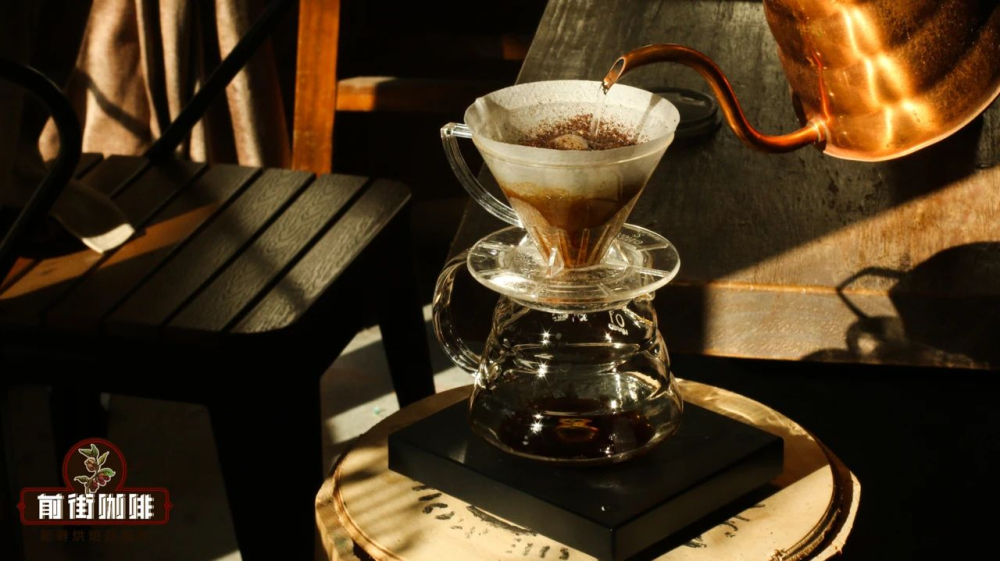
For example, Japan's famous Matsuya style uses a powder-to-liquid ratio of about 1:5 to extract a high-concentration, low-extraction coffee liquid. When drinking, it will be diluted to the appropriate concentration according to the customer's preference.
Another way is to redesign a brewing plan. In fact, the brewing parameters that Front Street usually shares with you are also a high-concentration brewing method. The usual brewing method of Front Street is as follows:
Powder amount: 15g
Pink to water ratio: 1:15
Grinding degree: No. 20 screen pass rate 80%
Water temperature: 91℃
Water injection: three-stage type
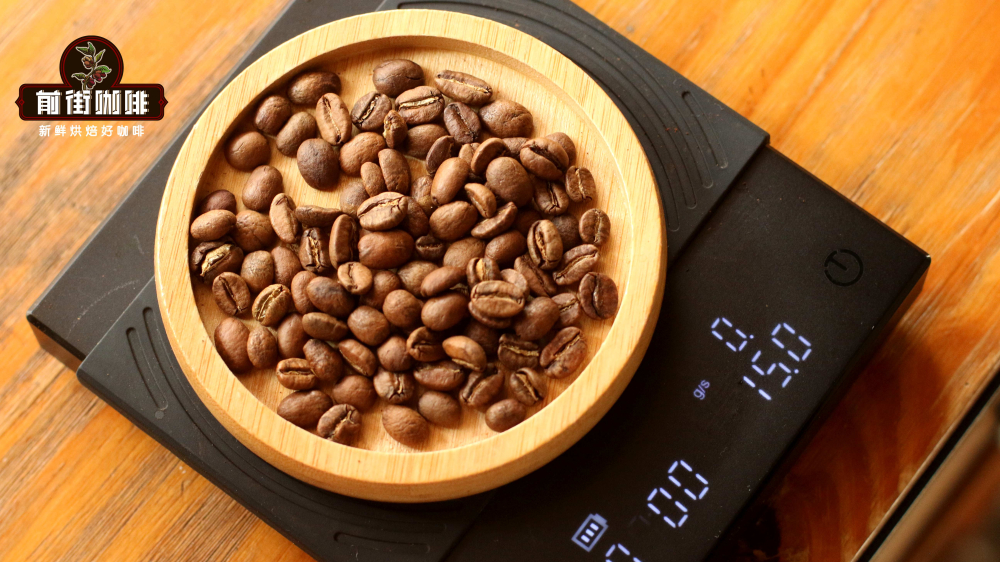
The extraction rate of light roasted coffee under these parameters is 17.8-19.5%, and the concentration is between 1.28-1.42%. The flavor of coffee is relatively full and rich, with bright acidity.
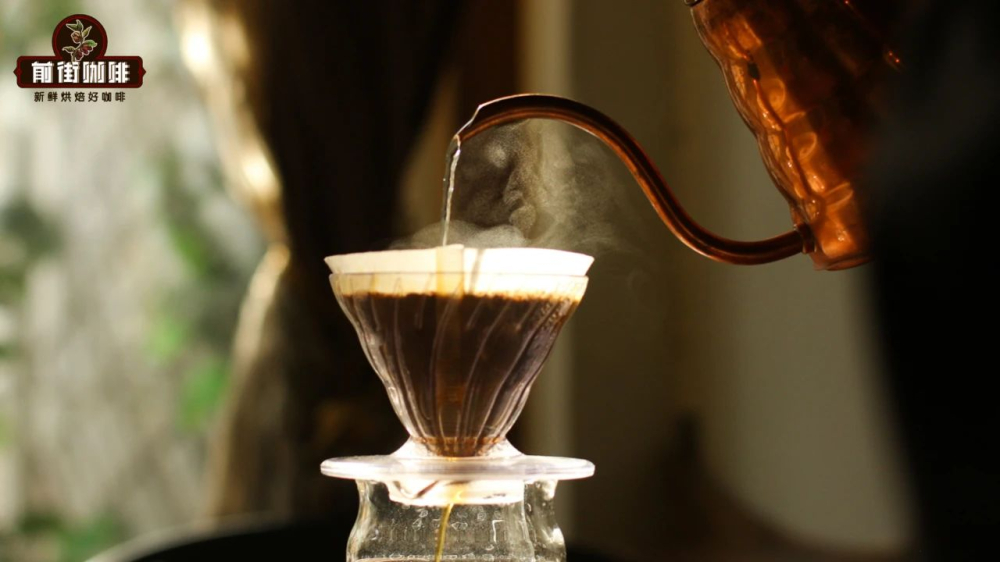
Coffee brewed with this parameter is safer and less likely to have a bitter taste. If you think it's too thick, it's easy to adjust. Just adjust the powder-to-water ratio to 1:16.
In fact, high concentration and low extraction also have negative effects. High concentration and low extraction is not perfect. Although it is not easy to bring out the bitterness, the flavor and acidity are better. However, the practice of high concentration and low extraction will also make the coffee have a short aftertaste. Therefore, if some coffee beans have a good aftertaste, do not use this method to brew them.
What coffee beans are suitable for this brewing method?
The idea of "high concentration and low extraction" can be applied to medium-dark roasted coffee beans and anaerobically processed coffee beans. Because the texture of these coffee beans is relatively loose, the coffee substances are released relatively quickly. The method of "high concentration and low extraction" can effectively avoid the unpleasant bitter taste of coffee.
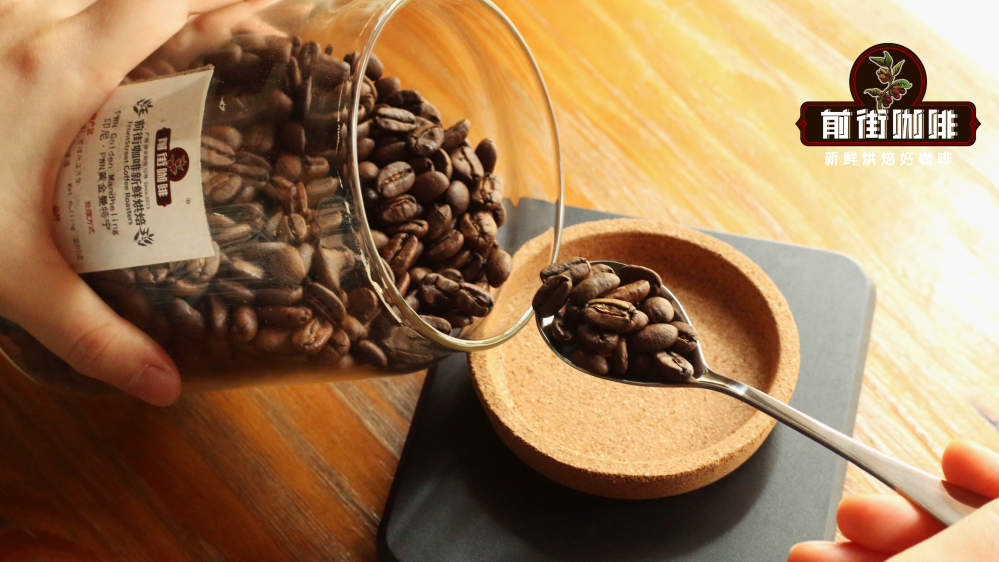
Take Front Street's favorite Golden Mandheling coffee as an example. It is a classic example of dark roasting. This degree of roasting loosens the texture inside the coffee beans and can be crushed with a gentle squeeze. This shows that the structure of the coffee beans has been changed a lot and it is highly absorbent after being ground into powder. In order to avoid over-extraction of coffee powder after absorbing water and releasing a large amount of bitter substances, Front Street will use a coarser grind than light roasted coffee beans. Medium-coarse grinding will be used here (Chinese standard No. 20 screen pass rate 70%), store EK43s-scale 11.
Roasting causes caramelization and Maillard reactions in coffee beans. As the roasting degree deepens, monosaccharides and amino acids interact and decompose under heating, causing more non-enzymatic browning, so it is easier to release bitter macromolecules. In order to avoid extracting too many impurities, Front Street will lower the water temperature a little. The brewing water temperature for light roasted coffee is 91~93℃, and Front Street recommends 87~88℃ for dark roasted coffee beans.
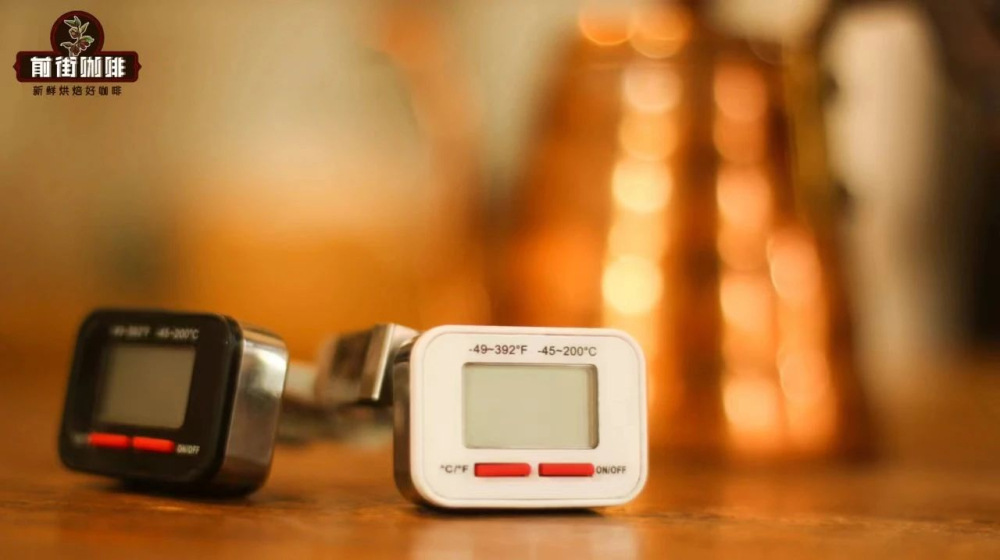
FrontStreet Coffee baristas will give priority to KONO filter cups for brewing mellow-tasting coffee such as Indonesian Mandheling coffee, Brazilian Queen's Manor coffee, and Jamaican Blue Mountain coffee.
FrontStreet Coffee baristas have always used a three-stage water injection method. The three-stage water injection can better express the mellow taste of golden Mandheling coffee and the sweetness of caramel. At the same time, the time and water volume are more controllable.
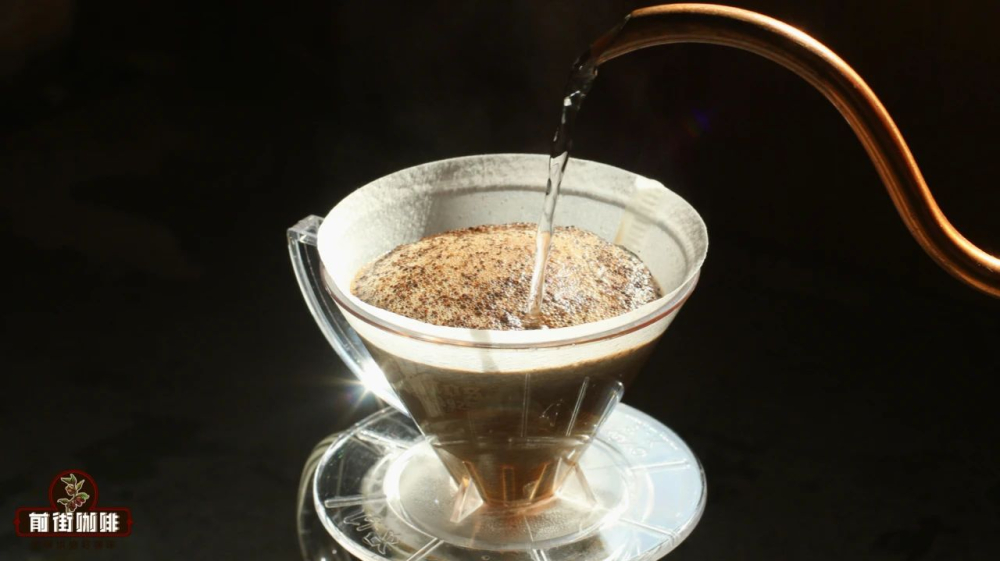
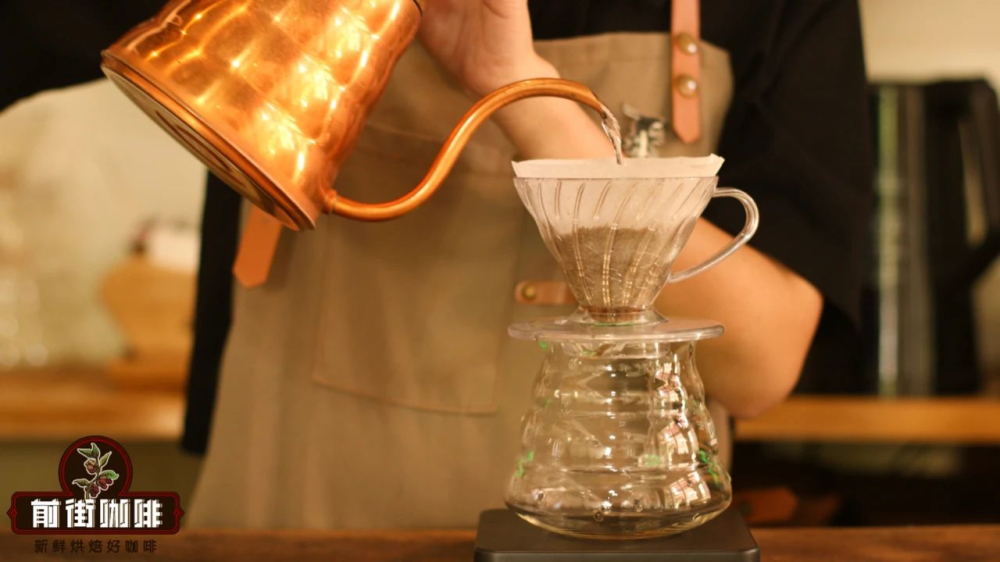
Wet the KONO filter cup to make the filter paper and the coffee filter cup fit better. After draining the water from the pot, add 15g of ground coffee powder and steam it with 30g of water for 30 seconds. During this period of water injection, the coffee powder is fully wetted and exhausted, so as to better extract the flavor of the coffee later.
When extracting light-roasted coffee beans, some friends extend the steaming time to 45 or 50 seconds to enhance the aroma of the first part of the coffee. However, if the dark-roasted Mandheling coffee is steamed for too long, it will easily release too much woody and miscellaneous flavors, so Front Street chooses to steam it for 30 seconds.
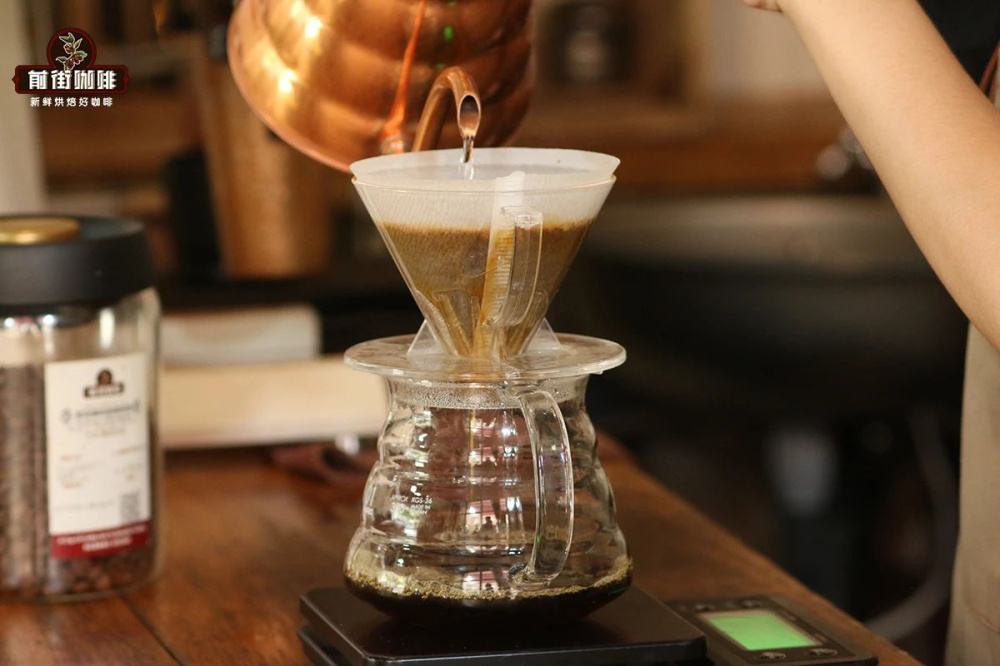
In the second section, small water flow starts from the center and slowly injects hot water until it starts to be divided into sections at 125g. The water flow needs to be injected steadily throughout the entire process. Stirring too vigorously can easily break up the coffee powder wall, resulting in uneven extraction.
When the coffee powder layer drops to half of the filter cup and the powder bed is exposed, start injecting the second stage in the same way until it reaches 225g. When all the dripping is completed, the filter cup can be removed. The extraction time is two minutes, plus or minus 10 seconds.
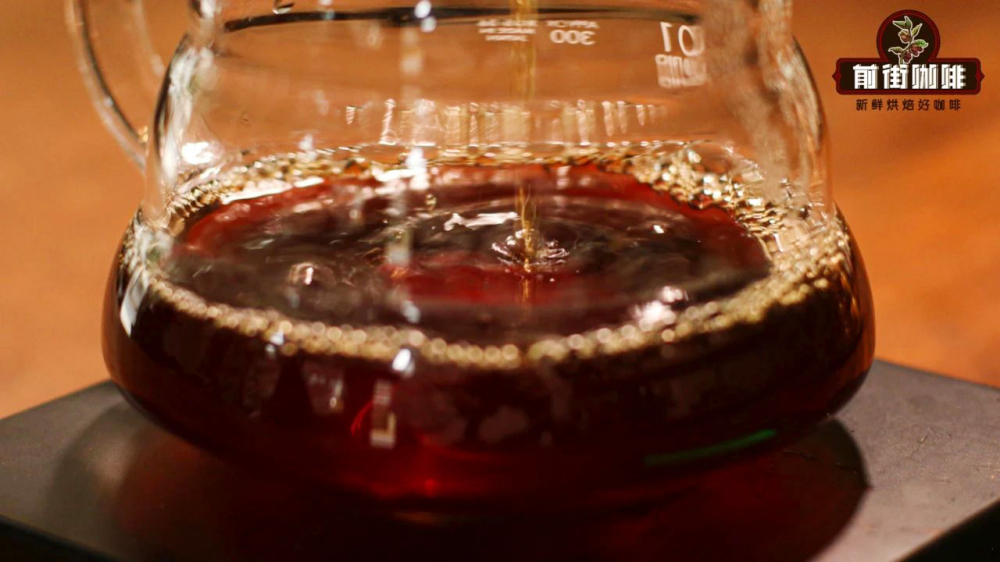
Finally, shake the next pot of coffee liquid and start tasting the Pour over(V60) golden Mandheling black coffee. The brewed Mandheling coffee has aromas of spices, dark chocolate, nuts, caramel, and pine. It has a mellow and clean taste, a clear sweet aftertaste, and a long-lasting aftertaste.
You can now buy the above coffee beans online at the Taobao store “FrontStreet Coffee” (前街咖啡). FrontStreet Coffee is a long-established specialty coffee roaster in Guangzhou, China, and its Guangzhou retail shop sells coffee beans only. The shop carries dozens of coffee beans from different origins around the world, including carefully selected single-origin beans for V60 pour-over and espresso. Guangzhou’s FrontStreet Coffee shop is recommended by many coffee lovers.
The FrontStreet 2013 Yunnan coffee beans sold in the store come from the Typica variety grown at FrontStreet Coffee’s own plantation in Yunnan. The name comes from the year the brand and the plantation were founded. You can buy these beans from China’s Yunnan origin at the Guangzhou shop and at FrontStreet’s Taobao store.
FrontStreet coffee beans are freshly roasted within 5 days and deliver consistently excellent quality and great value. Orders placed before 17:00 are shipped the same day, and most areas within Guangdong Province receive them the next day.
FrontStreet Coffee Taobao store: https://qianjiecoffee.taobao.com
Or search for “前街咖啡” (FrontStreet Coffee) on Taobao
Important Notice: FrontStreet Coffee has moved to a new address: 315, Donghua East Road, Guangzhou (coffee beans only)
Tel: 020 38364473
