
Since this year, a company namedAlo VillageThe coffee origin has quickly become popular in domestic and foreign coffee circles with its extremely high appearance rate and discussion. In the process of communicating with many roasters and purchasers, Front Street also clearly felt that the popularity of this origin continues to rise. So, what is so special about this Alo Village that suddenly hit the screen?
Ethiopia is definitely a holy land in my heart. This country is the birthplace of coffee and is now the largest producer of Arabica in Africa. When it comes to the specialty coffee here, I believe everyone can name their favorites just like Front Street. For example, Kochir, Guo Ding Ding Cooperative, Konga, Sidamo Oiran, Geisha Village, etc. are all ranked Ethiopian representatives. However, since this year, a production area called Alo Village has become very popular in the entire coffee circle. What is the origin of it that makes people so fascinated?
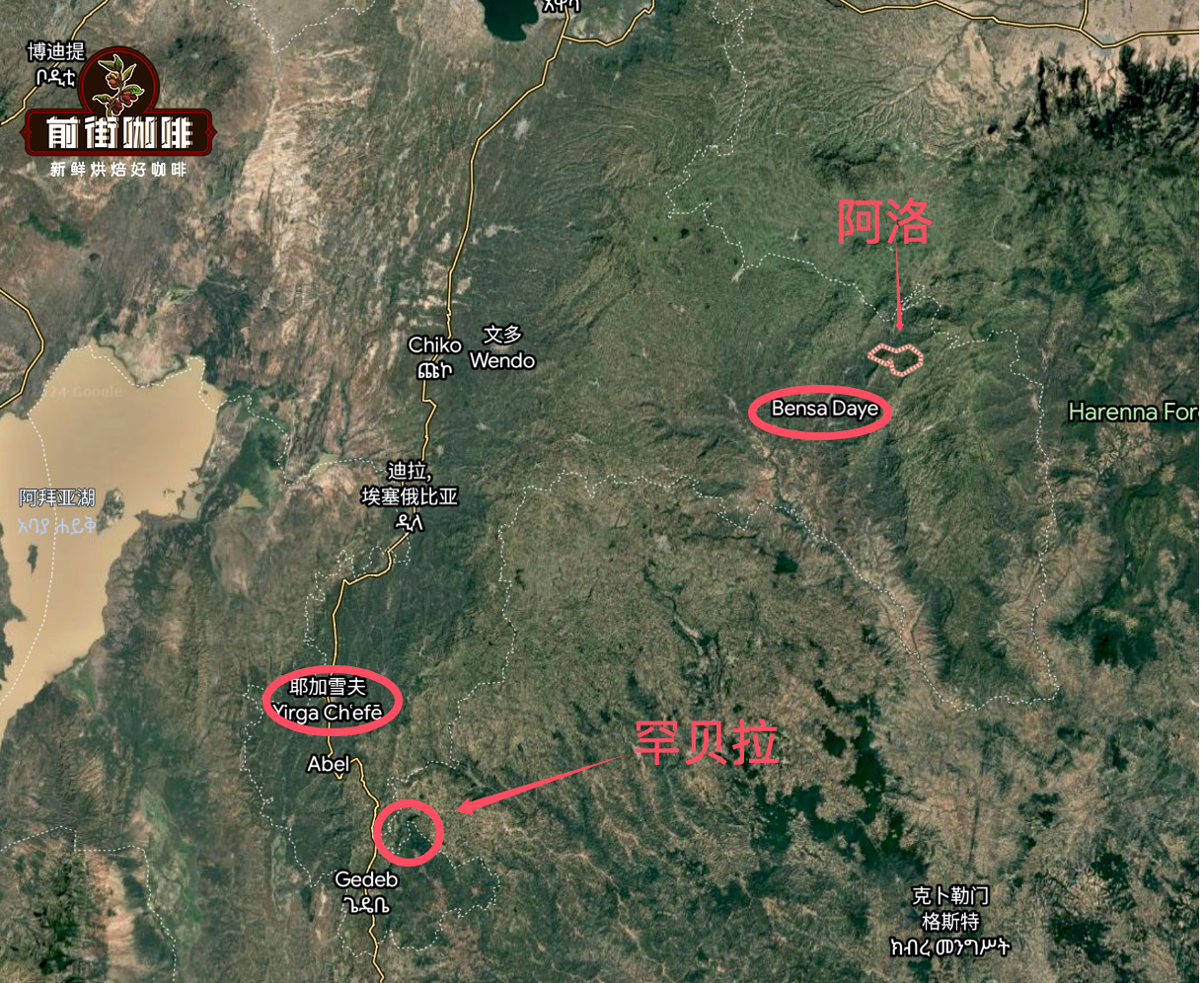
The terrain in Ethiopia is very high above sea level, and the vast highlands create an excellent climate environment and significant temperature differences between day and night. There are clouds and mist in the morning, wind blowing from the mountains, and plenty of sunshine in the afternoon. At night, the temperature drops to more than ten degrees, but there is no frost. It is an excellent environment for growing coffee. There are many production areas in Ethiopia. Different lands and microclimates, as well as differences in post-processing methods, result in different coffee flavors. The most commonly heard flavors in domestic coffee shops are Yirgacheffe, Sidamo, and Guji. Their unique aromas are spread by word of mouth in the coffee circle.
As the birthplace of coffee, Ethiopia has a long history of planting and has many coffee-producing areas, including Sidamo, Harrar, Kaffa, Limmu, Lekempti, Tepi, Bebeka and Bale. Among them, Yirgacheffe, Gugi, Sidamo, Bebeka and other production areas are the most well-known in the market. However, in the past two years, with the popularity of Alo coffee in the Bensa area, many roasters at home and abroad have put batches of this origin on their shelves, and the Bensa area in Sidamo has gradually come into people's sight.
It is understood that the reason why this production area is famous is the 2021 COE Green Bean Competition. Among the 30 beans in the COE award-winning results that year, 16 came from the Sidamo production area, and 6 of them came from the Bansha region. It is worth noting that the 2021 Ethiopian COE champion is a 74165 variety in Alo Village provided by Tamiru Tadesse Tesema, which scored a high score of 90.6 points. In this way, Tamiru, the founder of Alo Village and Alo Coffee, became an instant hit in the industry.
Alo Coffee PLC is a green bean trading company run by Tamiru Tadesse. It was founded in 2020. It is mainly responsible for exporting coffee from the Bensa region of Sidamo and is also considered a green bean brand. As a native of Bansha, Tamiru has been exposed to coffee since he was a child. He studied engineering in college and taught at the university for two years after graduation. Since then, he has been engaged in the specialty coffee industry. In 2020, after seeing a farmer friend from Bantha Town win an award at COE, he realized that the specialty coffee produced in this land has great potential, but due to its small scale and backward conditions of farmers, it is difficult to commercialize it in the market. He determined to promote the high-quality "Bangsa Taste" to the world, so he established his own company Alo Coffee.
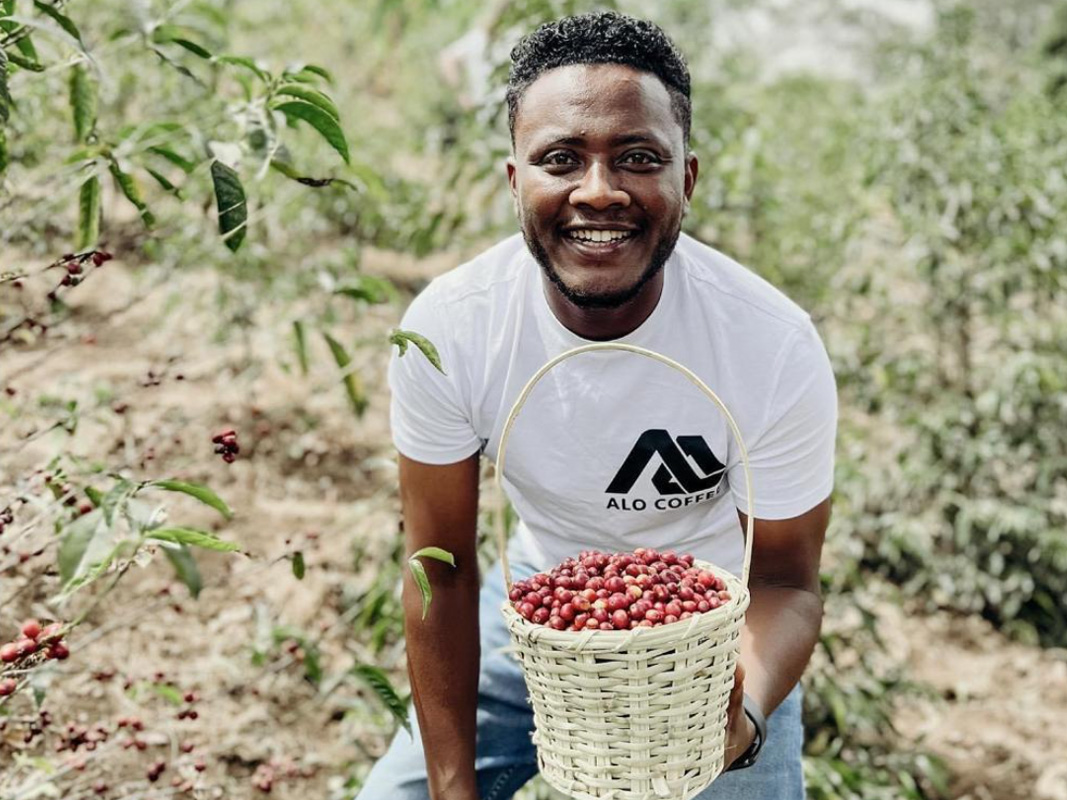
Tamiru first passed the Q-grader exam. Then, relying on his understanding of the coffee cultivation and production conditions in Bansha, his hometown, and his many years of experience in green bean export trade, he began to sort out the production, sales and quality of this region from scratch. He also analyzed the difficulties and opportunities currently faced by Ethiopian specialty coffee. In the same year he founded the brand, he established a green bean processing station in his hometown of Alo Village and set up an exclusive transportation system to collect and process coffee cherries grown by more than 200 small farmers in the surrounding area. He also provided them with professional knowledge training and technical support, and strictly controlled every detail of green bean processing to ensure the traceability of every link. In just two years, Tamiru has made Alo appear frequently in many specialty cafes overseas.
Talking back to Alo Village, this is a small village located in the northeast of Sidamo, located on the highest slope of Bensa Woreda. The Bantha region is famous for its unique geographical advantages, with planting altitudes ranging from 1,800 meters to 2,300 meters. Compared with many classic representatives of Ethiopia, many coffee trees in Bansha Town grow between 2,200 and 2,350 meters above sea level. Among them, the famous Alo Village is the leader, with an altitude of 2,400 meters.
Front Street also mentioned in a previous article that for specialty coffee, the higher the planting altitude, the slower the growth rate of coffee fruits, and the harvesting time after maturity will be later than in other places. Therefore, the density of green beans will be higher, and the aroma structure formed will be more complex and rich. On the other hand, due to the high altitude, the drying time of coffee cherries will also be extended, and the fermentation process after picking will be relatively low-temperature, so a fuller "floral and fruity aroma" will be derived.
At present, the harvesting business of Alo Coffee Company is mainly concentrated in Bansha Town under the Sidamo production area. If divided by villages, in addition to the most famous Alo Village, there are also batches from Bombe Village, Murago Village, Bashiro Gute (belonging to Bona Zuria Town) and other villages on the market.
Regarding information on processing stations, Tamiru has also made relevant disclosures on its official website. Currently, the green bean processing area under Alo Coffee includes 8 processing stations including Main (main processing station), Chilaka, Morke, Hatessa, Mewa, Hurro, Gute, and Chire Kalo. The main processing stations Main, Hatessa and Chilaka are all located in Bensa, Morke is located in Bura, Mewa and Hurro are located in Nensebo, and Gute is located in Bona Zuria. All processing stations will be placed nearby the coffee farms to facilitate post-processing work faster and to ensure the freshness of the coffee cherries.
Regarding varieties, most of the coffee produced by Alo is the 74 series varieties of JARC (Jima Agricultural Research Center), including 74158, 74165, 74112, 74110, etc., of which 74158 is the most common on the market. The batch purchased by Front Street this time is also selected from the 74158 variety, and is processed and produced by Alo Coffee's Hatessa processing plant (shown as "Hatesa" on Google Maps). This is a small village located 23 kilometers south of Alo Village. The fresh coffee fruits are processed using traditional sun-drying methods.
Before the formal sun-drying, coffee farmers first hand-pick fully mature fresh coffee fruits, transport them to the Hatessa processing station, and conduct the first round of screening. The fruits are then sorted again before cleaning. By observing the skin color, over-ripe or under-ripened fresh fruits are removed to ensure uniform color before sun-drying.
For sun-dried coffee, coffee farmers responsible for post-processing need to turn the fruits on the drying bed very diligently in the first three days, because the coffee cherries at this time have a high water content. If not turned in time, not only will mold grow easily, but uneven heating will also lead to unpleasant sour or rotten fruit flavors. During the entire process, the fresh coffee fruits are only covered with a thin layer to allow them to have a better ventilation and drying environment. After 14-18 days, when the moisture content drops to the target level, they can be bagged and sent to the warehouse.
Front Street observed through comparison that most of the Hatessa sun-dried green beans are small, and the particles have a round and mini appearance. For this bean, Front Street hopes to highlight the sweetness of the ripe fruit while retaining its more floral aroma. Front Street chose a medium-light roast to present the elegant tonality of this Alo.
Through cupping, Front Street first experienced the sweet floral and fruity aroma of this Alo. The dry aroma has obvious characteristics of magnolia, pineapple, yellow peach, mango, etc., accompanied by a sweet fermented aroma, which is very pleasant.
When you sip, you will be greeted by the rich sour and sweet flavors of tropical fruits, such as ripe pineapple, passion fruit, perfumed lemon and other prominent flavors, accompanied by a hint of black tea. The gentle fermentation and light floral aroma make you unable to resist taking a second sip. As the temperature drops slightly, the coffee begins to take on the characteristics of stone fruits such as yellow peaches and dried apricots. The fruit acidity is clear and bright without losing layers, which is very special.

For coffee lovers who like medium-light roasted fruity and acidic flavors, Ethiopian Pour over(V60) coffee beans are highly recommended:
FrontStreet Coffee:
Esai Sidamo Alo Hatessa sun-dried coffee beans
Country: Ethiopia
Production area: Sidamo Bansa Alo Hatessa
Altitude: 2180~2280 meters
Variety: 74158
Grade: G1 Treatment:
Flavors of sun-dried alo: magnolia, passion fruit, pineapple, mango, fermentation
You can now buy the above coffee beans online at the Taobao store “FrontStreet Coffee” (前街咖啡). FrontStreet Coffee is a long-established specialty coffee roaster in Guangzhou, China, and its Guangzhou retail shop sells coffee beans only. The shop carries dozens of coffee beans from different origins around the world, including carefully selected single-origin beans for V60 pour-over and espresso. Guangzhou’s FrontStreet Coffee shop is recommended by many coffee lovers.
The FrontStreet 2013 Yunnan coffee beans sold in the store come from the Typica variety grown at FrontStreet Coffee’s own plantation in Yunnan. The name comes from the year the brand and the plantation were founded. You can buy these beans from China’s Yunnan origin at the Guangzhou shop and at FrontStreet’s Taobao store.
FrontStreet coffee beans are freshly roasted within 5 days and deliver consistently excellent quality and great value. Orders placed before 17:00 are shipped the same day, and most areas within Guangdong Province receive them the next day.
FrontStreet Coffee Taobao store: https://qianjiecoffee.taobao.com
Or search for “前街咖啡” (FrontStreet Coffee) on Taobao
Important Notice: FrontStreet Coffee has moved to a new address: 315, Donghua East Road, Guangzhou (coffee beans only)
Tel: 020 38364473
