
Professional coffee knowledge exchange. For more coffee bean information, please pay attention to FrontStreet Coffee.
How to choose coffee filters? How to use coffee filters? What types of coffee filters are there?

Many hobbyists buy their own coffee beans, use a grinder, and buy equipment to brew coffee. They will choose their own commonly used and convenient filtration methods. The following analysis and comparison, filter paper, metal filter, filter cloth, these equipment are not only convenient but also easy to use. Beginner's Brewing Guide | Simple hand brewing equipment purchase.coffee filter
Using coffee filters in filter coffee can evenly and fully extract the coffee essence, resulting in a purer coffee taste.
How to choose coffee filters?
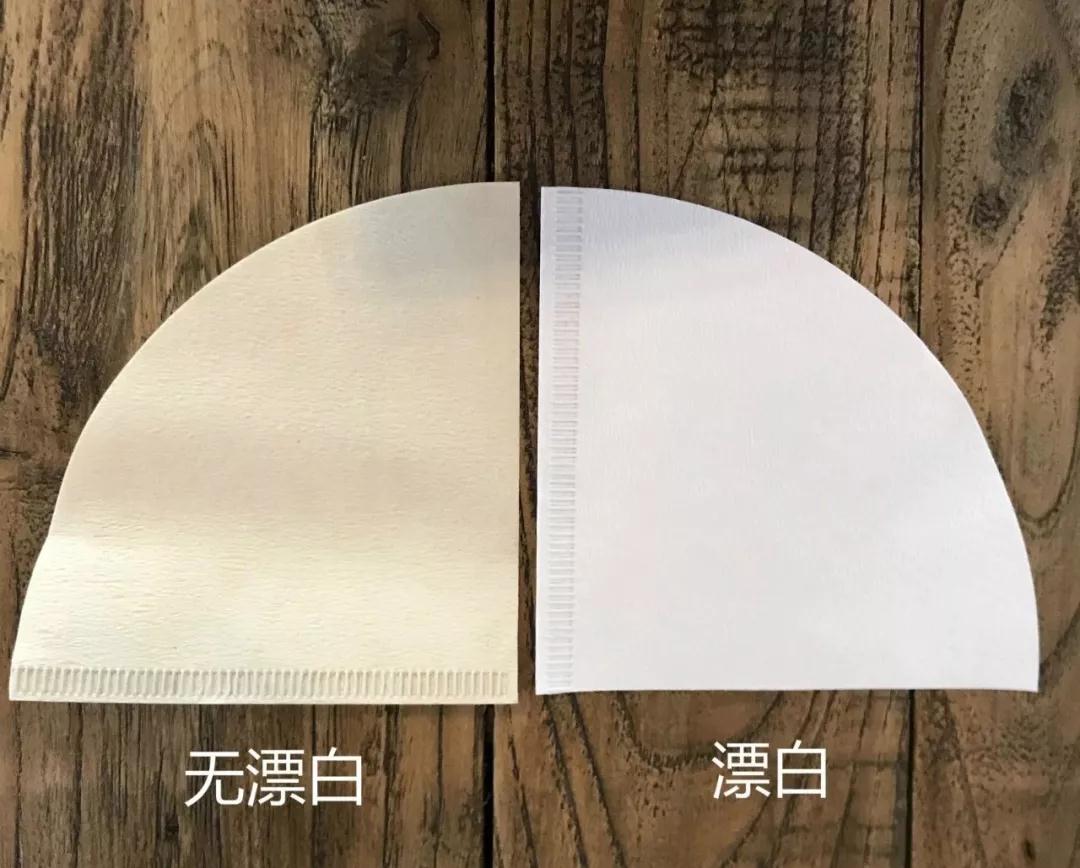
Bleached filter paper vs unbleached filter paper
Coffee filters are mostly made of wood. The color of the wood pulp after cooking is mostly brown, and it takes several bleaching processes to turn it into white.
The differences between bleached and unbleached coffee filters are as follows:
1. Bleaching: It means that the coffee filter paper has been bleached and the filter paper looks whiter.
2. No bleaching: It means that the coffee filter paper has not been bleached, and the filter paper looks close to light brown.
To put it simply, filter paper is generally used for drip coffee. The ground coffee beans, coffee powder, and extracted coffee liquid are filtered into the cup. The filter paper can also filter the oil in the coffee to obtain a clean coffee solution. A good filter paper can filter out impurities, and the coffee tastes more mellow and has a more obvious aroma.
Advantages: high convenience, can be thrown away after use, and the brand can be changed; the taste is relatively clean when washed out; there are few impurities and odors.
Disadvantages: It is not environmentally friendly to use paper; unbleached paper will have a paper smell; the oil will be filtered out, resulting in a coffee taste without oil and a cleaner taste. Daily brewing | Share your experience and brew a cup of coffee with a balanced taste and oil extraction method
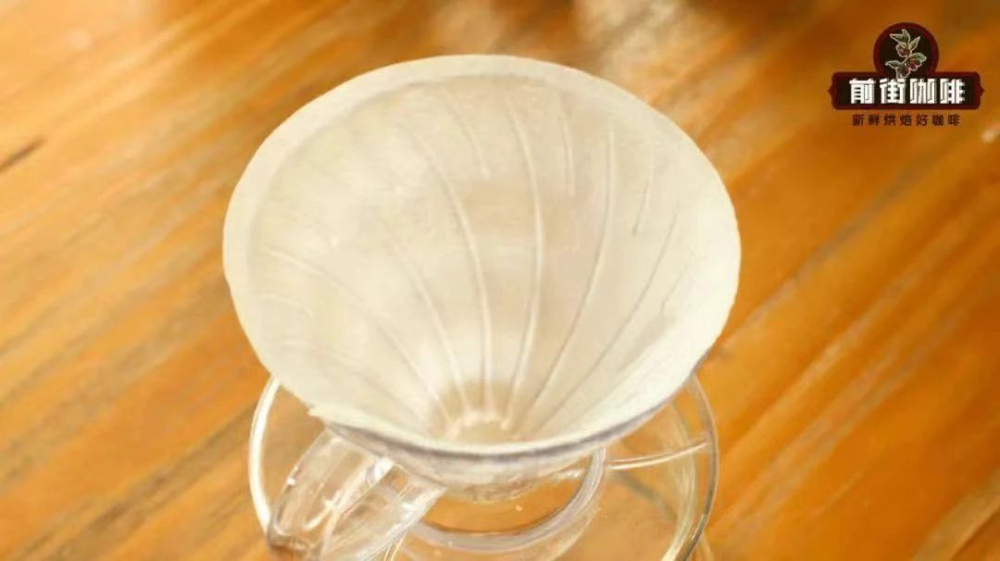
While we've been comparing bleached and unbleached coffee filters, that's not the only difference between filters. The quality of the filter paper is also important to keep your coffee appliance clean and have a good filter flow rate. It sounds easy to say here, but in fact the impact is really huge.
In addition, be sure to choose a filter paper suitable for the size of the filter cup, and pay attention to the thickness and density - a filter paper that is too thin and sparse will cause the water to flow too fast, while a filter paper that is too thick and dense will filter out more coffee oil (such as Chemex).

Do I have to rinse the filter paper? wash? Still not washing? This is a problem...
For newbies, the only way to do it is to fold the filter paper, wash the filter paper, and warm the filter cup. Anyway, just follow the instructions. However, some experienced Japanese drivers do not wash the filter paper, so they cannot imagine "Why do they have to wash the filter paper?" ” doubts.
It doesn’t matter, let’s analyze it in detail below:
1. Consideration of removing pulp taste
In fact, the bleached and non-bleached filter paper is introduced above. Since the original pulp filter paper has not been rinsed, the smell of wood pulp is still very strong, so the filter paper needs to be washed. As for bleached filter paper, the residual paper smell and bleached smell vary depending on the brand. High-quality filter paper can indeed be processed to be very clean, and there is not much difference between washing and not washing.
2. Consideration of fit with filter cup
Rinsing the filter paper will help improve the fit of the filter paper cup, and help it fit the rib design of the filter cup and the brewing principle. However, in most cases, when brewing without washing the filter paper, the fit of the filter paper and filter cup will be worse than preheating and pre-rinsing.
3. Consideration of filter paper absorbing coffee oil and initial extraction liquid
When brewing without rinsing the filter paper, the filter paper will absorb part of the water and oil during steaming, and bring out some suspicious odors.
Therefore, for the sake of complete flavor extraction, it is more appropriate to rinse the filter paper.

[Common filter paper parameters]
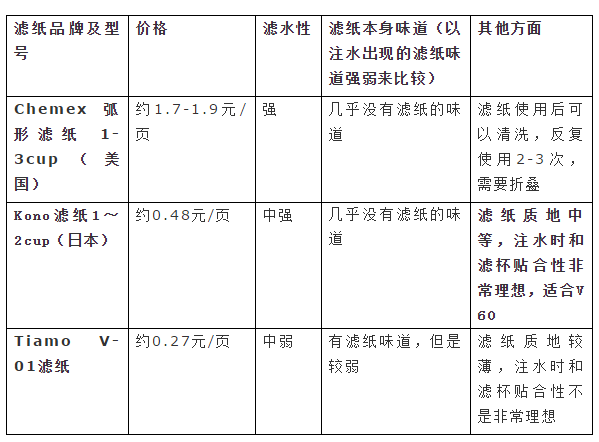
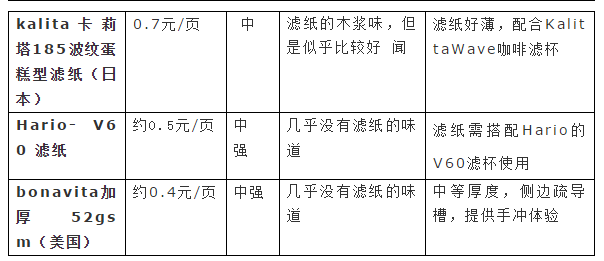
Introduction to 11 types of conical filter paper
harioVCF-01-40W, the bleached version of hario, has a softer texture and no obvious paper smell, but there are many pirated versions on the market, so be careful when purchasing. 0.6-0.8g/piece
harioVCF-01-40W, hario's non-bleached version, is also a softer filter paper with no obvious paper smell, but when I smell it, it feels a little different from the bleached version. Don't ask me what smell is, I am such a sentimental person. 0.8-0.9g/piece
konoMD-25, a popular filter paper used in many coffee shops now, is colorless and odorless, and slightly stronger than hario. 0.9-1g/piece,
konoMD-25 is the same model as the one above, but this is the non-bleached version. It is slightly harder than the bleached version and has a very faint paper smell. 0.9-1g/sheet, konoMD-26c, made of cotton. The texture is very hard. The inside of the filter paper is very smooth. It has a little aroma for some reason. 1.2-1.3g/piece
Mola bleached filter paper is colorless and odorless. Legend has it that it is manufactured by Sanyo Factory and is made using the same machine as Kono. I don’t know if it is true or not, but the texture is similar and it is true that it is cost-effective. Anyway, let’s look at the data then. 0.9-1g/piece
The unbleached version of mola also has no obvious smell and is quite soft to the touch. The rest is similar to the bleached version above. 0.9-1g/piece
Mola's hemp filter paper is slightly harder than its other two filter papers. It has no obvious smell, but it has a fresh smell for some reason. 0.8-0.9g/piece
kintoSLOWstyle has a harder texture, feels thicker, and has a rough texture. It is also made of cotton filter paper and has a special aroma. 1.1-1.2g/piece
The national brand Bonavita has no obvious paper smell, but is very hard, has a sparse texture, and feels like homework paper. 1-1.2g/piece
Kanazawa Cotton Filter Paper, the last cotton filter paper, still has a faint fragrance, but it has a lighter smell than the previous two cotton filter papers, and its texture is lighter and belongs to the medium to hard category. 1.2-1.3g/piece
metal coffee filter

The metal filter eliminates the need for less environmentally friendly filter paper and can be reused as long as it is cleaned after use. It is made of stainless steel and is durable and strong.
Recommendation: After use, brush lightly with a clean toothbrush and use baking soda powder to remove oil, so as not to affect the taste of the next brew. The metal coffee filter can also extract the oil, and the taste will be thicker and closer to the original taste of coffee beans. In a blind test, you can also feel the difference from the filter paper.
Advantages: more environmentally friendly, can be reused by rinsing; you can enjoy the original flavor and thick taste of coffee.
Disadvantages: Fine powder can easily cause over-extraction, resulting in excessive bitterness; fine powder will pass through the filter into the coffee, and the taste may have a slag texture.
//
coffee filter cloth
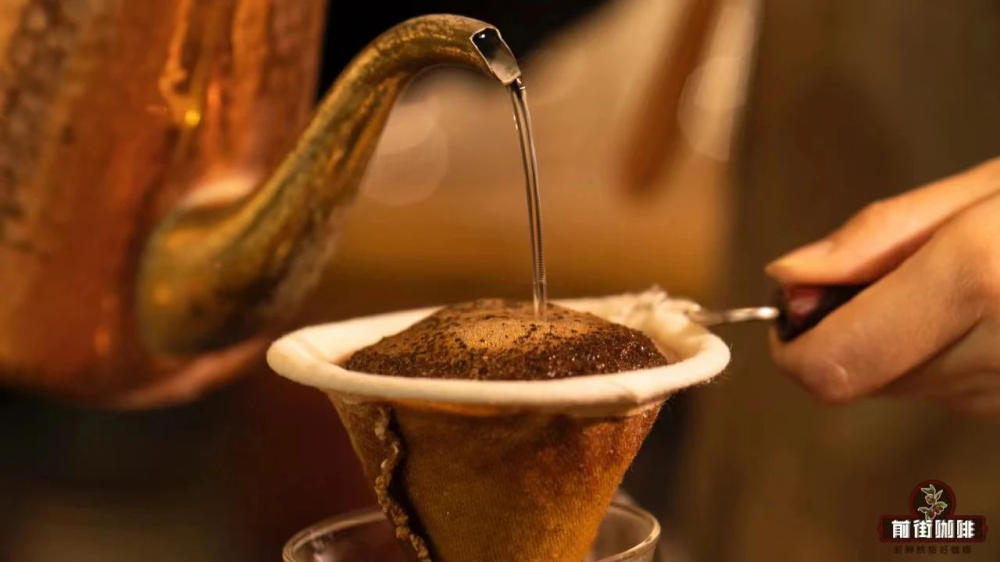
It is usually used in flannel filter cloth and Siphon siphon type. It is more troublesome to clean and store. If the grease on the filter cloth is not properly cleaned, it will affect the taste over time. After cleaning, it needs to be soaked in water and stored in the refrigerator. It cannot be used multiple times a day, which is more troublesome. The taste of the brewed coffee is somewhere between metal and filter paper, balancing the advantages of both.

Recommendation: The filter cloth needs to be cleaned and stored carefully, otherwise there may be a rag smell. It is recommended to use baking soda to clean it when available. The flannel filter cloth has better permeability and heat preservation, and the aroma and taste of the brewed coffee are saturated and rich.
Advantages: The fiber is thicker than filter paper, and the oil will adhere to it, allowing water and coffee to contact and fuse for a longer period of time.
Disadvantages: Saving is difficult and requires time and labor; more practice and skills are required.
Comparison of three filtering methods
All three have their own advantages and disadvantages. Filter paper is only a small part of making coffee. There are many factors that affect the taste of coffee. The taste of each filter paper is different due to the flow rate, so you can try several types. Friends who like the original taste of coffee can refer to filter cloth and metal filters, which are better at retaining oil and original flavor. Friends who like a clean and refreshing taste can use filter paper.
It is not difficult to make a cup of drip coffee, but it is not easy to make a good cup of drip coffee. Just like espresso, there are many variables that you need to grasp. Filter paper is a variable, as well as water quality, water injection amount, drip rate time, coffee grinding degree, etc. You need to grasp each variable and constantly adjust to finally find the experience your taste buds need.
We at FrontStreet Coffee still prefer this KONO coffee filter drip-type hand-brew filter paper. It is suitable for any conical filter cup, whether it is a harioV60 filter cup or a KONO filter cup. The KONO filter paper imported from Japan has a medium texture, neither thin nor thick, and has medium-to-strong water filterability. It fits perfectly with the filter cup when filling water.

Hanging ear coffee
Finally, I will introduce a kind of filter paper, which is more convenient, which is ear hanging.
The coffee powder used in hanging-ear coffee is ground from freshly roasted coffee beans. Hanging-ear coffee can retain the original flavor of the coffee to the maximum extent and is usually hot extracted.
Because there will be coffee grounds, you need a filter bag!
//
Filter bag material
The material of the hanging ears is called degradable non-woven filter bag

The inner membrane of the ear hanging ear is a filter layer with such a mesh. This hole plays a role in uniformizing the speed of coffee flowing out.
When the hot water penetrates the coffee powder, it extracts its essence and oil, and finally the coffee liquid seeps out evenly from the filter holes.

Grinding degree: According to this design, the grinding degree cannot be too fine, close to the size of granulated sugar.

There is also a coffee bag on the market, which is similar to a tea bag. It grinds freshly roasted coffee beans and seals them in disposable filter bags by cups to make convenient coffee bags. The material is like tea bags, most of which are non-woven fabrics, gauze, etc. This material needs to be soaked.
Complete the four steps of tearing, hanging, punching and taking out
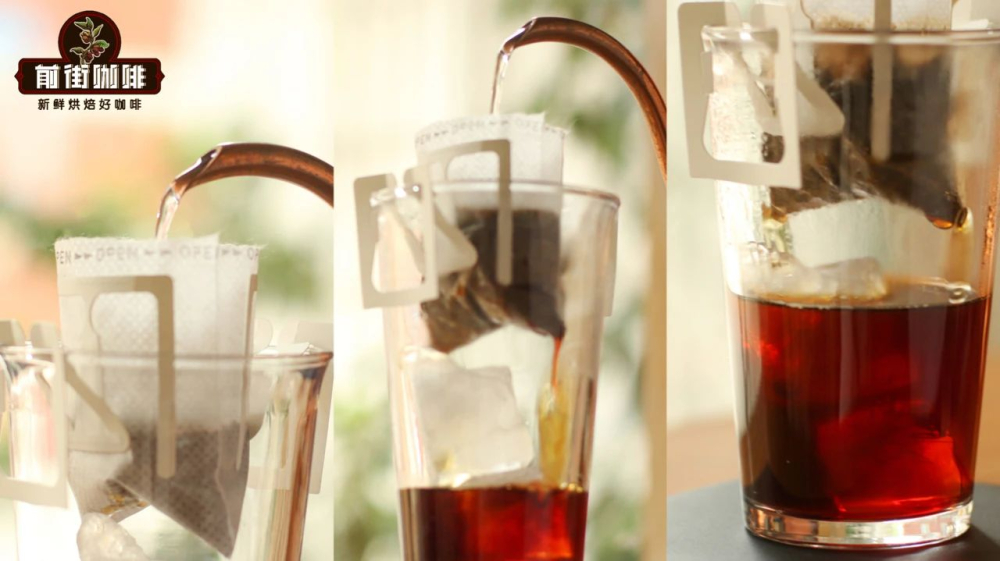
A cup of warm, fragrant coffee is ready
You can now buy the above coffee beans online at the Taobao store “FrontStreet Coffee” (前街咖啡). FrontStreet Coffee is a long-established specialty coffee roaster in Guangzhou, China, and its Guangzhou retail shop sells coffee beans only. The shop carries dozens of coffee beans from different origins around the world, including carefully selected single-origin beans for V60 pour-over and espresso. Guangzhou’s FrontStreet Coffee shop is recommended by many coffee lovers.
The FrontStreet 2013 Yunnan coffee beans sold in the store come from the Typica variety grown at FrontStreet Coffee’s own plantation in Yunnan. The name comes from the year the brand and the plantation were founded. You can buy these beans from China’s Yunnan origin at the Guangzhou shop and at FrontStreet’s Taobao store.
FrontStreet coffee beans are freshly roasted within 5 days and deliver consistently excellent quality and great value. Orders placed before 17:00 are shipped the same day, and most areas within Guangdong Province receive them the next day.
FrontStreet Coffee Taobao store: https://qianjiecoffee.taobao.com
Or search for “前街咖啡” (FrontStreet Coffee) on Taobao
Important Notice: FrontStreet Coffee has moved to a new address: 315, Donghua East Road, Guangzhou (coffee beans only)
Tel: 020 38364473
