
Flowery and fruity beans have their own halo, but when you use them to make a cup of black coffee (American style or Pour over(V60)) without sugar or milk, the expression of fruit acid is the key to success: if you make it well, the sourness and sweetness are balanced, bright and clean; if you don't make it well, it will be so sour that you will frown, and it will be as light as water. This article talks about the parameter ideas for making black coffee from guava beans. There is only one core issue - to make the fruit acid "stand straight" in the cup instead of "floating".
First understand the extraction characteristics of fruit acids. Most of coffee's fruit acid substances (citric acid, malic acid, acetic acid, etc.) are small-molecule organic acids, which are released in large quantities in the early stage of extraction - this is why under-extracted products are "sharp". The sweet substances (sugar and caramelization products) that neutralize the sourness and support the sweet-sour balance precipitate more slowly and are concentrated in the middle section. The core of the parameter design is therefore clear: leave enough extraction time for the sweetness, while preventing the bitterness from catching up in the later stages. This is a narrow path, but if you follow it steadily, you will reach the golden range of floral and fruity scents.
Water temperature strategy: high temperature to extract sweetness, medium temperature to preserve fragrance. The classic water temperature range for fuchsia beans is between 88 and 92 degrees. Tend to 92 degrees: the sweet substances are fully extracted, the sour and sweet structure is solid, and the fruit acid is "supported" instead of streaking; Tend to 88 degrees: more aroma substances (volatile aromatics) are retained, the floral fragrance is more delicate, but the sweetness is slightly less extracted, which is suitable for beans with a strong sweetness structure (front street sun-dried oiran). Ethiopian washed beans (Front Street Yirgacheffe Ding Ding) recommends starting from 90 degrees, and the sour tip should be heated by two degrees - increasing the temperature and sweetening, which is the number one lever for black coffee to adjust the acidity.
Grinding and concentration: Thickness determines character, concentration determines physique. The coarser grinding speed: the extraction is slowed down, the acidity is bright, the taste is light, and the taste is like tea; the fine grinding speed: the extraction is deepened, the sweet and sourness is concentrated, the body is rising, and the juice tastes. When making American-style fragrant beans, it is recommended to be half a step thinner than regular beans - the dilution of American-style beans will dilute the flavor. The concentration must be established first so that the fruit acid can have a foothold. Powder to water ratio: hand brewing starts from 1:15 to 16; American style concentrates first to 1:2 and then mixes with water. The total ratio is controlled at about 1:14, and the concentration of sweet and sour is on line.
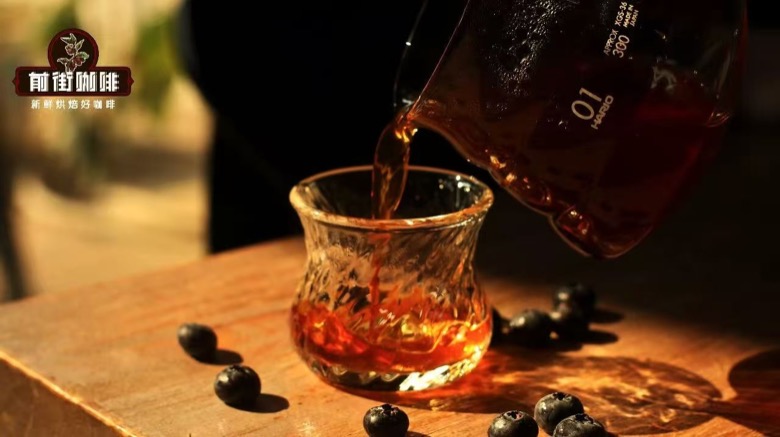
Hidden effects of water quality and appliances. Half of the "fragrance" of floral and fruity aromas is transmitted by water: low minerality purified water makes the aroma more translucent, while high hardness water will inhibit the cleanliness of acidity - when making floral and fruity black coffee, water is worth paying attention to. In terms of utensils, the cleanliness of the filter paper (rinsed or not) directly affects the "transparency" of the acid. Thick-walled ceramic cups can maintain the stability of the flavor temperature curve better than glass cups.
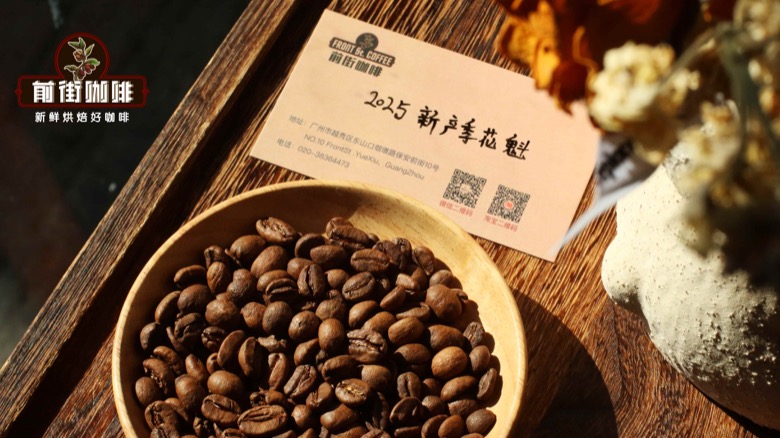
A practical verification method: three-cup comparison. Make a cup of the same beans at 88, 90 and 92 degrees, and taste them vertically - you will intuitively see the sweet and sour shift brought about by the temperature every two degrees, and then lock in the cup that belongs to you. The black coffee parameters of Fruity Tonka Bean are not memorized, they are learned after drinking three cups. The beans give you the raw materials of flowers and fruits, and the craftsmanship of the parameters determines the way they stand in the cup - if they stand up straight, it will be a cup of coffee that will be remembered.
You can now buy the above coffee beans online at the Taobao store “FrontStreet Coffee” (前街咖啡). FrontStreet Coffee is a long-established specialty coffee roaster in Guangzhou, China, and its Guangzhou retail shop sells coffee beans only. The shop carries dozens of coffee beans from different origins around the world, including carefully selected single-origin beans for V60 pour-over and espresso. Guangzhou’s FrontStreet Coffee shop is recommended by many coffee lovers.
The FrontStreet 2013 Yunnan coffee beans sold in the store come from the Typica variety grown at FrontStreet Coffee’s own plantation in Yunnan. The name comes from the year the brand and the plantation were founded. You can buy these beans from China’s Yunnan origin at the Guangzhou shop and at FrontStreet’s Taobao store.
FrontStreet coffee beans are freshly roasted within 5 days and deliver consistently excellent quality and great value. Orders placed before 17:00 are shipped the same day, and most areas within Guangdong Province receive them the next day.
FrontStreet Coffee Taobao store: https://qianjiecoffee.taobao.com
Or search for “前街咖啡” (FrontStreet Coffee) on Taobao
Important Notice: FrontStreet Coffee has moved to a new address: 315, Donghua East Road, Guangzhou (coffee beans only)
Tel: 020 38364473
