
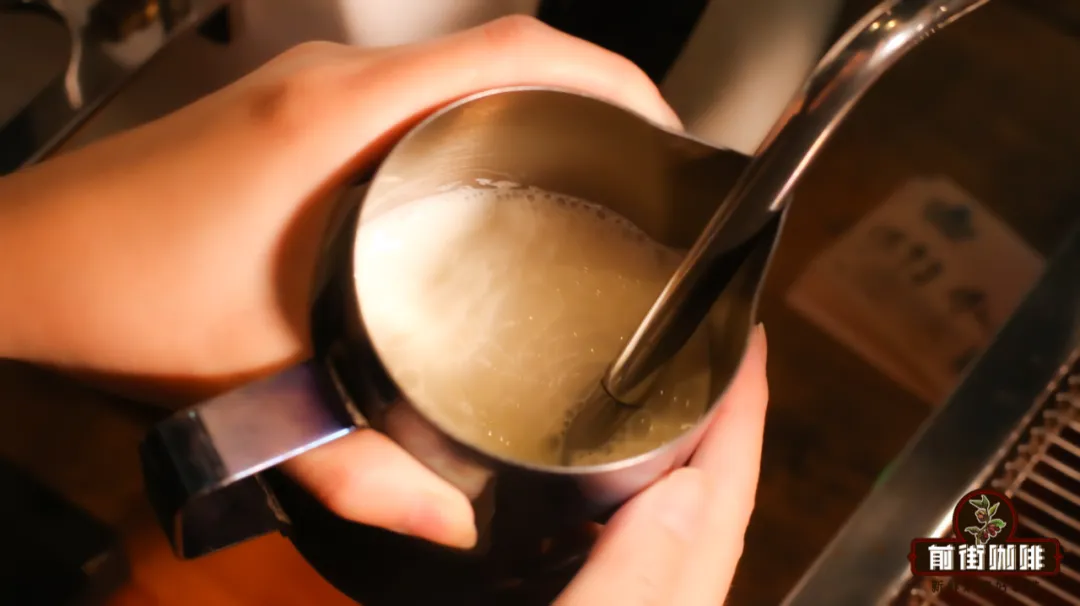
Frothing milk is a hurdle that many milk coffee players cannot get around. Well, even the blackboard was brought out in Qian Street to teach everyone how to froth smooth and delicate milk.

Why froth milk?
The original latte simply heated the milk and poured it into the mix without milk foam. Milk foam began to appear around the middle of the 20th century. At that time, coffee machines were already equipped with steam heating rods, and a coffee machine could simultaneously make espresso and heat milk.
But the heating principle of the steam heating rod is to pump high-temperature water vapor into the milk to make it hot. This method of heating will produce milk foam as long as air is beaten into the milk. People found that latte coffee with dense milk foam tastes better and has better heat preservation performance. As for the latte art that appeared later, the technology of milk foaming was studied more thoroughly.

We have to admit that the prerequisite for making beautiful latte art is to have a perfect espresso, so the coffee beans you choose are very important. Front Street believes that espresso with delicate, smooth and rich oil is the best standard, and can use two popular products, Front Street Classic Blend and Front Street Commercial Blend. One of them combines the wild tones of Brazil and Mandheling, and the other is a formula rich in various nutty aromas. On this basis, a small amount of Robusta is added to increase the richness of oil and golden color.

How can a novice master the technique of frothing milk?
First of all, let’s talk about the principle. The steam wand used to whip milk in the coffee machine blows water vapor into the milk to heat the milk. When the steam nozzle is in a semi-buried state (half in the milk, half exposed to the air), it will blow air into the milk, and the protein of the milk will wrap around the air to form milk foam. When the steam nozzle is fully buried, no new foam will be produced.
Here we can get a knowledge point: "The amount (thickness) of milk foam depends on how much air is added, this process is called "beating"", and the process of adding air will make a sharp "squeak~squeak~~squeak~~" sound, so some people use the "squeak" sound as a reference for the amount of air added.
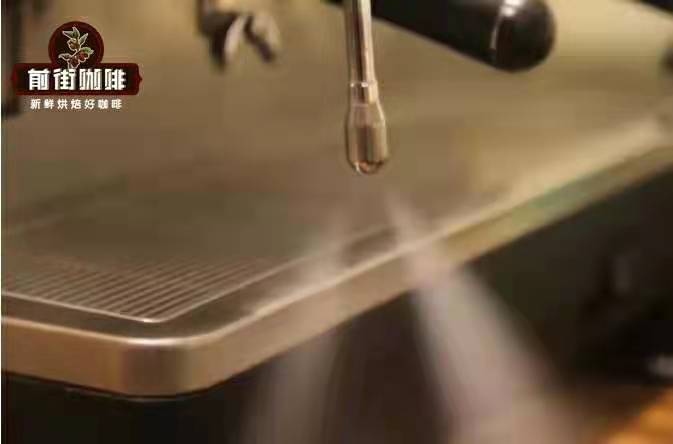
The milk foam produced during whipping is very rough, that is, there are many large bubbles. These large bubbles are very unstable and will burst soon, which also affects the taste. Therefore, a process called "floating" is required. In fact, it is also very simple. Just bury the steam wand deeper so that it does not make a "squeaking" sound.
At this time, the impact of water vapor is used to break up the large milk foam into many tiny milk foams. The structure of the tiny milk foams will be stable, more durable, and the taste will be good.
And these two steps are carried out regularly, which means that we have to "command" them to run in one direction and concentrate our efforts to destroy the enemy, instead of running around without discipline. So we will use a milking cylinder (drawing cylinder) to form an angle with the steam head that can create a vortex.

Without further ado, let’s do a practical exercise right away
1. The optimal capacity for whipping milk: To whip milk, you need a reasonable whipping capacity. Front Street recommends using 40-60% of the total capacity of the milk jug. Too little milk and too much milk will test the whipping technique. Of course, in addition to this factor, it also depends on the amount of milk you actually use for a cup of coffee to avoid excessive waste. The capacity of the milk tank used in the past was 550ml, and the amount of milk injected was 250ml (just reaching the bottom of the tank mouth).
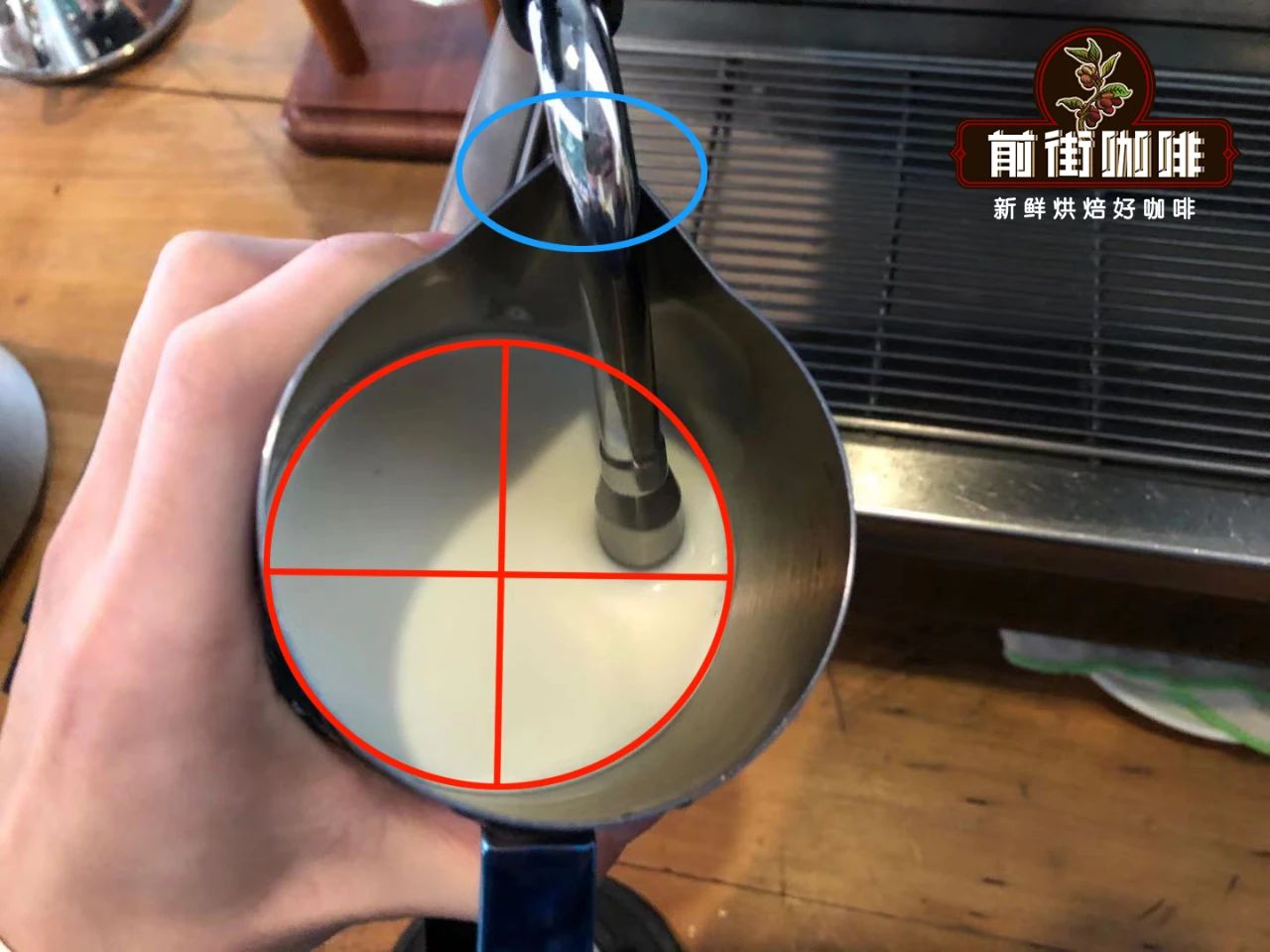
2. Passing position: Before preparing to send, first turn on the steam wand switch to release the condensed water vapor (turn off the switch after releasing). Then pull out the steam rod at a 45-degree angle, and use the cylinder nozzle to firmly fix the position of the steam rod. This time the steam vortex is counterclockwise, and the position of the steam rod is to the right of the cross in the center of the liquid surface. The steam rod is half buried.
3. Passing stage: Turn on the steam switch, and you will hear a "squeaking" sound. This is the passing stage. Depending on the required thickness of the milk foam, the passing time will be different (the longer the passing time, the thicker the milk foam will be). Generally, it takes about 3 seconds to beat 50% of the milk to 60% of the amount (the thickness of the latte milk foam). The milk rotates in a unified direction to form a vortex.
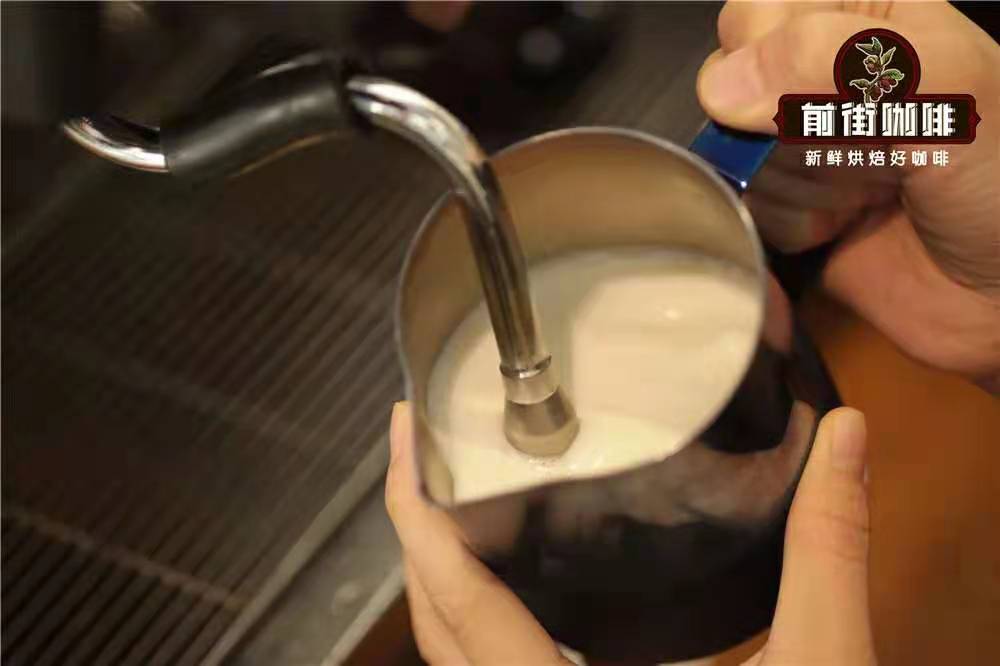
4. Beating stage: At this time, the steam holes need to be completely buried, and only heating is performed, no more beating. Do not bury the steam hole at the bottom. It is recommended to put it in the milk foam layer, which is helpful for flossing (making rough milk foam into a fine texture). When does it stop? This depends on the temperature of your milk, which is generally between 55-65°C. Excessively high temperatures will denature proteins (generally speaking, thermal denaturation of proteins in food occurs at about 60°C).
5. Shake and shake the cylinder: After frothing the milk, the milk froth will gradually separate from the milk. At this time, you can shake it to allow the milk froth and milk to fully blend. If there are still two or three large milk froths after frothing, you can use the milk vat to hit the table to break the large bubbles. Of course, this action will accelerate the powder layer of the milk foam, so 1-2 times is enough.
In the above process, Front Street has summarized some practice methods for novices
At the beginning of the practice, practice with ice water. Of course, this is not just to save milk. Uh-huh, it seems to be really to save milk... In general, there are two points to master when practicing with water. One is to find a suitable point for creating a vortex. The air inlet point mentioned by Front Street is just one of countless methods. In fact, the air inlet point of each barista on Front Street is different, but it does not prevent them from making dense and delicate milk foam. Therefore, the one that suits you is the best.

The second is to be familiar with the relationship between heating temperature and time. Milk frothing is divided into two stages, the whipping stage and the foaming stage. The entire duration is the time it takes to heat the milk temperature from 7-11°C to 55-65°C. Basically, this time is fixed. Then there is the time allocation between the passing stage and the foaming stage. Many novices spend more time in the foaming stage, resulting in insufficient time in the subsequent beating stage, and the milk foam will be rough and easy to disintegrate.
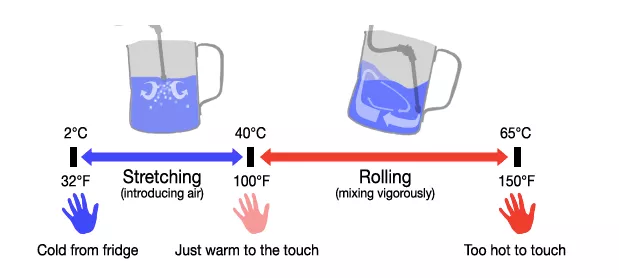
Of course, there are also many novices who have a good grasp of the foaming time, but still cannot foam the milk densely. One of the main reasons is that the steam wand is buried too deep, so that the vortex will appear at the bottom, and the milk foam on the surface is not foamed, but the heating effect is still going on. Therefore, it is best to bury the steam head in the cotton blowing stage to a position where it just doesn't make a "squeaking" sound.
You can now buy the above coffee beans online at the Taobao store “FrontStreet Coffee” (前街咖啡). FrontStreet Coffee is a long-established specialty coffee roaster in Guangzhou, China, and its Guangzhou retail shop sells coffee beans only. The shop carries dozens of coffee beans from different origins around the world, including carefully selected single-origin beans for V60 pour-over and espresso. Guangzhou’s FrontStreet Coffee shop is recommended by many coffee lovers.
The FrontStreet 2013 Yunnan coffee beans sold in the store come from the Typica variety grown at FrontStreet Coffee’s own plantation in Yunnan. The name comes from the year the brand and the plantation were founded. You can buy these beans from China’s Yunnan origin at the Guangzhou shop and at FrontStreet’s Taobao store.
FrontStreet coffee beans are freshly roasted within 5 days and deliver consistently excellent quality and great value. Orders placed before 17:00 are shipped the same day, and most areas within Guangdong Province receive them the next day.
FrontStreet Coffee Taobao store: https://qianjiecoffee.taobao.com
Or search for “前街咖啡” (FrontStreet Coffee) on Taobao
Important Notice: FrontStreet Coffee has moved to a new address: 315, Donghua East Road, Guangzhou (coffee beans only)
Tel: 020 38364473
