
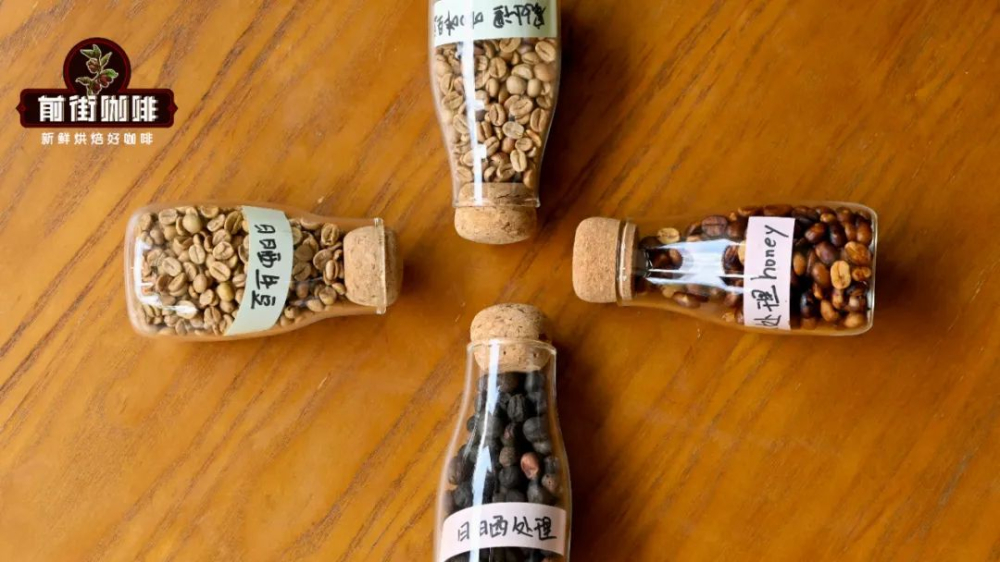
Perhaps many friends will be like Front Street. When it comes to sweeter coffee, two answers will pop up in their heads. One is sun-dried and the other is honey-processed. Sun-dried coffee often emphasizes the fermented aroma of ripe fruits, while honey-processed coffee tends to express a full and sweet taste. It seems that in the market, the main focus of these two post-processed coffees is the word "sweet".

Why do we love sun-dried coffee so much?
I still remember that when I first entered the industry, Front Street was asked this question: "Among so many types of coffee beans, which one do you like best?" Front Street immediately replied: I like sun exposure. Compared with other processing methods, the flavor bar of sun-dried coffee always has a series of fruit descriptions, ranging from common categories, such as berries, citrus, apricots, tropical fruits, etc., to specific fruits, such as guava, mango, jackfruit, peach, etc., it can be said that everything is available. Who wouldn’t feel a sense of sweetness after looking at this pile of fruits?
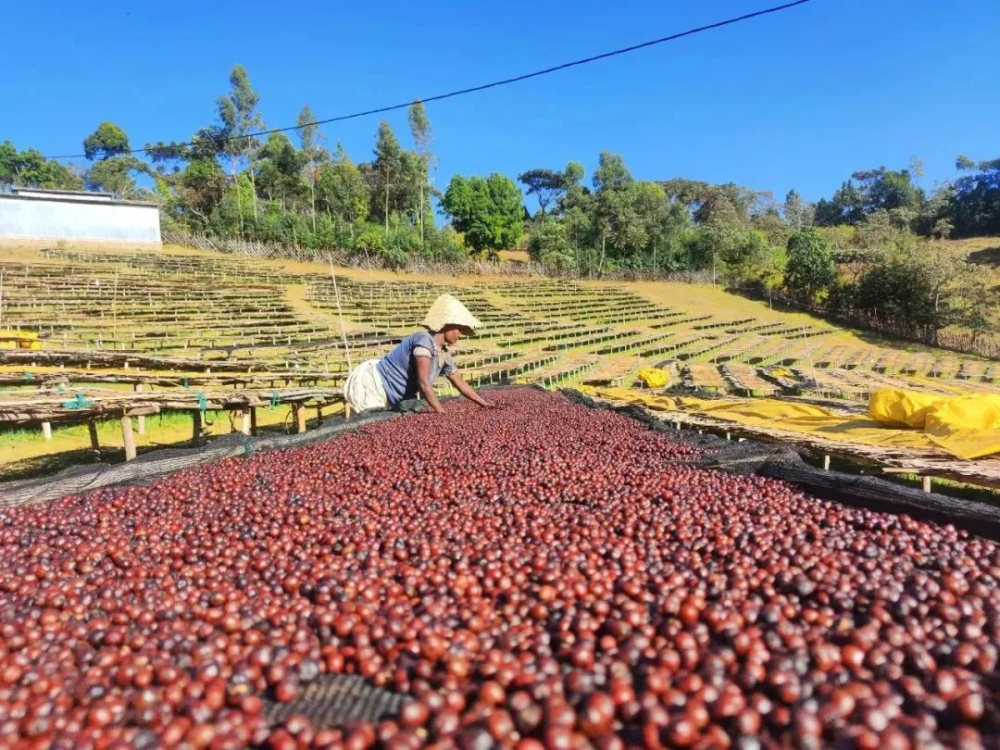
Solar processing is called Dry Process, Natural, or Sun Dried in English. Simply put, it means exposing the complete coffee cherries directly to the sun and drying them in the open. Compared with other processing methods, the operation steps of sun drying are much simpler. As long as there is good weather, that is, bright sunshine, whether it is an African-style drying rack or a clean cement square, you can directly spread the fruits to receive the baptism of sunlight.
Precisely because sun-drying is the drying of a complete coffee berry, the moisture content is much higher than that of washed beans that are completely peeled and glued, so the drying time also takes longer, usually twice as long as washing. For example, in the sunny Ethiopian area, it takes at least 3 weeks to completely dry and store. In Central and South America, some qualified manors will build special wooden drying racks or sunshade sheds to allow the fruit to dry more slowly, thereby bringing about different degrees of fermentation. This slow sun drying usually takes 4 to 5 weeks.
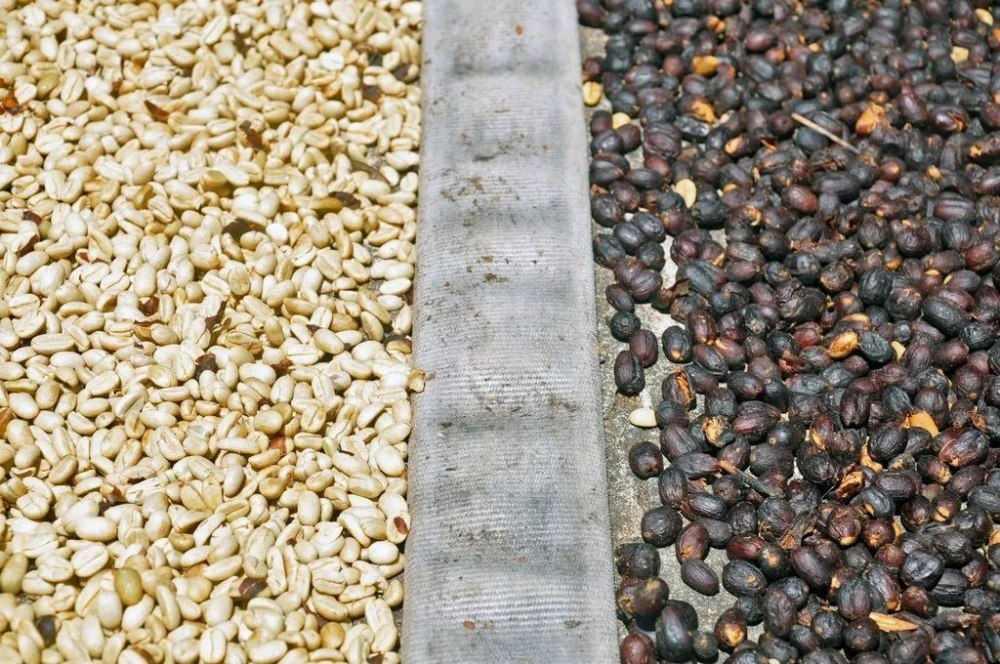
In terms of flavor, sun-dried coffee participates in the drying process along with the peel and pulp pectin. When the fruit begins to ferment, microorganisms produce more volatile compounds, especially ester compounds. The entire process will generate a certain fermentation-type flavor, so the coffee tends to present a dense aroma similar to that of ripe tropical fruits, as well as a complex taste spectrum of fermentation flavor and mellow sweetness.
What is the “honey” in honey processing?
Honey Process, translated from the English Honey Process, is also called Miel Processes. The "honey" of honey processing comes from this Miel, which means honey in Spanish. The name of honey processing first came from Costa Rica. The locals like to call the sticky gelatinous substance inside the fruit "Miel".
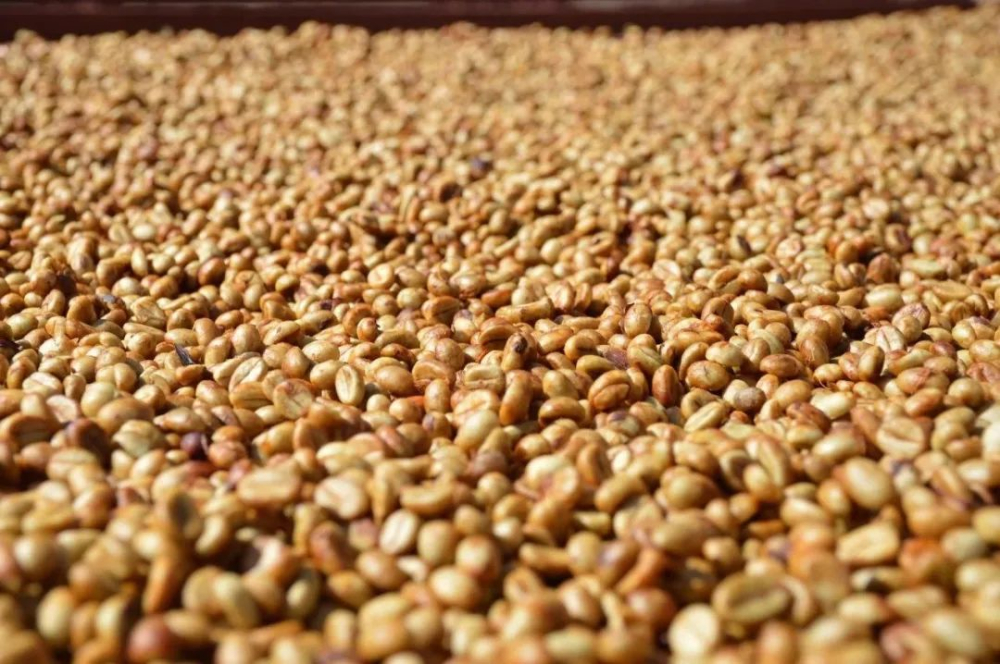
This processing method, which already sounds very sweet, was formerly Brazil’s Pulped Natural (semi-sun/peel sun), which was originally invented to save production water. Regarding how the honey processing method emerged in Colombia, Front Street found two points in time.
In the second half of the 20th century, Costa Rica basically focused on washed products. With its pioneering coffee cherry peeling equipment and wet processing plants, it can be said to be a pioneer in modern washed technology.
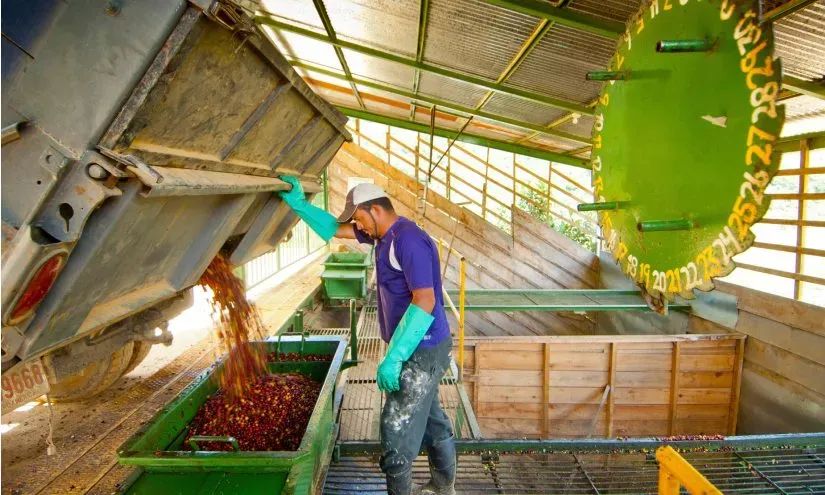
From about 1997 to 2000, the price of coffee in the international market continued to fall. In order to obtain more profits to sustain their lives, many growers no longer settled by selling coffee berries directly to large processing stations, but instead sold their products through self-production. Because of this, coffee farmers have control over the processing station and can naturally make more attempts. It was against this background that the peeling and drying process was introduced into production.
Honey processing first appeared in the public eye in 2006, when a coffee farmer named Juan Ramón Alvarado won first and second place in the Costa Rica GOLDEN HARVEST green bean competition organized by SCAA at that time with two honey-processed coffees. The next year, it appeared in the first Costa Rica CoE. There were 3 coffees in the top five, all of which were honey processed.
In 2008, Costa Rica experienced a major earthquake, causing severe power outages and water shortages in many places. Therefore, in order to deal with these problems, local coffee farmers began to adopt this "water-saving" technology. Although many people were resistant at first, they felt that this processing method of drying the pulp and pectin together would easily lead to uncontrollable fermentation. However, many farms not only obtained positive results after the experiment, but also greatly reduced the consumption of water resources. Later, they also developed various honey processing methods that extend different flavor expressions by controlling the degree of pectin fermentation.
Why are there so many classifications of honey processing?
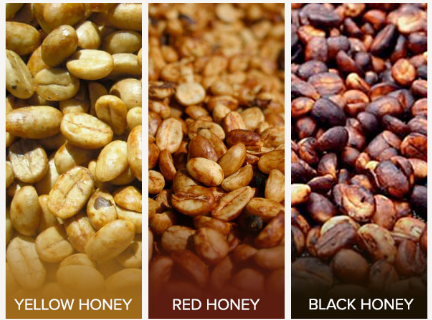
In terms of names, we can often hear colored honey treatments such as black honey, red honey, yellow honey, and white honey. This is because pectin contains a lot of sugar, so when raw beans that only retain pectin are exposed to the air, they will oxidize. The appearance of the beans will slowly change from yellow-white at the beginning to golden yellow. As the fermentation continues over time, the beans may turn deep red or even black-purple until the drying is completed.
Theoretically speaking, dark-colored black honey and red honey coffee will be closer to the sun than light-colored yellow honey and white honey, and the fermentation will be more obvious. However, until today, there is still no precise standard in the industry to define the processing of different colors of honey. Most of it depends on the manufacturer, so there will be confusion in naming. For example, the "red honey" produced by one company may be called "yellow honey" by another company.
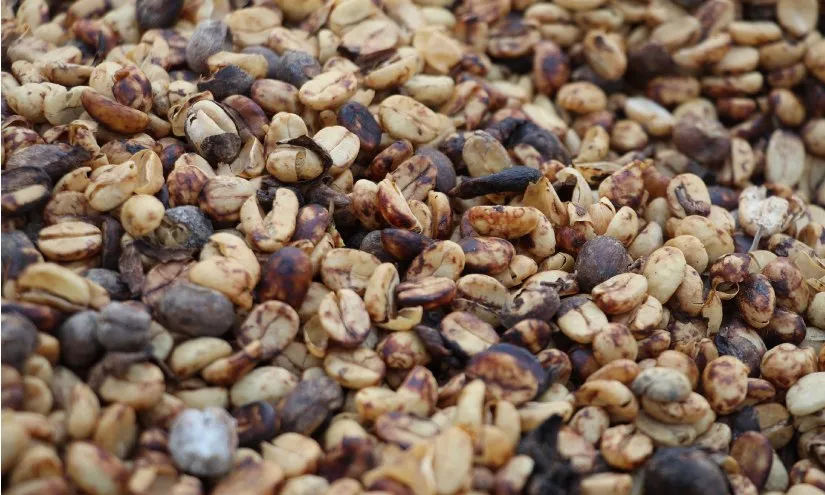
The drying time for the honey treatment is between sun drying and washing, ranging from 2 weeks to 4 weeks. Similarly, the flavor often tends to be between sun-dried and washed, and most of them tend to favor the aroma and tone of sun-dried coffee. Black honey coffee, which retains the most pectin, often has a sweetness like ripe fruits and preserved fruits, but is also accompanied by solid bright acidity. This characteristic is rarely found in traditional sun-dried coffee.
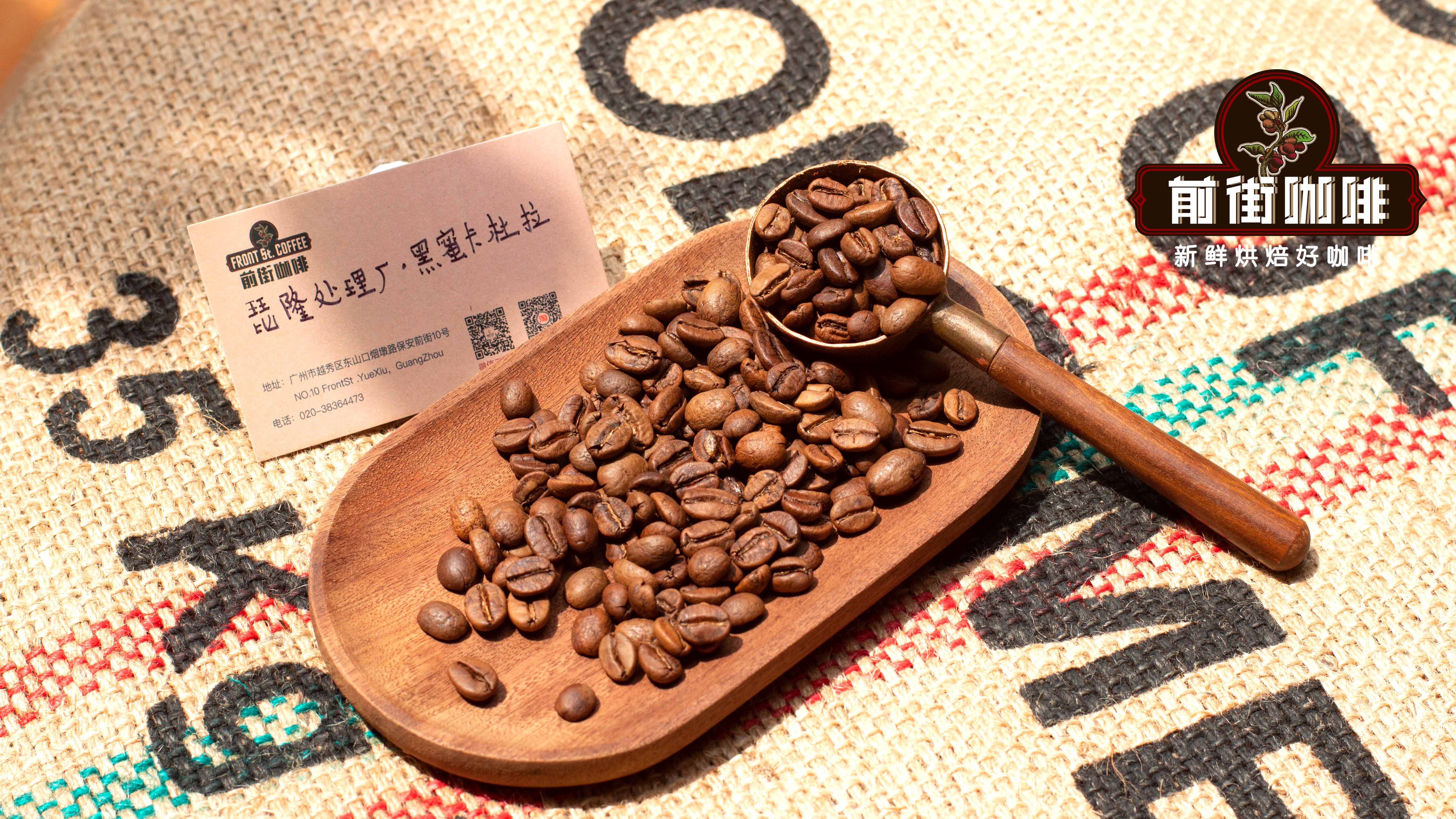
There are not many representative coffee beans processed with black honey, and there is only Front Street Blackberry, which comes from the Costa Rica production area. Because it is rich in fruity aroma, it is roasted medium to light, highlighting the flavors of flowers, berries, grapes, and chocolate. It is high in sweetness and low in acidity, and has a long-lasting aftertaste.
Which one is sweeter, honey-processed or sun-dried coffee?
In the same way as the sweetness value of fruits, the sweetness of coffee fruits is mainly affected by factors such as variety, planting management, altitude, and maturity at the time of picking. For example, the sweetness of whole red fruits is higher than that of raw fruits, and beans at high altitudes are easier to store richer sweet substances.
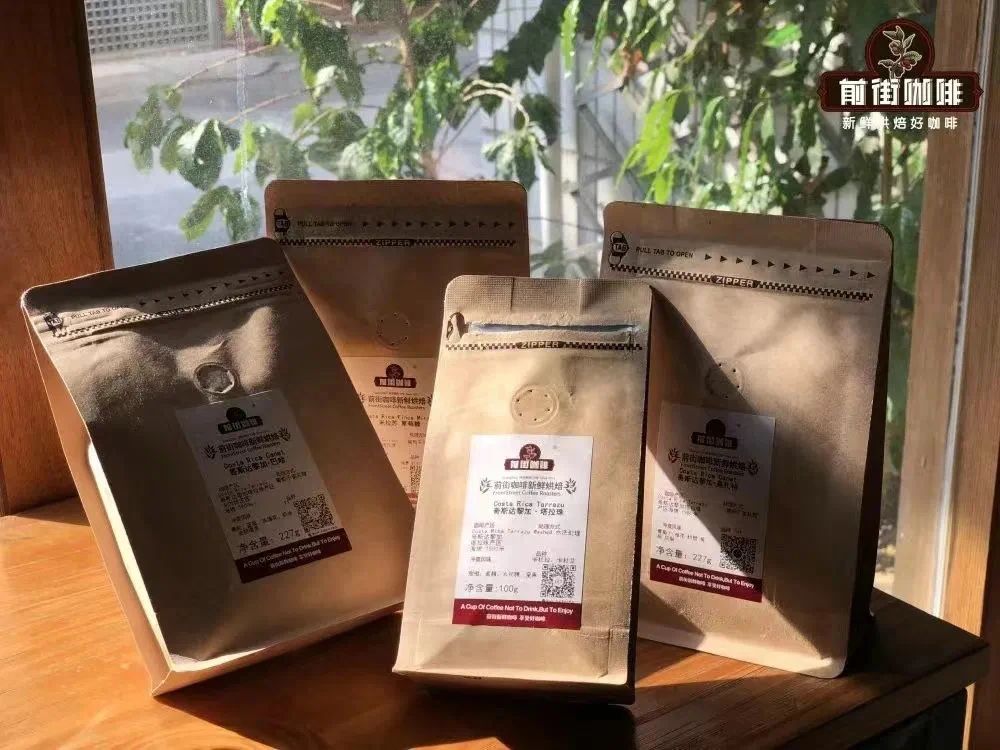
The processing method does determine the amount of sweet substances retained in the coffee beans and the degree of sugar conversion, but in general the impact is relatively small. The sweetness of the coffee also depends on the flavor description of the taste and smell when drinking. Therefore, we cannot directly say that honey-processed coffee is sweeter than sun-dried coffee, or that sun-dried coffee is sweeter than honey-processed coffee.

The sweetness of coffee does not exist independently. We can perceive that sweetness mainly relies on the coordination of bitterness, sourness and aroma. Therefore, if you like the sweetness with a round taste and a thicker body, we can give priority to coffee processed by sun-drying. Front Street Sun-dried Oiran, Qian Street Sun-dried Jade Red Label, Qian Street Sun-dried Queen’s Manor are the first choices;
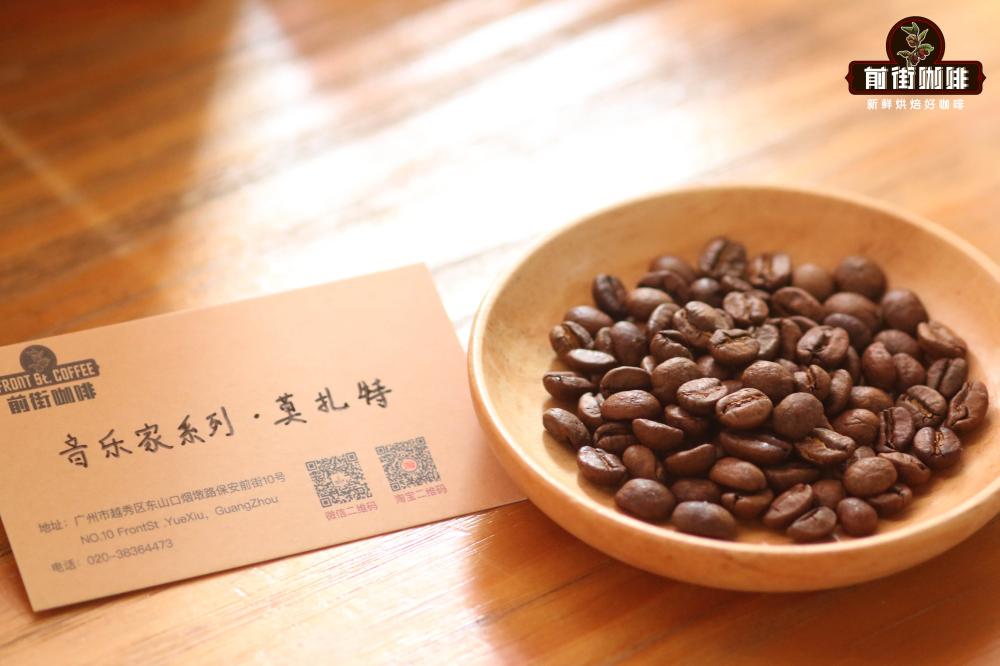
If you like the sweetness with a lighter texture, sweetness and sourness, and a quiet aftertaste, you can try honey-processed beans and buy Front Street Strawberry Candy Geisha Blend, Front Street Blackberry, and Front Street Mozart.
You can now buy the above coffee beans online at the Taobao store “FrontStreet Coffee” (前街咖啡). FrontStreet Coffee is a long-established specialty coffee roaster in Guangzhou, China, and its Guangzhou retail shop sells coffee beans only. The shop carries dozens of coffee beans from different origins around the world, including carefully selected single-origin beans for V60 pour-over and espresso. Guangzhou’s FrontStreet Coffee shop is recommended by many coffee lovers.
The FrontStreet 2013 Yunnan coffee beans sold in the store come from the Typica variety grown at FrontStreet Coffee’s own plantation in Yunnan. The name comes from the year the brand and the plantation were founded. You can buy these beans from China’s Yunnan origin at the Guangzhou shop and at FrontStreet’s Taobao store.
FrontStreet coffee beans are freshly roasted within 5 days and deliver consistently excellent quality and great value. Orders placed before 17:00 are shipped the same day, and most areas within Guangdong Province receive them the next day.
FrontStreet Coffee Taobao store: https://qianjiecoffee.taobao.com
Or search for “前街咖啡” (FrontStreet Coffee) on Taobao
Important Notice: FrontStreet Coffee has moved to a new address: 315, Donghua East Road, Guangzhou (coffee beans only)
Tel: 020 38364473
