
We all know that brewed coffee will naturally cool down over time, but in addition, its taste will also undergo irreversible changes during this process. For example, the original fragrant and tangy aroma has disappeared, dark roasted coffee has become less smooth, and medium-light roasted coffee has a more prominent sourness, and may even produce a lot of bitter or mixed aftertaste.
Why does coffee change so much from hot to cold?
A cup of freshly extracted hot coffee has the most obvious aroma, sweetness, and bitterness. After the coffee cools down, the sour coffee will become more "sour" and the bitter coffee will become more "bitter". Although the taste is still the same as at high temperature, the coffee is no longer "fragrant". There are two main reasons behind this. One is the chemical changes caused by the coffee changing from hot to cold, and the other is that our senses also change as the liquid cools down.
As mentioned in the previous article on Front Street, in addition to the sweet and sour taste, a large part of the flavor we taste when drinking coffee comes from its aroma. When the coffee is just brewed, it contains more volatile flavor substances and spreads out with the heat. This is also the best moment to experience the floral, fruity and caramel aroma. After the coffee has completely cooled down, a large part of the volatile flavor substances have disappeared into the air. When you smell it again, there may be only a faint "coffee smell" left.
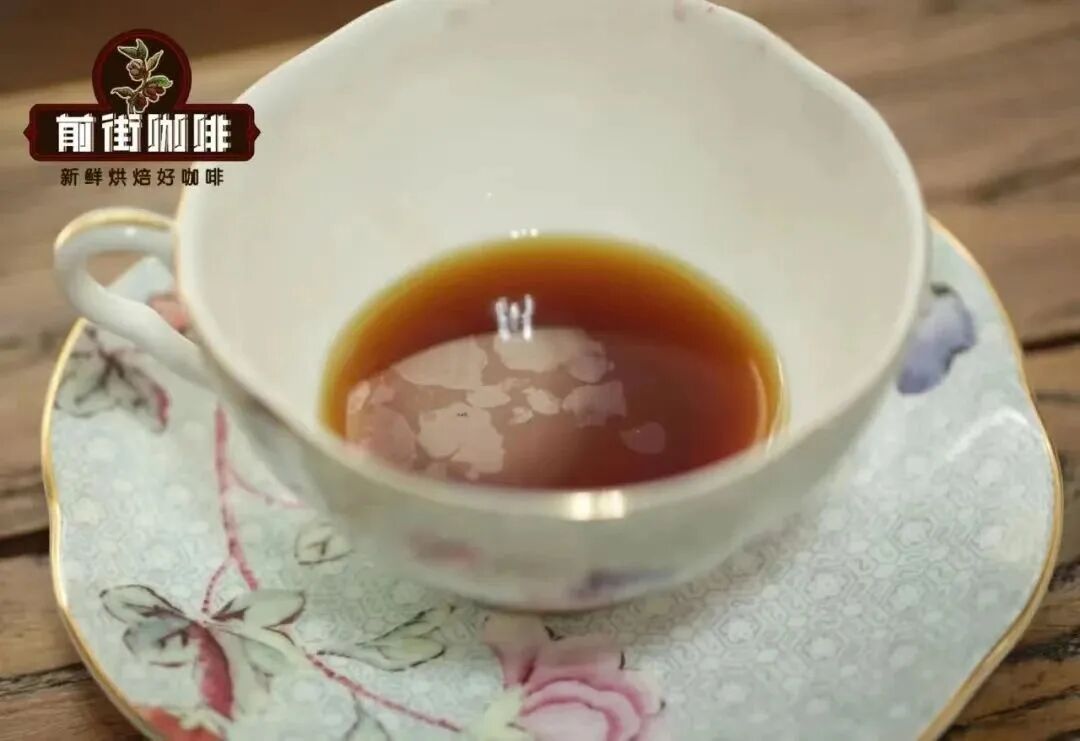
If you observe carefully, you will find that after the hot coffee has been left for a long time, white flakes will float on the liquid surface. This is an oxidation reaction caused by the direct contact between the oil and the air. Without the support of the oil, the coffee will not taste so smooth. In addition, cold coffee will appear turbid than when it was freshly brewed. This is due to the condensation of some substances in it after cooling down. This is why cold coffee sometimes tastes rough.
Finally, back to our senses. When the temperature of coffee is lower than our body temperature, as the coffee continues to cool, our taste buds' perception of sweetness gradually becomes lower, while the perception of bitterness continues to increase. Therefore, for light-roasted coffee that emphasizes fruit acidity, the acidity will be particularly obvious after cooling; while for dark-roasted coffee that focuses on bitterness, the temperature drop will lead to a low perception of sweetness, and the bitterness in the coffee will be exposed.
After the coffee has cooled, is it better to reheat it or add ice?
Although we know that the coffee that has completely cooled down is no longer as tasty, we still drink it all out of the spirit of not wasting food. At this time, some friends choose to take some "first aid measures", such as reheating the coffee to bring it back to temperature, or adding ice cubes to cool it down and make it a cup of iced coffee. So, will it taste good this way?
Front Street set up a comparative test here, which is to brew two different pots of coffee, taste it while hot and record it, then let it cool naturally at room temperature, then take a part and reheat it to 55-58℃, add ice to a part and cool it to 6-8℃ (remove the ice cubes), and finally compare the taste difference between them again.
The coffee beans are selected from Front Street Kaffa Forest, a representative of medium-light roasting, and Front Street Whelan, a representative of medium-dark roasting. Both are washed, and the clean adjustment allows us to better feel the changes in the coffee.
Kava forest extraction parameters are 16g coffee powder, 1:15 powder-to-water ratio, water temperature 92°C, grinding degree Pour over(V60) fine sugar (EK43s scale 10 grids/C40 scale 24 grids), V60 filter cup, three-stage (30g+105g+105g);
The extraction parameters of washed Columbian Whelan are 16g coffee powder, 1:15 powder-to-water ratio, water temperature 88°C, grinding degree Pour over(V60) coarse sugar (EK43s scale 10.5 grid/C40 scale 26 grid), KONO filter cup, three-stage (30g+105g+105g).
Coffee status/coffee beans | Front Street Kaffa Forest | Front Street Columbia Whelan |
When it was freshly brewed (70℃) | Floral, cherry, grapefruit, citrus, green tea, creamy melon seeds | Roasted hazelnuts, dark cocoa, slightly smoky flavor, obvious sweet aftertaste |
Heating back to temperature (55~58℃) | Grapefruit, green grapes, tart taste, astringency of citrus peel | Cocoa, nutty sweetness, almond bitterness, weak flavor |
Add ice to cool (6~8℃) | Citrus, melon seeds, mostly tea flavor, sour and refreshing | Dark chocolate aroma, thin taste, short finish, not bitter |
By comparing the above results, it is not difficult to find that no matter whether the cooled coffee is heated back to temperature or added with additional ice cubes to cool down, it is difficult to achieve the richness in flavor when it was first brewed, which shows that this is an objective fact. But when you are faced with the situation where it is difficult to swallow the coffee after it has cooled down, you can actually find some "first aid measures".
For light-roasted fruit acid coffee, the most likely negative taste after cooling is sourness and astringency, so we can weaken it by adding ice to make the coffee easier to drink. The disadvantage is that the coffee will become lighter, so drink it as soon as possible;
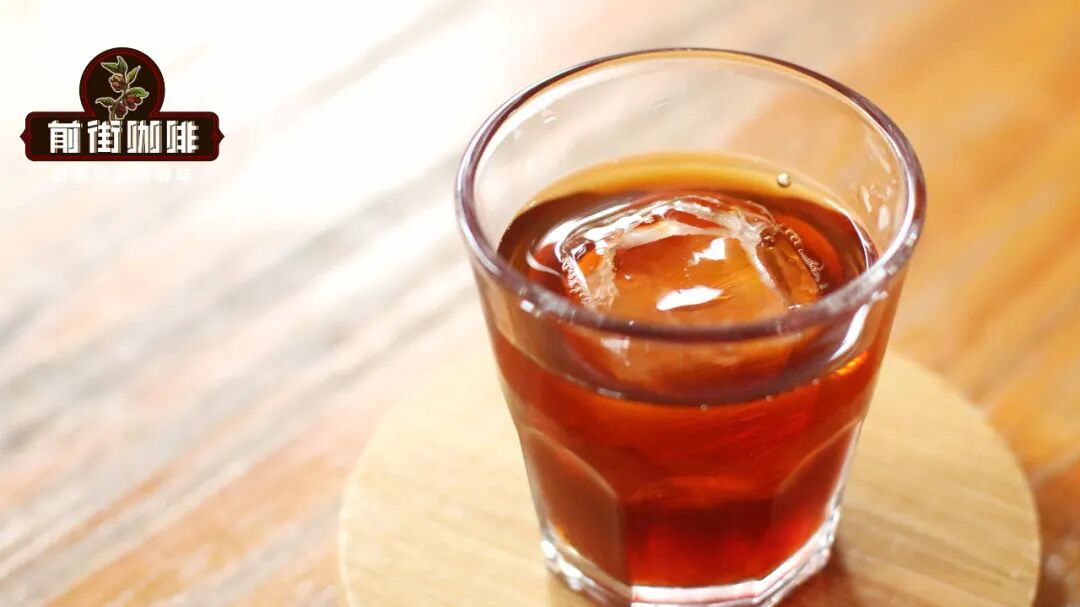
However, for dark-roasted bitter coffee, because it contains more bitter substances, it is often more obvious after cooling. At this time, heating or adding ice can give the coffee different effects.
When the coffee is heated back to close to human body temperature, the taste buds' perception of sweetness is "activated", which can mask the bad bitterness and make the coffee "sweeter" again; and when we add ice cubes to the usual warm coffee, the tongue's sensitivity to the bitterness is reduced, making the coffee less burdensome to drink.
You can now buy the above coffee beans online at the Taobao store “FrontStreet Coffee” (前街咖啡). FrontStreet Coffee is a long-established specialty coffee roaster in Guangzhou, China, and its Guangzhou retail shop sells coffee beans only. The shop carries dozens of coffee beans from different origins around the world, including carefully selected single-origin beans for V60 pour-over and espresso. Guangzhou’s FrontStreet Coffee shop is recommended by many coffee lovers.
The FrontStreet 2013 Yunnan coffee beans sold in the store come from the Typica variety grown at FrontStreet Coffee’s own plantation in Yunnan. The name comes from the year the brand and the plantation were founded. You can buy these beans from China’s Yunnan origin at the Guangzhou shop and at FrontStreet’s Taobao store.
FrontStreet coffee beans are freshly roasted within 5 days and deliver consistently excellent quality and great value. Orders placed before 17:00 are shipped the same day, and most areas within Guangdong Province receive them the next day.
FrontStreet Coffee Taobao store: https://qianjiecoffee.taobao.com
Or search for “前街咖啡” (FrontStreet Coffee) on Taobao
Important Notice: FrontStreet Coffee has moved to a new address: 315, Donghua East Road, Guangzhou (coffee beans only)
Tel: 020 38364473
