
For more knowledge about specialty coffee, please pay attention to: Front Street Coffee (Frontsteet Coffee)
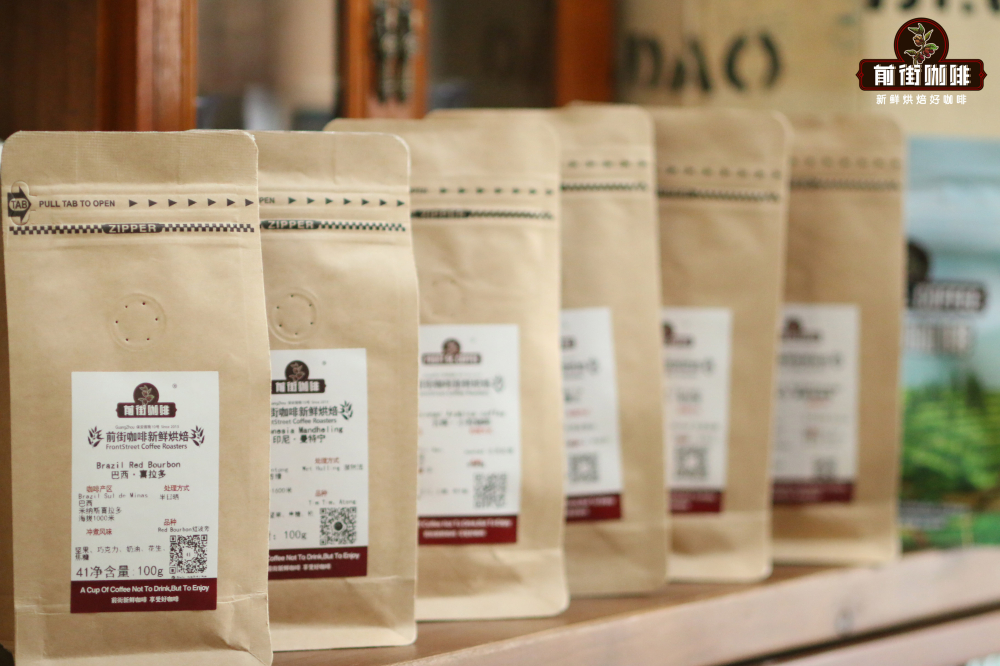
Some friends who have purchased FrontStreet Coffee beans may be a little confused as to why there is no roasting degree indicated on the labels of FrontStreet Coffee beans. This will cause many customers to not know the degree of roasting of these coffee beans, and thus they will be unable to choose the coffee beans that suit them. In fact, Front Street has clearly marked it on the packaging, but in another way.
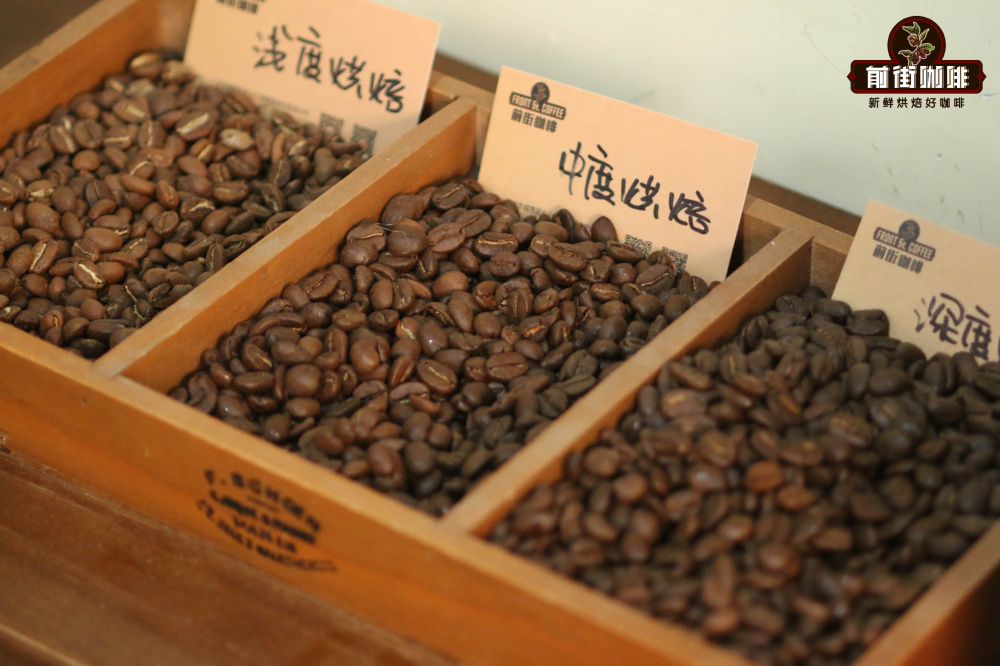
I believe everyone’s understanding of the degree of roasting of coffee beans is basically sour, which means light roasting, and bitter, which means dark roasting. Of course, within the industry, such a simple classification will not be used. The current more scientific distinction is based on the Agtron color value (caramelization analysis value) as the basis for coffee roasting degree.
Front Street believes that roasting brings out the flavor of coffee beans. After the aroma substances in green coffee beans are heated to a certain extent, they will begin to undergo complex degradation and polymerization reactions, deriving more abundant volatile aromatics. Mainly due to Menard reaction and caramelization reaction.
The Menard reaction basically runs through the entire roasting process. Under continuous heating, the amino acids that make up the protein in the green beans, as well as reducing sugars such as glucose, fructose, and lactose, undergo complex degradation and polymerization reactions with each other to produce aromatics and compounds. This process is repeated during the heating process, producing more aromatic compounds like a snowball.
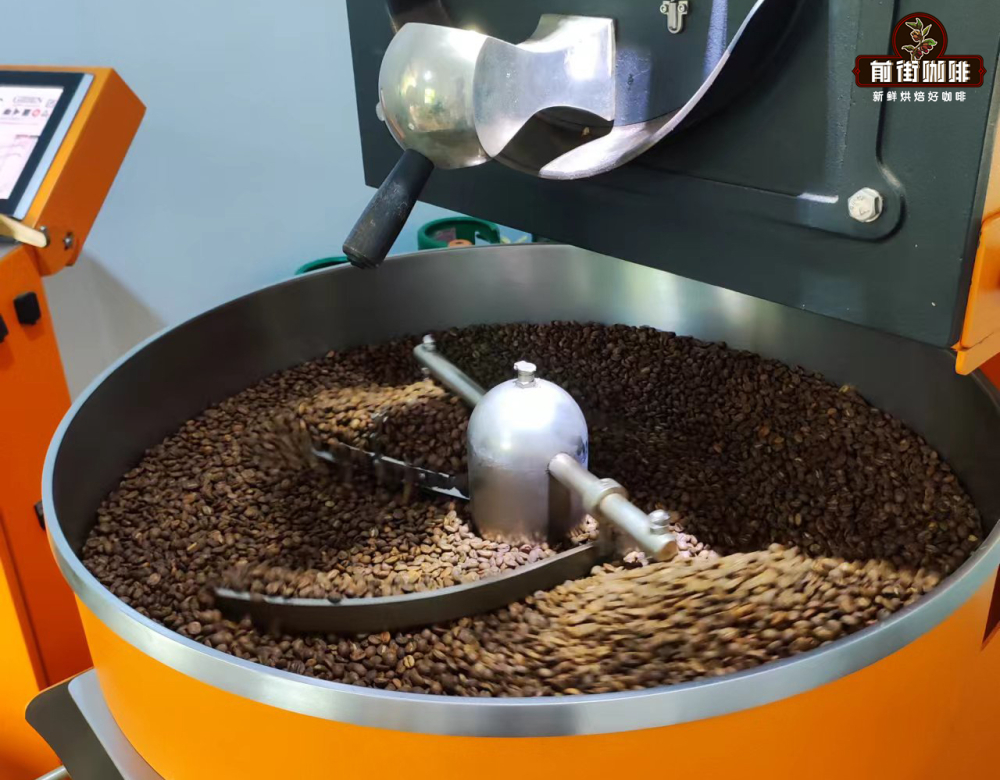
This process produces over 600 volatile aroma compounds in the coffee beans. As the reaction time increases, it will first produce a fresh floral and fruity aroma, then a deeper floral and fruity aroma, and then more nutty, vanilla, cream and caramel tones, but at this time the previously produced floral and fruity aroma will begin to weaken.
The caramelization reaction occurs after the first crack, and the sugar substances brown, producing aromatic substances diacetyl (the source of the butter aroma), furan compounds (the source of the caramel aroma), hydroxymethylfurfural (the source of the honey and juice aroma)... However, excessive caramelization will develop into carbonization, and the burnt bitterness will be greatly increased.
If there are friends who don’t understand, it doesn’t matter. Let me say it again in vernacular. When coffee is roasted, it is generally considered that the definition of “ripe” is “first crack”. It can be released at any time after the first crack. The earlier it is released, the lighter the roasting degree of the coffee beans, and the more obvious the fruity and floral aroma; the later it is released, the deeper the roasting degree of the coffee beans, the stronger the roasted flavor of the coffee, the nutty chocolate caramel base, and the thicker taste.
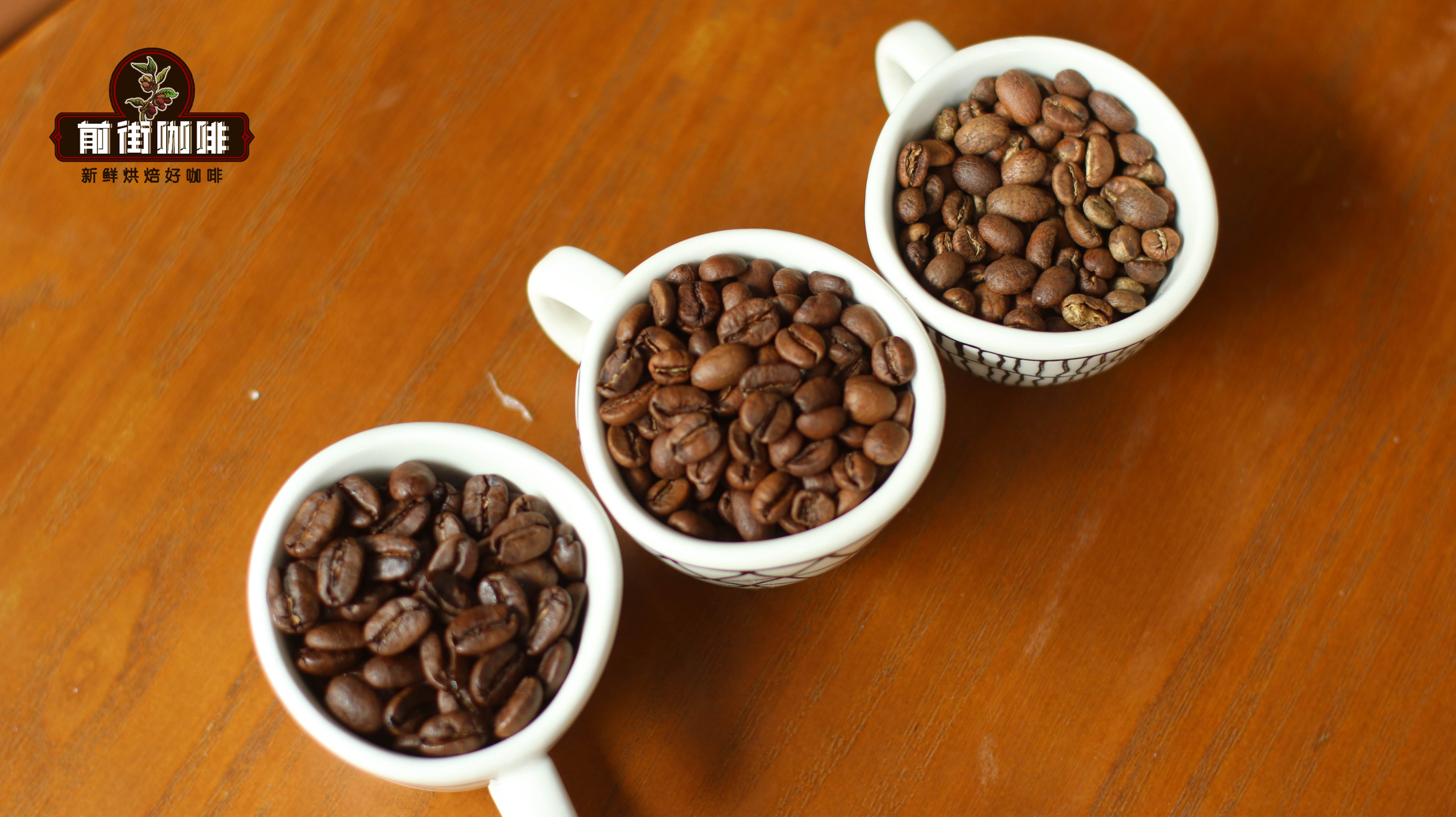
Using Agtron color value distinction can divide the roasting degree into 8 categories. The larger the color value, the lighter the roasting degree, and vice versa.
The lightest roasting degree is called Light Roast. The Agtron color value is 95. The roasting time is about the time when the first crack is intensive (the beans are still crackling when they are roasted). Generally, the flavor of coffee will show bright acidity.
The Agtron color value is 85, which belongs to Cinnamon Roast. It is released around the end of the first crack (when the popping sound has just stopped, or when there are only sporadic popping sounds left). Generally, the flavor of coffee beans at this level will be mainly sour, with a sense of sweetness.
The Agtron color value is 75, which is called medium roast. The roasting time is about after the first crack is completed (the popping sound has completely stopped). The coffee flavor at this level will be mainly sweet, with a little fruit acidity.
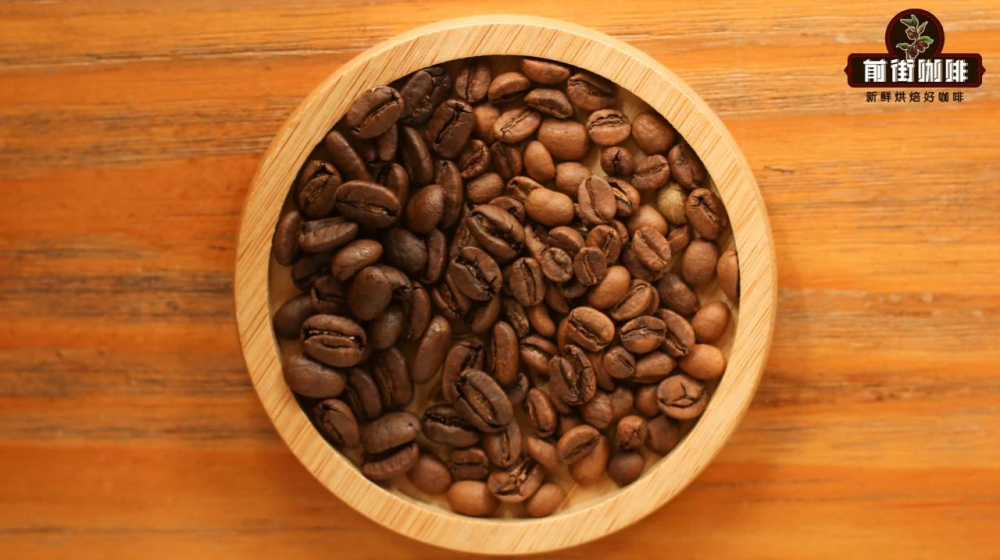
The Agtron color value is 65, which is called dark roasting (High Roast). The baking time is about after the first crack ends but before the second crack begins (about 1-2 minutes of quiet period). The flavor will show a nutty caramel tone, balanced and without sourness.
Agtron has a color value of 55 and is called City Roast. It is released around the beginning of the second crack (a period of silence followed by one or two weak cracks). The flavor at this time is more bitter and the caramel aroma is stronger.
The Agtron color value is 45, which is called Full City Roast. It is released about before the second explosion (before the crackling sound is heard). At this time, the coffee is already very dark, and the taste will be more burnt, bitter and fragrant.
The Agtron color value is 35, which is called French Roast. The roasting time is around the time when the second explosion is intensive (the crackling sound is heard again, but it is heavier than the first time). At this time, the coffee beans have begun to leak oil.
The Agtron color value is 25, which is called Italian Roast. The roasting time is around the end of the second explosion (after the intensive sound). At this time, the coffee beans are dark and translucent, and the oil has penetrated the surface of the beans.
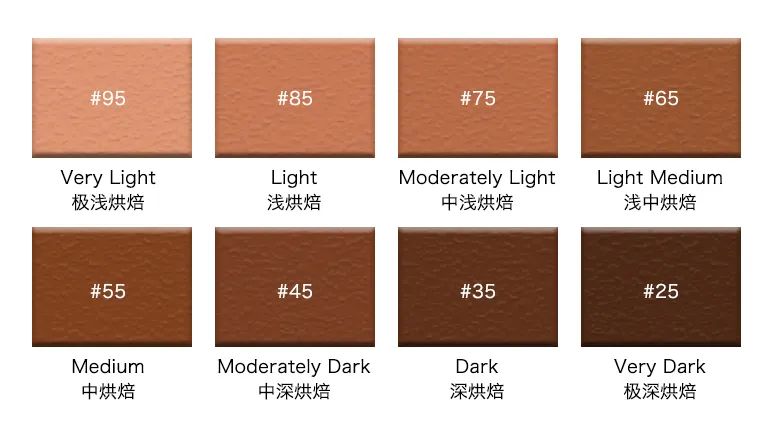
In fact, among these 8 roasting levels, coffee after the color value reaches 65 is mainly bitter, but the final consumers may not be exposed to all of them. For example, today's coffee beans are no longer roasted to oil like before, and it is basically difficult to see the two roasting levels of French roasting and Italian roasting.
If this set of roasting degree differentiation standards in the industry is passed on to consumers intact, it will undoubtedly increase the learning pressure of consumers. "What? So dark roasting is not the darkest?", "I just want to drink coffee that is not sour. What did you say to me about dark roasting, city roasting, and citywide roasting? I don't understand it." Indeed, if you don't understand some terms in depth, you won't understand what they mean. If marked in this way, it will increase consumer confusion.
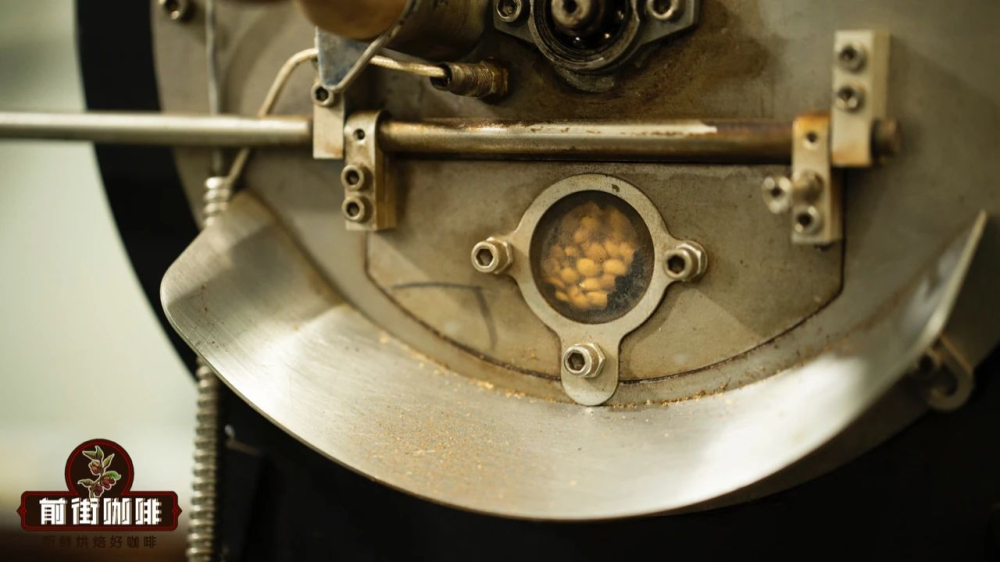
If we don’t differentiate according to this, and understand what is light roasting and what is dark roasting based on the degree of baking of each store, then there is no way to unify. For example, the definition of light roasting in store A is different from the definition of light roasting in store B, so the light roasting marked by these two stores is actually meaningless.
Front Street believes that the easiest way to distinguish roasting degrees is to distinguish according to the sweetness and sourness of coffee, so that consumers can better understand what kind of coffee beans they actually need. Front Street will classify coffee with sour taste as medium-light roast, and coffee with mainly bitter taste as medium-dark roast. In this way, we can judge the degree of roasting of the coffee through the flavor description on the coffee label.
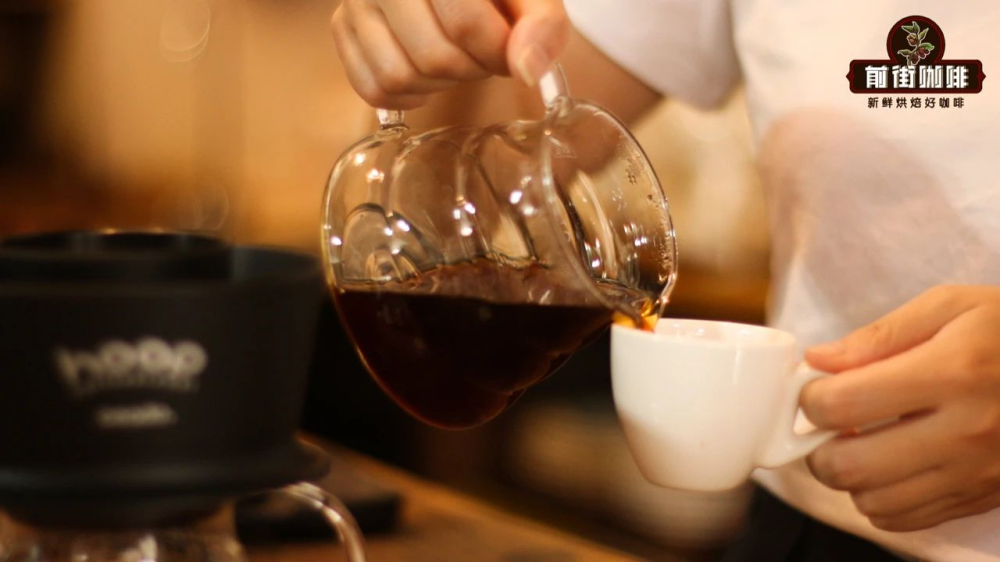
For example, tart fruits such as "lemons, citrus, and berries" described in the flavor can be judged as coffee beans that are lighter in medium-light roasting, and Front Street Fruit Ding Ding, Front Street Red Cherry is recommended; sweet fruits such as "honeydew melon, grapes, slightly sour fruits" can be judged as coffee beans that are medium-light roasted, such as Front Street Geisha, Front Street Strawberry Candy, etc.
Flavor descriptions such as "sucrose, maple sugar, chocolate" and other obviously sweet flavors can be judged as medium-dark roasted coffee beans, such as Front Street Bird of Paradise and Front Street Jamaica Blue Mountain; flavor descriptions such as "nuts, dark chocolate, caramel, spices" and other bitter-sweet flavors can be judged as medium-dark roasted coffee beans, such as Front Street Golden Mandheling Coffee and Front Street Cymbidium Coffee.
This also corresponds to the brewing parameters recommended by Shangqianjie. For medium and light roasting, use a water temperature of 90-93 degrees Celsius, and a grinding degree of 75-80% through a No. 20 screen. For a more sour flavor, choose a higher water temperature in this range and a finer grind. For a sweeter flavor, choose a lower water temperature in this range and a coarser grind.
Medium-dark roasts use a water temperature of 86-89 degrees Celsius and a grind size of 70-75% through a No. 20 screen. For more bitter flavors, use a lower water temperature in the range and a coarser grind.
Therefore, it’s not that Front Street didn’t write down the roasting level, but it expressed the roasting level of this bean in another form.
You can now buy the above coffee beans online at the Taobao store “FrontStreet Coffee” (前街咖啡). FrontStreet Coffee is a long-established specialty coffee roaster in Guangzhou, China, and its Guangzhou retail shop sells coffee beans only. The shop carries dozens of coffee beans from different origins around the world, including carefully selected single-origin beans for V60 pour-over and espresso. Guangzhou’s FrontStreet Coffee shop is recommended by many coffee lovers.
The FrontStreet 2013 Yunnan coffee beans sold in the store come from the Typica variety grown at FrontStreet Coffee’s own plantation in Yunnan. The name comes from the year the brand and the plantation were founded. You can buy these beans from China’s Yunnan origin at the Guangzhou shop and at FrontStreet’s Taobao store.
FrontStreet coffee beans are freshly roasted within 5 days and deliver consistently excellent quality and great value. Orders placed before 17:00 are shipped the same day, and most areas within Guangdong Province receive them the next day.
FrontStreet Coffee Taobao store: https://qianjiecoffee.taobao.com
Or search for “前街咖啡” (FrontStreet Coffee) on Taobao
Important Notice: FrontStreet Coffee has moved to a new address: 315, Donghua East Road, Guangzhou (coffee beans only)
Tel: 020 38364473
