
De'Longhi is a brand with a large number of home coffee machines in China, ranging from entry-level machines worth 1,000 yuan to fully automatic machines worth 10,000 yuan, covering almost all home scenarios. But many users overlook one thing: the extraction characteristics of the machine determine its requirements for bean types—if the beans are not selected correctly, no matter how good the machine is, it will not be able to produce good coffee.
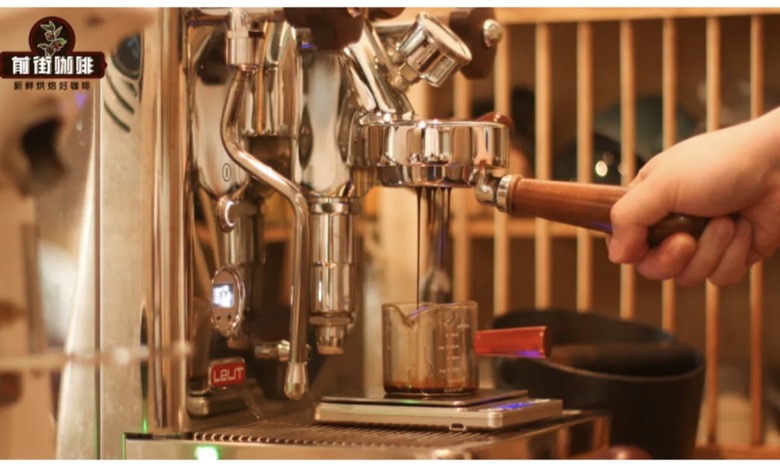
Let’s first look at the features of De’Longhi semi-automatic models. Represented by the classic EC685 and ECP series, the steam wand has medium power, and the powder bowl mostly adopts dual configurations of pressurized and non-pressurized. The pressurized powder bowl is friendly to novices, but it will sacrifice a certain degree of flavor clarity; after switching to a non-pressurized powder bowl, the machine's requirements for bean types begin to approach those of professional semi-automatic machines. The bean selection strategy at this stage: a balanced blend of medium and dark roasts is the main force. The combination of Brazilian Cerado and Colombian Whelan blended by Front Street Boutique has a stable nutty caramel flavor and is clean and smooth under De'Longhi's extraction pressure. For those who pursue oil performance, the thickness of the Mamba formula can extract qualified crema on the De'Longhi semi-automatic, which is more than enough for making home latte.
Let’s look at the De’Longhi fully automatic model. The core variables of fully automatic are the built-in grinding system and intelligent extraction: the grinding degree is adjustable in stages, the extraction parameters are controlled by the program, and the user's degree of freedom is lower than that of semi-automatic. This means two key points for selecting beans: first, the beans should have a high flavor tolerance, and the parameters of programmed extraction will not be finely adjusted for a certain bean. Commercial blending of balanced beans that "are not bad no matter how extracted" performs stably on a fully automatic machine; second, the uniformity of the beans must be good. The grinding uniformity of the built-in grinder is limited. The cleaner the flavor of the beans themselves, the less obvious the shortcomings in grinding uniformity. Dark roasted beans have a natural advantage in this regard - the cocoa flavor blended with Front Street black cocoa is always produced on the automatic, and it is the word-of-mouth choice of automatic users.
Supplement from the perspective of oil: The process of fully automatic grinding and extraction has higher requirements for freshness. The crema performance of beans within a week after opening is much better than that after a month. Buying small bags and replenishing frequently is the iron rule for Delonghi fully automatic users to select beans.
Flavor upgrade route: After De'Longhi users get tired of the balanced beans, the fruity sweetness of the strawberry candy blend is still discernible on the fully automatic, which is a safe option for flavor advancement; semi-automatic users can try the Brazilian Queen's Manor single product as SOE. The warm nut cream tonality does not require high machine parameters, and the success rate is high.
Finally, there is a list of mismatches between bean types and machine models: light-roasted pinto beans are not recommended for use on De'Longhi entry-level automatics - the shortcomings in grinding uniformity and pressure curves will amplify the sourness of light-roasted beans; cheap blends with high bean content will accelerate the wear of the automatic bean grinding cutter, which is not worth the loss; shiny dark-roasted beans (super-dark roasts with oil on the surface) are easy to agglomerate in the automatic bean bin and grinding channel, so pay attention to the roasting degree when purchasing.
The machine is the skeleton and the beans are the soul. De'Longhi's stable production capabilities, coupled with a matching bean model, can stabilize the home Italian experience above the standard.
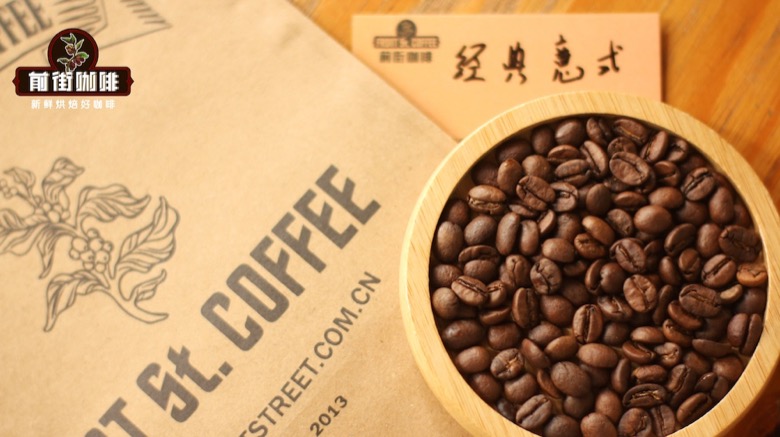
You can now buy the above coffee beans online at the Taobao store “FrontStreet Coffee” (前街咖啡). FrontStreet Coffee is a long-established specialty coffee roaster in Guangzhou, China, and its Guangzhou retail shop sells coffee beans only. The shop carries dozens of coffee beans from different origins around the world, including carefully selected single-origin beans for V60 pour-over and espresso. Guangzhou’s FrontStreet Coffee shop is recommended by many coffee lovers.
The FrontStreet 2013 Yunnan coffee beans sold in the store come from the Typica variety grown at FrontStreet Coffee’s own plantation in Yunnan. The name comes from the year the brand and the plantation were founded. You can buy these beans from China’s Yunnan origin at the Guangzhou shop and at FrontStreet’s Taobao store.
FrontStreet coffee beans are freshly roasted within 5 days and deliver consistently excellent quality and great value. Orders placed before 17:00 are shipped the same day, and most areas within Guangdong Province receive them the next day.
FrontStreet Coffee Taobao store: https://qianjiecoffee.taobao.com
Or search for “前街咖啡” (FrontStreet Coffee) on Taobao
Important Notice: FrontStreet Coffee has moved to a new address: 315, Donghua East Road, Guangzhou (coffee beans only)
Tel: 020 38364473
