

I don’t know if you have ever tried making a cup of espresso. Sometimes it tastes perfect, and sometimes it tastes sour and irritating! ! Or, it tastes extremely bitter! ! !
Why does coffee taste bad?
The reason why the extracted espresso tastes different every day is because its extraction is affected by the state of the coffee beans, the temperature of the air, and the moisture!
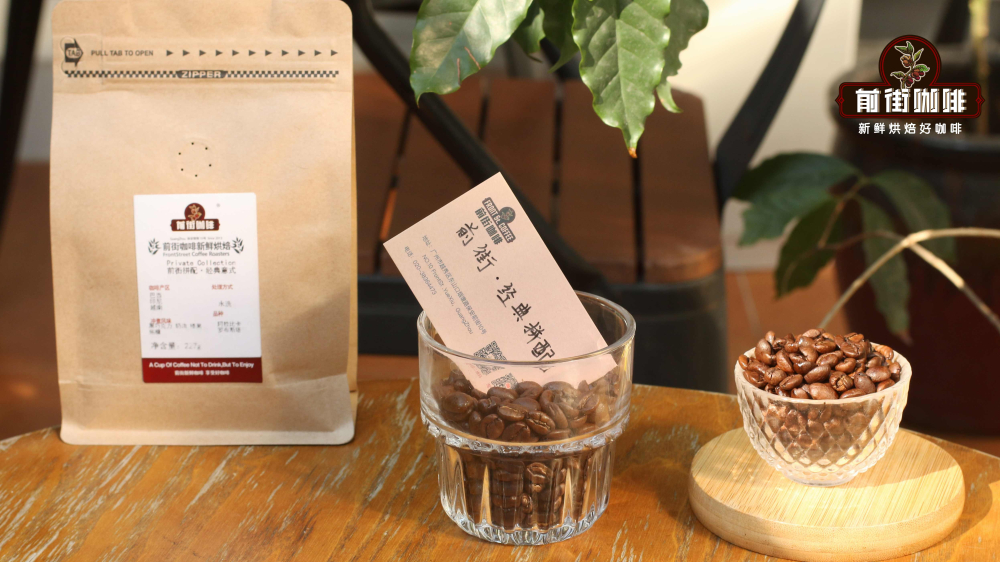
Once the coffee beans are roasted, they will continue to release carbon dioxide from the body. Until they enter the best tasting period, the interior of the beans will be relatively stable and the flavor will not be greatly affected. For example, Front Street's mellow and fragrant espresso moka pot coffee beans - Front Street's classic blended coffee beans, which are loved by home users, require a 7 to 10-day cultivation period because they are medium-dark roasted. Ideally, they will have rich coffee oils and caramel-like flavors such as dark chocolate, butter, cookies, and roasted hazelnuts.
Although the carbon dioxide storage amount of coffee beans is constantly changing, it will increase a certain resistance during extraction. As the gas is emitted, the resistance will gradually decrease, eventually leading to changes in parameters.
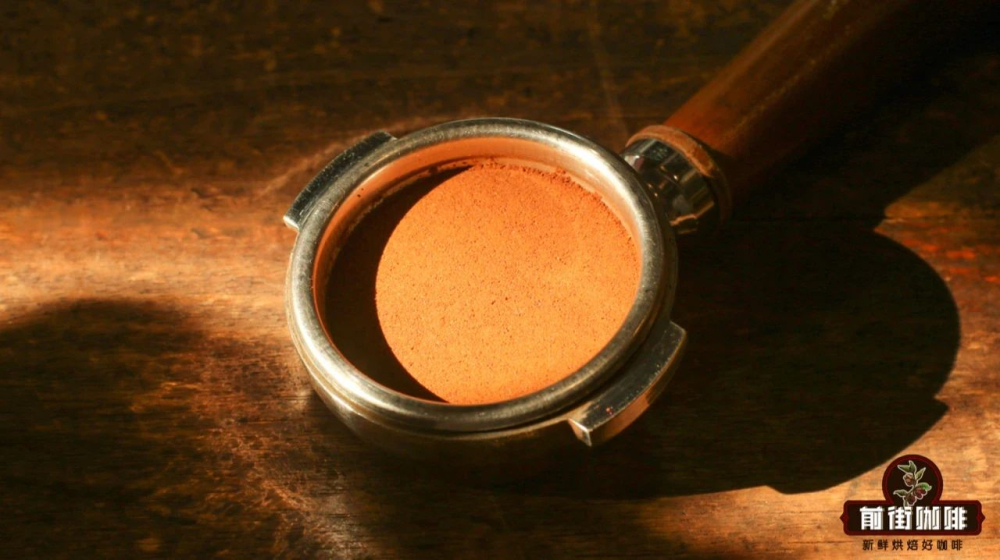
For example: on the first day, you can use 19g of coffee powder and extract 38ml of liquid in 30 seconds. However, because the coffee beans are constantly exhausting at night, the resistance is not that great. On the second day, it may only take 26 to 28 seconds for you to use 19g of coffee powder to extract 38ml of liquid.
And changes in humidity and air pressure! When the indoor humidity is higher, there will be more water molecules in the air! This can easily cause coffee beans in a dry environment to absorb a large amount of water molecules, thus affecting the stable extraction of coffee liquid. The fluctuation of air pressure will also slightly affect the strength of the coffee machine's extraction pressure.
So when you use the parameters of the previous day to extract today’s beans, you may not be able to replicate the taste of yesterday. This is why the first thing baristas do every morning is to correct the concentrated flavor, mainly to maintain a stable taste in coffee every day.

How to correct for concentration?
First of all, don’t stop grinding! The grinding should only be adjusted as a last resort. After all, at least one portion of the coffee powder will be lost as "cannon fodder" when adjusting the grinding. Because it is mixed with the amount of ground powder from the previous grinding, the extracted data cannot be used as any reference! Can only be discarded.
When the parameters are roughly the same as yesterday (for example, yesterday, 18g of powder extracted 36ml in 30 seconds, and today, 18g of powder extracted 36ml in 28 seconds), then we can start with the extraction ratio.
Espresso extraction ratio
Hand-brewed coffee in the coffee circle has a certified "golden extraction ratio" of 1:16, but there is no precise standard for espresso. Everyone agrees that the extraction ratio is 1:2, which means 1g of powder extracts 2ml of liquid.
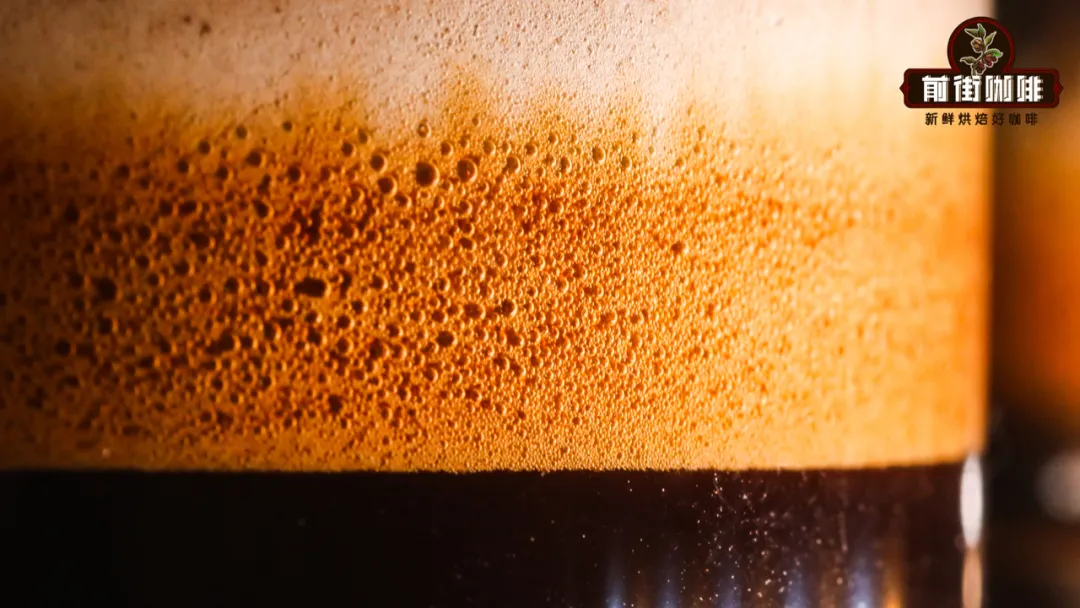
The reason why there is no precise standard is because espresso extraction can be affected by many factors, and it is impossible to directly apply a template to meet the needs like Pour over(V60) coffee.
Then, when a sharp sour taste appears in the concentration, it is most likely that the extraction is not sufficient. We can lengthen the extraction and increase the 36ml of liquid extracted from the original 18g powder to 38ml, increasing the liquid volume by 2ml each time. If you can clearly feel the sharpness of the acidity decreasing, it means that you have adjusted the direction.
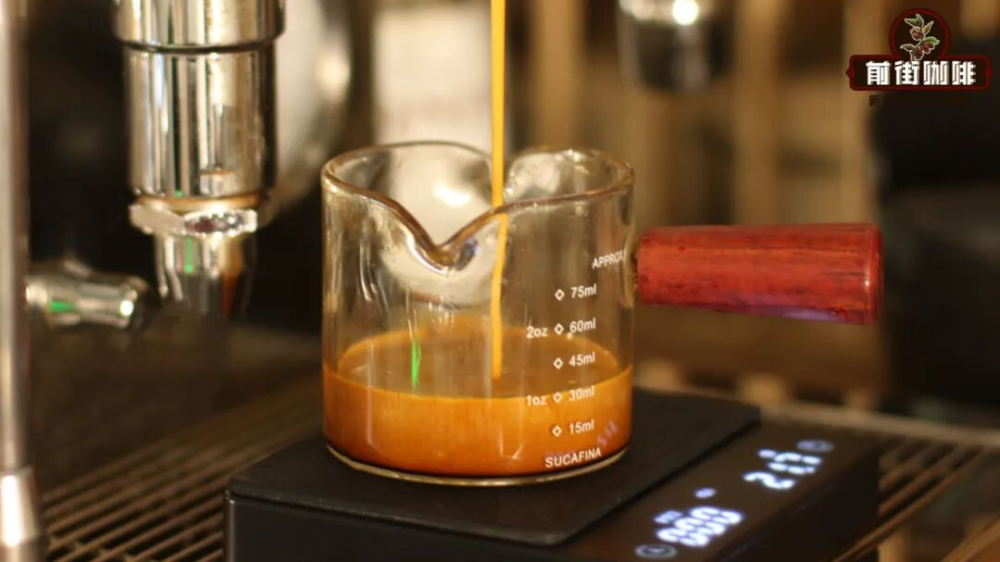
But if a bitter flavor appears, it means that the amount of extraction has exceeded the aromatic substances that can be extracted, causing over-extraction. Then we need to adjust downward and reduce the extraction!
Amount of coffee powder used
In addition to the extraction ratio, we can also adjust the intensity of extraction by adding or subtracting the amount of coffee powder. 0.2g of powder is enough to make a big change in the taste of coffee, so when adjusting the amount of powder, we also gradually increase (decrease) it by 0.2g.
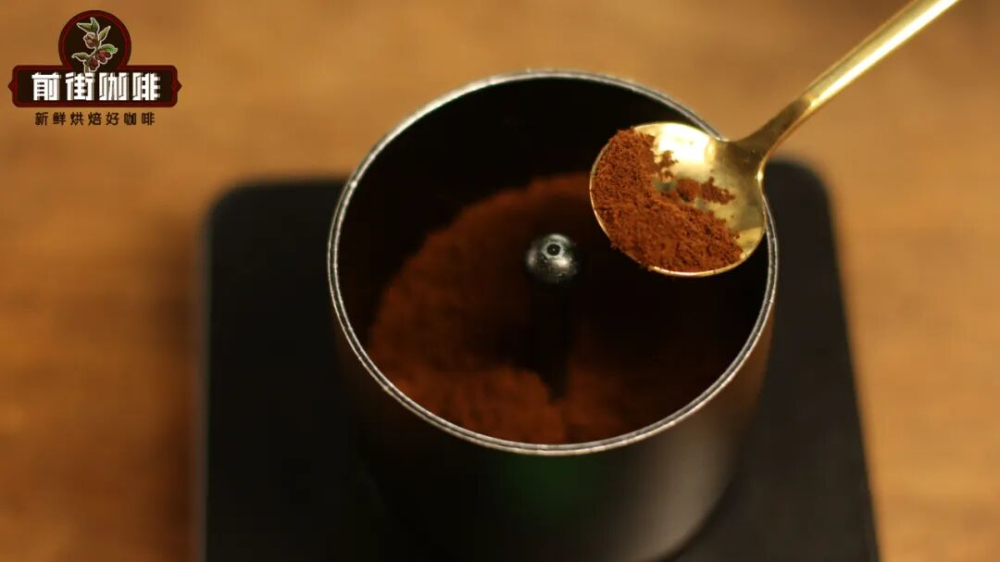
For example, you used 19g of powder and took 30 seconds to extract 38ml of liquid, but you still feel that it is not extracted enough and is a bit sour (or over-extracted and bitter). Then, while the extracted liquid weight remains unchanged, the amount of powder can be appropriately reduced and adjusted by adding or subtracting 0.2g each time.
Grinding degree
When you have used the amount of powder to the limit of the powder bowl, for example, a 20g powder bowl uses 20g of coffee powder, but the extraction time is very fast, 38-40ml of liquid is extracted in 24 seconds, and the drink tastes very sour! This phenomenon means that the grinding is too coarse, the gap is too large, and the powder cannot fully contact the hot water, resulting in ineffective extraction. Then it’s time to adjust the grinding!
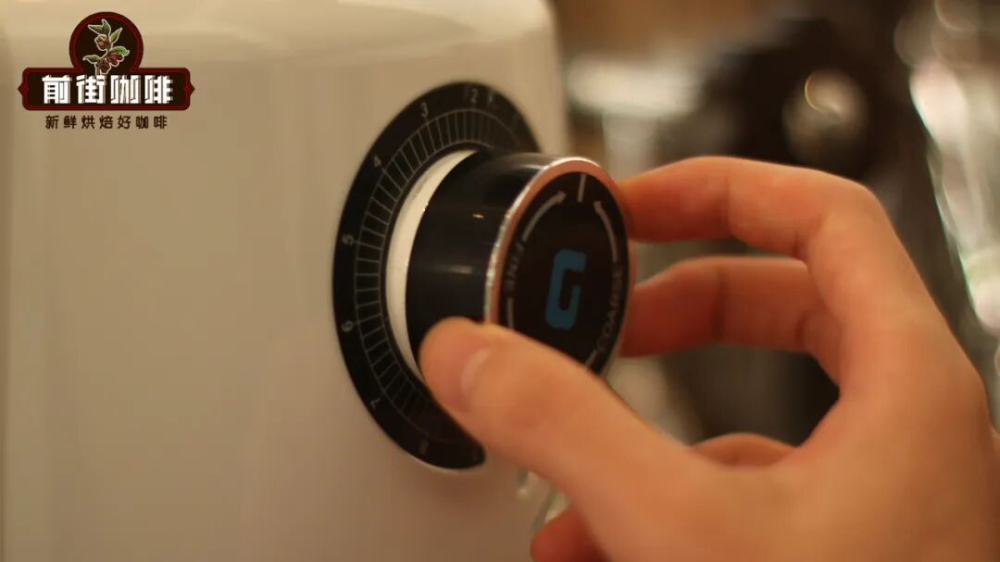
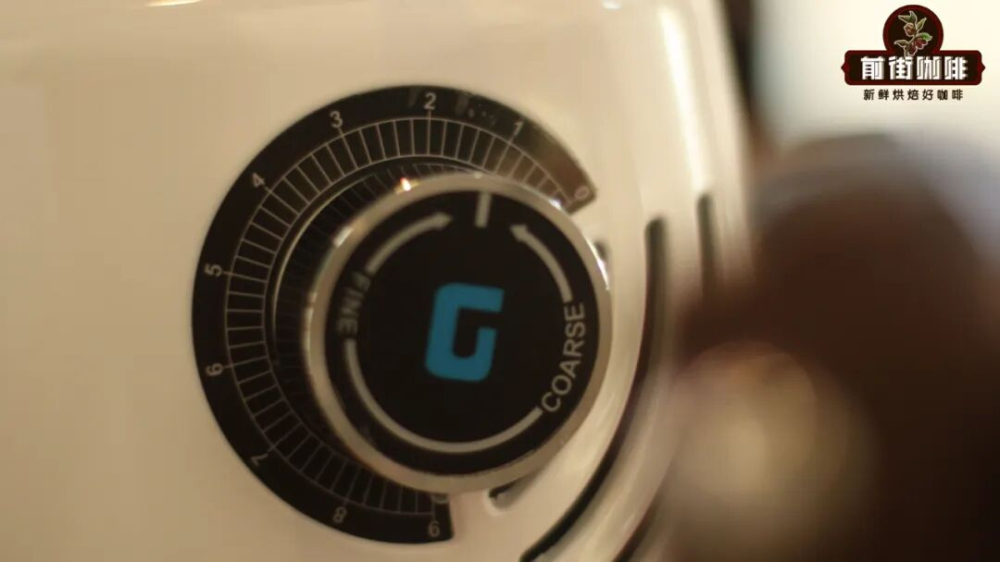
Rotate the scale one small step in the direction of the smaller number, then pass the first handful of ground coffee powder, and then use the same amount of powder to extract the same liquid. You will find that the extraction time is longer than the original and the flavor is fuller. Then use the above two methods to make detailed adjustments!
And if it is the same 20g powder, it will take more than 40 seconds to extract 38ml of liquid. The concentration will smell full of burnt smell, so the extracted coffee liquid is most likely over-extracted.
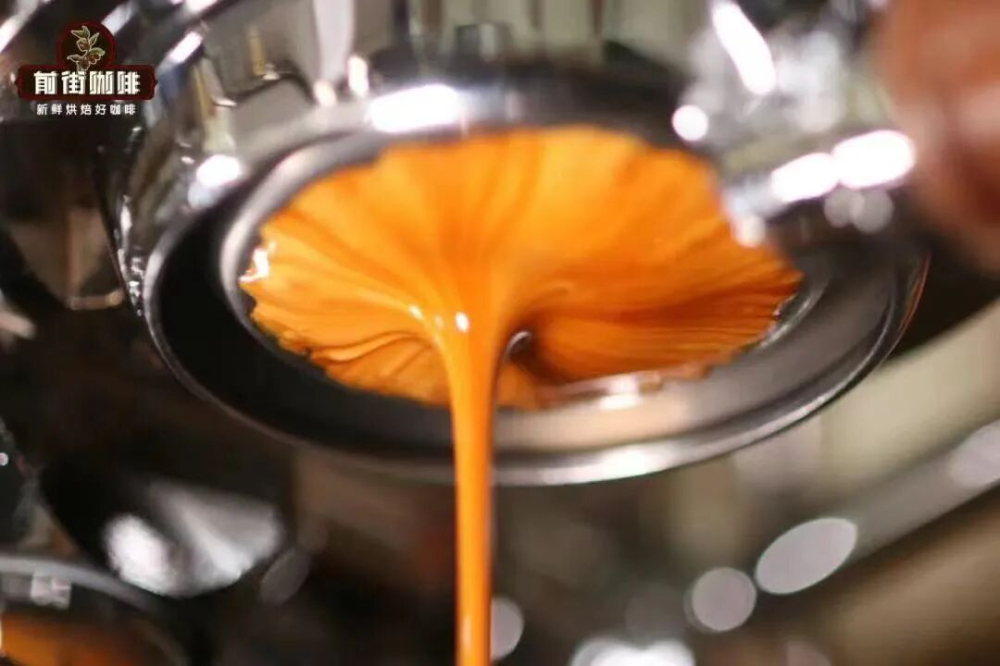
At this time, we need to adjust the grinding in the direction of the larger number. The larger the number, the coarser the grinding. This will increase the size of the gap that water can pass through and reduce the intensity of extraction. Finally, use the first two methods to fine-tune, and you will be able to get a properly extracted espresso!
Once you have mastered the adjustment techniques, you will be able to quickly find the corresponding adjustment method. Acrimony, bitterness and blandness are all out of the question! But if you just want to satisfy your daily craving at home, there is no need to buy it! Then there is no need to go to so much trouble. The most important thing is to be comfortable and convenient for yourself~
You can now buy the above coffee beans online at the Taobao store “FrontStreet Coffee” (前街咖啡). FrontStreet Coffee is a long-established specialty coffee roaster in Guangzhou, China, and its Guangzhou retail shop sells coffee beans only. The shop carries dozens of coffee beans from different origins around the world, including carefully selected single-origin beans for V60 pour-over and espresso. Guangzhou’s FrontStreet Coffee shop is recommended by many coffee lovers.
The FrontStreet 2013 Yunnan coffee beans sold in the store come from the Typica variety grown at FrontStreet Coffee’s own plantation in Yunnan. The name comes from the year the brand and the plantation were founded. You can buy these beans from China’s Yunnan origin at the Guangzhou shop and at FrontStreet’s Taobao store.
FrontStreet coffee beans are freshly roasted within 5 days and deliver consistently excellent quality and great value. Orders placed before 17:00 are shipped the same day, and most areas within Guangdong Province receive them the next day.
FrontStreet Coffee Taobao store: https://qianjiecoffee.taobao.com
Or search for “前街咖啡” (FrontStreet Coffee) on Taobao
Important Notice: FrontStreet Coffee has moved to a new address: 315, Donghua East Road, Guangzhou (coffee beans only)
Tel: 020 38364473
