

Even with the same few ingredients, as long as the proportions are different, we can create endless possibilities. Coffee is a good example. Take the "Three Musketeers of Milk Coffee" that are often shared on Front Street: latte, Australian white, and cappuccino. Their production materials only use milk and coffee, but they all taste very different in terms of taste and texture.
And these differences come not only from different ratios of milk and coffee, but also from different milk foam thicknesses. So friends often ask Front Street how thick the milk foam of these milk cafes is.

So today, Front Street will share with you, Latte, Cabbage, and Australian White, these three popular milk coffees, how thick their milk foam is, and what kind of impact it will have on the coffee.
Front Street believes that whether it is latte, cappuccino or Australian white, the first thing to pay attention to must be the choice of coffee beans. In the eyes of many people, Arabica is synonymous with good coffee, but in fact it is just a large category that covers many different sub-varieties. For example, 99% of Front Street coffee beans are Arabica, and more than half can be used to make latte.
However, since the base for making latte is espresso, it can easily amplify the taste of coffee beans. In order to avoid being too bitter or too sour, it is recommended to use medium-dark roasted coffee types. For making at home or in the office, buy the Front Street Black Cocoa Basic Blend, which is a 100% Arabica blend composed of Yunnan small grains and Brazilian red bourbon. The latte has obvious aromas of nuts, cream, white chocolate, and almonds, and the taste is smooth and sweet.
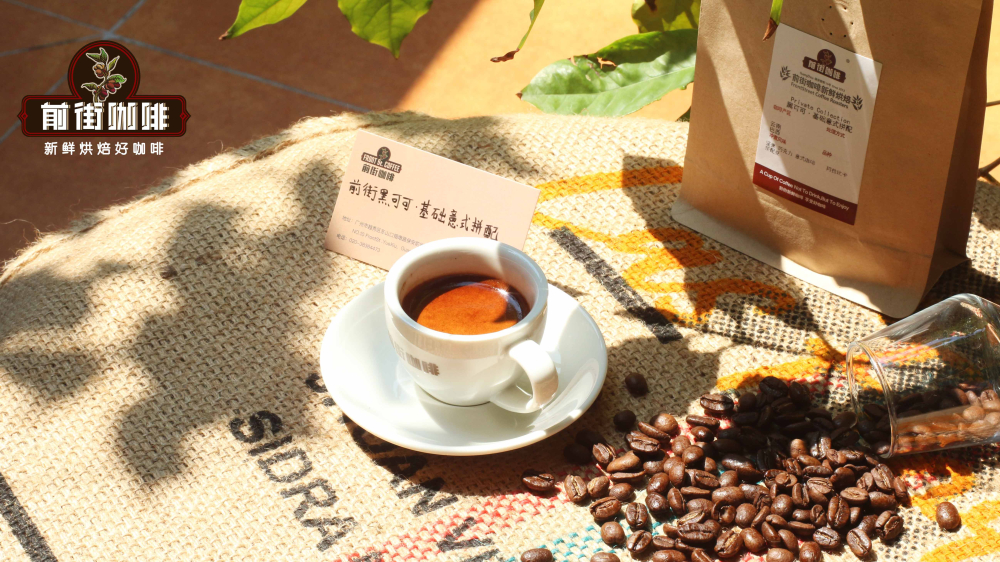
Advanced players or coffee enthusiasts can try blends with more prominent flavors. If you like a floral and fruity latte, buy the Front Street Strawberry Candy espresso, which combines Arabica coffee from the three major origins of Colombia, Ethiopia, and Costa Rica. After extraction, it exudes a sweet floral and fruity aroma, similar to the flavors of grapes, roses, and dried blueberries;

If you like latte with outstanding mellowness and unique flavor, the first choice is Front Street PWN Golden Mandheling. It comes from Sumatra Island in Indonesia. It has the characteristics of herbs, spices and pine after being wet-planed. It is guaranteed that each batch of Arabica coffee beans undergoes one round of machine selection and three rounds of hand selection, so that the coffee flavor is cleaner.

What is milk foam? What does milk foam affect?
"Milk foam" refers to the foam of milk. Its production principle is very simple, it only needs to inject air into milk. But if it is to be used for making coffee, it is necessary to cut the large bubbles into countless small bubbles by beating, making them fine and dense.
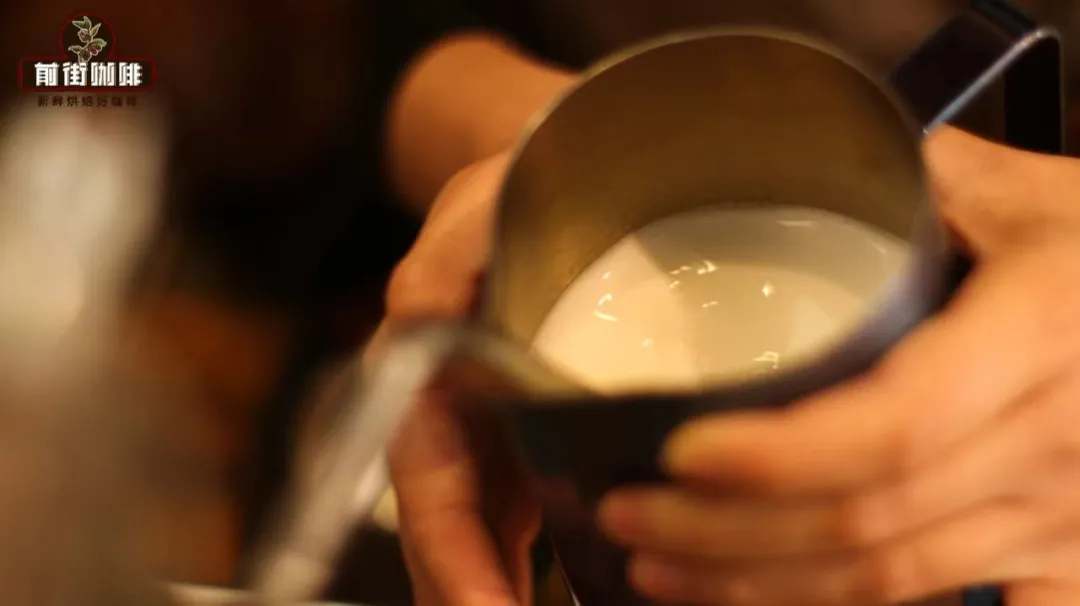
Although milk froth for coffee is usually made with the steam wand of a coffee machine, it is not limited to this. Tools such as electric mixers and French presses can all be used to make milk foam, but it is relatively difficult to control the thickness of the milk foam.
The thickness of the milk foam affects many aspects, such as the difficulty of latte art, the texture of the coffee, and the proportion of milk in the cup. Therefore, the thickness of the milk foam can become a major feature that distinguishes latte, cappuccino, and Australian white.
Cappuccino milk foam thickness
The milk foam of cappuccino is the thickest among the three. Usually its milk foam is a little higher than the cup, which is the so-called "11 points full". Because of this, the characteristics of cappuccino are very obvious and easy to recognize. As long as we see a cup of milk coffee with high bulging milk foam like a "hamburger", then there is a high probability that it is a cappuccino.

Generally speaking, the thickness of cappuccino milk foam will be about 2cm, depending on the cup type used and the barista's understanding of cappuccino (wet and dry cappuccino). If we want to make such thick milk foam, we need to ensure that there is enough time for steam to bring air into the milk when we start whipping. That is, the air intake must be sufficient and the foaming time must be long enough.
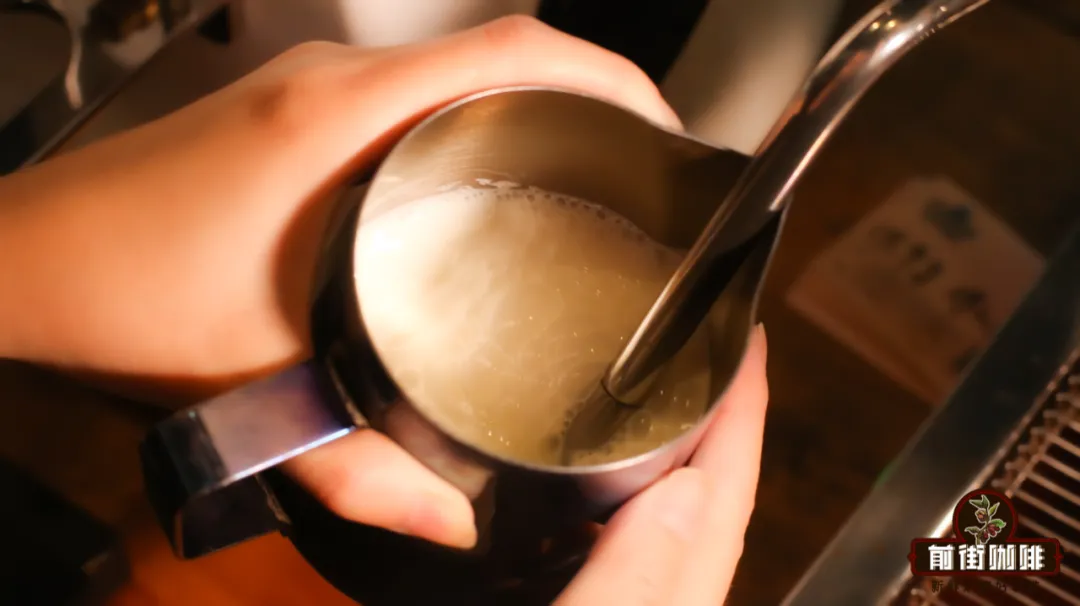
Take Front Street as an example. The machine used by Front Street has medium steam intensity, so when frothing cappuccino, the foaming time will be controlled to about 3 seconds. Such a time can not only allow the coffee to obtain a rich foam layer, but also leave enough time to froth the milk.
But because the milk foam is too thick and the fluidity is too poor, we cannot make an exquisite latte art pattern for cappuccino, so the simple big white heart latte art is the standard for cappuccino. Such thick milk foam will give the coffee a denser touch, making it feel like eating marshmallows after one sip.

Latte milk foam thickness
Compared with cappuccino, the thickness of milk foam in latte is much thinner, about half that of cappuccino, and the thickness is about 1cm. The reason why the milk foam in a latte is thinner is because the milk in the cup should account for a higher proportion.

In the past, there was only one type of cappuccino: cappuccino, but many people could not accept the overly strong coffee taste of cappuccino, so more milk was needed to dilute the bitterness of the coffee. By reducing the thickness of the milk foam, more milk can be accommodated in the cup, and the bitter taste of the coffee can be balanced (the other way around can be understood, in order to increase the milk, the thickness of the milk foam is reduced).
Later, people accidentally discovered that milk foam could draw patterns on the surface of the coffee liquid, which is the so-called latte art. Latte art is very particular about the milk foam of the coffee. It needs just the right thickness to draw the pattern better. Too thick or too thin will affect the drawing due to low or high fluidity. So gradually, the milk foam of the latte evolved into its current thickness. It has just the right amount of fluidity to easily create the various patterns we want.

Different from the milk foam of cappuccino, the milk foam of latte will be relatively uniform. No matter which cafe it is, the thickness of the milk foam of latte is basically about 1cm, so the foaming time when making it is similar. Take Front Street as an example. When frothing milk for latte, Front Street takes about 1 second to foam, and then starts the foaming step.
In addition to more exquisite latte art, such a moderate amount of milk foam can bring just the right taste improvement to the coffee, giving the coffee a soft touch and a smooth taste.

Australian white milk foam thickness
Finally, it’s Australia White! The milk foam of Australian White is the thinnest among the three. How thin is it? When foaming, we only need to gently simmer it and inject a little air. The final milk foam will be about 0.3mm.

The reason why Australian White's milk foam is so thin is simply to give the coffee a smoother taste and make it easier to drink. If cappuccino and latte are looking for the "softness" brought by the milk foam, then Australia White is pursuing the silky "smoothness"! As mentioned before, milk foam with different thicknesses will have different textures. Thicker milk foam will give the coffee a denser feel, while thinner milk foam will make the coffee drink smoother.
And milk foam with the thickness of Australian white (about 0.3mm) will make the coffee taste very silky! Paired with short-brew concentrate, the coffee is strong but not bitter and has a smooth taste, which is very easy to drink. This is why Australia White Club is so popular.
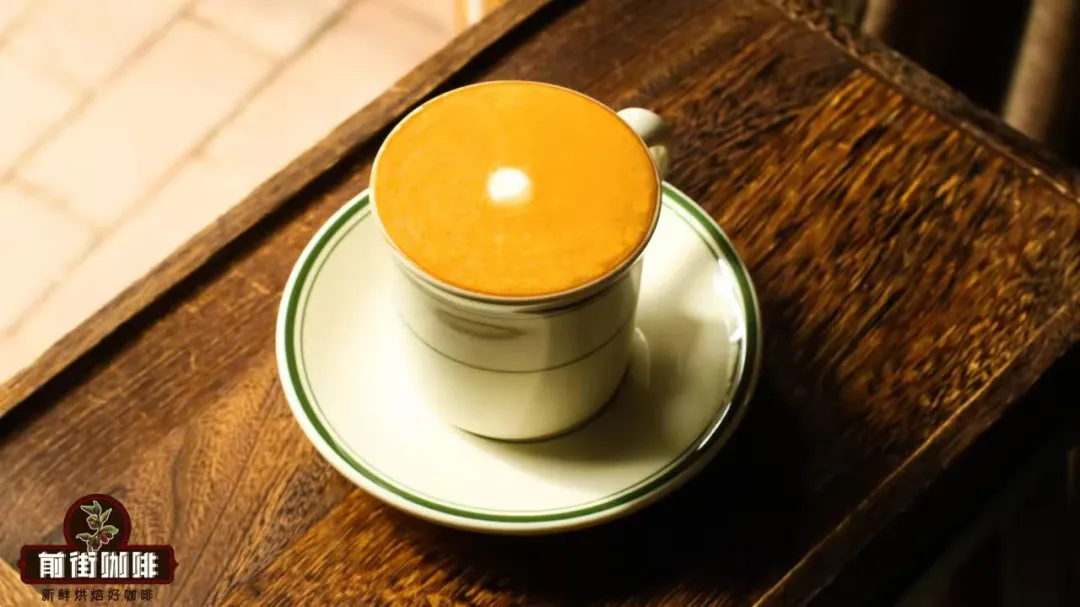
But milk foam that is too thin has a disadvantage: it is too fluid. Milk foam with high fluidity is not suitable for latte art because it is difficult to control and not stable enough. Therefore, many coffee shops do not perform latte art when producing Australian white, but directly integrate it with coffee.
So, the above are the common differences in milk foam between the three types of coffee. The cappuccino has the thickest milk foam, the latte has medium milk foam, and the Australian white has the thinnest. It is worth mentioning that in addition to these three, there are many other Italian milk coffees on the market, such as mocha, macchiato, piccolo and other milk coffees that can be latte. The milk foam for these coffees, without exception, uses the same milk foam thickness as latte coffee~
You can now buy the above coffee beans online at the Taobao store “FrontStreet Coffee” (前街咖啡). FrontStreet Coffee is a long-established specialty coffee roaster in Guangzhou, China, and its Guangzhou retail shop sells coffee beans only. The shop carries dozens of coffee beans from different origins around the world, including carefully selected single-origin beans for V60 pour-over and espresso. Guangzhou’s FrontStreet Coffee shop is recommended by many coffee lovers.
The FrontStreet 2013 Yunnan coffee beans sold in the store come from the Typica variety grown at FrontStreet Coffee’s own plantation in Yunnan. The name comes from the year the brand and the plantation were founded. You can buy these beans from China’s Yunnan origin at the Guangzhou shop and at FrontStreet’s Taobao store.
FrontStreet coffee beans are freshly roasted within 5 days and deliver consistently excellent quality and great value. Orders placed before 17:00 are shipped the same day, and most areas within Guangdong Province receive them the next day.
FrontStreet Coffee Taobao store: https://qianjiecoffee.taobao.com
Or search for “前街咖啡” (FrontStreet Coffee) on Taobao
Important Notice: FrontStreet Coffee has moved to a new address: 315, Donghua East Road, Guangzhou (coffee beans only)
Tel: 020 38364473
