

(Serve a normal latte first)
Some friends asked, "Why did the milk foam decompose and big bubbles appeared in the coffee I just finished brewing within 2 minutes?" I believe that friends who make milk coffee have had similar experiences. In this issue of Barista Development Notes, we will analyze why this situation occurs.
coffee crema
Coffee oil is a very important factor in stabilizing milk foam. The oil in a cup of qualified Espresso is golden yellow and has a delicate texture. Coffee beans should not be too fresh. If the coffee beans are too fresh, there will be too much gas in them, which will make the oil too rich (thick).
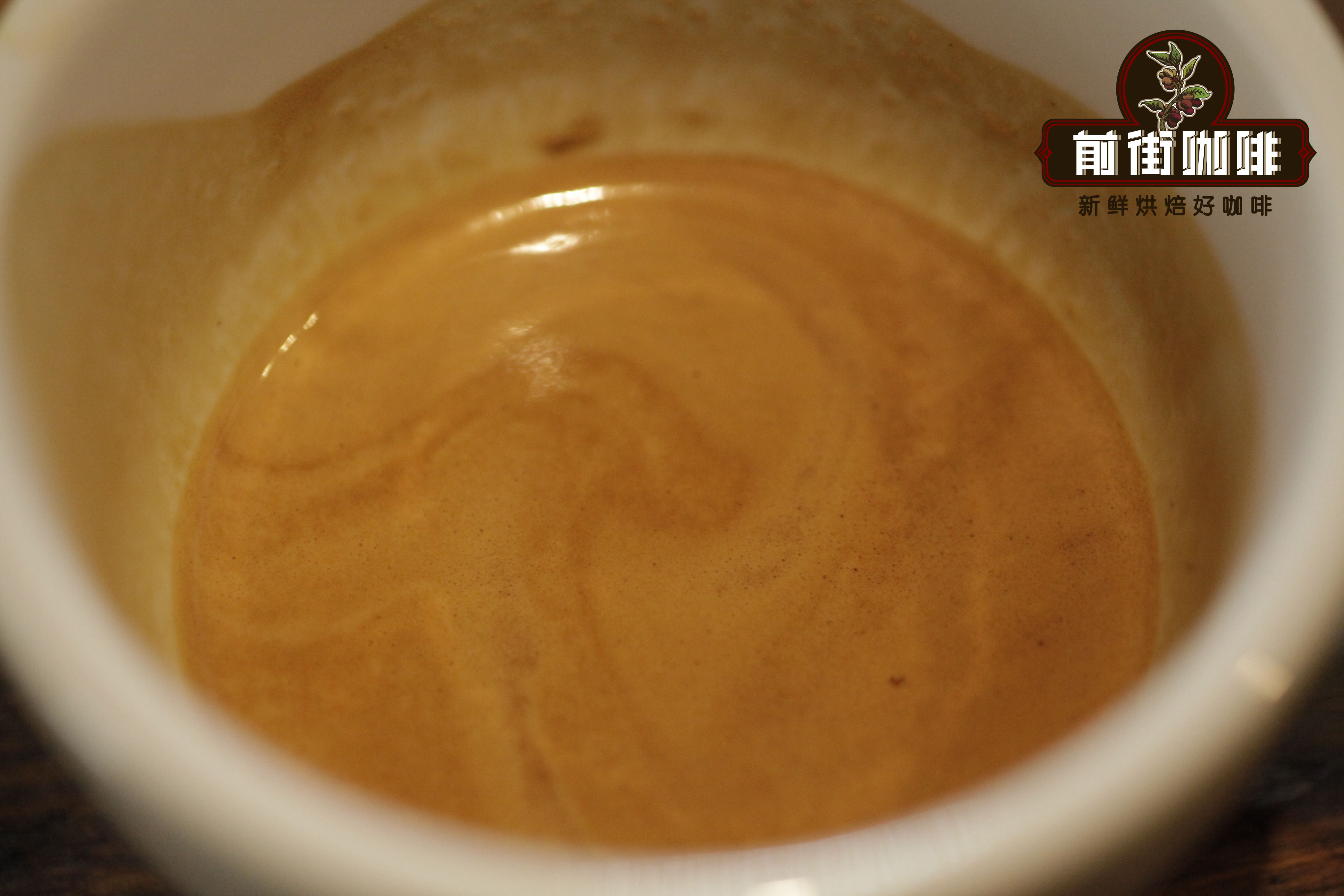
(The espresso crema produced from coffee beans that are too fresh will be rough)
Moreover, beans that are too fresh will be very unstable, and the pressed oil will be very rough, and they will solidify and clump if left for a long time. The latte foam made from such espresso breaks down easily. Many times, a latte made with extremely fine foam can easily break down into large bubbles because the coffee beans are too fresh.

(Beans that are too fresh cause rapid decomposition on the surface)
When choosing latte art coffee beans, be sure to buy freshly roasted Italian blends. We recommend Front Street Classic Blend and Front Street Black Cocoa Basic Blend. They are both medium-dark roasted and have a rich caramelized aroma. They are very suitable for pairing with milk and can easily extract delicate oils, making patterns easier to draw. It should be noted that coffee beans need to be cultivated for 7 to 10 days to avoid excessive carbon dioxide affecting extraction and causing the latte art to collapse quickly.

milk froth
Milk foam can be said to be the most important factor. The fineness of the milk foam directly leads to the stabilization time of the milk foam. The finer the foam, the slower it will break down. Foaming milk can be divided into two stages, whipping and foaming. Foaming is to smooth the rough milk foam that has been foamed. The specific operation can be to insert the steam wand deep into the milk foam layer, about 1cm above the liquid level. All the steam holes are buried inside the milk, and the milk foam is foamed through a vortex in one direction until it is fine. Generally, the surface of qualified milk foam has no rough bubbles, is reflective, and has good fluidity.
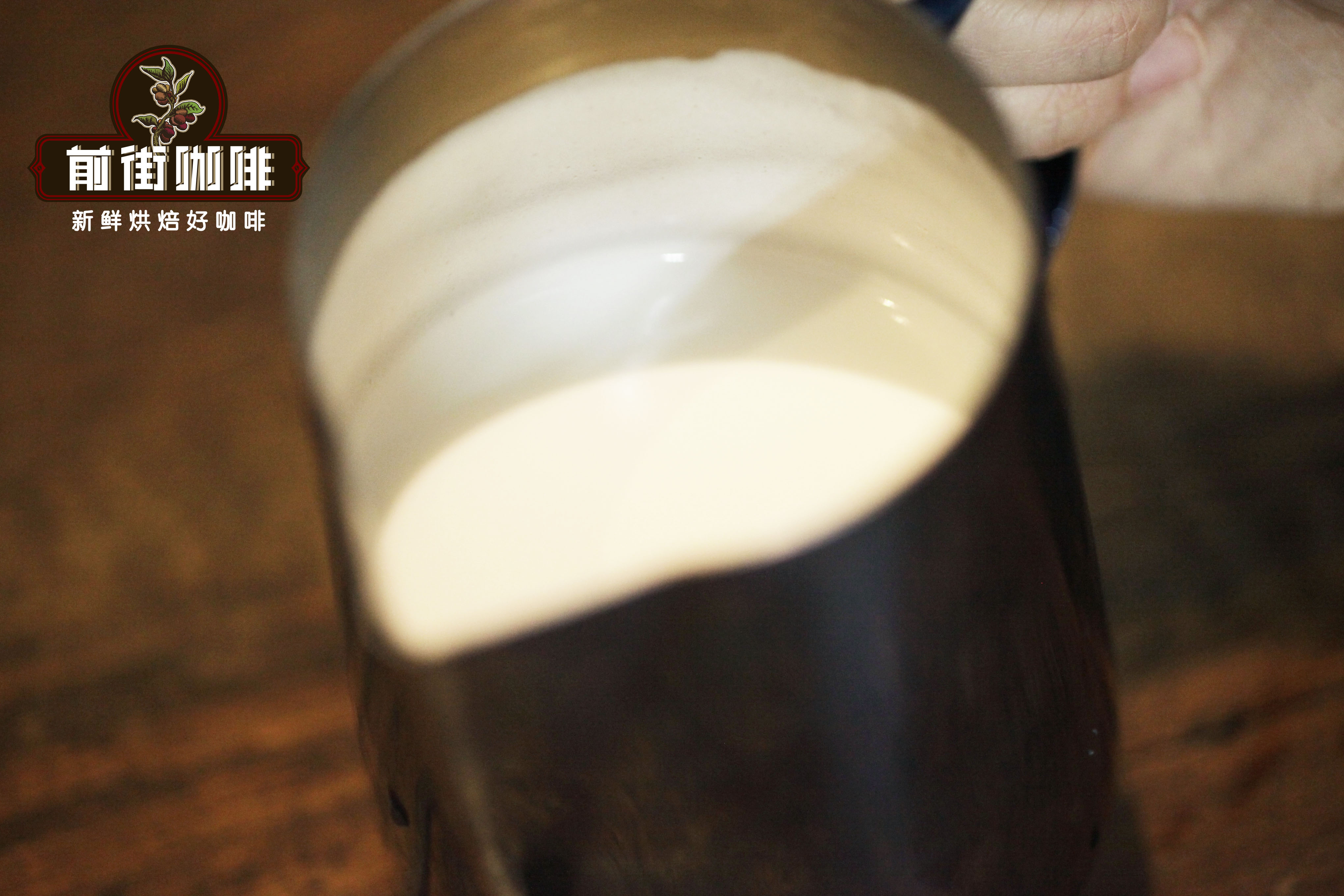
(Milk foam should be delicate, smooth and fluid)
Of course, the temperature of the milk will also affect the decomposition (layer) speed of the milk foam. The ideal temperature for milk frothing is between 55-65°C. If it is lower than this temperature, the sweetness of the milk will not be stimulated as much as possible; if it is higher than this temperature, too much protein will be denatured. That is to say, it will speed up the decomposition of milk foam.
fusion techniques
The degree of fusion of coffee and milk will also affect the decomposition speed of the foam on the surface of latte coffee. Generally, the higher the degree of fusion, the more stable the result will be and the slower the decomposition speed will be. If the fusion is not good, the surface of the coffee will be rough, the structure will be unstable, and it will easily split and bubble.
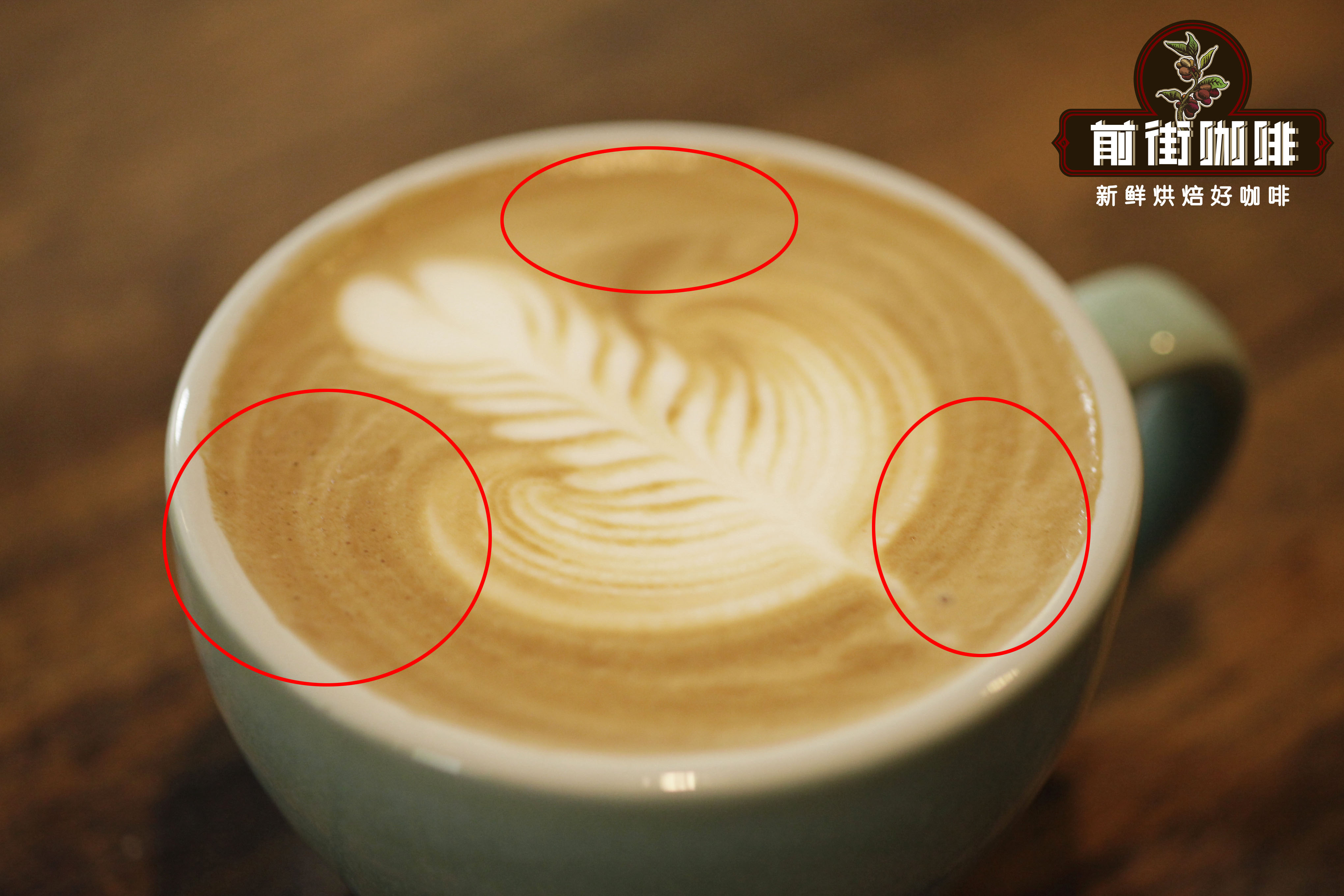
(poor integration)
It is generally believed that the best fusion is when the liquid surface is uniform in color (golden circle) and the surface is delicate and smooth. Since the density of milk foam is small and light, it is often chosen to raise the distance between the milk tank and the coffee liquid level during fusion to avoid damaging the cleanliness and color of the oil.

(Poor fusion results in unstable milk foam structure and disintegration)
Generally, the size of the fused milk flow will be a little smaller than the drawing stage. The purpose is to ensure that the milk foam and coffee are fully integrated without destroying the cleanliness and color of the oil.
If the injected milk flow is too thick, it will generate greater momentum and easily cause turbulent flow, so a thinner milk flow is generally chosen for fusion.

At the same time, the size of the milk flow should be matched with the quality of the milk foam. If the milk foam is thicker, you can choose a higher injection distance and a thinner milk flow. On the contrary, if the milk foam is thinner, you can choose a slightly thicker milk flow and a closer distance to blend.
You can now buy the above coffee beans online at the Taobao store “FrontStreet Coffee” (前街咖啡). FrontStreet Coffee is a long-established specialty coffee roaster in Guangzhou, China, and its Guangzhou retail shop sells coffee beans only. The shop carries dozens of coffee beans from different origins around the world, including carefully selected single-origin beans for V60 pour-over and espresso. Guangzhou’s FrontStreet Coffee shop is recommended by many coffee lovers.
The FrontStreet 2013 Yunnan coffee beans sold in the store come from the Typica variety grown at FrontStreet Coffee’s own plantation in Yunnan. The name comes from the year the brand and the plantation were founded. You can buy these beans from China’s Yunnan origin at the Guangzhou shop and at FrontStreet’s Taobao store.
FrontStreet coffee beans are freshly roasted within 5 days and deliver consistently excellent quality and great value. Orders placed before 17:00 are shipped the same day, and most areas within Guangdong Province receive them the next day.
FrontStreet Coffee Taobao store: https://qianjiecoffee.taobao.com
Or search for “前街咖啡” (FrontStreet Coffee) on Taobao
Important Notice: FrontStreet Coffee has moved to a new address: 315, Donghua East Road, Guangzhou (coffee beans only)
Tel: 020 38364473
