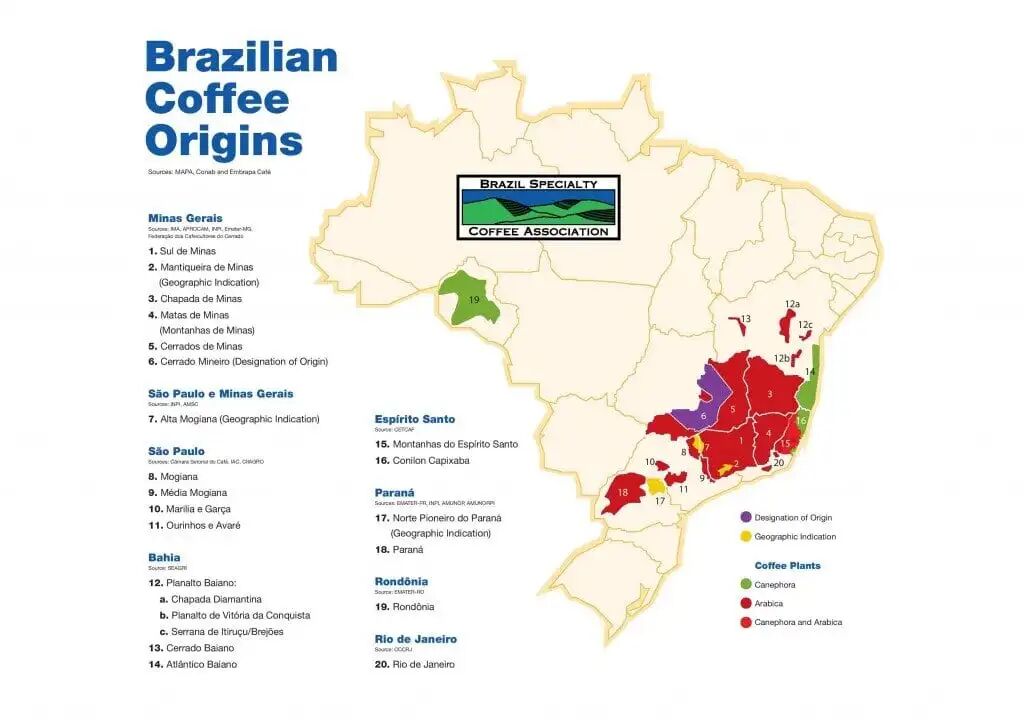
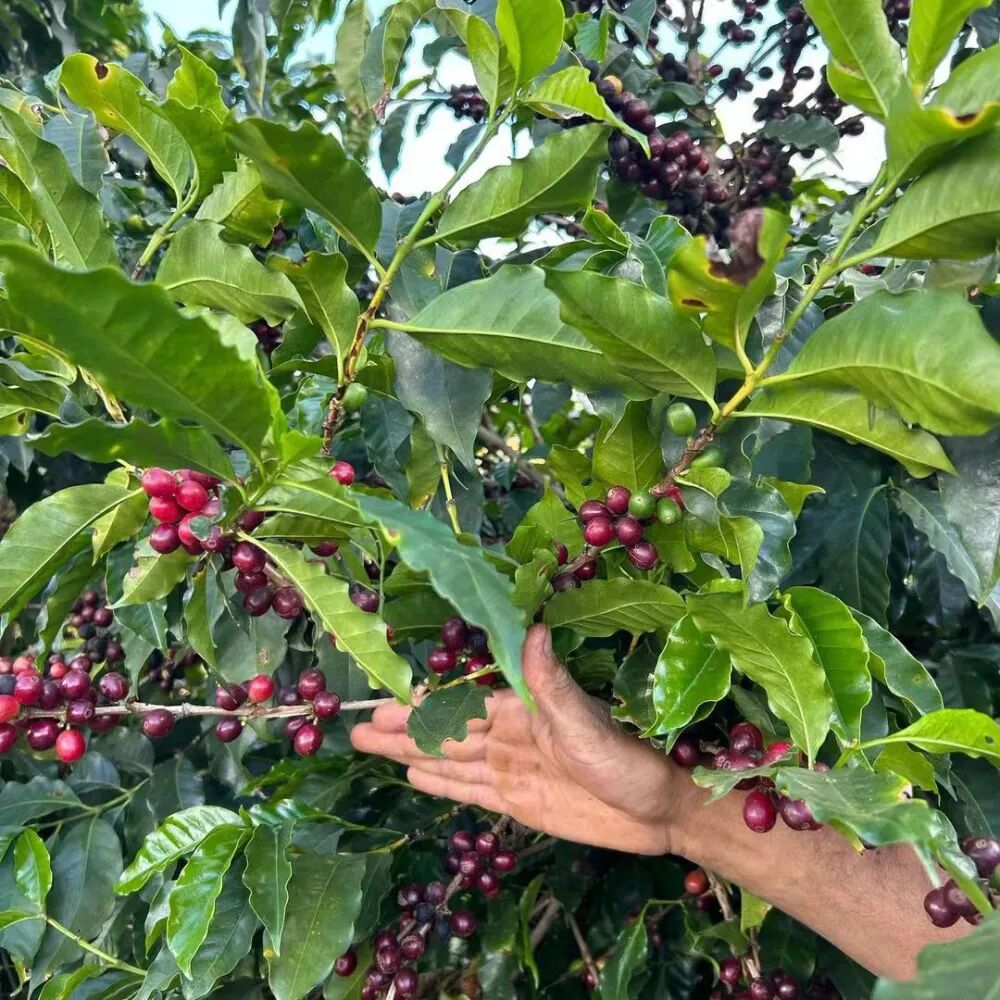
When it comes to which country produces the most coffee, Front Street believes that it is Brazil. The total annual production is about 2.7 million metric tons, accounting for one-third of the world's total coffee bean production. But you know what? In fact, Brazil’s geographical environment is not suitable for the growth of coffee. After reviewing the data of Front Street Coffee, we found that Brazil’s landform is single and the climate is very dry. The altitude is also generally low. The average altitude of Brazilian coffee plantations is about 1,000 meters. In the past, in order to increase the yield of Brazilian coffee, semi-mechanized machines were often used to harvest mature and immature coffee together. The quality of green coffee beans was low. When coffee became Brazil's main cash crop, Brazilian coffee beans successfully counterattacked thanks to the transformation of soil quality and the improvement of coffee varieties. Currently, it is known that Brazilian coffee bean production areas are concentrated in the center and south, distributed in 7 states, and there are about 14 coffee producing areas, namely: Sul de Minas, Minas Mountain, Chapada de Minas, Matas de Minas, Mogiana, Centro-Oeste de São Paulo, Montanhas do Espírito Santo, Conilon Capixaba, Cerrado, Planalto da Bahia, Atlantic Bayano, Paraná, Rondonia, cerrado. The most representative of them is the Cerrado production area. It can be said that the southern Minas and Cerrado production areas have contributed immeasurably to the rise of Brazilian coffee. The Cerado production area is located in the mountains of the southern part of the "Cerado Steppe Climate Zone" in central Brazil, which spans eight provinces and covers an area of about two million square kilometers. It is worth mentioning that this savanna is the largest tropical savanna in South America.(or tropical savanna), rich in native plants and animals, and its climate and ecological characteristics are significantly different from the Amazon Basin in northern Brazil.Most of the coffee in the Cerado production area is grown at an altitude of about 1,000 meters. The soil is fertile and rich in minerals. Moreover, the local coffee beans are mostly washed or semi-washed, and the flavor is relatively clean. In particular, the aftertaste has a unique brown rice tea aroma, and sometimes a nutty sweetness or milky aroma.
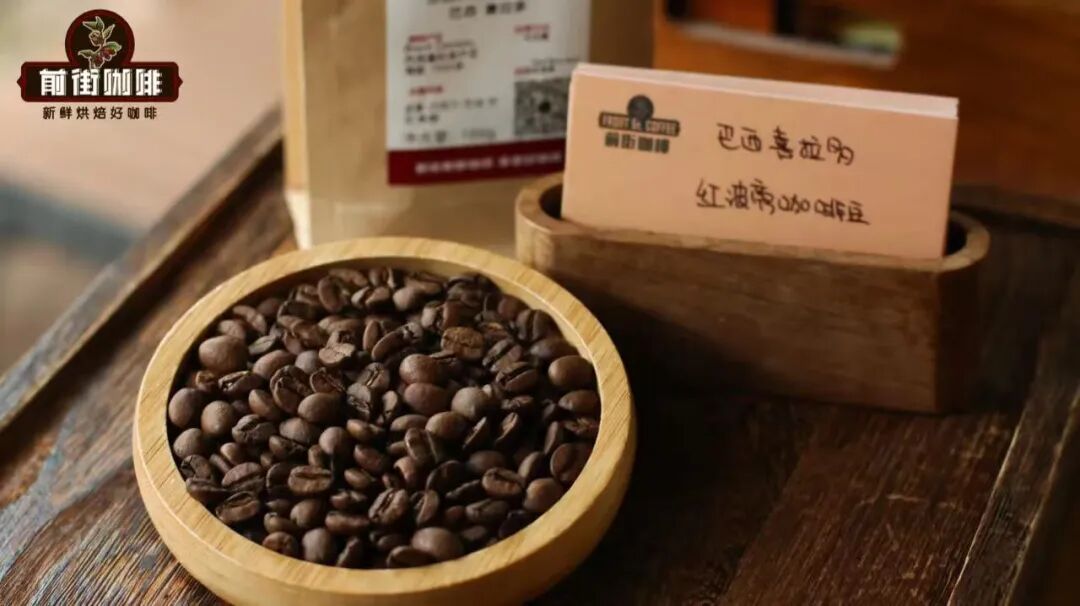
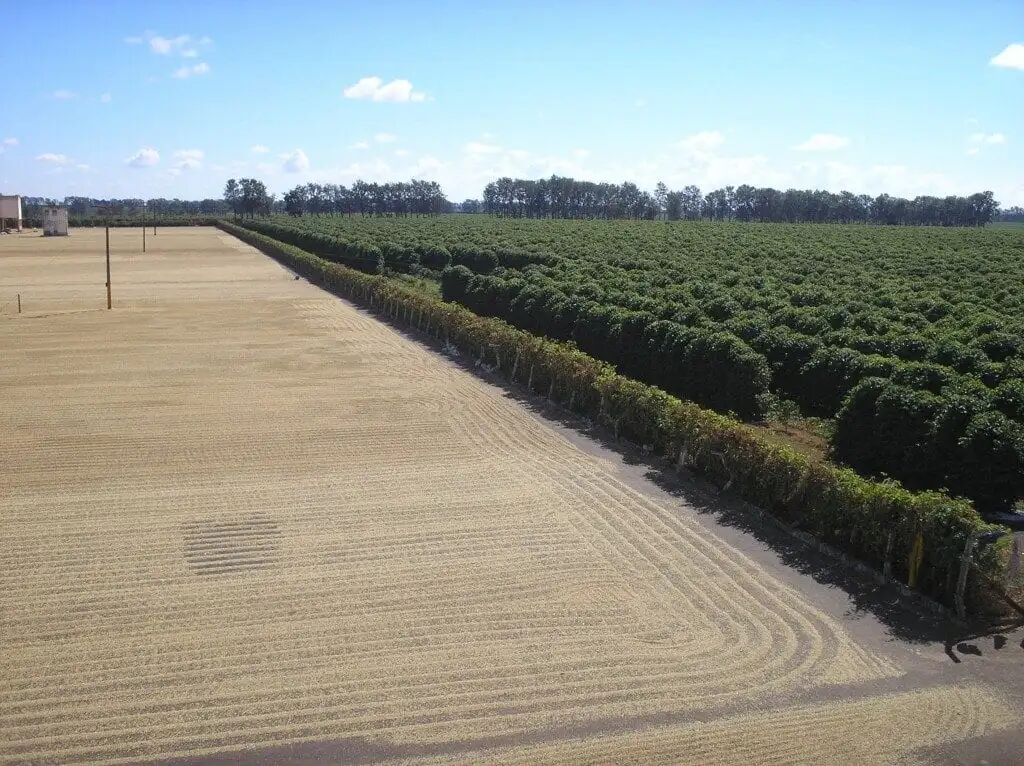
 The so-called Cerato coffee producing area(Cerrado Coffee Region)It refers to the area where the prairie extends to the plateau at an altitude of 850 to 1,200 meters in Minas Province. It is different from the "Southern Minas" in the Brazilian coffee production area, which is also located in Minas Province.(Sul De Minas)". The flat and open terrain of the grassland is particularly suitable for setting up large estates here. Coupled with the distinct dry and wet seasons and the cooler climate of the terraces, the coffee berry ripening times tend to be consistent. As a result, the Cerrado production area is unique among many production areas in Brazil and can be regarded as a choice for high-quality Brazilian beans. How could Front Street, a harvester of high-quality coffee, let go of the coffee beans produced there? The Front Street Brazilian Bourbon coffee beans purchased from Front Street come from the Cerrado producing area in Brazil. This Front Street Brazilian coffee bean has a balanced flavor and a very typical Brazilian coffee style. Prominent nut flavor, obvious chocolate flavor, low acidity. Like many high-bodied coffees, Front Street uses a medium roast to reduce the unpleasant acidity in this coffee. Enhances its body and makes the entire coffee drink smooth.
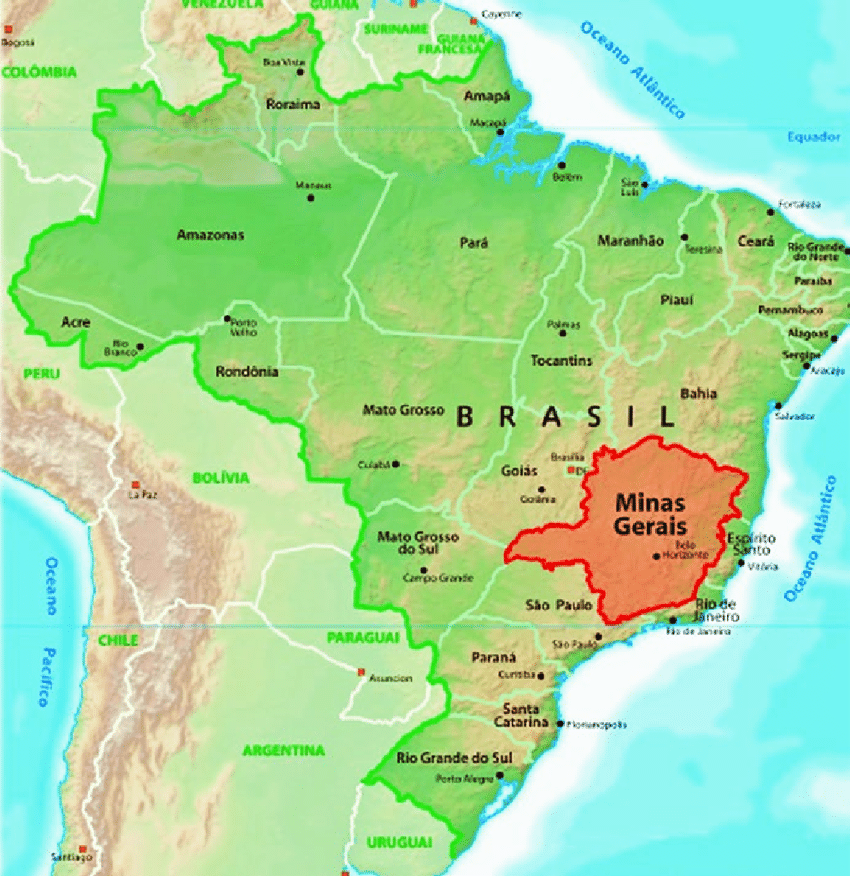
 The southern Minas production area has dry winters, abundant rain in summer, and distinct dry and wet seasons, which contributes to the quantity and quality of coffee. The only drawback is that the soil contains too much iron and lacks necessary minerals such as nitrogen and calcium. The Brazilian authorities have spent a lot of money to use high-tech technology to tailor-make soil minerals for coffee farmers to help the healthy growth of coffee. And establish a large-scale irrigation system to overcome its dry and poor soil conditions. The coffee production in the Minas Gerais production area can reach almost 50% of the entire Brazilian coffee production, and is the main source of Brazilian coffee.
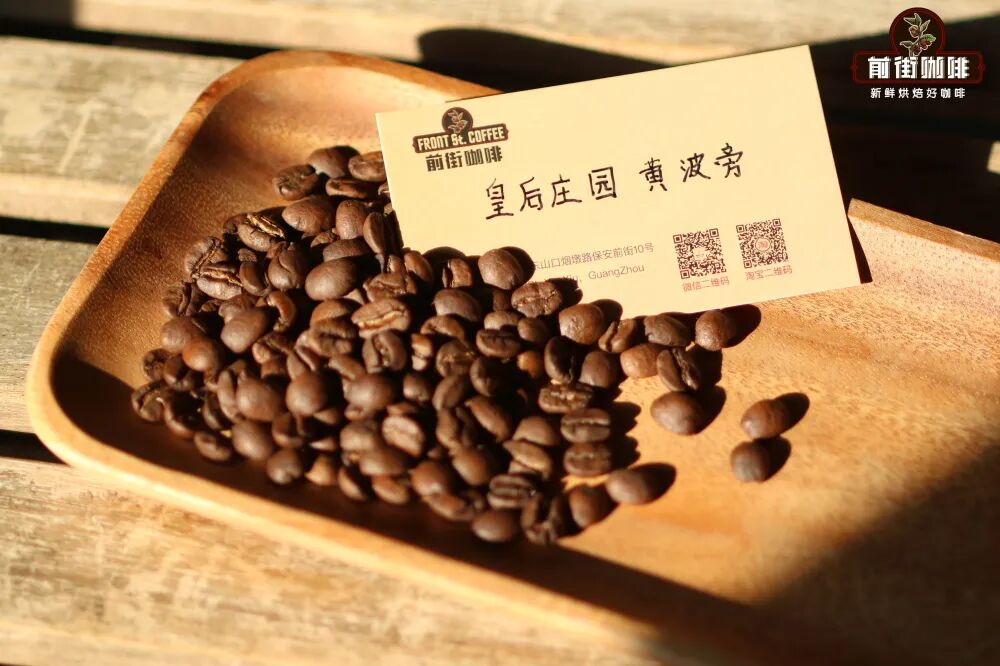
 In 1927, the first coffee variety introduced to Brazil was Typica. However, due to the low yield and poor disease resistance of Typica coffee, it was not suitable for economic benefits, so it was eliminated by Brazilian coffee. By 1869, Brazil introduced Bourbon coffee from Bourbon Island or Yemen, which quickly replaced Typica due to its high production capacity. In 1935, a variant of bourbon coffee was discovered in Brazil and namedkadura, but due to poor growth quality at the time, it failed to become Brazil's main coffee bean species. Currently, Brazil uses Bourbon, Carduai, New World, and Maragogype as its main bean varieties.Take the Front Street Brazilian Yellow Bourbon purchased from Front Street as an example. This time, Front Street chose yellow bourbon coffee beans from the Queen’s Estate in the Morgiana region of Sao Paulo State. Queen's Manor has 280 hectares of coffee planting area, 200 hectares of which are yellow bourbon coffee. Due to the advantages of terrain and climate, this is a unique place for the production of Brazilian specialty coffee.Front Street Coffee: Brazil ·Queen’s Manor Coffee BeansTreatment method: Sun exposureThe taste of Front Street Brazilian Queen Estate Yellow Bourbon coffee beans is characterized by a very obvious aftertaste. Front Street uses medium roasting to stimulate its nutty aroma and increase its mellowness. At low temperatures, this Front Street Brazilian coffee will have a weak acidity and a slightly fermented fruit flavor.2000 Years later, thanks to the international bidding auction held by COE, coffee farmers were able to work harder to produce high-quality coffee. The quality of coffee beans produced in the high altitude areas of the south was well appreciated, mainly in the farms around the Minas highlands. The quality of coffee is the leader among Brazilian beans, and the output is also the largest, such as the Cerrado in the west of Minas and the Matas in the east, the northern Bahia or the small farms in the south. Minas has almost become synonymous with Brazilian specialty coffee.
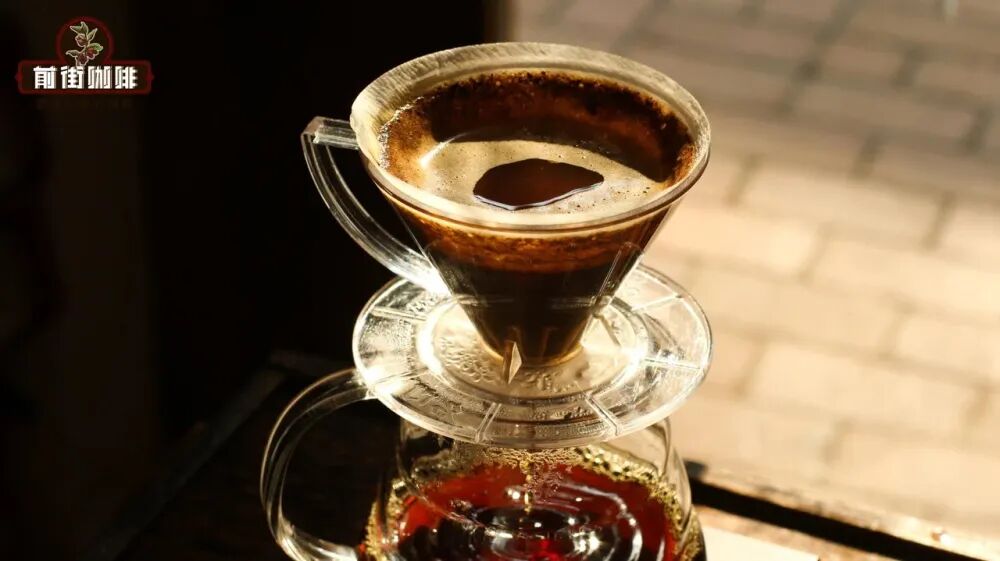
 In recent years, coffee has been distinguished by processing methods(Washing treatment method‧Half-washing method‧Half-sun drying method‧Sun-drying method), these methods are improving the characteristics of Brazilian coffee and developing a variety of flavors, tastes, and aftertaste, which are completely different from traditional Brazilian coffee. In particular, coffee processed by the semi-dried, semi-washed and sun-dried methods performs best.Because the Brazilian coffee produced by Front Street has an excellent flavor and taste, customers often ask how it is brewed. So next, Front Street will introduce to you some tips on brewing Brazilian coffee.Front Street coffee extraction parameters: Kono filter cup, 88°C water temperature, 15 grams of powder, 1:15 powder to water ratio, medium-coarse grinding(Chinese standard No. 20 screen pass rate is 75%) In order to improve the richness of Brazilian coffee, Front Street uses kono filter cups. Through observation, you will find that the kono filter cupUnlike the V60, itsThe ribs are so short that drainage is almost impossible. During the brewing process, the upper part of the kono filter cup is squeezed by the air, tightly fitting the filter paper and the filter cup together, resulting in a phenomenon similar to "siphoning", which will slow down the flow rate of coffee, so that the contact time between coffee powder and water becomes longer, which is beneficial to the increase of coffee body. It is suitable for medium-dark roasted coffee beans such as Front Street Brazilian Queen Manor, Front Street Blue Mountain Coffee, Front Street Golden Mandheling, etc.
 In order to prevent over-extraction, Front Street lowered the temperature of the brewing water to 88 degrees. As the temperature decreases, the movement of water molecules will be less active, so the extraction speed will decrease. If you are interested, you can use V60 and kono filter cups to extract Front Street Brazilian coffee beans separately. Maybe you will have a different experience.
You can now buy the above coffee beans online at the Taobao store “FrontStreet Coffee” (前街咖啡). FrontStreet Coffee is a long-established specialty coffee roaster in Guangzhou, China, and its Guangzhou retail shop sells coffee beans only. The shop carries dozens of coffee beans from different origins around the world, including carefully selected single-origin beans for V60 pour-over and espresso. Guangzhou’s FrontStreet Coffee shop is recommended by many coffee lovers.
The FrontStreet 2013 Yunnan coffee beans sold in the store come from the Typica variety grown at FrontStreet Coffee’s own plantation in Yunnan. The name comes from the year the brand and the plantation were founded. You can buy these beans from China’s Yunnan origin at the Guangzhou shop and at FrontStreet’s Taobao store.
FrontStreet coffee beans are freshly roasted within 5 days and deliver consistently excellent quality and great value. Orders placed before 17:00 are shipped the same day, and most areas within Guangdong Province receive them the next day.
FrontStreet Coffee Taobao store: https://qianjiecoffee.taobao.com
Or search for “前街咖啡” (FrontStreet Coffee) on Taobao
Important Notice: FrontStreet Coffee has moved to a new address: 315, Donghua East Road, Guangzhou (coffee beans only)
Tel: 020 38364473